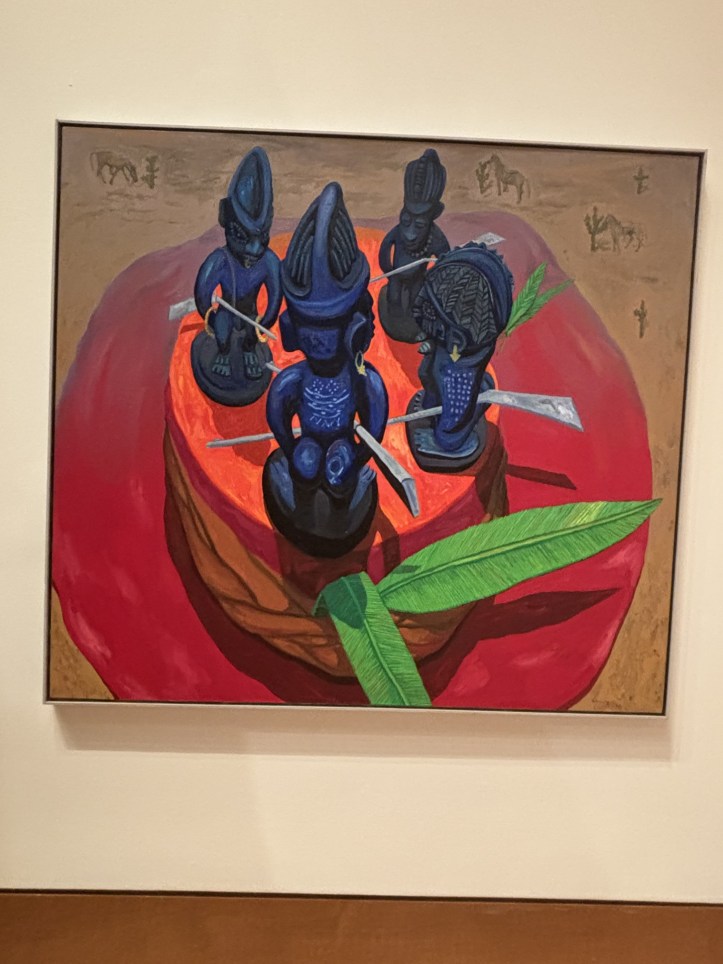
A little while ago, Constant Companion and I ventured out to one of the local art museums. I honestly forget what exhibit drew us to take the drive. In the meantime, I was drawn to the work of the late African American art historian and artist David C. Driskell, David C. Driskell and Friends. I was unfamiliar with this artist and was entranced with what I saw.
Discussions about art and other topics these days frequently circulate around the presence of conversations and dialogs. These concepts were part of the guiding forces around which the works in this exhibition were organized. According to the wall text, this exhibit explores the work of Driskell and his relationships with other artists including Romare Bearden, Elizabeth Catlett, Jacob Lawrence, Kara Walker, all prominent African American artists. Driskell’s painting and printmaking practices, like those of his colleagues were influenced by “… the imagery, history and aesthetics of the African Diaspora and African Modernism.
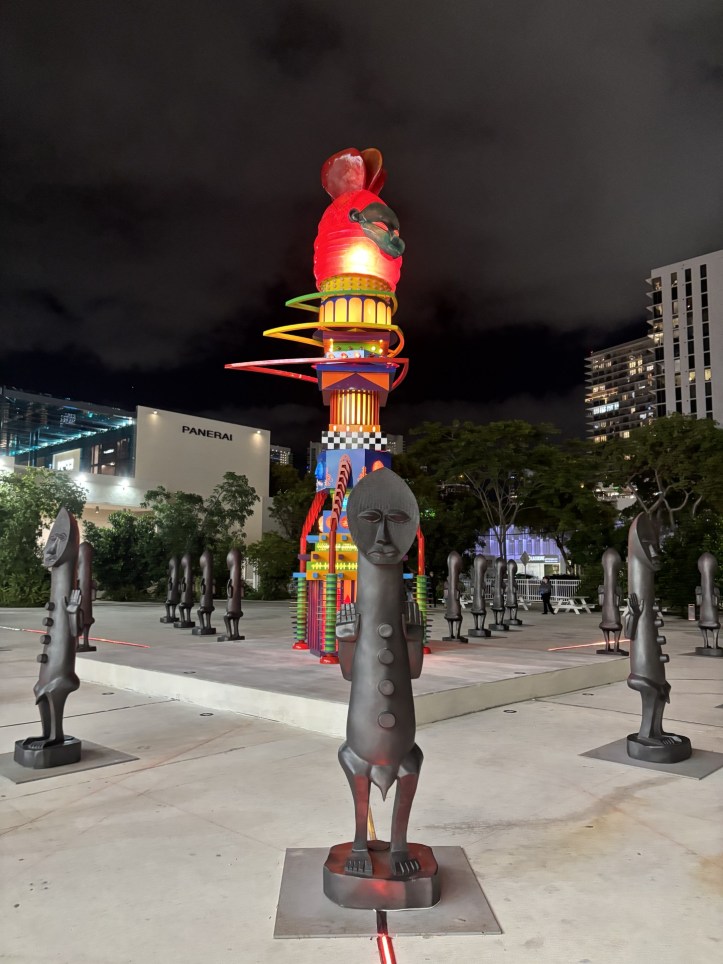
I was struck, however, by how several of the works reminded me of the the immersive exhibition of work by British artist Zak Ové we saw last January at the Design District (see 15 February 2026 post). Similarities jumped out to me as the visual images flowed together in my brain. His large, brightly colored sculptures, The Mothership Connection and The Invisible Man and the Mosque of Blackness, drew upon African iconography, in this case to create futuristic forms in a totem-like sculpture. The works in the Driskell exhibit also were influenced by similar source materials.
In the David C. Driskell exhibit this print by Sandford Bigger immediately reminded me of the Zak Ové work. The central column in Bigger Family Ark (1992) is composed of a resting elephant with what could be an Ashanti stool on its back, an elongated comb, and finally an elegant mask. The Ové sculpture is also topped with a mask, in this instance unusually illuminated.

Keith Anthony Morrison‘s Possee (1994) took me back to the imposing figures standing in concentric circles part of the Zak Ové work.
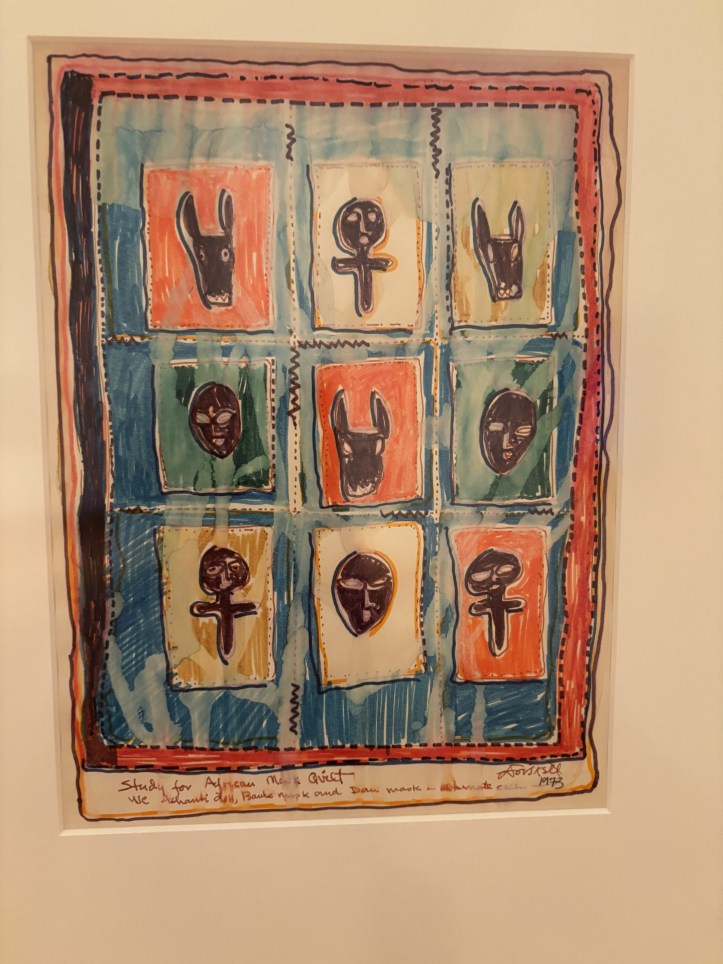
Finally, Driskell’s Study for an African Mask Quilt (1973) brought together the disparate works of two exhibits that rested in my mind. Funny how you see things!
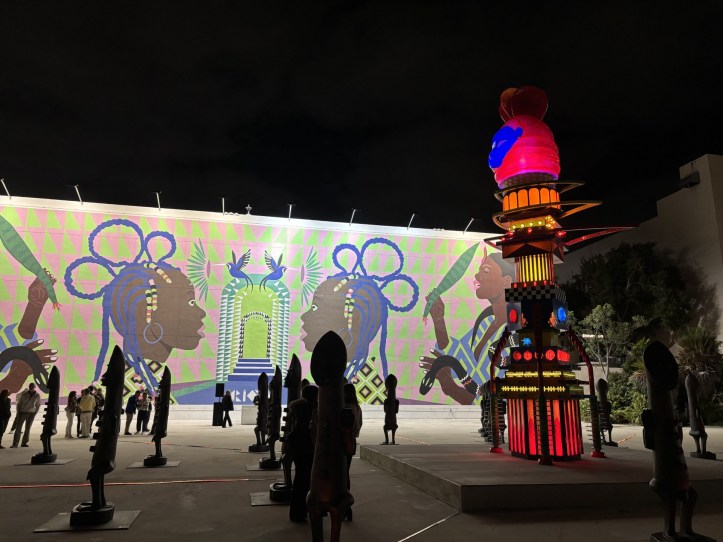
Finally, on that post about this year’s Design District installation, I did not credit the amazing and colorful mural in the background. The equally African inspired public artwork is by April Bey and titled Colonial Day Sale: What Are You Gonna Do, If You Like a Woman and Your Mama No Like Am? (2021).
Who can tell what peregrinations Constant Companion and I will go off on during the rest of the year, and how they will simulate thoughts of similarity or anything else. I am reminded to keep my little grey cells (as the great Belgian detective Hercule Poirot often says) active!


So interesting. ThanksSent from my iPhoneOn Aug 9, 2026,
LikeLike