For the past few months I’ve been encouraged to go to the Dolce & Gabbana exhibit, actually “From the Heart to the Hands Dolce & Gabbana.” Social media posted has been flooded with images of their rarified version of haute couture, encouraging more people to come the exhibit.
Recently, I relented and went with a friend who loves fashion. The immersive exhibit fills the space that formerly housed the De La Cruz Collection, a remarkable private/vanity museum of the best of the best contemporary art. I use the term immersive exhibit cautiously because unlike those that have been flooding the market (see April 17, 2023 post about the Salvador Dali immersive exhibit) high tech projections, loud spurts of music, wandering lights, or more to engage all the senses of the viewers are not part of the Dolce & Gabbana.
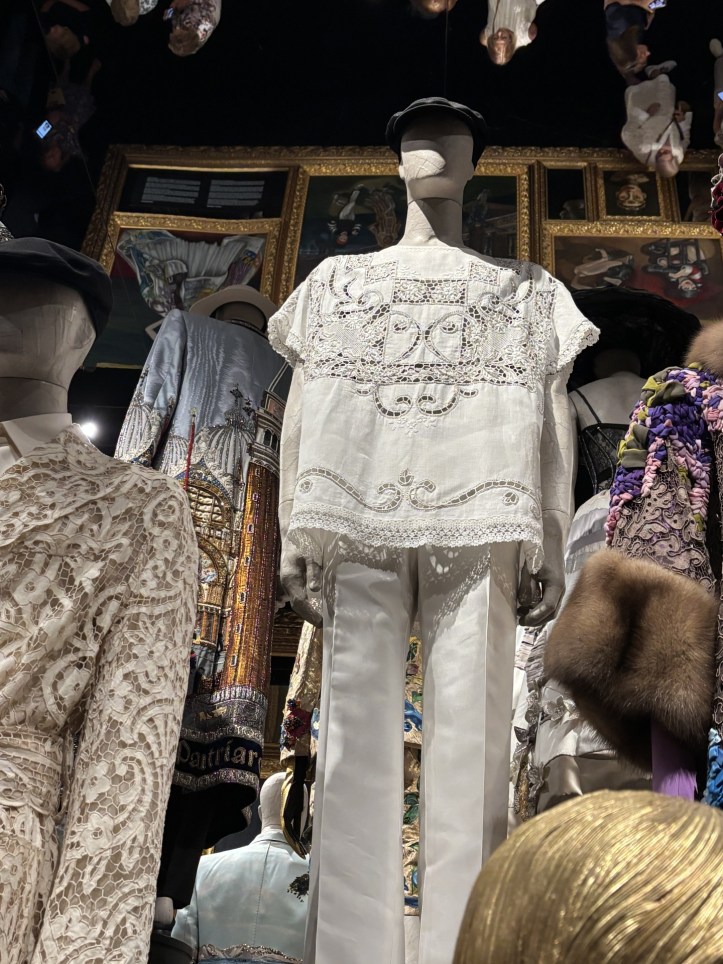
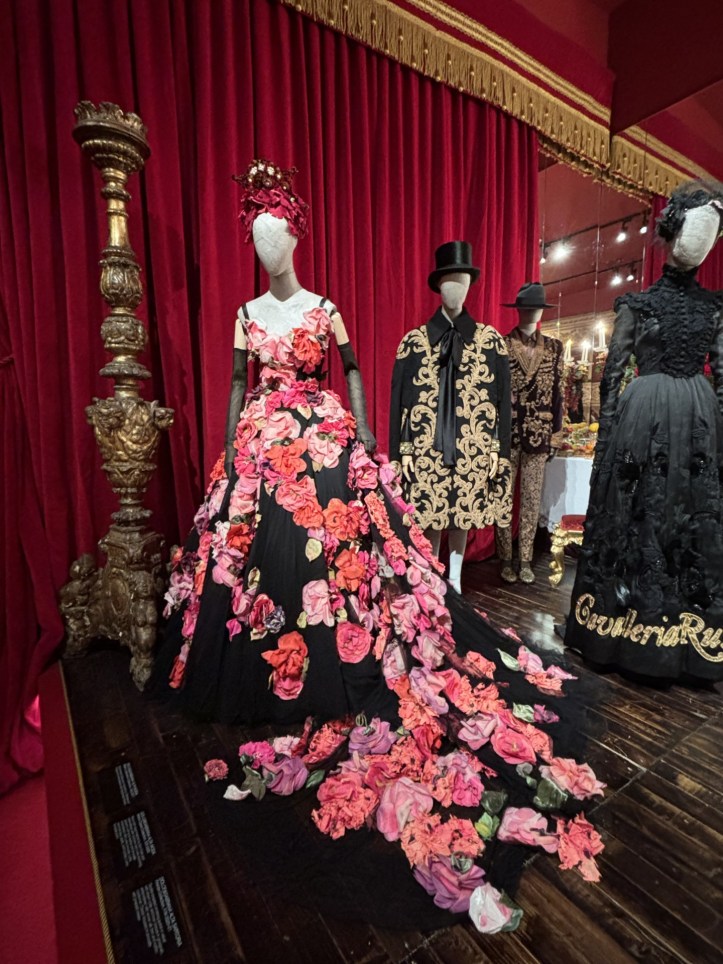
No, visitors to this exhibit move from huge gallery to huge gallery, each filled with multi-layered displays of over-the-top D&G attire. Along with the sparkling, awe-inspiring garments, the walls are filled with reproductions of period artwork, beautiful chandeliers are suspended from the ceilings, and the ceilings are often finished with mirrors, reflecting the clothing below. It was enough that the sense of sight was totally engaged. I had to hold back my desire to touch (another sense) as I strolled through the show.
Four of the 16 extravagant displays spoke to my interests and drew me in. Three galleries referenced D&G’s use of traditional arts of Italy. The fourth gallery took me back to a memorable visit to a day trip to Monferrato in northwestern Italy.
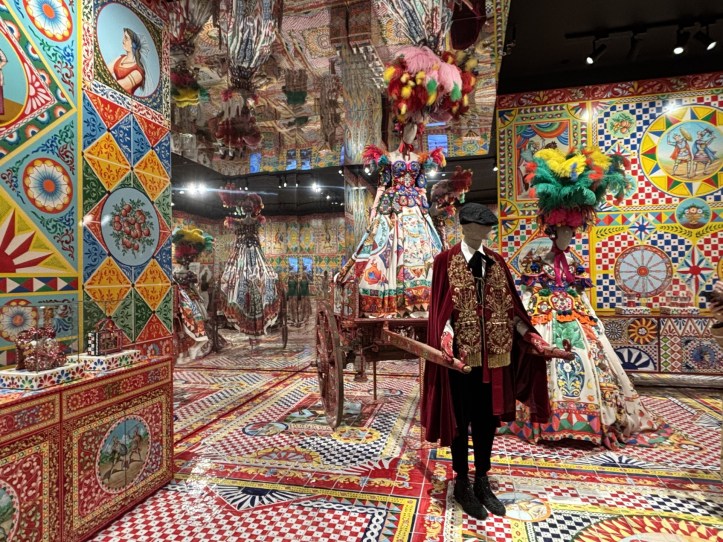
The work of three master artisans were the focus of the Sicilian Traditions gallery: the painted cart, painted woodwork, and the ceramic tiles, all reflecting the island’s decorative styles. Videos of them at work are included in the space which was awash with bright colors and patterns. The floors were covered with hand painted tiles from the family workshop, Caramica Bevilacqua. Cart painter, Salvatore Sapienza, learned his trade as an apprentice to two noted masters. The painted woodwork of Gianfranco Fiore also learned his craft from master artisans.
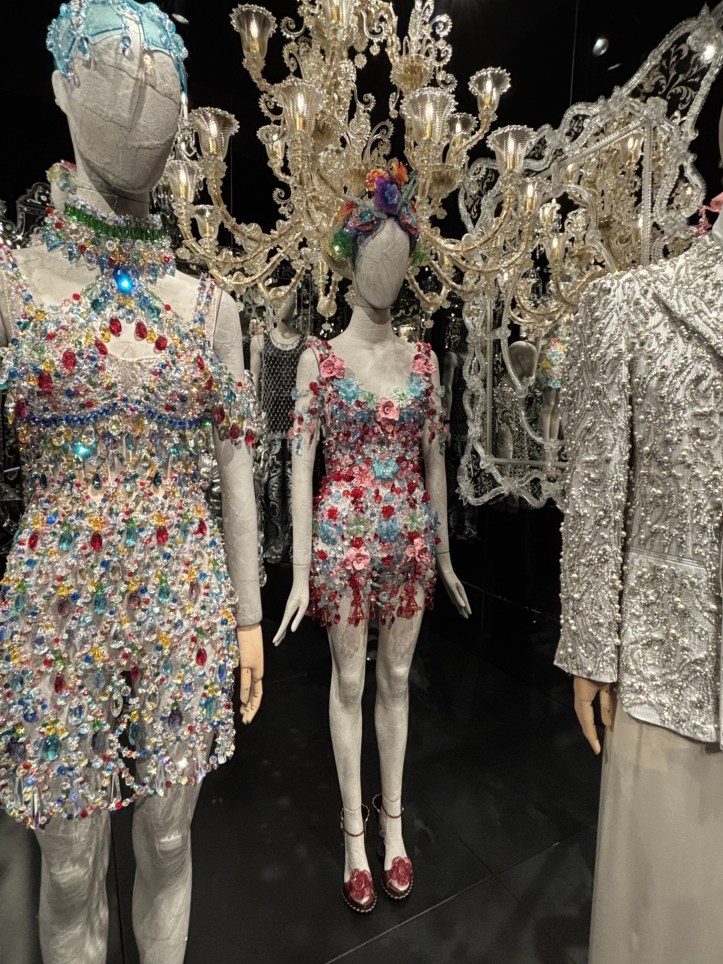
The Art and Craft of Glassworking was the inspiration of the Alta Moda collection (Venice, 2021). In which garments in the mirrored gallery were delicately adorned with crystal embroidery. The glass emborideries paid tribute specifically to the 13th century work of Angelo Barovier, who developed “Venetian crystal.” The family Murano mirror-making craft was revitalized in the 20th century.
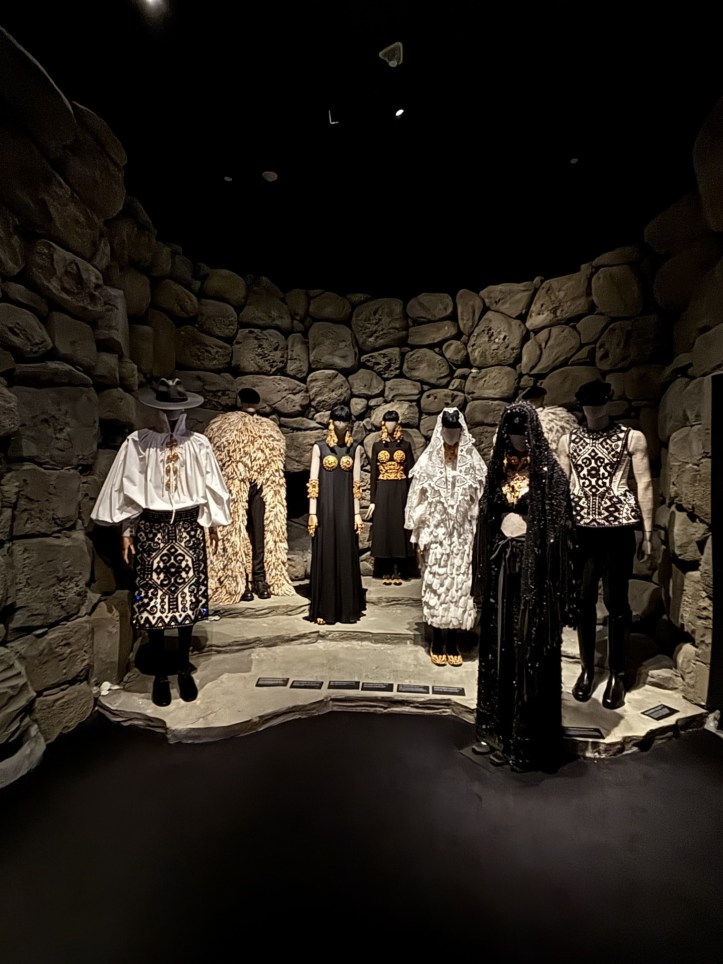
The Art of Sardinia was displayed in a cave-like gallery. This collection paid tribute to several Sardinian textile traditions (Autumn Winter 2024-25). There is the weaving technique, pibiones or “grape seeds. Black and white garments worn by shepherds as well as regional jewelry traditions were seen on the D&G garments.
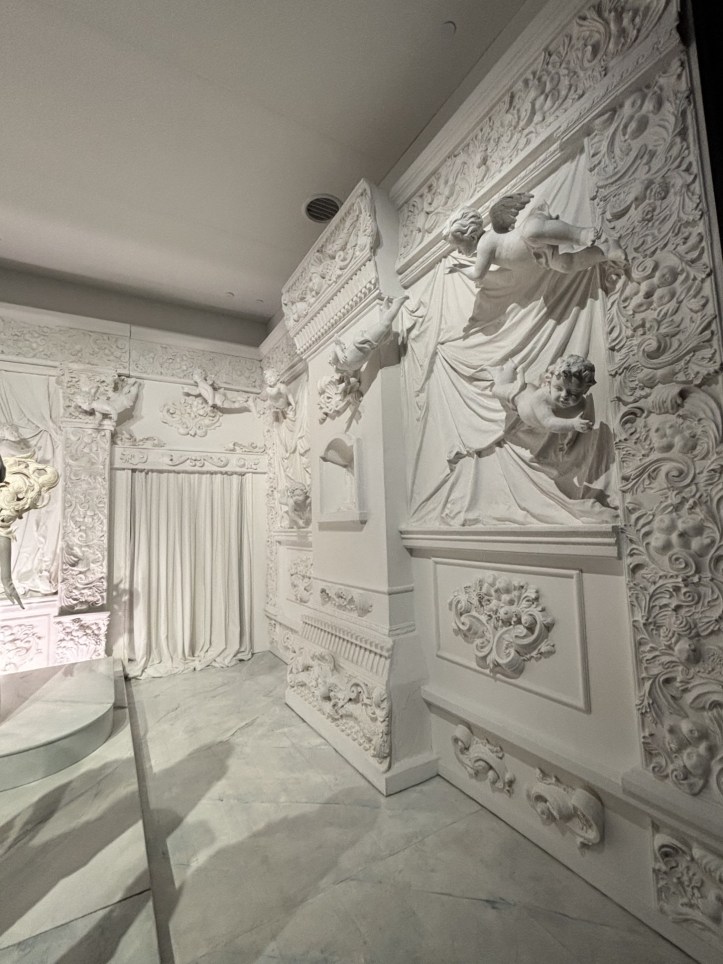
The garments in the White Baroque gallery were displayed in a background of decorative interior stuccowork in vogue in the 17th and 18th centuries Sicily. Label text referred Giacomo Serpotta, a master whose work appears in many churches in Palermo.
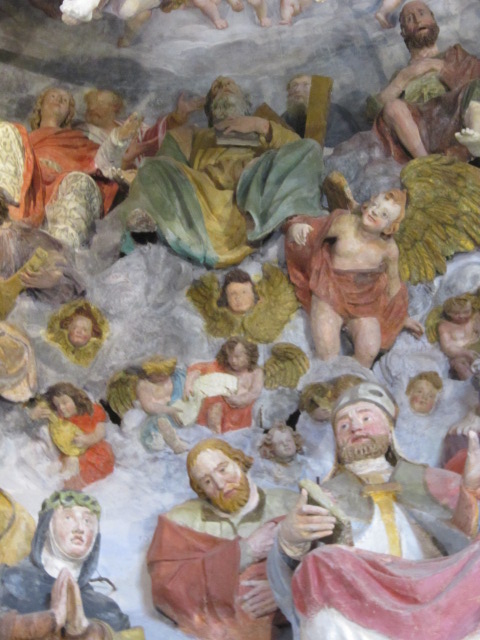
The majestic Sacro Monte di Crea (Sacred Mountain of Crea) is one of nine UNESCO World Heritage listed sacred mounts in Piedmont and Lombardy. It’s a Catholic sanctuary composed of a church and numerous chapels. The highest chapel,: the ‘Paradise Chapel,’ is filled with absolutely magnificent depictions of Biblical scenes. I was reminded of them in the White Baroque gallery at the D&G exhibition.
Of course the vast majority of visitors who immersed themselves in the 16 exhibits, each display of moda more magnificent than the other, were drawn to the over-the-top haute couture. Me, ever the folklorist and student of traditional culture, was thrilled to see the four sections described here.


What great photographs!!! As a lover of textiles myself, I wish I could go to this exhibit.
LikeLike