It’s been almost a year ago since Constant Companion and I took a memory trip to Oklahoma. We met and married there and Daughter was born in Tulsa. I’ve already shared some thoughts and observations about our visit (see 10-20-2025 post) and realized recently that there’s more to write about. These notes have occupied my desktop and it’s time to write about more.
In our all too brief stay, we returned to places that we’d enjoyed in the past. New sites were also on our itinerary. And then there were the places we’d known about but never really explored. As you can imagine, most of the places on our “to visit” list were museums. They are what took me to Oklahoma in the first place in the mid-1980s.
Actually, my work in in various Oklahoma museums helped to shape my lifetime practice as a museum professional who has worked with mostly smaller, community-based institutions.
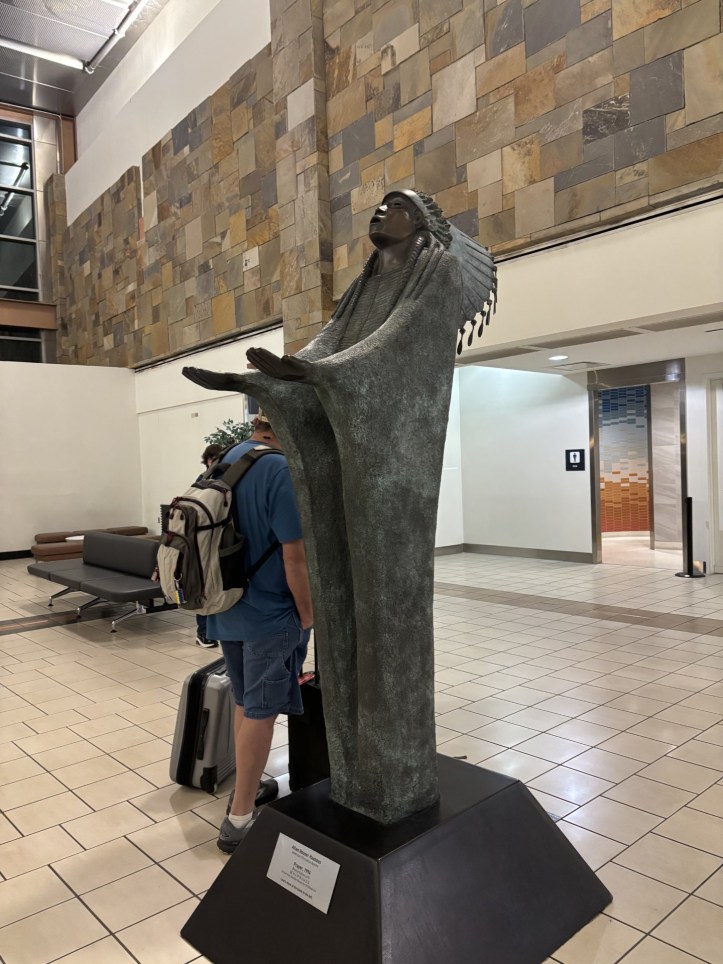
Allan Houser‘s contemplative sculpture, Prayer 1994 welcomed us at the Oklahoma City Airport. His powerful work set the scene of my return to where I learned so much from working with many Native American community scholars and artists.
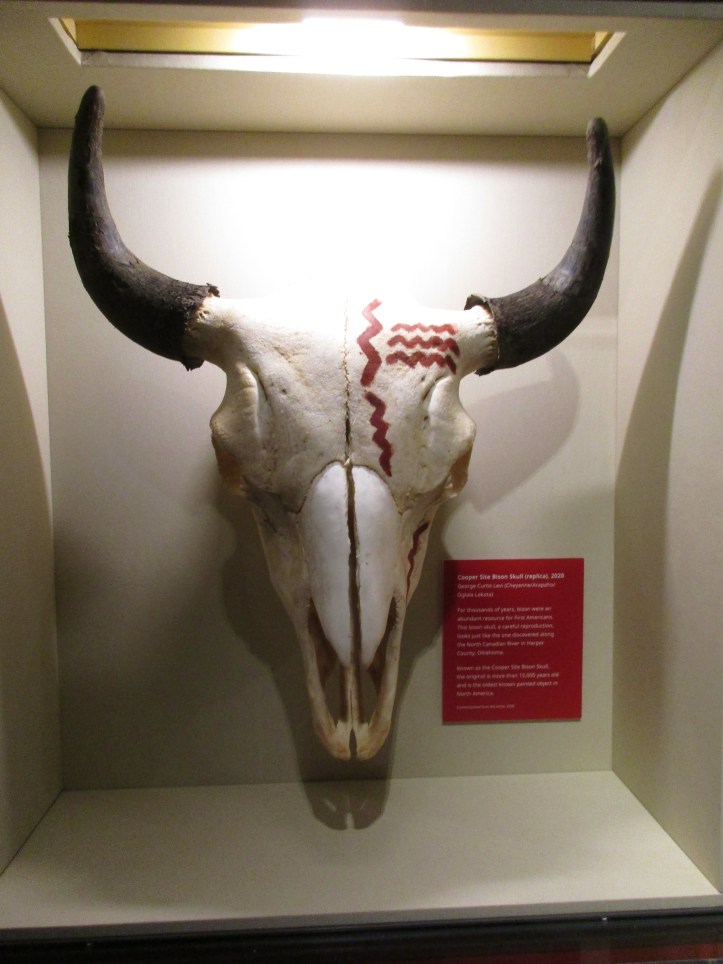
Places from the past. Our first stop was Norman, the home of the University of Oklahoma and the Oklahoma Museum of Natural History. I had the privilege work with so many Native Americans while at the museum as an exhibition developer. I also learned so much about archeology which I’ve carried with me to this day.* One of the pieces in the exhibits that we were most proud of is the Cooper Site Bison Skull. It is dated more than 15,000 years old and represents the oldest known painted object in North America.
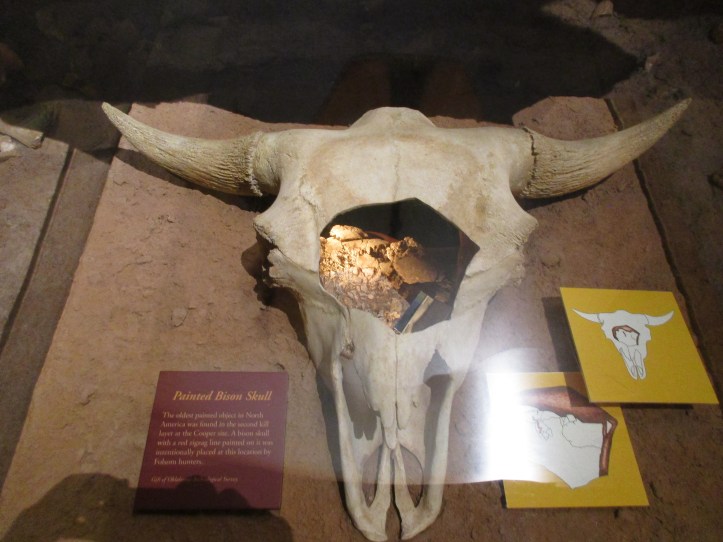
*I credit this experience as part of my qualifications to teach exhibition development to archeology students in India as a Fulbright Specialist a few years ago.
A replica of this bison skull is among the many, many items featured in the First Americans Museum in Oklahoma City one of the destinations on our Oklahoma itinerary.
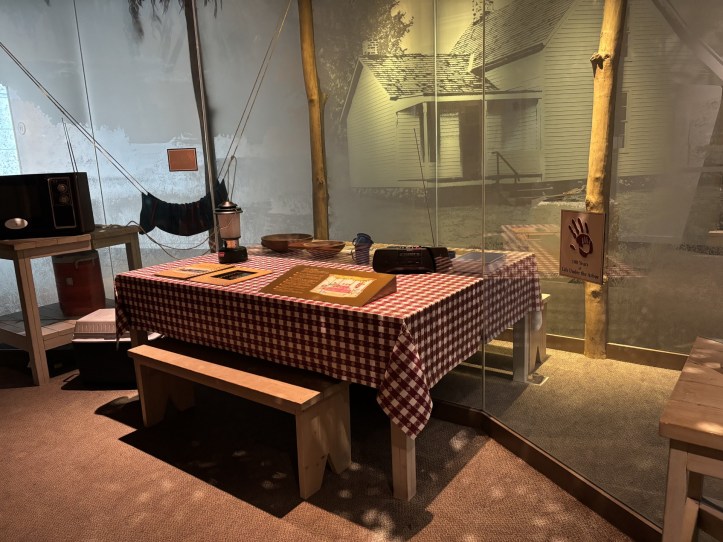
Guided by a Native American advisory board at the Natural History Museum, two themes were chosen to illustrate their lifeways and heritage. One theme focused on the care given to children in most tribes. A full-sized brush arbor, found at most summer dance grounds, reflects the vibrant and culture of Native Americans in Oklahoma today. I wondered where the dance bustle was, though.
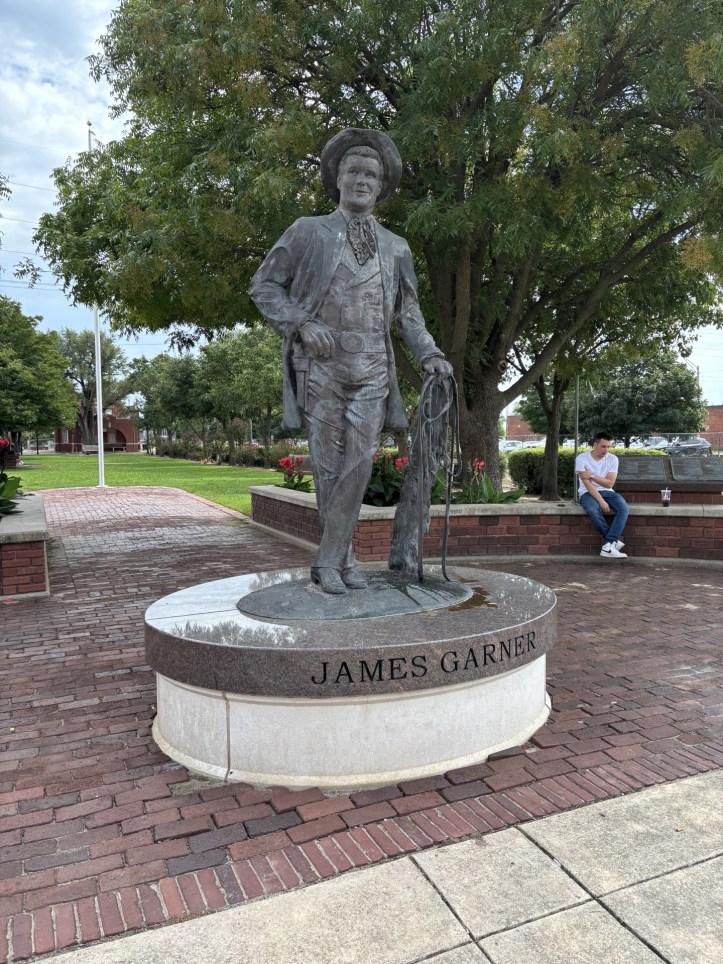
In Norman, we had to pass by and pay reference to the sculpture of one of the sons of the city – James Garner. I grew up with Maverick; Daughter and I enjoy the reruns now.
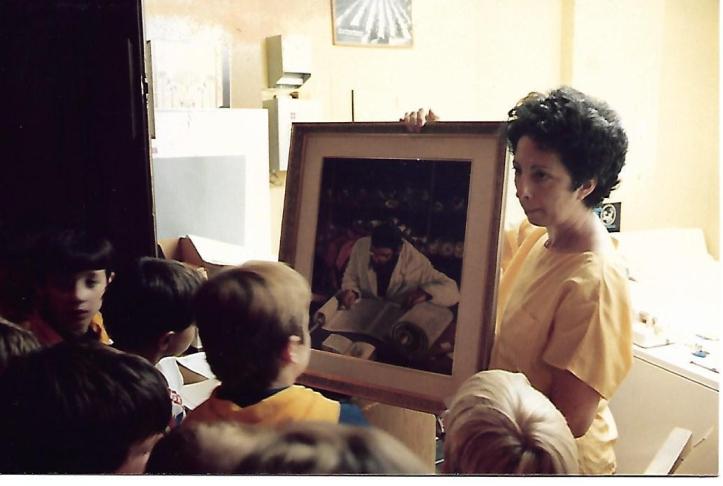
When we reached Tulsa on Day 3, the Miller Museum of Jewish Art was our first destination. Formerly the Fenster Museum of Jewish Art located in four spaces (galleries) the B’nai Emunah synagogue, I was director here while the board dreamed of a new home.
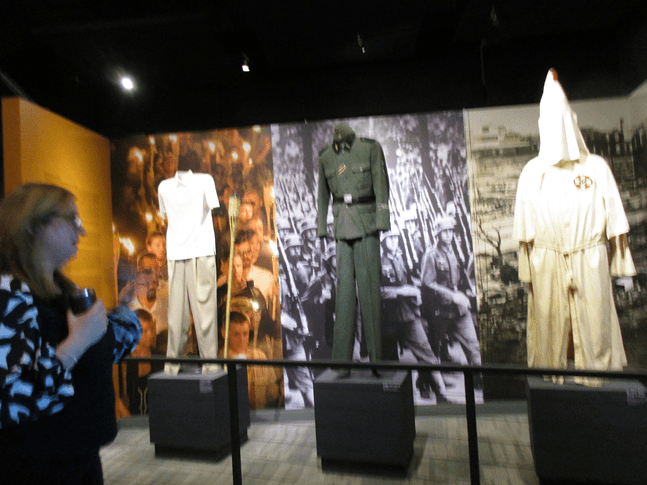
This has been accomplished, with a larger space to tell the stories of Jewish traditions and more. Especial emphasis is put on the Holocaust as well as the presence of the Klan in Eastern Oklahoma.
New Places. Our main destination in Oklahoma City was the First Americans Museum (https://famok.org/) where the collective histories of the 39 federally recognized tribes in Oklahoma are told. The extensive gallery in the first floor tells their histories from creation stories, through removal to what is now Oklahoma, to the present day. Artifact displays are complimented with animation, audio recordings, interactive technology, and artworks by contemporary artists.
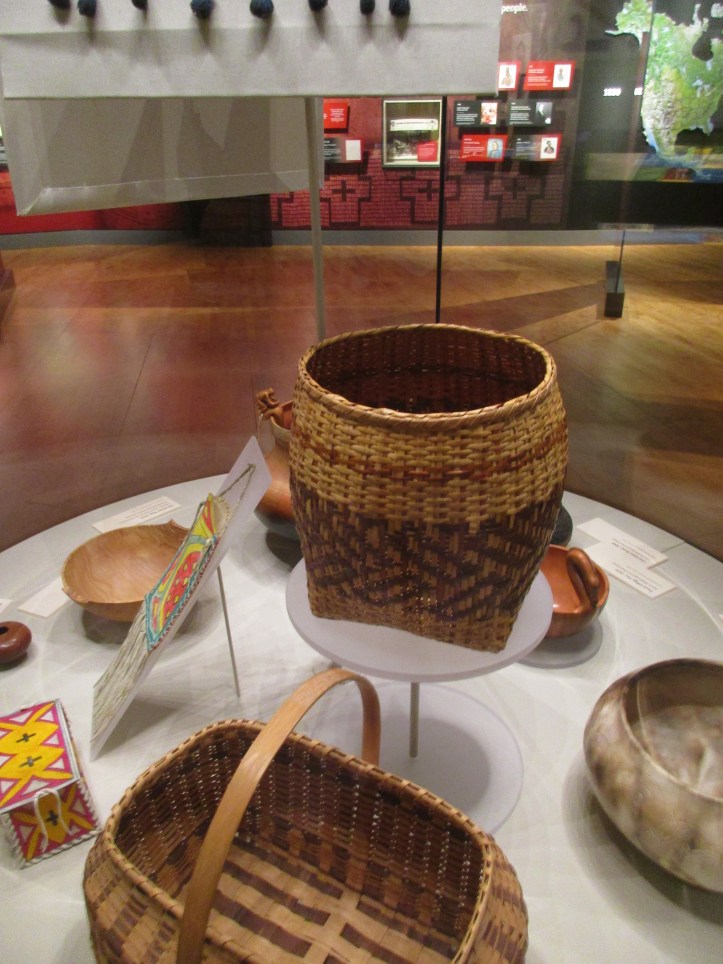
WINIKO: Life of an Object, the exhibition in the second floor shows many objects that have been repatriated to hundreds of descendent families and community members.
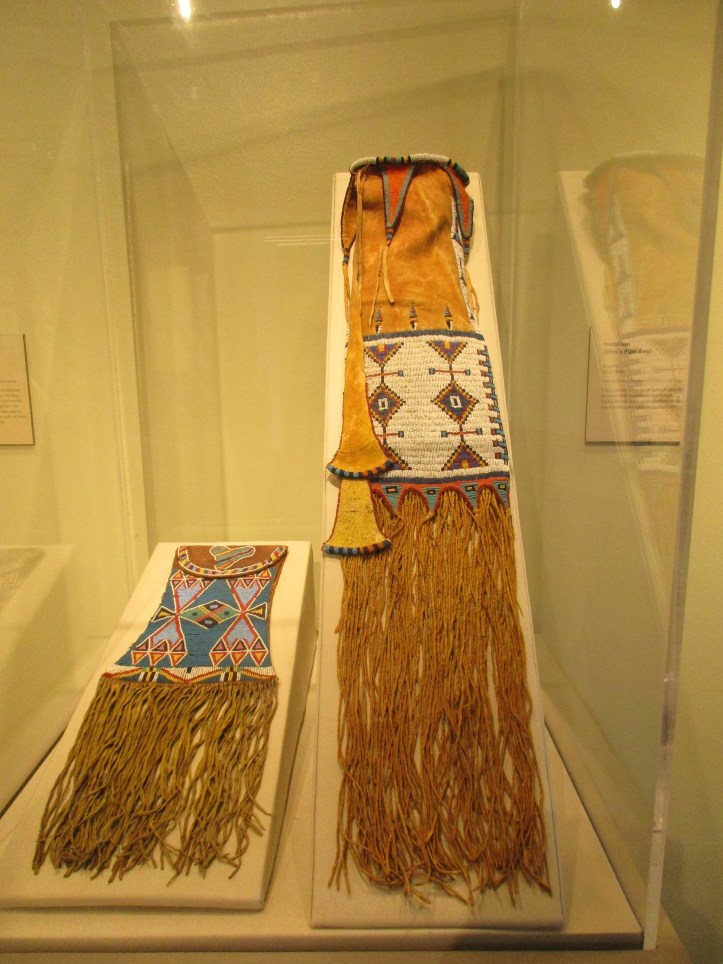
We included lunch at the museum’s restaurant, 39 Restaurant, as seeing the exhibits took all morning. Chef Loretta Oden took the time to share her philosophy of food preparations with us, a real treat.
High on our list of places to visit in Tulsa was Greenwood, known in the early years of the twentieth century as The Black Wall Street. When we lived there, attention was finally being placed on the tragic events in 1921 in this once-prosperous community. Several elderly Tulsa natives shared their memories of what was called a riot then. Now the destruction of the community is called a massacre.
Greenwood was a vibrant town of several thousand people stretching over thirty-five square blocks. It was home to one of the country’s most financially successful African American communities. Late in May 1921, following a false accusation that a young African American man attempted to assault a young white woman, an out-of-control white mob attacked the predominantly black neighborhood of Greenwood. More than 300 residents were killed and more than 1,000 businesses and homes were looted and burned. Estimated damages amounted to “$1.8 million, almost $25 million” dollars today.
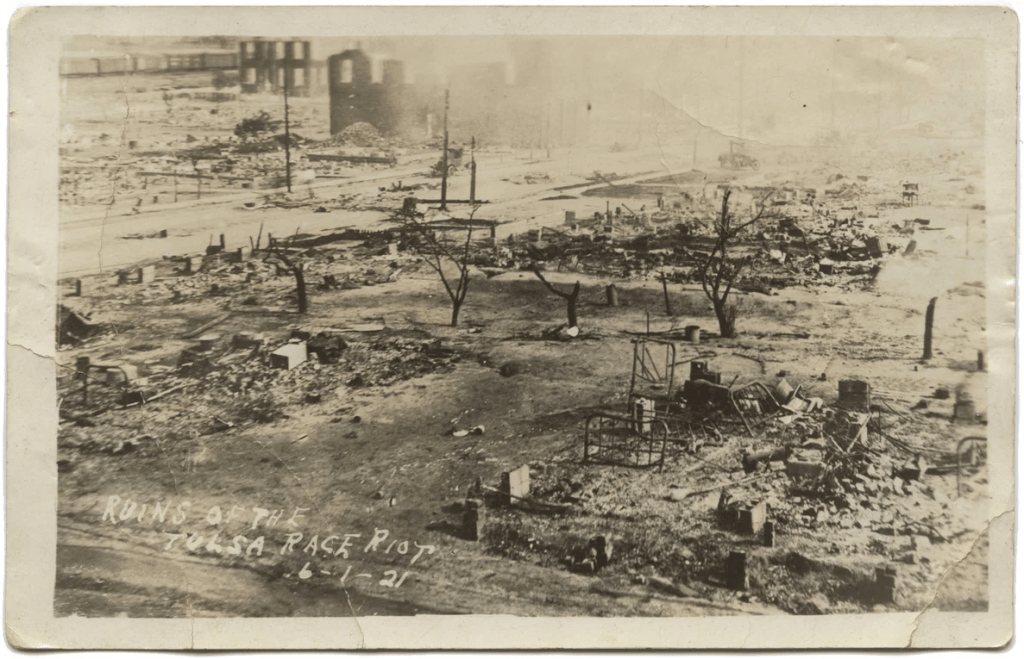
After the massacre, many people who owned homes and businesses with insurance sought reimbursement for their losses. All insurance claims by African Americans were rejected because the insurance did not include coverage for damage caused by a “riot.”
After we left Oklahoma for the sunny climes of South Florida, historians turned their eyes to unearth the real story of Greenwood. Some areas of the community have been restored. Tourists are drawn there to see this no-longer forgotten location important in American history.
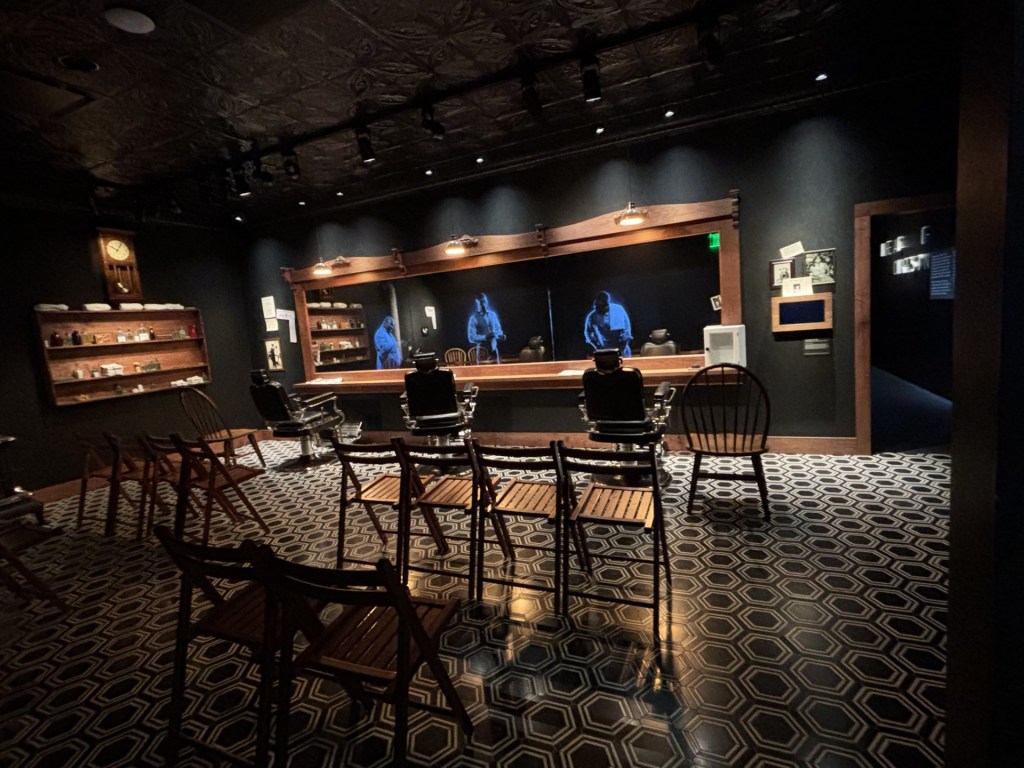
Of course, they come for the Woody Guthrie Center (https://woodyguthriecenter.org/) and the Bob Dylan Center (https://bobdylancenter.com/). We, on the other hand went in search of the history we’d learned of many years ago. Greenwood Rising is a multimedia center in which the stories are effectively told visually (https://www.greenwoodrising.org).
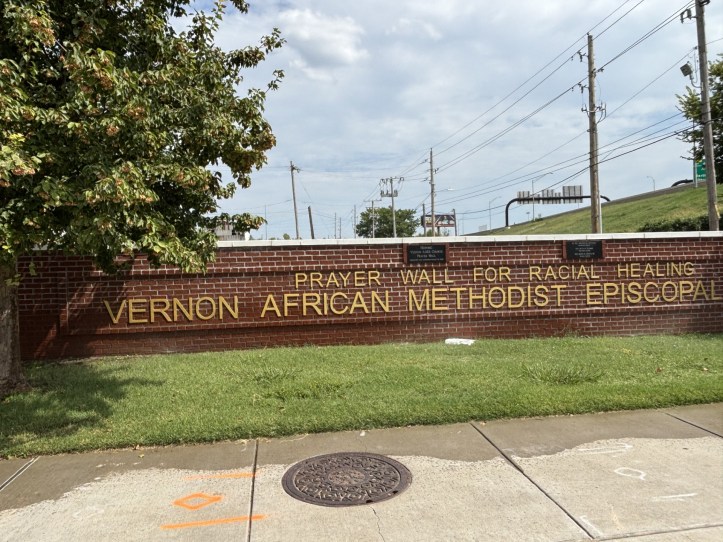
The bottom of Vernon African Methodist Episcopal Church is the only partial structure that survived the Race Massacre and remains today. It was turned into a prayer wall for racial healing. The building was rebuilt using this original foundation. Named for bishop W. T. Vernon, the church was founded in 1905 and has been on this parcel since 1908, making it the longest land-owning institution in Greenwood.
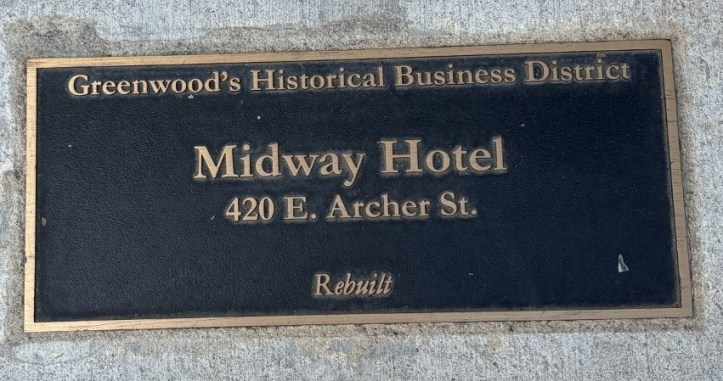
Several hundred small plaques are found in the sidewalks thoughout the Greenwood business district. Each commemorates an African American-owned business destroyed in 1921. Some businesses were rebuilt, some were not.
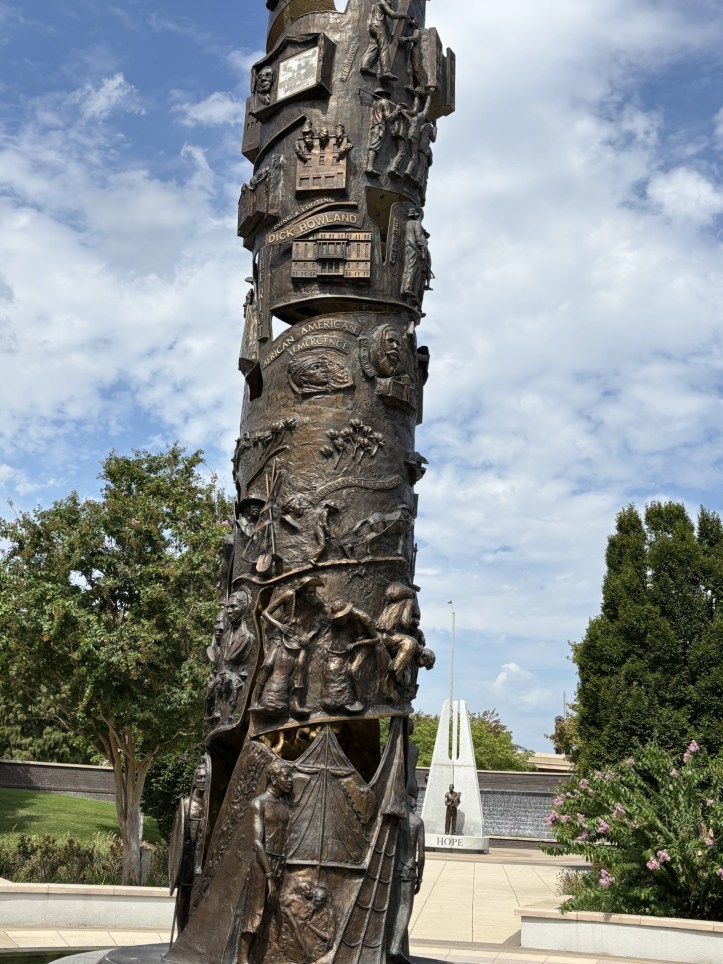
We had to drive around to find the John Hope Franklin Reconciliation Park , named after the renowned historian and civil rights activist, an Oklahoma native (https://www.jhfcenter.org/reconciliation-park). The park features a statue of a young African American girl facing the park, symbolizing hope for the future.
As we drove around, I saw a sculpture that seemed familiar. From Greenwood, we took a little walk to the “Center of the Universe,” a little-known, mysterious acoustic phenomenon. It’s almost an eight-foot diameter circle on a pedestrian overpass at Boston and Archer streets in downtown Tulsa. When you stand in the middle of the circle and speak, the sound is echoed back several times louder than it was made, but only for the individual standing within the circle’s roughly eight-foot diameter.
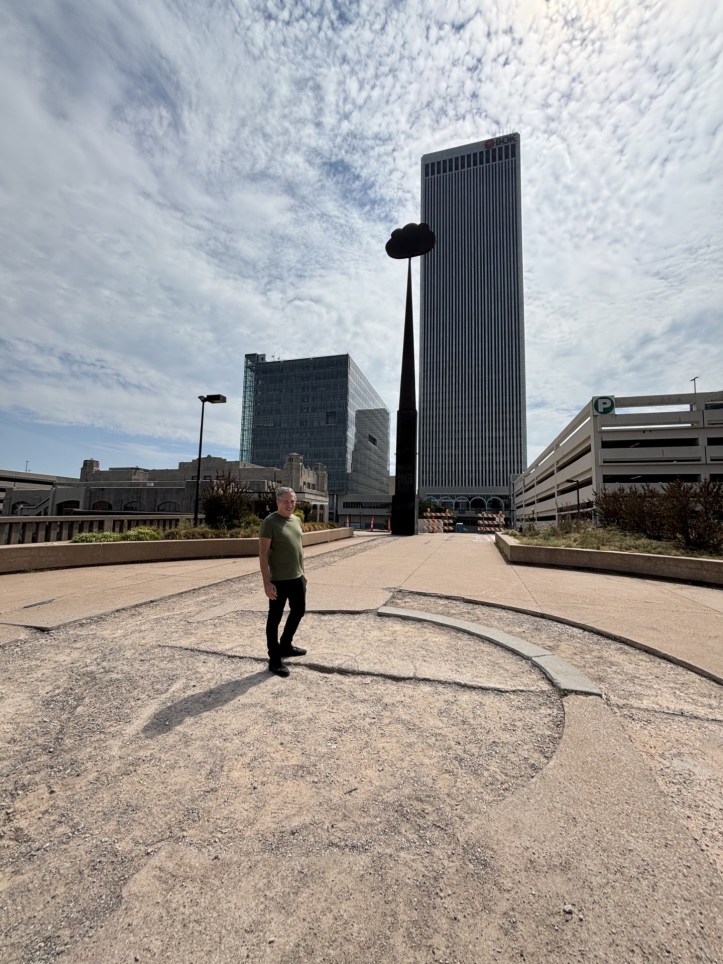
In the 1980s, a fire damaged the bridge. When it was reconstructed in 1983, a brick circular design was added along the expansion joint. And the “Center of the Universe” and its echo/distortion was born.
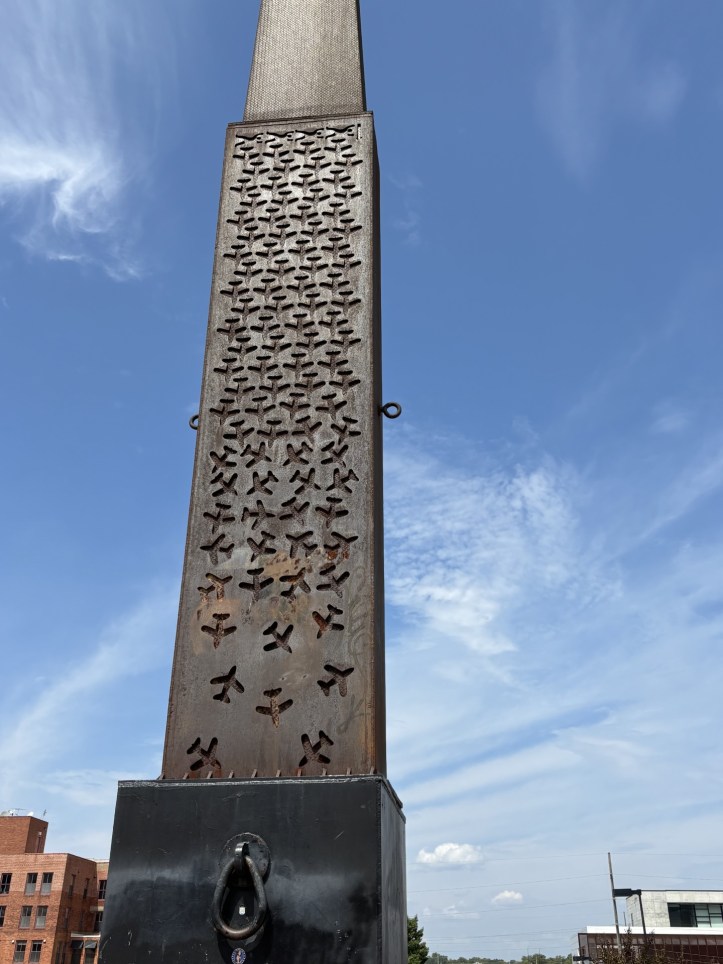
The sculpture I saw several times is Bob Haozous’s “Artificial Cloud,” a 60-foot steel sculpture topped with a cloud shape and … silhouettes of planes and people, overshadows the circle. Steel rings resembling shackles represent the treatment of America’s indigenous people. The location of the bridge, over the train tracks also mark the historic distinction between white and black Tulsa. The images of airplanes and people around the base of the work are symbolic of how humanity allows technology to ruin our relationship with nature.
A brief Art Deco walking tour that I took the other day is what stimulated me to return to last year’s nostalgic trip. Our guide asked where the second largest concentration of Art Deco building in the world, and responded to himself – Tulsa, Oklahoma. Actually the answer is Mumbai. Tulsa, a former oil capital, is mentioned because of the proliferation of Art Deco – something else that Constant Companion and I wanted to revisit. That will have to be Part 2 of Memory Lane.

