The Art Deco walking tour I joined recently sparked my memories of last year’s trip that Constant Companion took me on to mark a milestone birthday to our old stomping grounds in Oklahoma. Well, in just a month, I’ll be another year older.
Our tour guide asked us what was the second most concentration of Art Deco architecture. He told us Tulsa, Oklahoma, crediting the proliferation of downtown buildings to the “cowboys.” Yes, Oklahoma is rich with cowboys, bit it’s the oilmen who were responsible for the amazing collection of Art Deco architecture in downtown Tulsa. Their names adorn many of the structures.
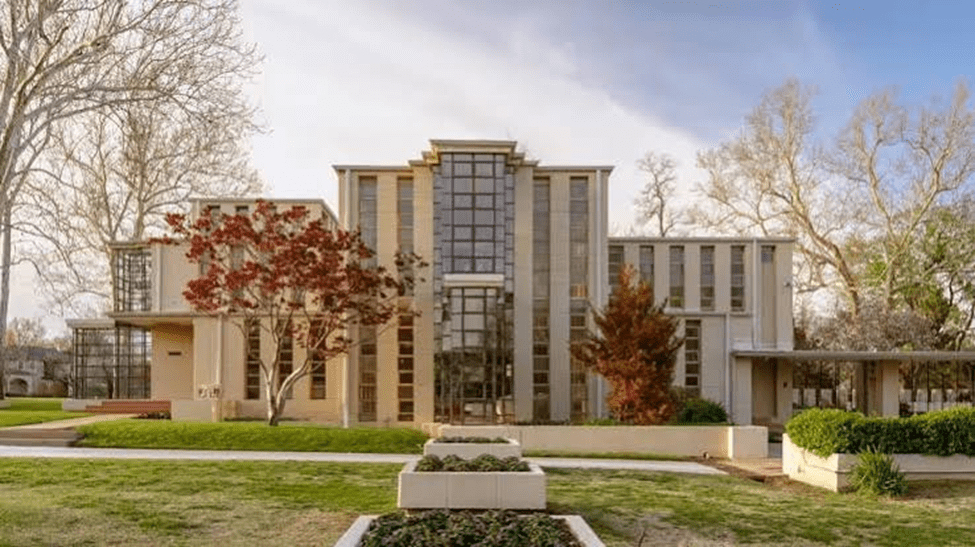
What our guide did not know is that around a few corners in our former neighborhood is a 1929 Frank Lloyd Wright home. It was built for Wright’s cousin, Tulsa Tribune publisher Richard Lloyd Jones. I often enjoyed driving the winding, tree-lined streets to admire this architectural wonder (https://www.tulsa.tours/westhope).
The historic Central Business District of Tulsa offers a meaningful account of the downtown’s early years and the opulence and wealth of the oil barons of the ’20s. Their infatuation with Art Deco produced some of the finest examples anywhere of Zigzag skyscrapers, the Streamline style of the ’30s, and the Classical style of the Great Depression and the New Deal. Tulsa developers and builders have thankfully maintained many of the city’s architectural treasures. They stand beside newer structures, including the 52-story Bank of Oklahoma Tower designed by Minoru Yamasaki.
The following are just a few of the rich collection of Tulsa’s Art Deco.
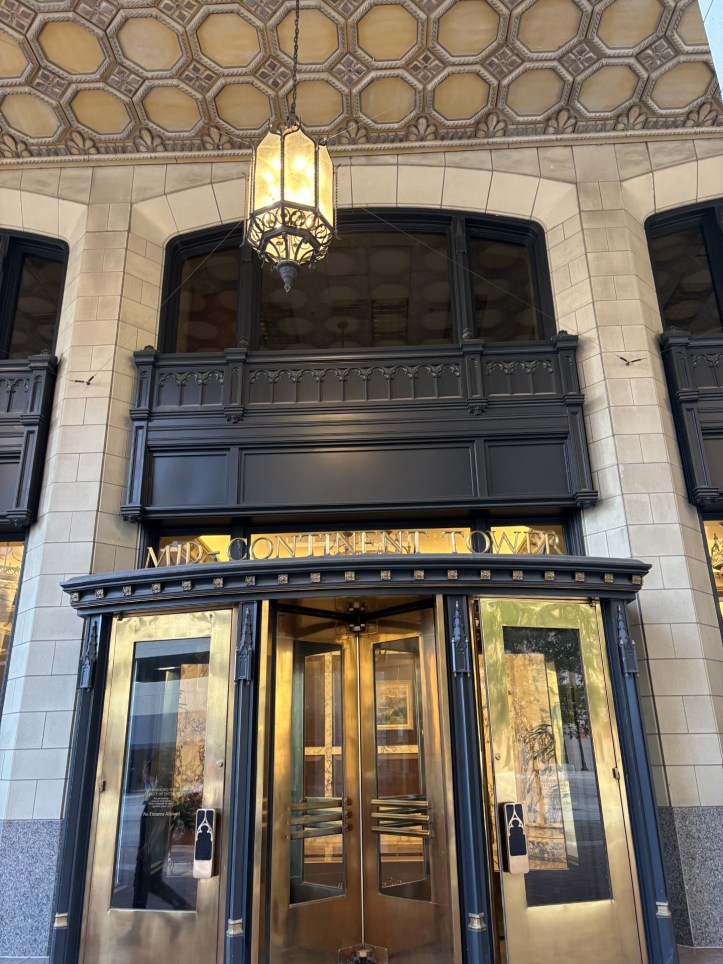
Tulsa’s first skyscraper, the 16-story Cosden (Mid-Continent) Building (1918), was one of the earlier reinforced concrete office structures in the United States and the tallest west of the Mississippi. Oilman Josh Cosden made and lost two fortunes; his million-dollar building symbolized oil boom attitudes and Tulsa’s spirit of flamboyant growth. The lavish marble lobby contains Tulsa’s skyline in stained glass on the east wall and beautiful chandeliers and marble walls. The facade is a Venetian Gothic terra Cotta veneer.
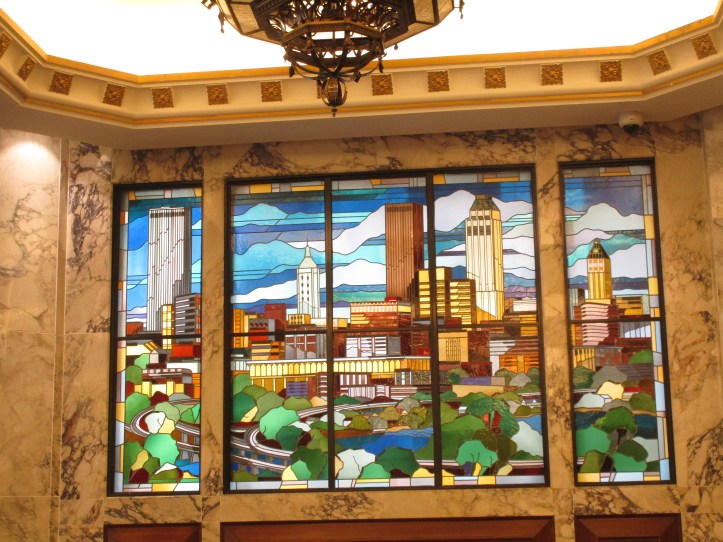
Cosden (Mid-Continent) Building), lobby
Oilman Harry Sinclair had the Sinclair Building (1919) built for the original headquarters of the billion-dollar oil company he founded. Of course I did not get to see several of its unique features, including a secret door in one of the elevators through which Sinclair could then enter a secret passageway leading to his penthouse.
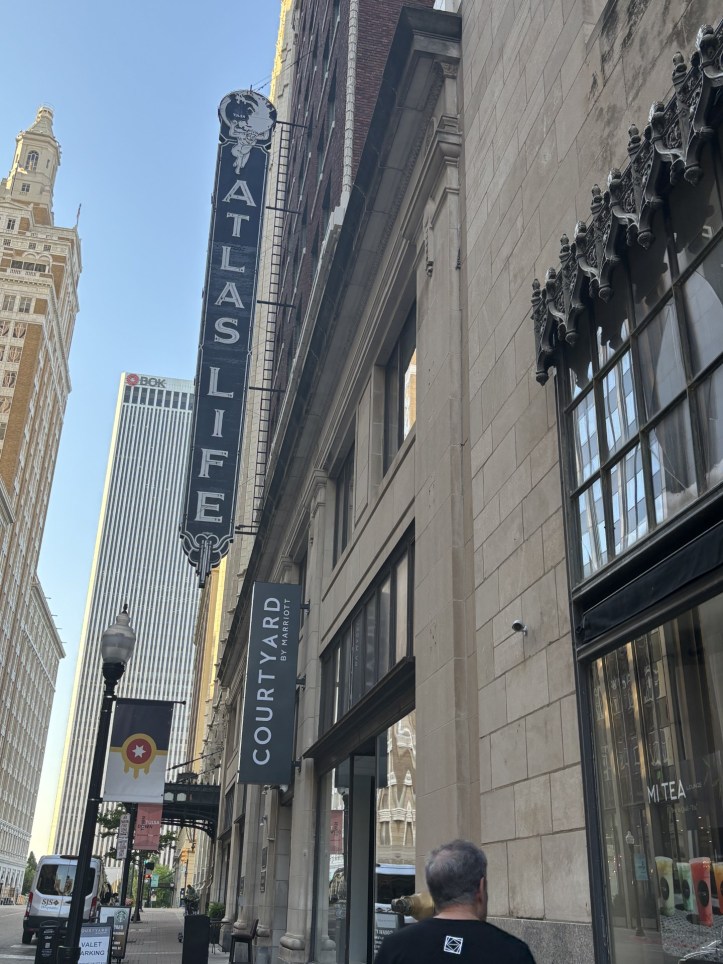
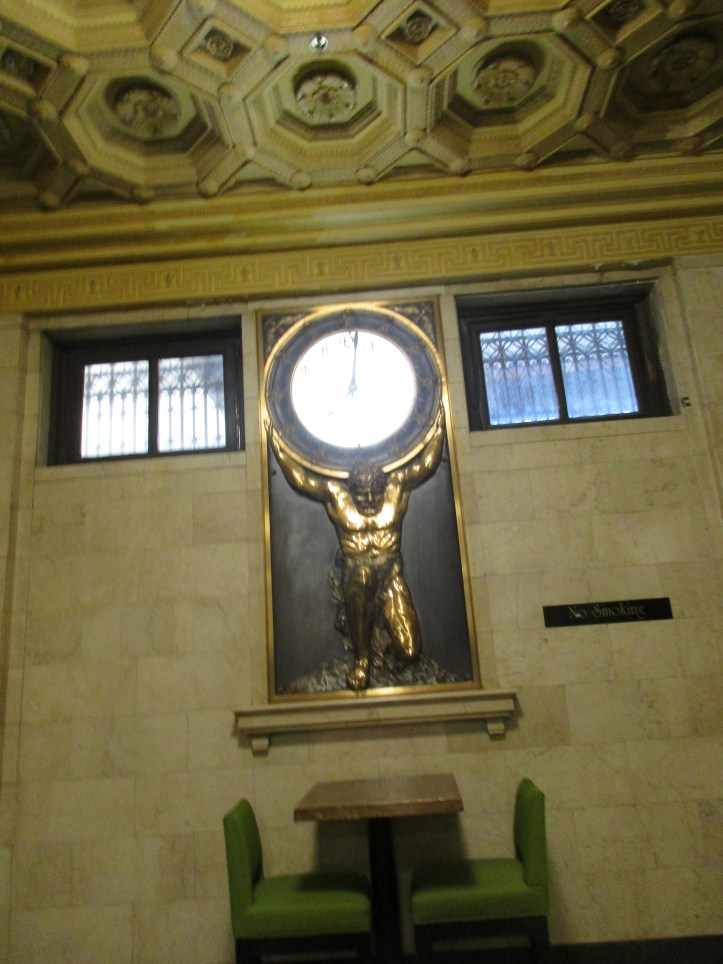
The Atlas Life Building’s (1922) pink and green vertical neon sign is an iconic Tulsa landmark. The interior lobby and arcade, with its intricate ceiling has often featured numerous shops and restaurants. Today, the building is home to a hotel.
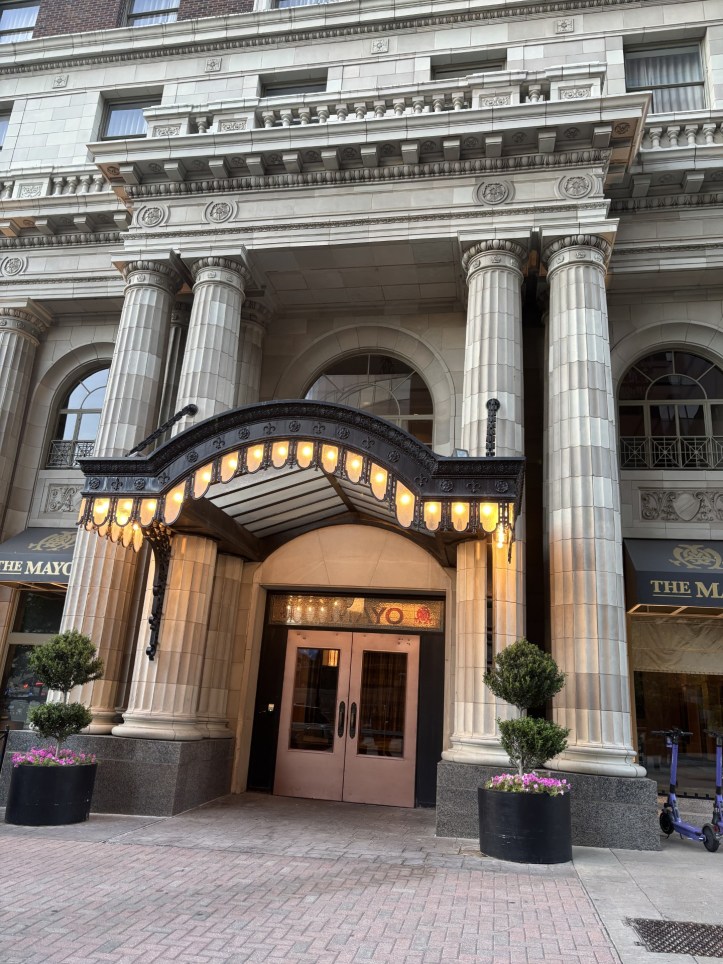
When the Mayo Hotel* (1925) opened it was the tallest building in Oklahoma. It was designed in “Sullivanesque” style and patterned after the Plaza in New York. The style of ornamentation on the Mayo is a mix of classical design elements including a base of two story Doric columns fronting a façade of elegant terra cotta balconies and other details. Notable guests included Charlie Chaplin, Mae West, Babe Ruth, Harry Truman, John F. Kennedy, and more.
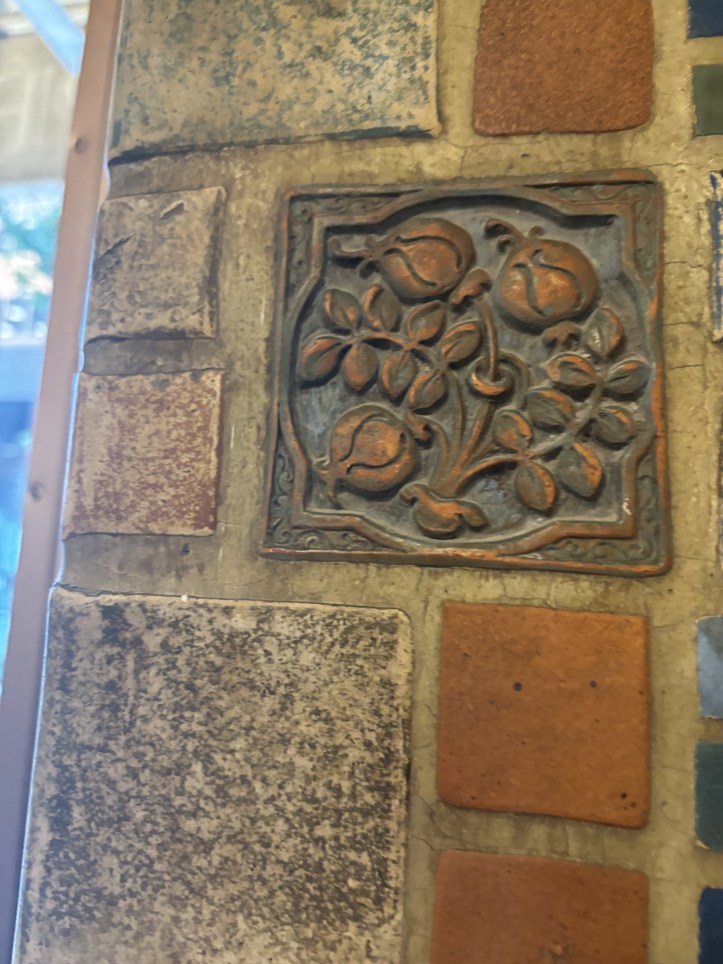
*Note: If you put this amazing building on your itinerary, go to the informal “museum” on the second floor to see historic photos. Also walk through the old bar and look at the tiles on the walls. Thanks to the bartender who told us to find the museum.
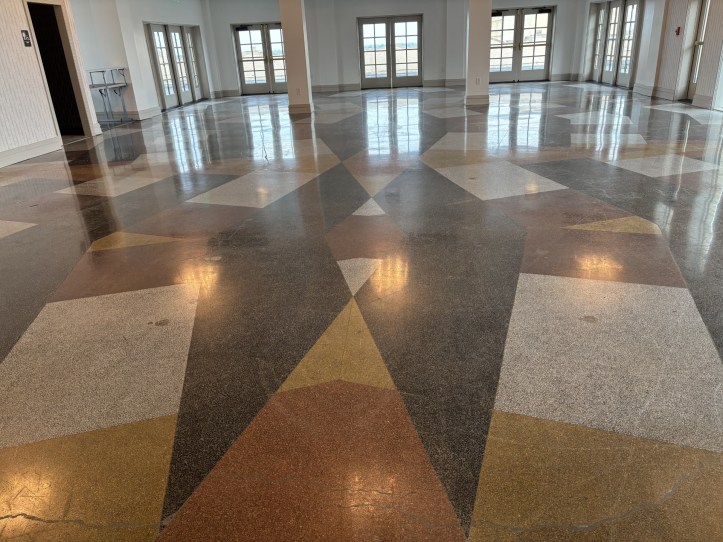
The Tulsa Club Building (1927) The Tulsa Club a joint project with the Tulsa Chamber of Commerce. It fell into serious disrepair, caught fire, and many feared this Art Deco treasure would be lost. It is now a hotel with a modern lobby. The rooms reflect the terrazzo floors exemplary of Art Deco architecture stunning Art Deco, Grand Ballroom on the top floors has been restored.
“Queen of the Tulsa Skyline,” the Philtower (1927), was built by Waite Phillips, financier and philanthropist; he donated the building to the Boy Scouts to endow a ranch in New Mexico. It is in Gothic Revival style, rather than Art Deco replete with fanciful gargoyles on the exterior. Its striking pyramidal roof in vibrant green, red and gold tiles, still stands as a Tulsa landmark.
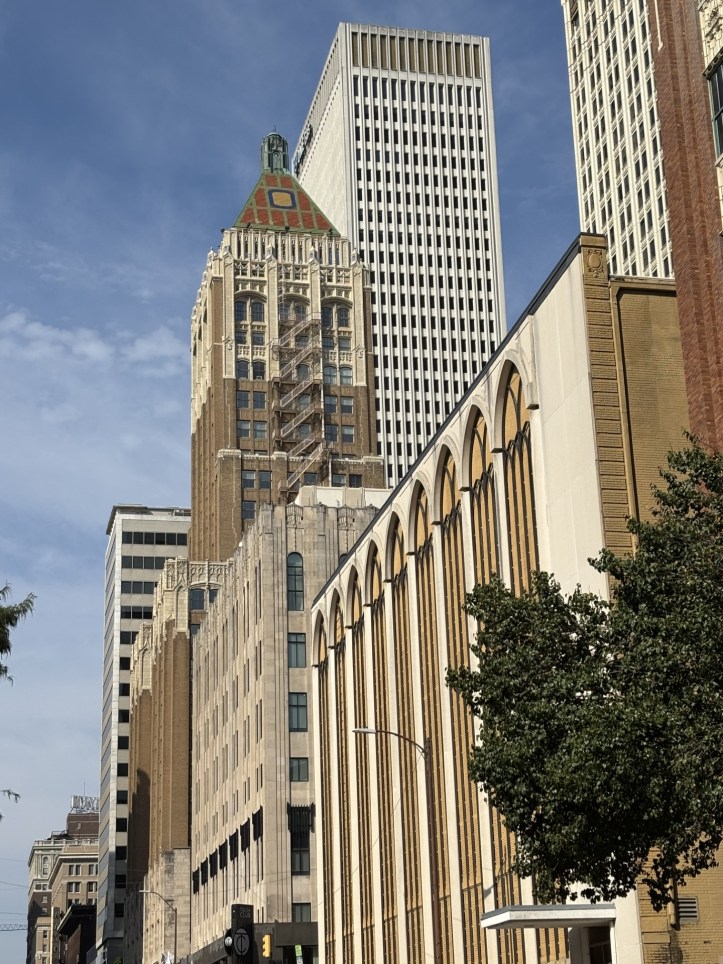
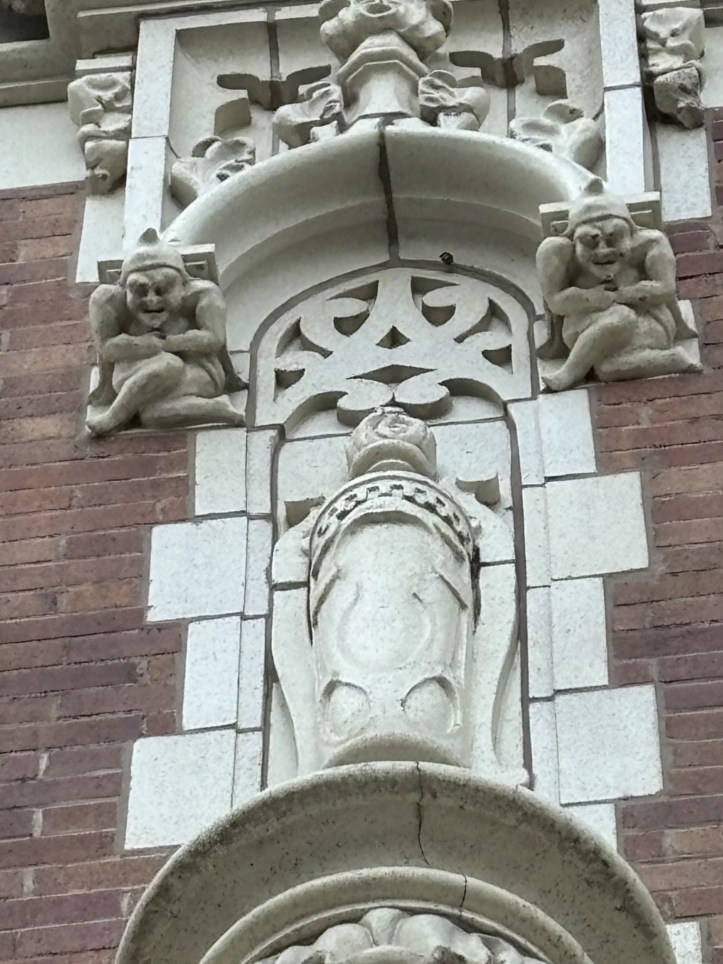
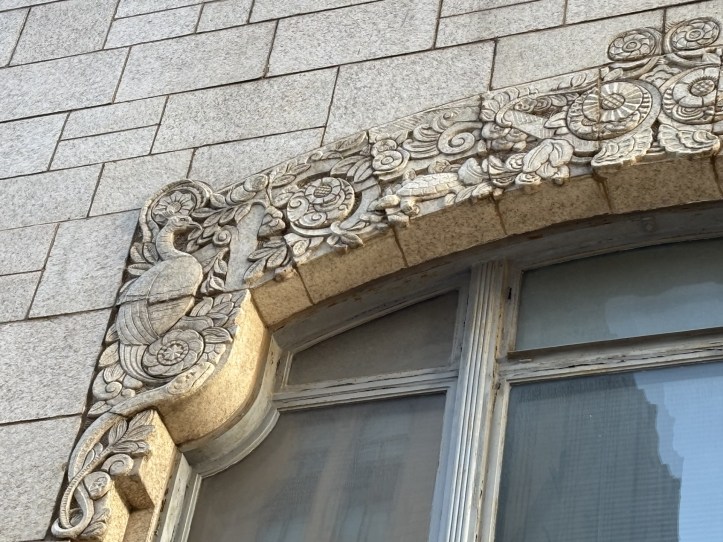
The Philcade (1930) was built by Waite Phillips as a sister building to the Philtower. It contains stylized foliage above the ground floor windows conceal birds, reptiles and mammals. The ornate lobby, designed in the shape of a “T” for Tulsa, has attracted national attention for its evident blend of Art Deco and Art Nouveau styles.
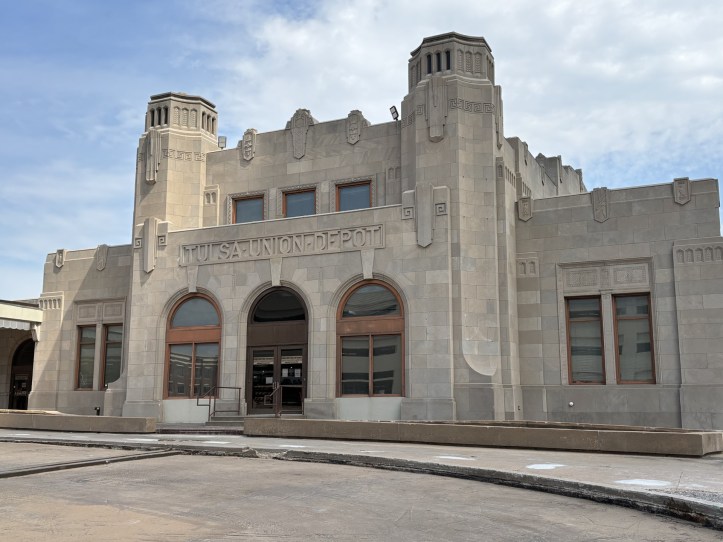
The Tulsa Union Depot (1931) is another impressive example of Art Deco architecture and reveals the inspiration of machinery as a theme for the exterior geometric designs. The Union Depot was built as a joint venture by three railroads during the Great Depression. Passenger trains continued to stop at the landmark until 1967. It’s now returned to life with alternative usage.
And then we just stumbled on the old Public Market building (1930). Another beauty with beautiful colored tile work.
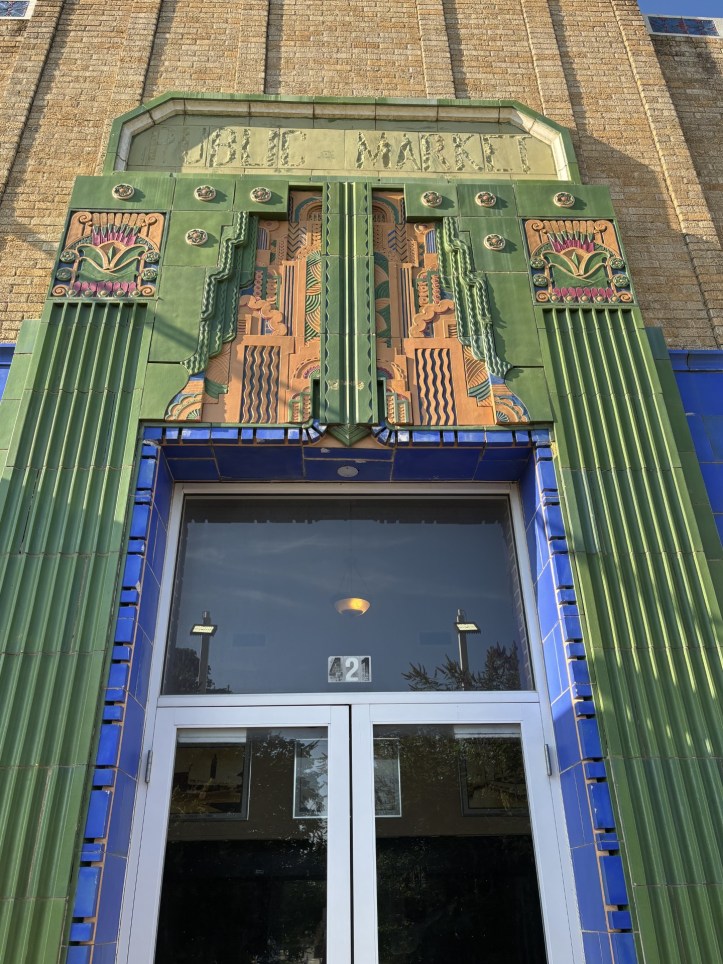
The architecture of at least two churches in downtown Tulsa is notable. In 1938, it was considered Oklahoma’s largest food supermarket.
Trinity Episcopal Church (1926)) is an excellent example of gothic revival architecture. The garden courtyard is a particularly favored feature. Proportions emphasize the soaring vertical lines reminiscent of many European Gothic churches. An interesting feature is a stained glass window featuring evilworld leaders of the 20th century, including Adolph Hitler.
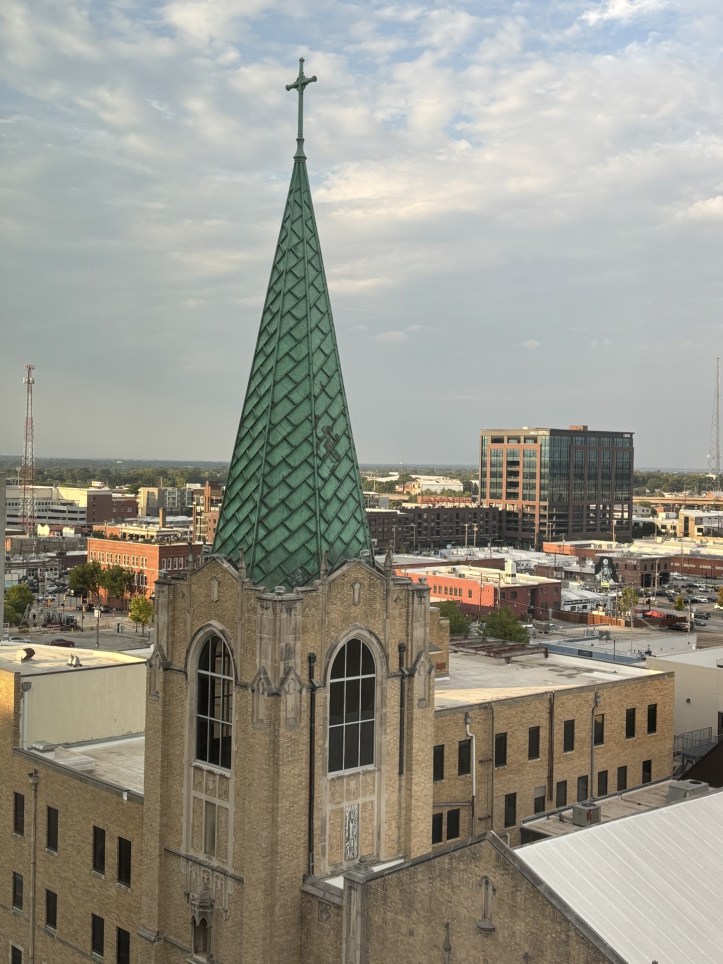
I remember that The Boston Avenue Methodist Church (1924-29) was extolled as a beloved gem of the city.
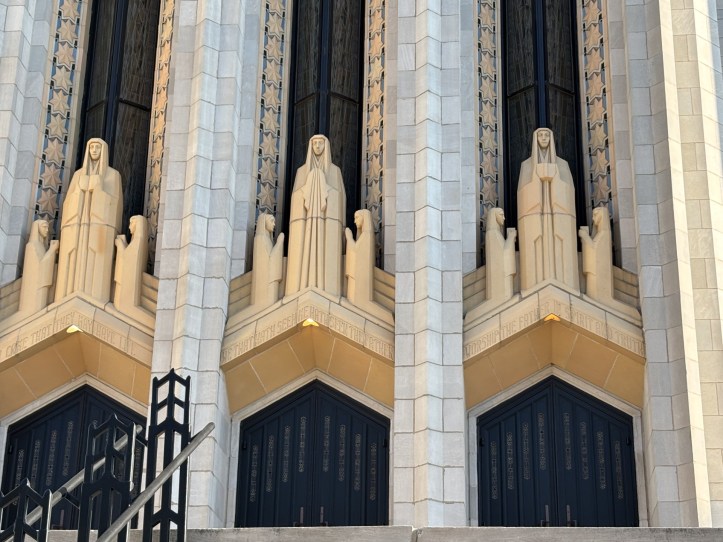
It is important example of Art Deco that was rarely seen in religious buildings. It was designed by a team: architect Bruce Goff and Adah Robinson. The Boston Avenue Church also exemplifies the era’s trend toward using new materials, in this case steel, which enabled the building of the church’s four-story “skyscraper” tower. Also important are the exterior’s terra-cotta sculptures, executed by artist Robert Garrison of Denver.
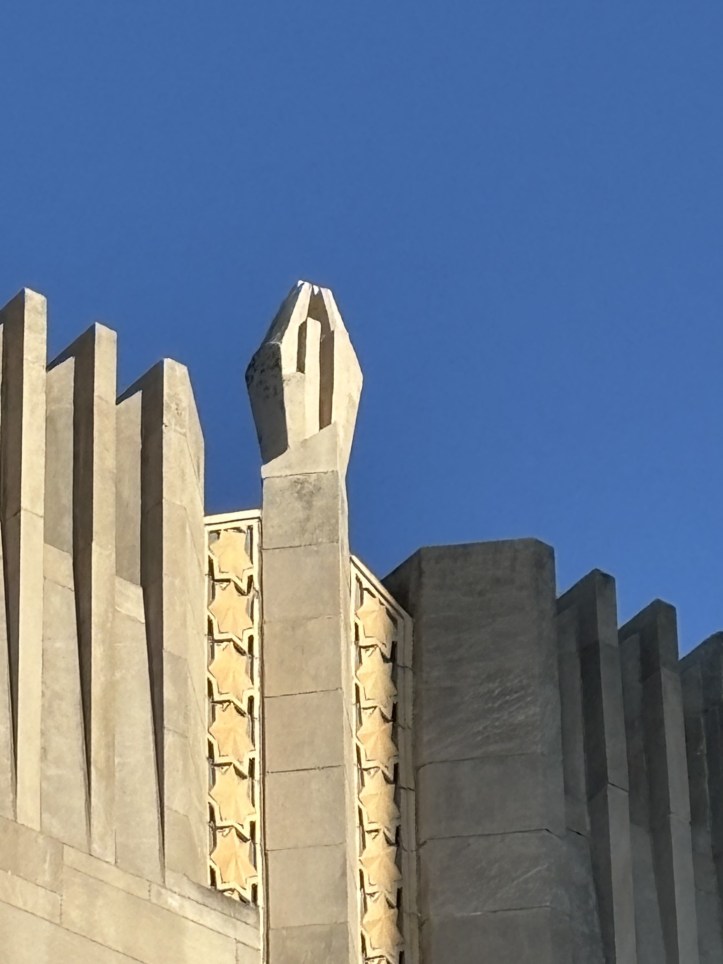
Approximately one hundred sets of “praying hands,” appear on the parapet and the four-story tower. Motifs used in window glass and in interior wood carving and mosaic include coreopsis and red-hot poker (tritoma), both native Oklahoma plants.
Writing this post reminds a Bruce Goff house close to our home in Norman, the Bavinger House (1955). It was known vernacularly as the “Teepee” house because of its circular floor pattern. I attended meetings in this building twice and loved it. Like the Boston Avenue Methodist, it was designed by Bruce Goff.
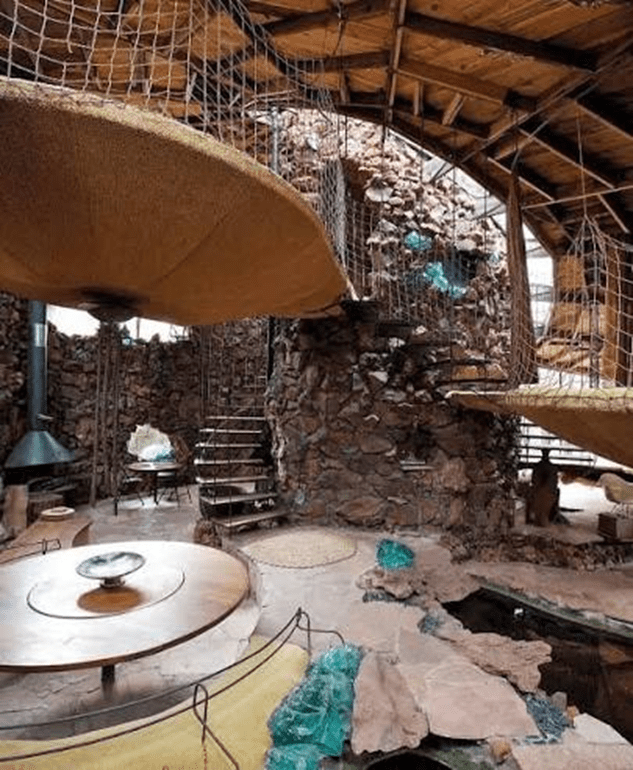
The walls were made of locally quarried “ironstone,” alternating intermittently with large blue pieces of glass cullet giving an organic appearance. The exterior stone walls seem to grow out of the landscape and surround the house, adding to its connection with the earth. Unfortunately, this amazing home was demolished in 2016.
And with this, some of my memories of last year’s trip “home” have been put down. There is, as you can imagine, much, much more. Maybe a return visit if warranted, before the next life milestone.
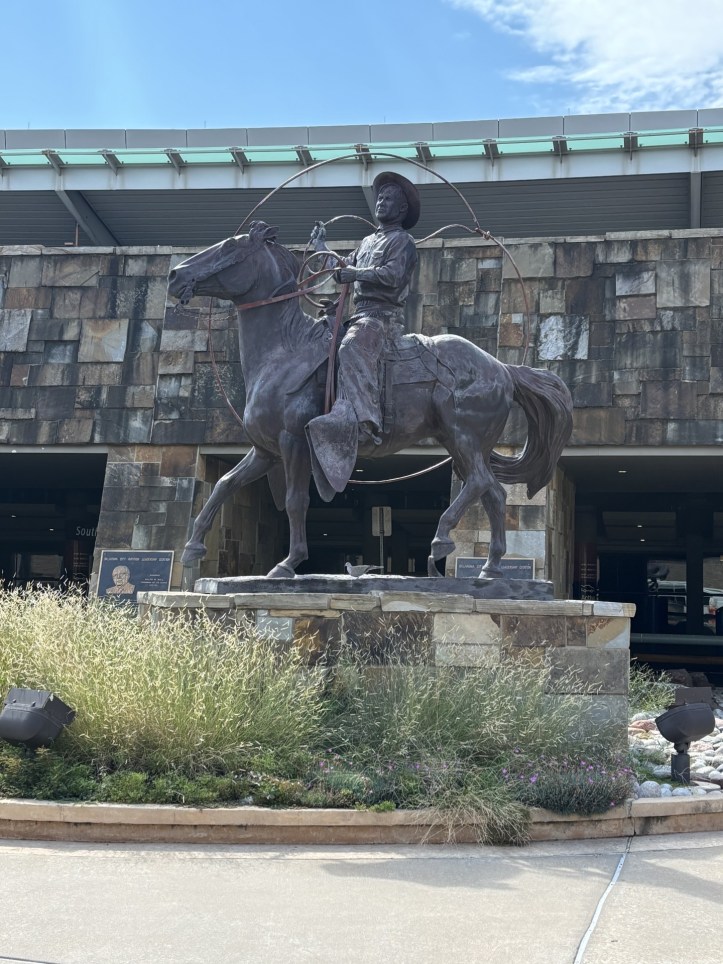
I see another Oklahoma stateman was on hand to thank us for coming. How could we leave without saying “howdy” to Will Rogers?


I didn’t realize there was so much art deco architecture in Oklahoma. That Public Market entrance facade is WOW!!!!
LikeLike
Amazing trip and amazing things to see. The Cosden Building reminds me a bit of the DuPont Building in Downtown Miami.
LikeLike