It’s Christmas Day. There’s been a strong relationship between Jews and Chinese living in America since the earliest 20th century. Christmas Day is a day when non-Christians can join together when their friends celebrate the holiday. It’s a natural match. And what is better for many Jews, than a Chinese restaurant.
By the 1920s, Chinese restaurants were common, catering to diverse clientele including Jewish immigrants seeking new dining experiences. Since at least the early 20th century Chinese restaurant owners have advertised in Jewish newspapers. Jews were criticized for eating in non-kosher restaurants, especially Chinese restaurants in 1988, the American Hebrew weekly.
This advertisement for Tangerine Gardens in Flatbush appeared in the Yiddish Daily Forward on December 2, 1922.
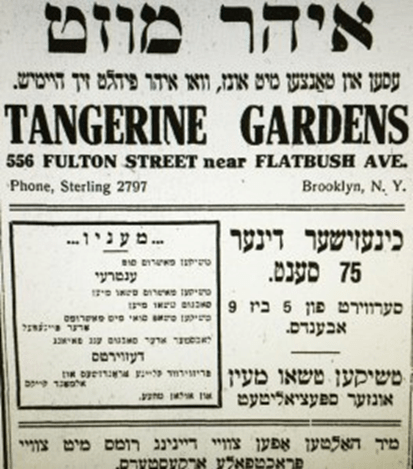
Diners were invited to “Eat and dance with us, where you’ll feel at home.” The Chinese dinner for 75 cents featured chicken (mushroom) chow mein, subgum chow mein with miniature preserved oranges and almond cakes for dessert and oolong tea.
An article in the Yiddish paper Der Tog, a few years later in 1928, addressed “The War Between Chop Suey and Gefilte Fish.” Chop suey, an Americanized Chinese dish popular with non-Chinese used neither pork nor dairy; it was a convenient, “hidden” way for Jews to eat out without violating kosher laws. Jewish women and entrepreneurs even collaborated with Chinese food purveyors to make Chinese food kosher, creating dishes like wontons (resembling kreplach) and sweet-and-sour dishes that fit Jewish dietary laws. Traditions versus Americanization eventually led to the fusion of kosher Chinese cuisine.
Another Yiddish article appeared in the Forverts (The Forward) on February 12, 1928, by a writer named Zimel, who discussed the popularity of Chinese food for Americans, especially Jews. The Jews adopted Chinese cuisine as a way to signify Americanization and upward mobility, finding it a non-Christian, affordable “fancy” alternative to traditional Jewish food. Some Yiddish writers joked about losing their culinary roots in soy sauce.
*Addendum … I just found this great photo of Ocean Drive at Biscayne Street, today’s First Street, looking north. Note the sign for Chop Suey, 1927.
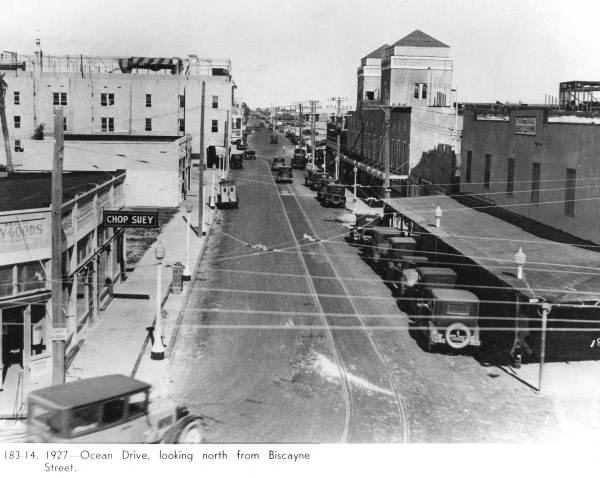
Chinese restaurants started appearing in what is now South Beach, Miami Beach’s original Jewish neighborhood as early as 1936. Nan Young American & Chinese Restaurant opened at 5th and Washington in January 1936 above the 5th Street Gym, which opened in 1950. Their specialties were egg rolls, chop suey, and chow mein. Sun Hoy Restaurant at 217 Fifth Street advertised in the Jewish Floridian in April, 1939.
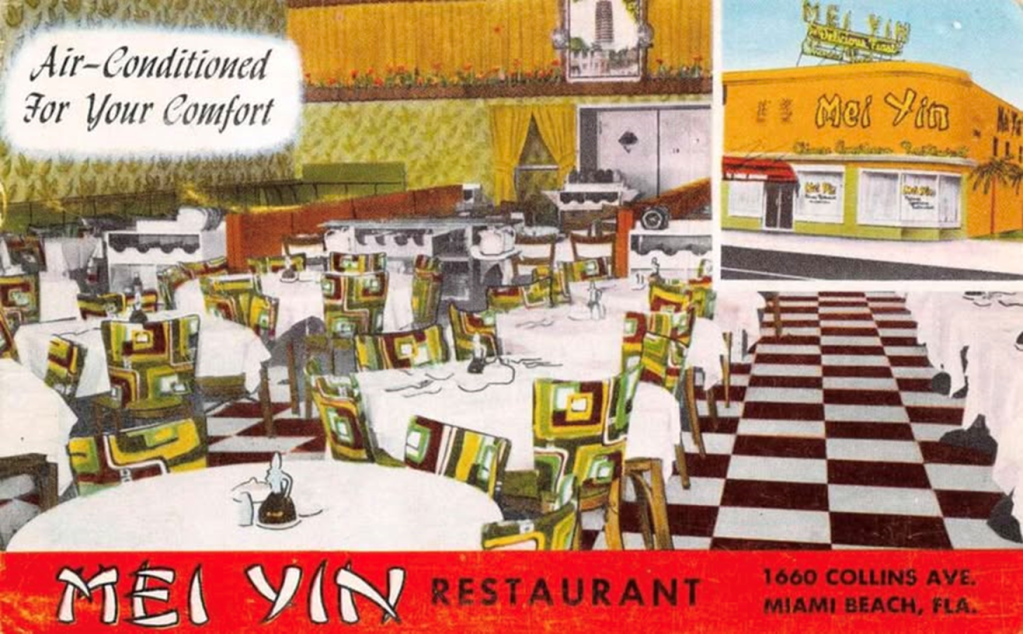
Mei Yin Chinese-American Restaurant opened in 1941 in an Art Deco building designed by Albert Annisat 16th and Washington .
The Paddock Club (1930-1954) at 685 Washington Avenue advertised “Chinese Food is our Specialty.”
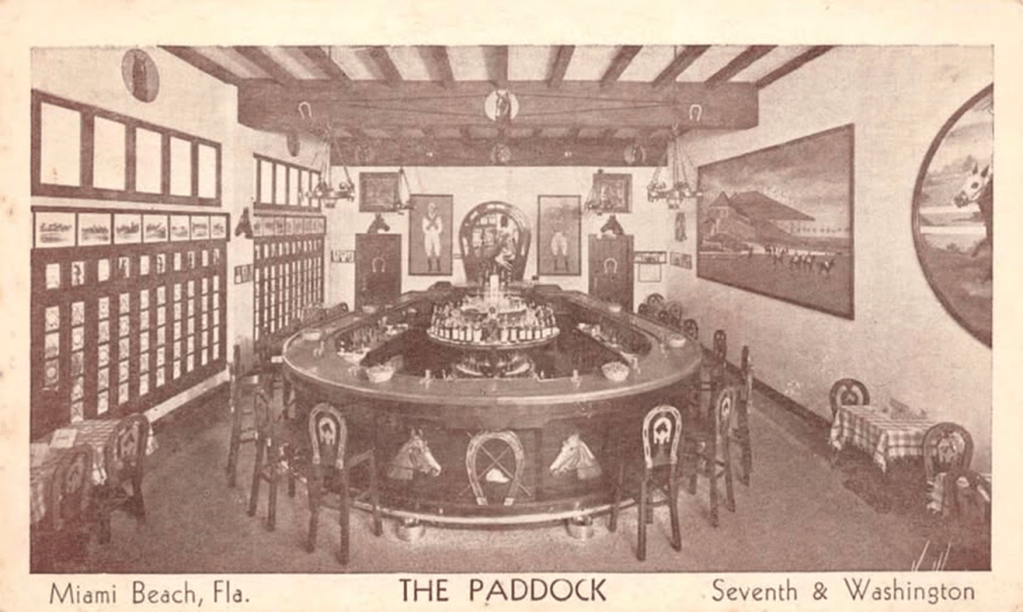
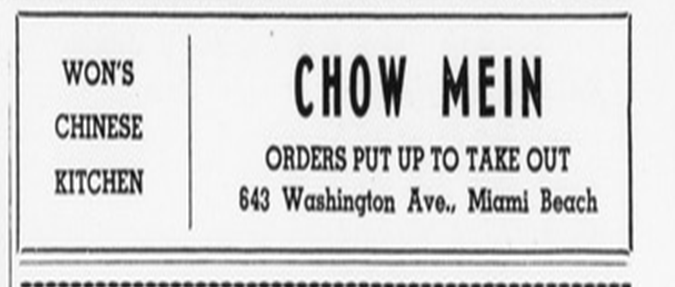
And by May 1948, Won’s Chinese Kitchen at 643 Washington Avenue advertised Chow Mein.
Two Chinese restaurants in Miami Beach stand out. In 1939, Ruby Foo’s of Boston fame, opened a restaurant and club on Dade Blvd at West Avenue, serving an authentic Chinese dinner for $1.50.

Ruby Foo, born in California (1904-1950), was a rare example of a Chinese woman who defied convention by creating a chain of stylish, nightclub-style Chinese restaurants that appealed to non-Chinese customers.
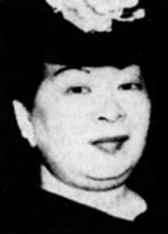
She moved to Boston in the early 20s and opened Ruby Foo’s “Den” on Hudson Street in 1929, said to be the first Chinese restaurant to successfully cater to non-Chinese clientele. During the 1930s, with the end of Prohibition, Ruby Foo’s Den grew into a popular nightclub and expanded into New York, Miami, Washington, and Providence.
Moy Lee (1885-2012), joined her husband in Seattle in 1937; they moved to New York City where they opened their restaurant, “Sunrise,” on Kings Highway in Brooklyn (1959-1962).
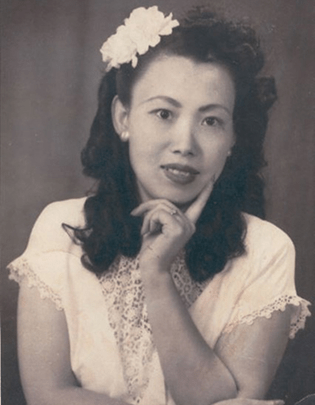
Almost twenty years later, in 1962, the House of Moy Lee opened at 634 Collins Avenue; it soon became one of the most popular restaurants in South Florida.
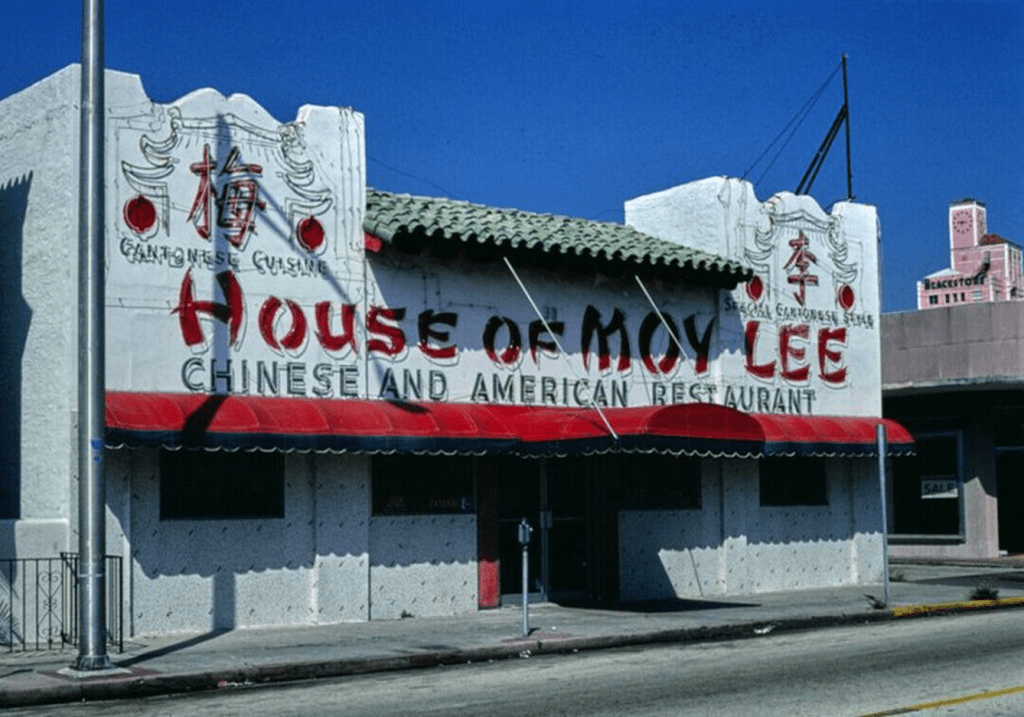
A scene from the 1974 film “Lenny” about the life of comedian Lenny Bruce was filmed there. In 1975, the Lees moved to Wilton Manors and opened Moy Lee Chinese Restaurant on Federal Highway. In 1977 she and her husband sold the Miami Beach location and opened a restaurant in Fort Lauderdale.
And that leaves us today, Christmas Day, when with Constant Companion and Daughter, celebrated Christmas with a lovely lunch of soup and dumplings at Yue, a relatively new Chinese restaurant in the heart of South Beach.


Wouldn’t you know, the majority of today’s diners were Asian (many believe this is the sign of a good Asian restaurant), a Jewish acquaintance, and a few others? Daughter chided me because my response to wishes for “A Merry Christmas” is simply “And a Happy New Year.”
A happy, healthy, prosperous, and peaceful New Year.
 Creatively Annette
ain’t the truth 😂Myrna
LikeLike