To tell the truth, I’ve lost track of what day it is. Luckily, I’ve not yet hit the state of art fatigue. I feel like I’ve just scratched the surface and want to see more. My feet can even handle more!
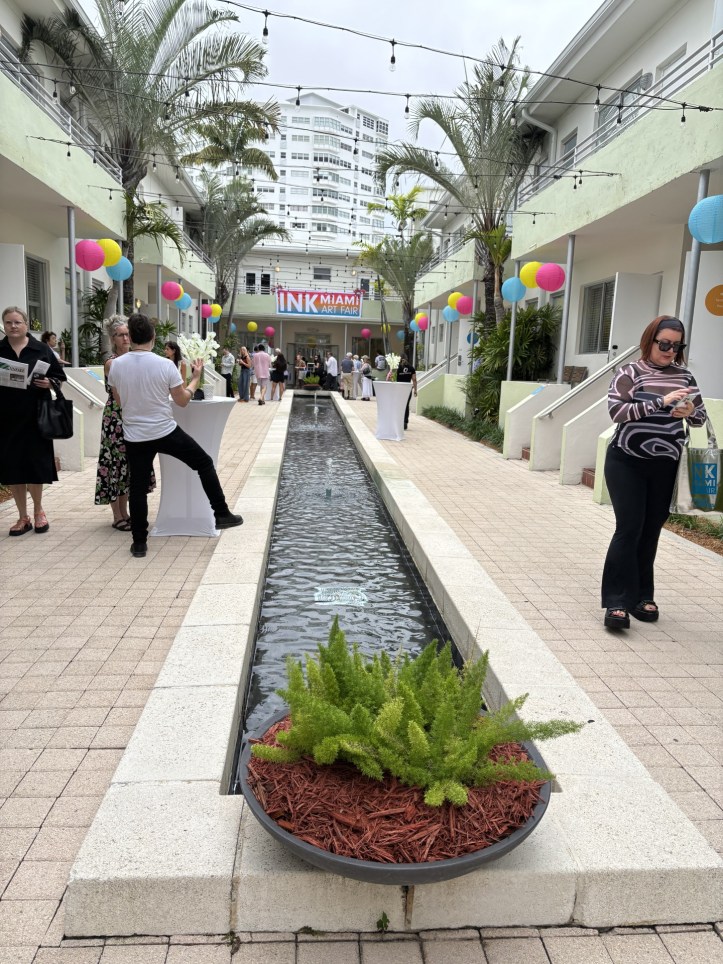
The past two days seem to have merged together; we covered a fair amount of ground seeing art and some of the city, too. One venue was an annual favorite, Ink. This fair sponsored by the International Fine Print Dealers Association takes over the suites of the historic Dorchester Hotel (other hotels in South Beach are likewise commandeered). Exhibitors represent publishers of works on paper, mostly.
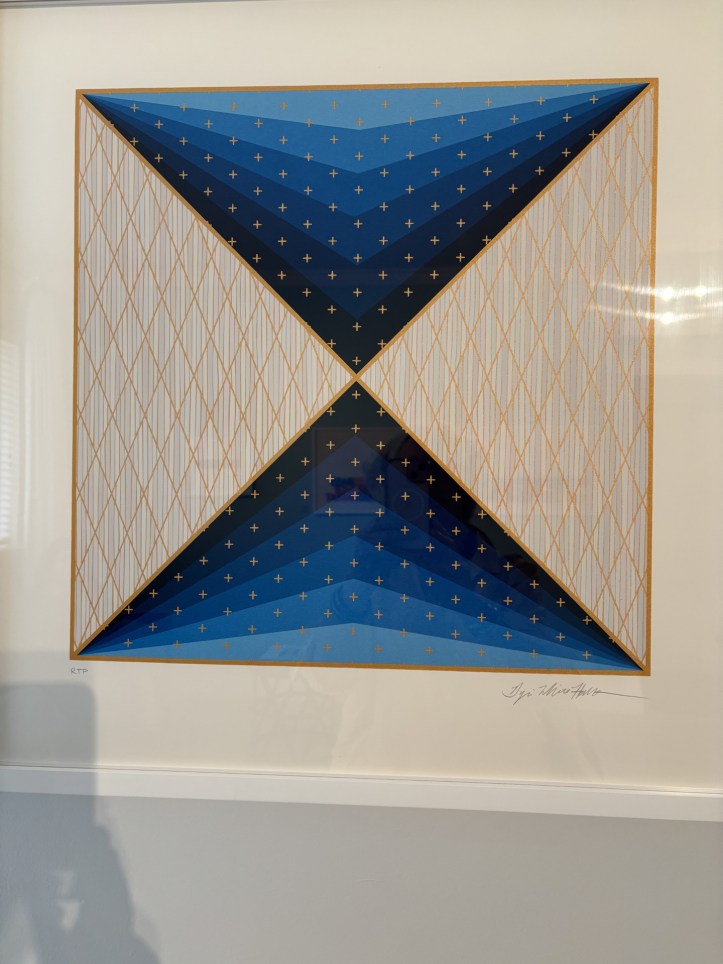
Several artists stood out from all that was on display. Dyani White Hawk Polk (Sičáŋǧu Lakota) is a multidisciplinary artist based in Minneapolis. Her prints foreground Lakota forms and motifs, and according to a gallerist, she challenges prevailing histories and practices surrounding abstract art. This is the inscrutable language I dislike in exhibition labels; what evidence in her work shows this? I simply see cosmologies represented on paper.
Not all of the works in Ink are works on paper, but works with paper.
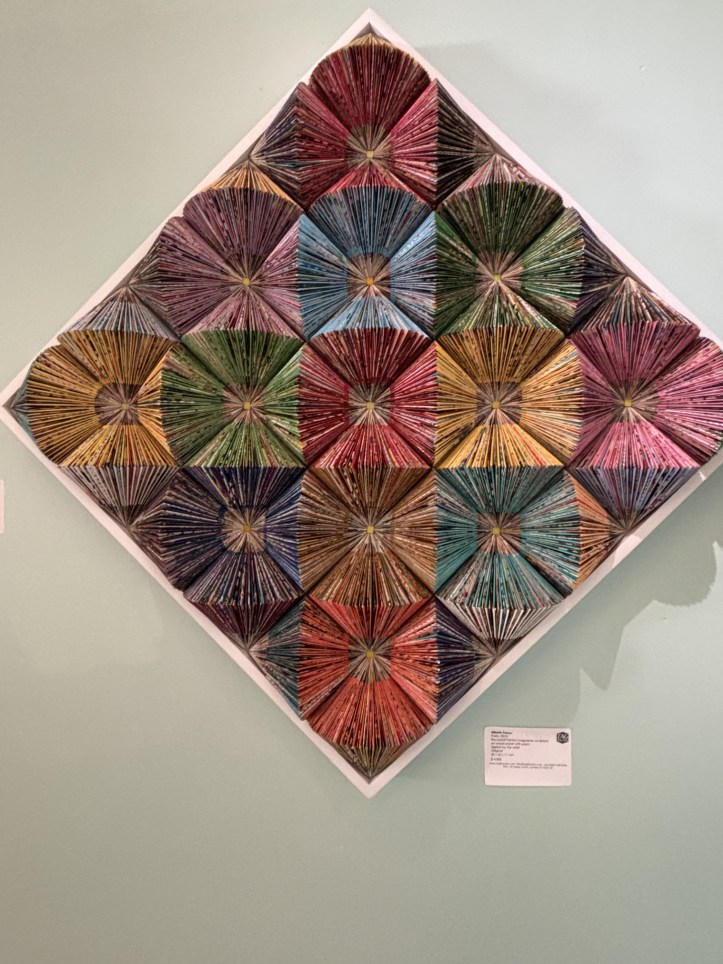
Alberto Fusco, a London-based Italian artist, transforms discarded magazines into intricate three-dimensional works. Flat pages are repurposed as he meticulously folds and layers them into geometric compositions.
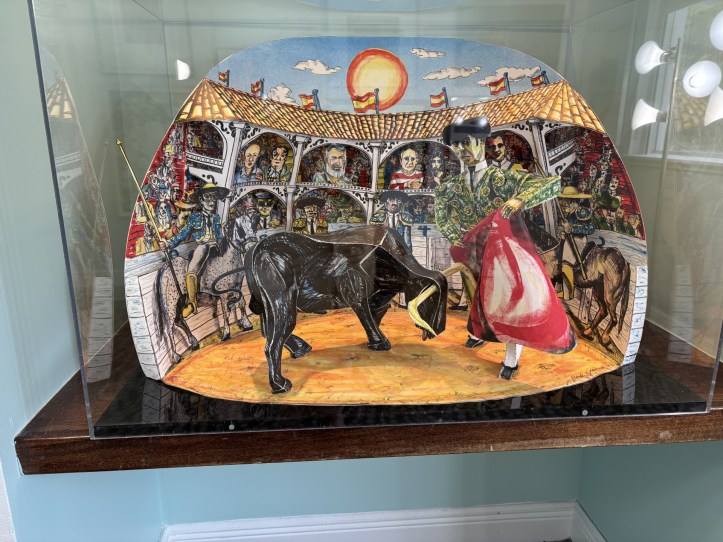
And American artist Red Grooms, Los Aficonados, an only bring a smile to your face.
Sardines were the themes of two artists. This school of fish is by Greek artist, Gianna Tholi.
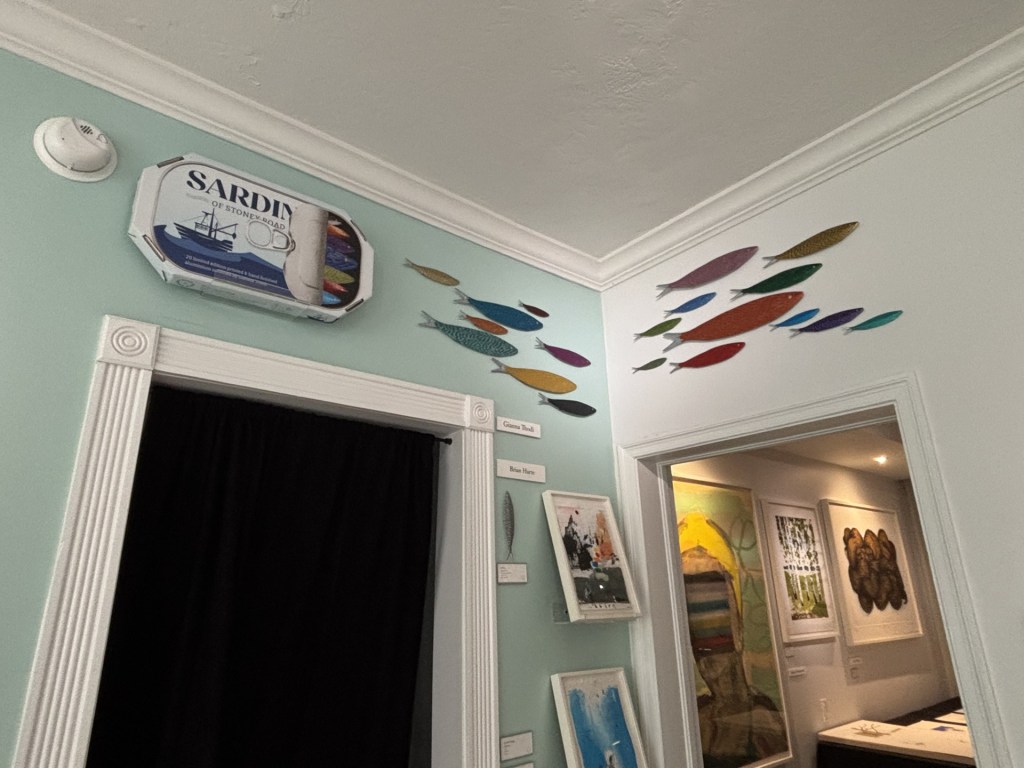
French artist Ortaire de Coupigny uses intense pigments to create his unique painted fish, which he then suspends in paraffin and covers with transparent resin. They are then placed in sardine cans.
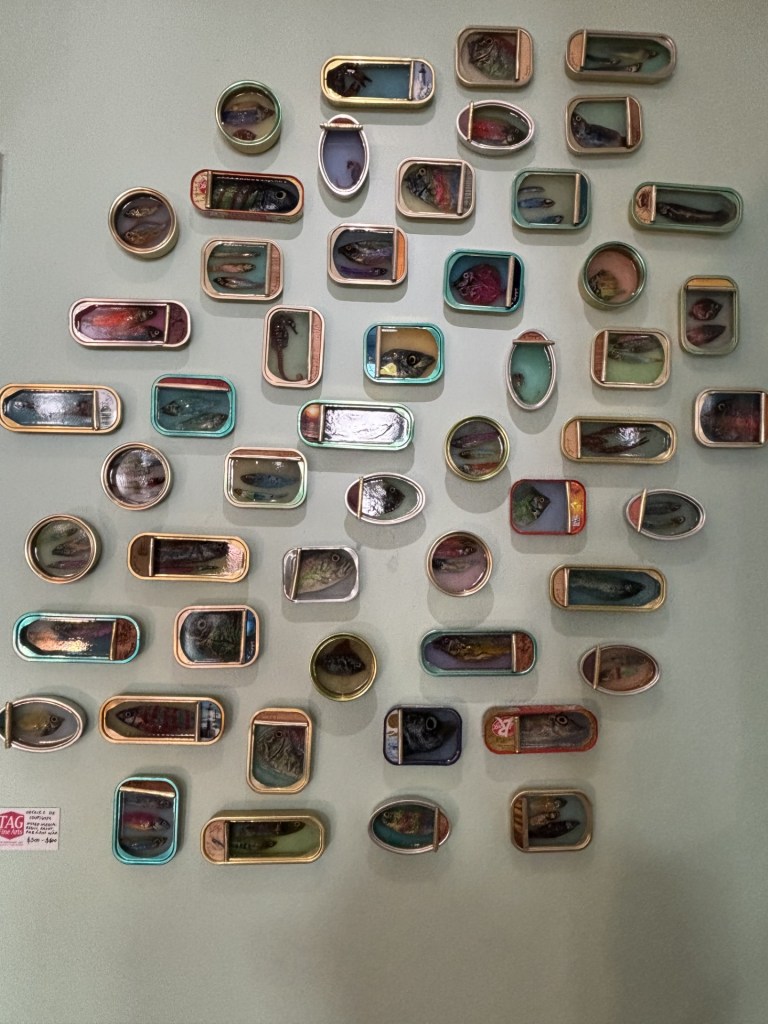
And then in this print by an unnamed artist, we see the remains of fish enjoyed by the dockside kitties!

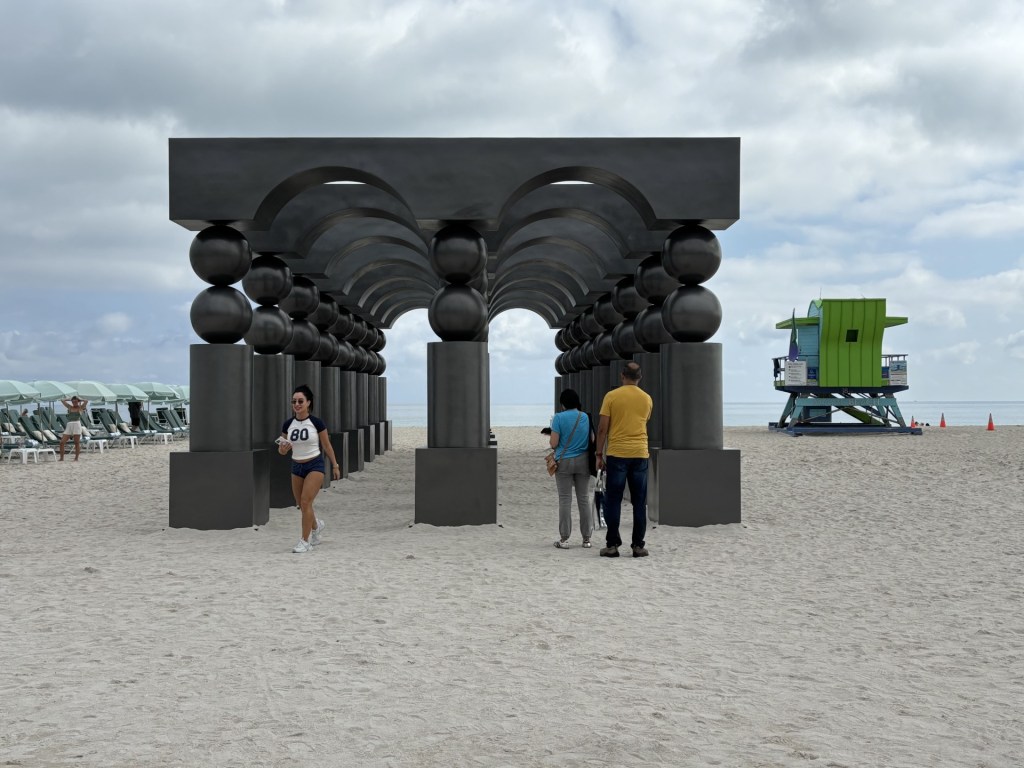
After getting our annual fill of Ink, Constant Companion and I crossed Collins Avenue to the Shelbourne By Proper Hotel. The monumental sculpture, The Observer Effect, by Pilar Zeta, an Argentinian artist based in Mexico City, was installed for Art Week on the beach opposite the hotel. The overblown promotional material about this monumental sculpture resembles the label language referred to above. A sense of peace came over me looking at this massive structure with the sky above, the sand below, and the ocean beyond.
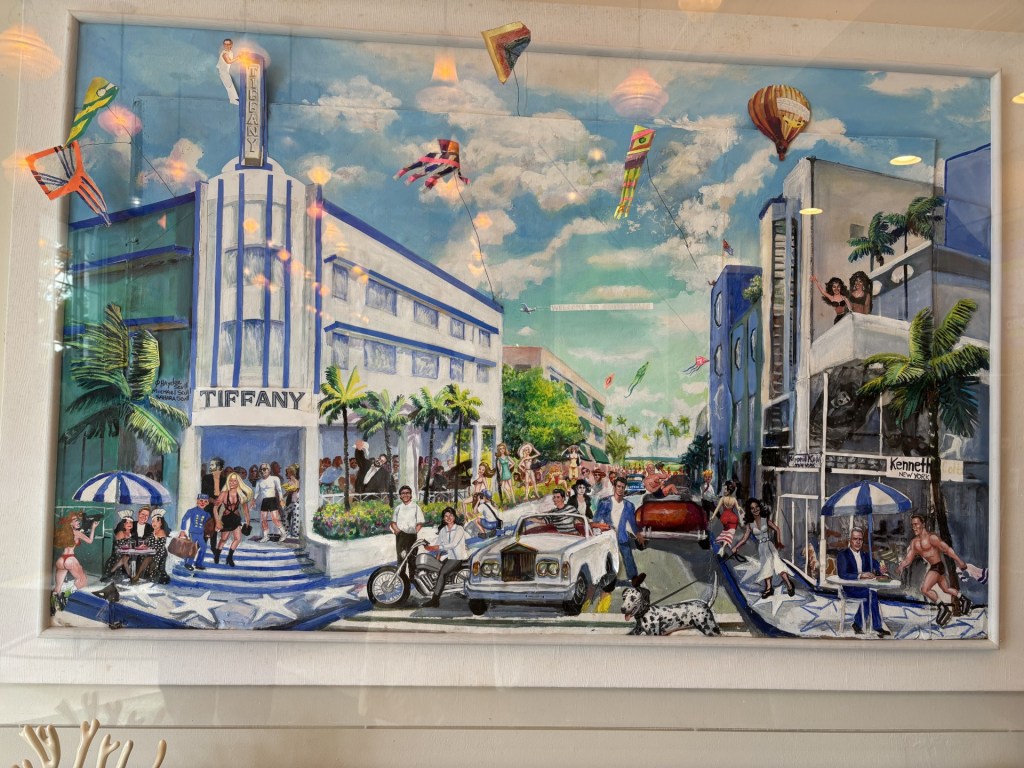
On the way to our next destination(s), the two fairs housed in tents on the beach, we made a brief detour. When I wear another hat, I am a tour guide for tours of South Beach’s Art Deco. We popped in to The Tony Hotel, aka The Hotel, The Tiffany, to see what we could see. The architural features are beautiful, the work of L. Murray Dixon, one of the primary architects of the era. Tucked away in an area beside the lobby was an enigmatic painting by Miami Beach’s own Scull sisters, two Cuban immigrants whose artwork brings to life any scene (see 12-1-24 post). In this case, it’s South Beach filled with the characters who populated it in, as some say, back in the day.
Scattered inside and outside of the Scope tent, along with the numerous gallery booths, are a series of so-called Special Projects. The 2025 theme is “Be Here Now.” According to the fair’s Director Hayley River Smith, it is “a declaration—a call back to presence, to grit, to honesty. … a call to presence in a world defined by acceleration and distraction.”
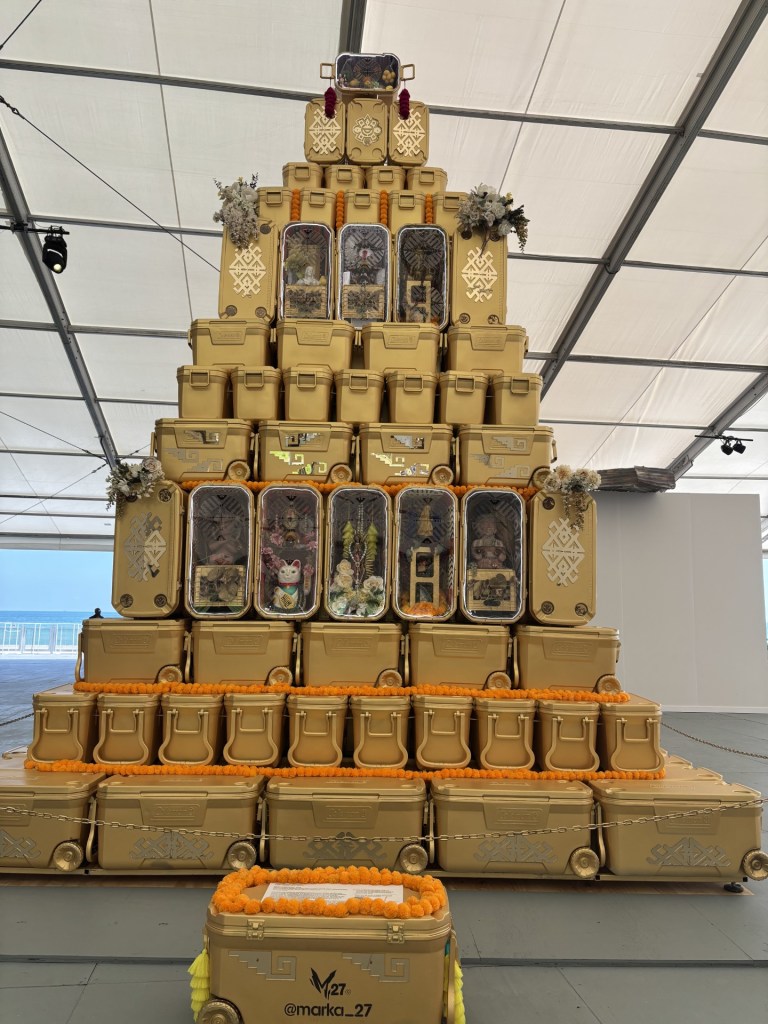
I did not find all of the Special Projects. Elevar La Cultura (2025), created by Victor Quiñonez, better known as Marka27, is a monumental installation comprised of repurposed coolers alongside cultural objects and materials stands. His goal is to bring attention of voices and narratives frequently overlooked or omitted from historical narratives.
The ever-present Shepard Fairey’s Phone Booth, is a reprisal of his 2017 exhibition “Damaged,” presented by Mortal Machine Gallery. An obsolete public phone booth is the canvas on which Fairey visually and aurally (pick up the phone) comments on ideas around free speech, cultural dialogue, and community connection.

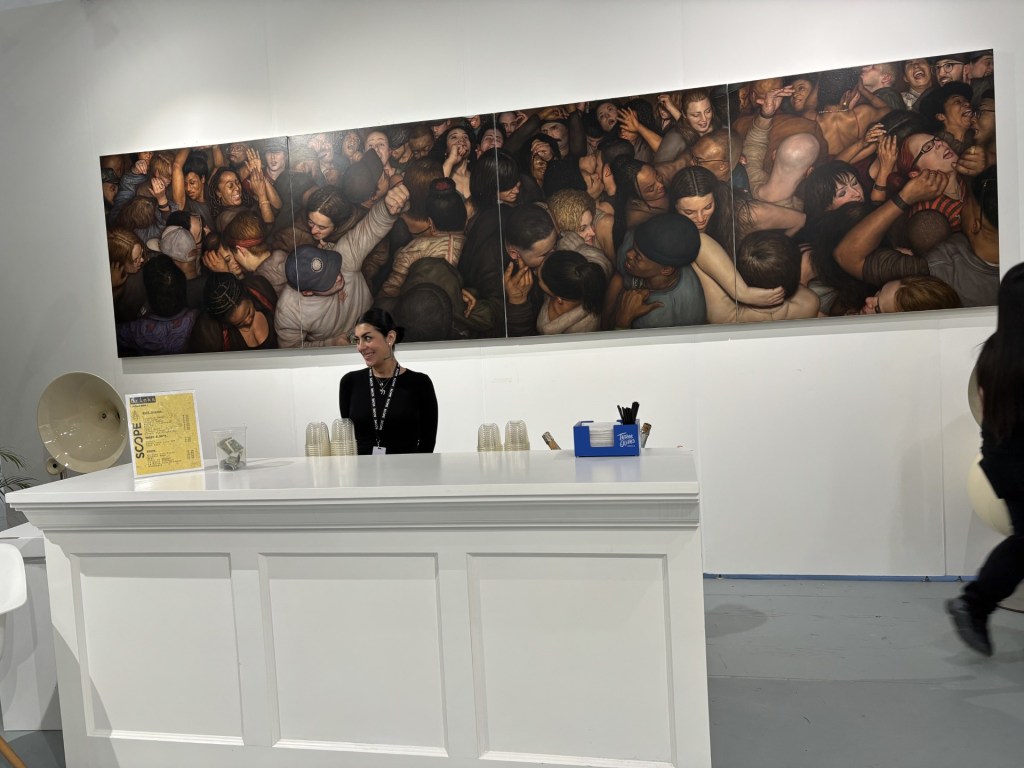
Street artist Dan Witz’s 16-feet wide Crown Heights (2025), featuring a hyperrealist depiction of a huge crowd of people. It is part social document, part social commentary; viewers are placed at a surreal vantage point, invited to confront the comfort and anxiety of human proximity.
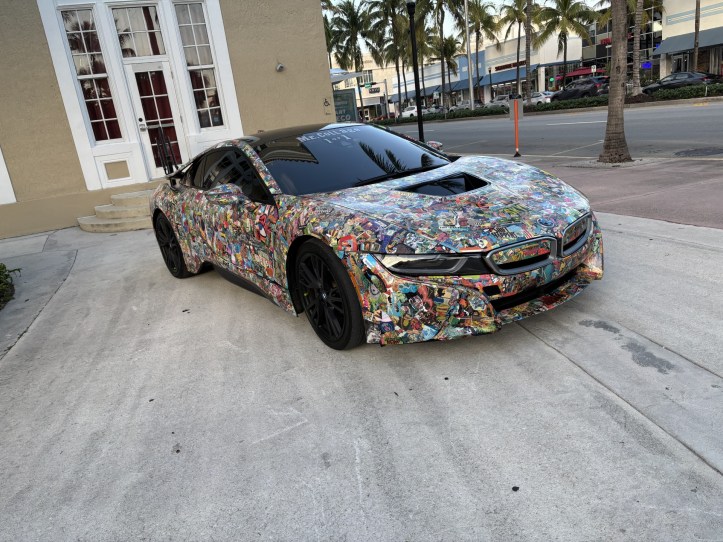
On the way back to the car, we passed “Mr. Collage,” an artist who creates large-scale, detailed collages, shown especially in public places. Case in point, this car in front of the Miami Beach Police Station. He has gained such a following on social media that a google search for “Mr. Collage” only turns up an AI summary and numerous links to Instagram and Tiktok.
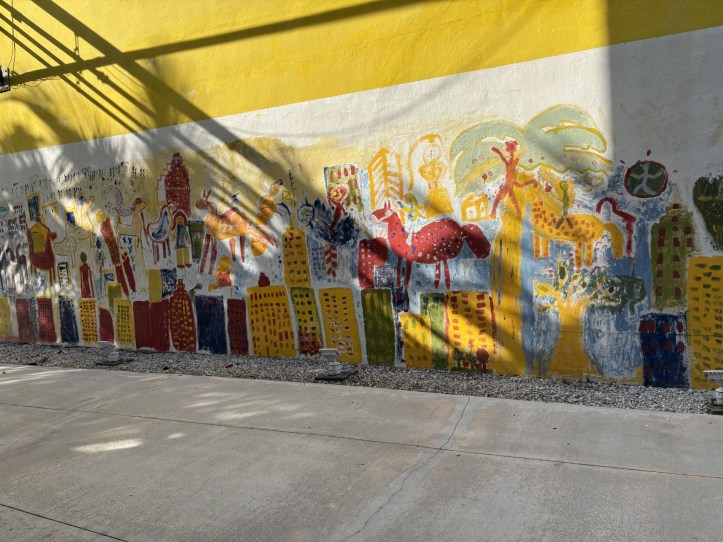
Yesterday, we started the day at the Bakehouse, one of several centers that offer low rent studio space along with some exhibition space. In fact, their current show celebrates the 40 years since a group of artists took over an abandoned commercial bakery complex. Under the current direction, a significant mural by Miami’s own Purvis Young has been carefully restored and brought to life. Young captured the city scape that surrounded Liberty City and Overtown where he lived.
Among the artists with studios here are Beatriz Chachamovits whose ceramic works are statements to the state of the waters around Florida, especially coral bleaching.

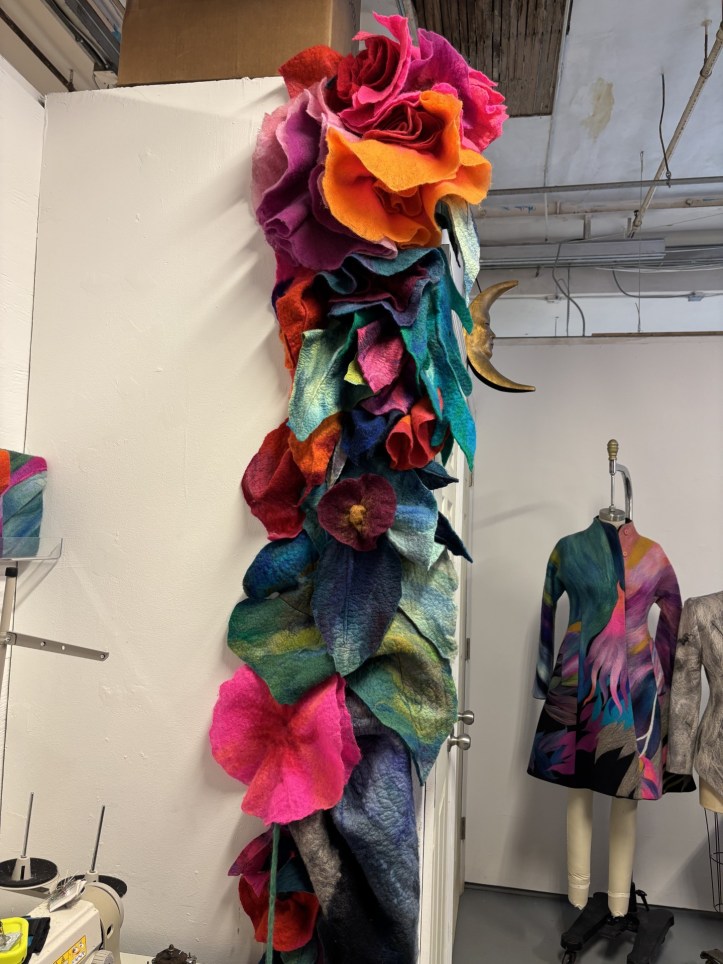
Former ballerina, Andrea Spiridonakos, merges fashion design and art in colorful work with felt.
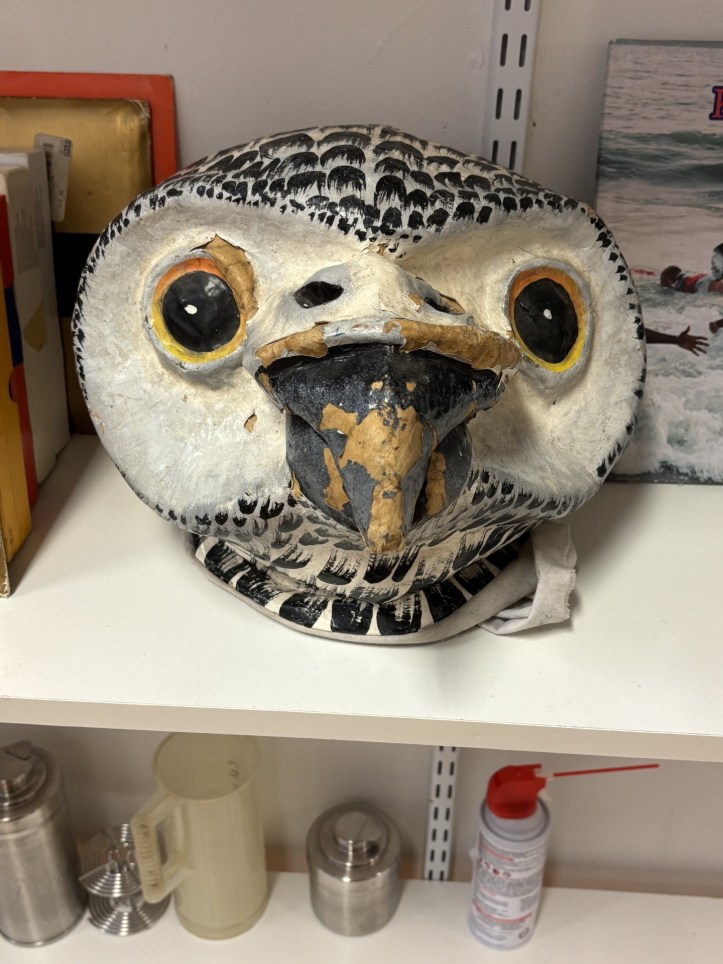
And Christopher Mitchell’s photographs from Haiti and from Miami’s Little Haiti reflect his world view. He rescued this owl mask from Haiti from the long-closed, historic Taptap restaurant in South Beach. For many years it was one of the primary sources of a Haitian meal.
Later that morning after Constant Companion maneuvered through the Art Week traffic to find a parking space, we went to NADA, The New Art Dealers Alliance.

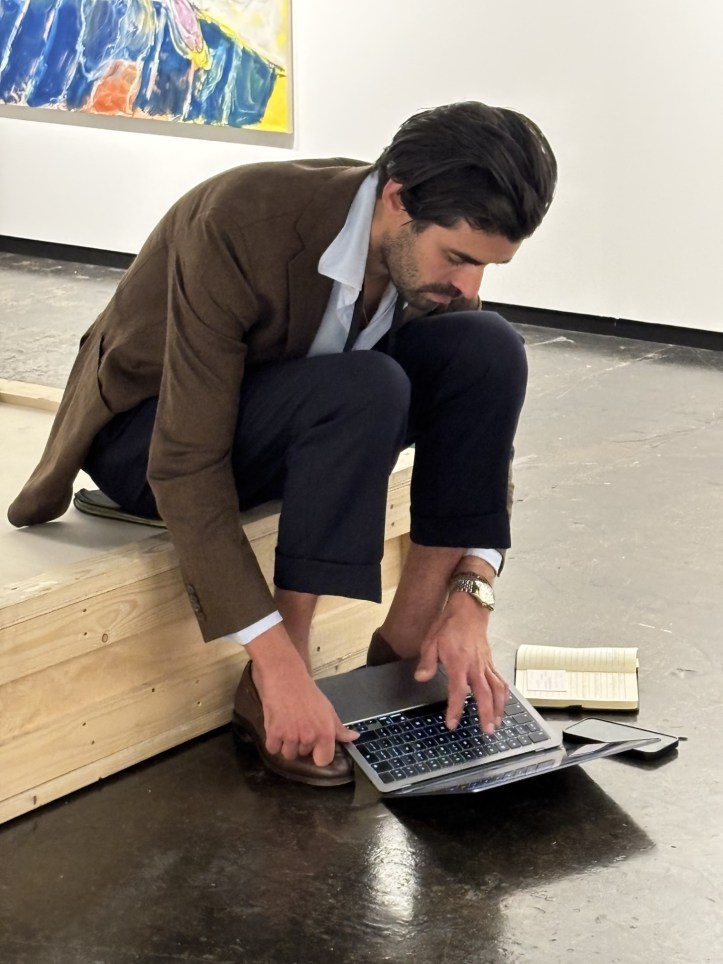
I found humor in simply observing the gallerists early in the morning, earnestly at work on their computers or phones. They were oblivious of the potential buyers streaming slowly past their displays.
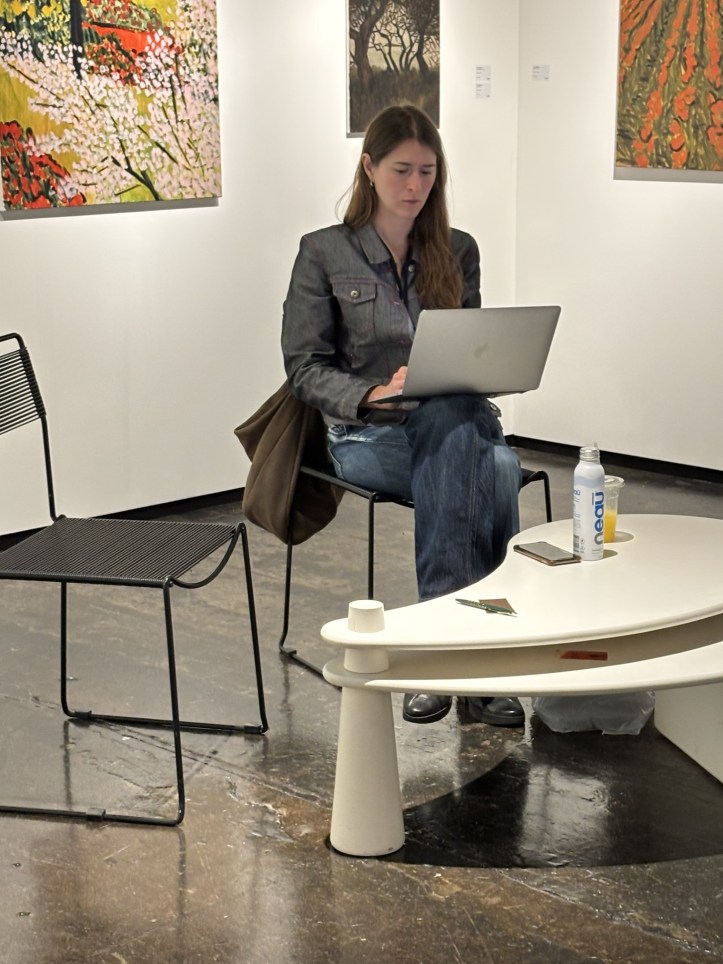
As the morning progressed, the digital work seemed to be done and a few more friendly attendants turned their attention to the art lovers and strollers.
And along the way, what did I see. In search of a parking spot, we passed Dorsey Park in Overtown. In segregated, Jim Crow Miami, the park was a haven for baseball in 1923. It still seems to be a well-used field.
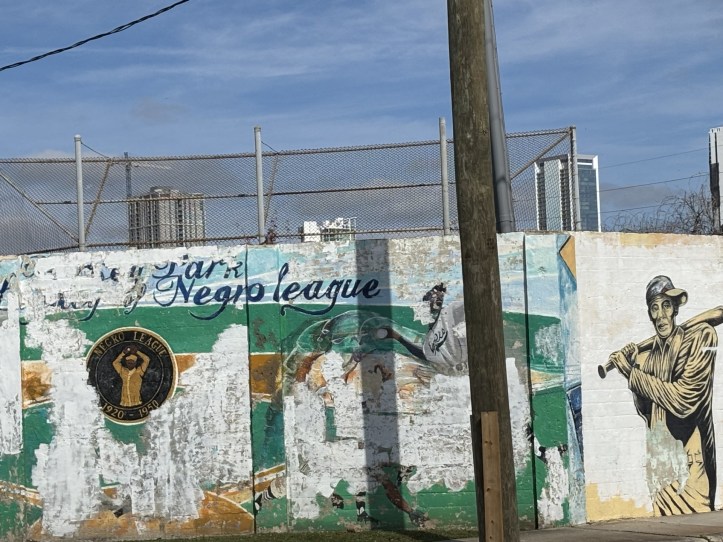
It continues to play an important role in remembering the contributions of baseball players who played in the Negro League (https://www.cbsnews.com/miami/news/negro-leagues-dorsey-park-overtown/). Around almost every corner in our town, history is waiting to be learned!
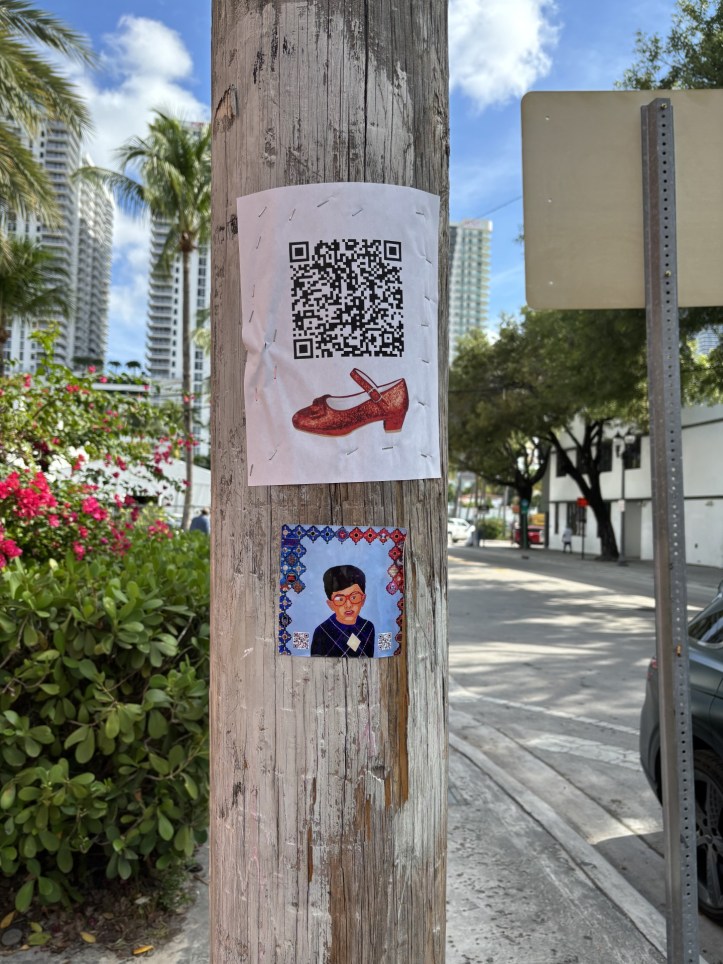
And then there were these flyers with the Ruby Slippers. Read the following to get their full meaning (https://www.theuniverseunveiled.com/synchronicity-street-magic-messages-from-the-universe/). A little bit of street magic to think about and brighten these strange days.
 Creatively Annette
Hi Annette, thanks for sharing my photo and blog about the red slippers. With magic and love Hector!
LikeLiked by 1 person
I just love it – thanks for brightening our days!
LikeLike
“Around almost every corner in our town, history is waiting to be learned!”
Great comment!
LikeLike