This year I wanted to try something different for our annual Rosh Hashanah dinner and add variety to several tried and true favorites, I turned to my e-mail in-box which for the past few weeks has been inundated with ideas and recommendations for the approaching holiday. Several recipes stood out as potential additions to the menu.
Our menu was as followed, with recipes for the newcomers:
Chicken soup with matzah balls. This dish is usually started the day before our meal. Start by simmering a pot of vegetable trimmings stashed away in the freezer for their day to shine. The vegetable broth is strained after about an hour. A chicken carcass, rich with some meat, is added as well as chopped onion, celery, and carrots (mire poix), bunches of fresh dill and parsley and the little packet of flavoring from the matzah ball box mix. Into the fridge overnight once well cooled.

On Erev Rosh Hashanah, take out the soup, bring to a boil, then simmer. Again, with the box mix, I make my matzah balls. Unlike their directions, I cook the matzah ball directly in the soup. Delicious.
Roasted Chicken and Eggplant in Pomegranate and Date Molasses. This is a now beloved member of my cooking repertoire that I’ve made numerous times (for the recipe see the 6-14-21 post).
Among the cooks that I followed on zooms during the long months of Covid, which I compared to Hotel California (“…you can never leave…”) were Adeena Sussman and Leah Koenig. I don’t know where I found Sussman’s recipe for Melted Green Cabbage. It comes from her cookbook Sababa. I thought it might make a nice vegetable addition to our meal.
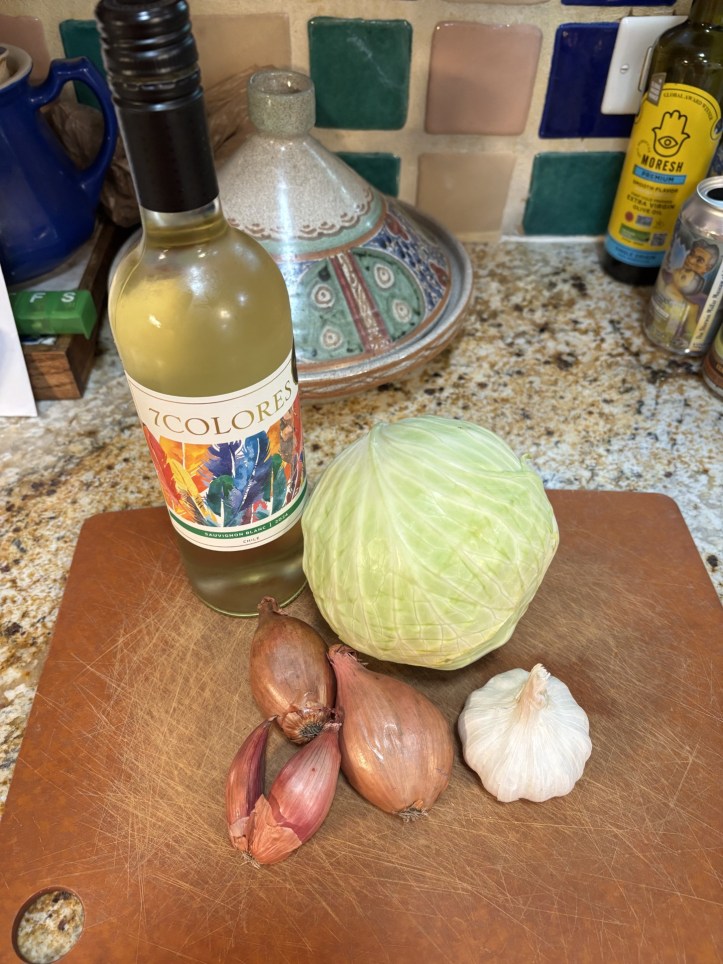
Melted Green Cabbage, Adeena Sussman. Preheat the oven to 300°F. In a heavy, large, high-sided skillet or shallow Dutch oven, heat the olive oil over medium-high heat. Sprinkle 1 teaspoon of the salt and ¼ teaspoon of the pepper directly onto the oil, then arrange 2 small heads of green cabbage (2 pounds), quartered (but not cored) cut in wedges in the pot, making sure that each is lying on a flat side (cram them in; they’ll relax into one another as they release liquid). Let the undersides get nice and brown, resisting the urge to move them too much but checking once to make sure they’re not burning (reduce the heat slightly if they are), 6 to 7 minutes. Using tongs, flip the cabbage wedges, then tuck the ten garlic cloves and four peeled and halved shallots into the pot, and brown the undersides of the cabbage, another 6 to 7 minutes.
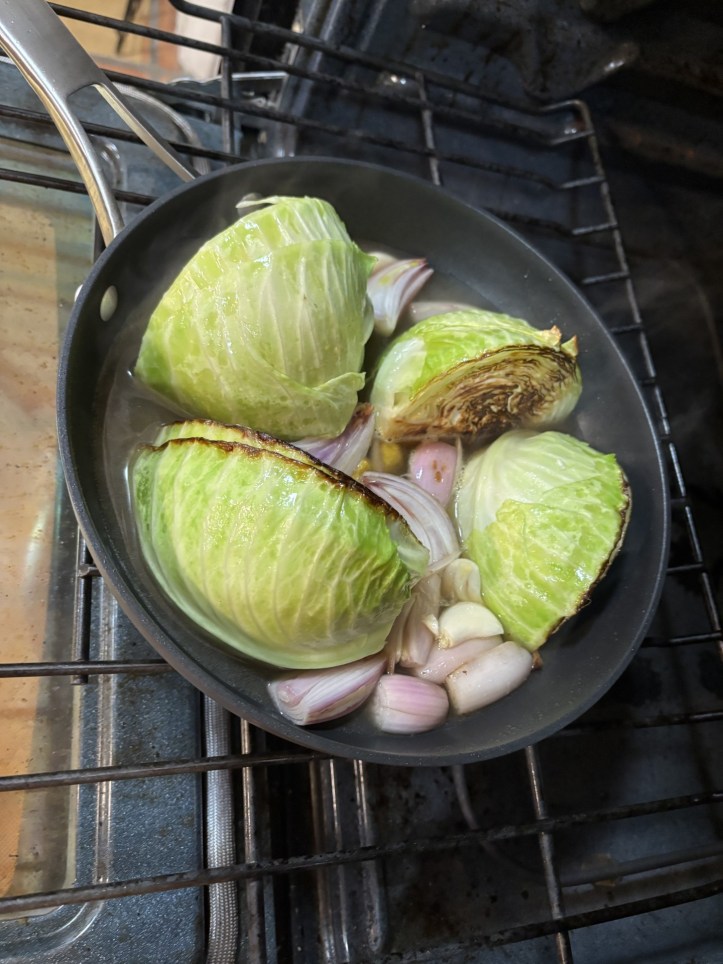
Add the ½ cup wine and ¼ cup broth (chicken or vegetable), bring to a boil, reduce the heat, and add the remaining 1 teaspoon salt and ¼ teaspoon pepper along with the thyme. Cover with a tight-fitting lid, transfer to the oven, and cook until soft and deep brown, 2 hours, or 2½ hours for even softer cabbage. Uncover, cool slightly, and serve the cabbage with the liquid accumulated in the pot. Season with salt and pepper and top with 3 Tbsp butter and ¼ cup crème fraîche (I omitted this step). Serve with lemon wedges, if desired.

I always like a fresh green to supplement a meal frequently weighted down by heavy main courses. Jewish Food Society featured the following Arugula Fennel Salad by cookbook author Anna Gershenson for this year’s Rosh Hashanah table.
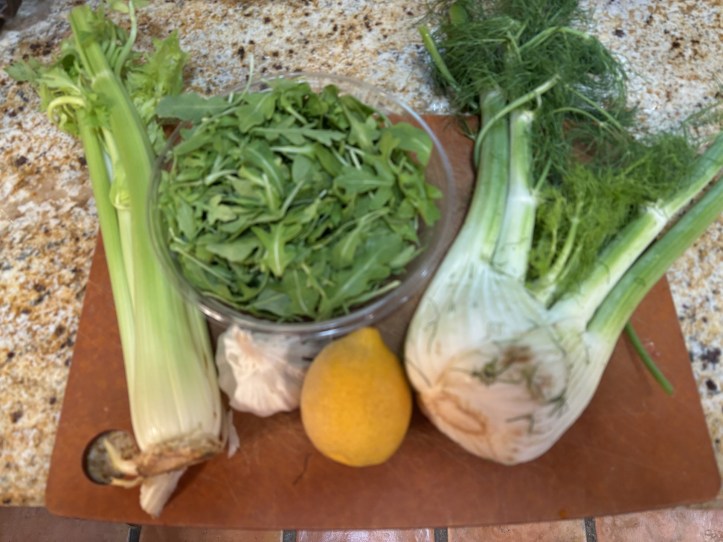
Arugula Fennel Salad, author Anna Gershenson (apologies to the author for adjustments I’ve made). Make the dressing by combining ½ tsp toasted and ground fennel seeds, 1 medium garlic clove, grated, ½ tsp salt and pepper, each, and 2 tbsp fresh lemon juice. Let sit for about 10 minutes, then gradually whisk in 4 tbsp olive oil, set aside.
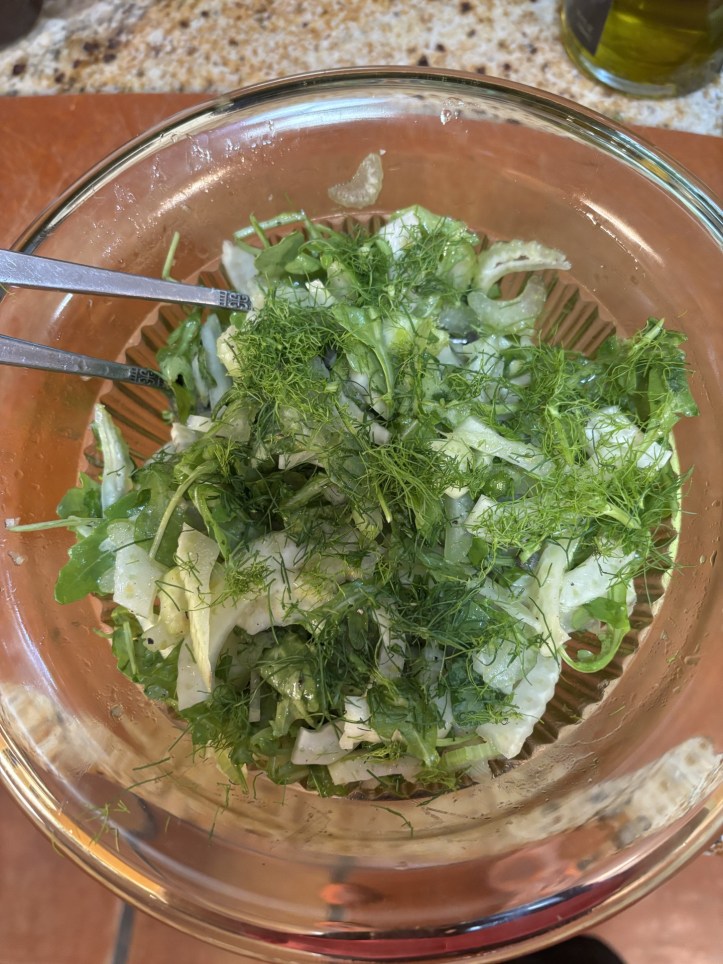
For the salad, cut one small fennel head in half, thinly slice (use chopped fronds for garnish). Toss with 2 cups arugula, ½ cored and julienned Granny Smith apple, ½ cup toasted and chopped walnuts (omitted), 2-3 tbsp rinsed capers, zest of one lemon, salt and pepper. I added two chopped celery stalks. Toss gently with the dressing.
Neither Constant Companion nor Daughter particularly like honey cake. I thought I’d try something new in the spirit of the holiday. Cookbook author, Leah Koenig, is another Covid period zoom acquaintance. Recently her apple cake was offered as an alternative in a Jewish Food Society newsletter.
Mom’s Apple Cake, Leah Koenig (also prepared the day before). Preheat oven to 350°F. Combine 3 cups of flour, 1 tsp each salt, cinnamon, and baking soda in a medium bowl and set aside. In a second bowl, mix together 2 cups sugar, 1 cup canola oil, and 2 tsps vanilla. Add 3 eggs to the wet mixture, one at a time; stir to combine. Pour wet mixture into the dry ingredients and stir until thoroughly combined. Fold in 3 cups peeled, cored and chopped Gold Delicious or Granny Smith apples and 1 cup chopped walnuts (the batter is very thick).
Grease two loaf pans and spread half of the batter into each pan.* Sprinkle the tops of each loaf with a little sugar and bake for about 1 hour, or until a toothpick stuck in the middle of the cake comes out clean.
*I used my bundt pan and am not sure if this was a mistake!
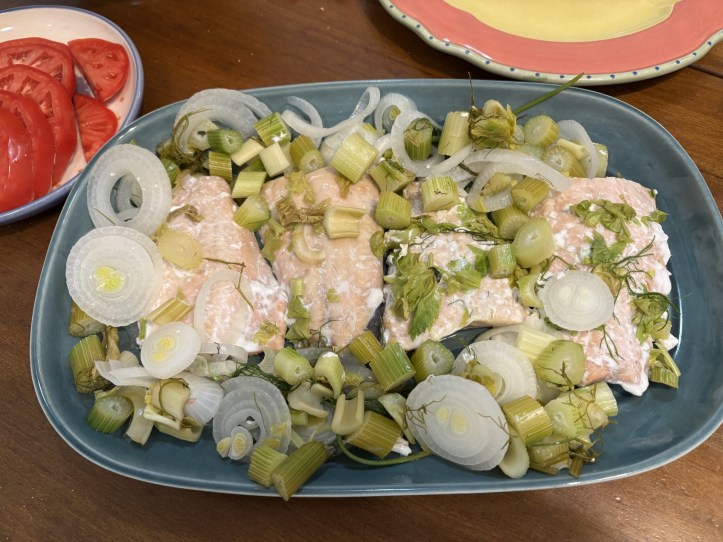
Note: What to do with the leftover fennel fronds. For our second night dinner, I topped several salmon fillets with the fronds, thinly sliced onion, and one stalk of celery, chopped. Added about one cup of white wine and gently poached for about 10 minutes. A light, aromatic dinner.
One flavor that ties many Rosh Hashanah dishes together is sweetness, the sweetness with we all hope the New Year will begin!
 Creatively Annette
Looks Delicious as usual! 🙂
LikeLike
Wishing you a Happy and Healthy 5786!
LikeLike