After a restful Sunday, well, house cleaning and laundry are not so restful, Constant Companion and I started off on our Day One ArtAdventures and more a bit after noon.
First stop was a bit of a more. One of the leading producers of kitchen and bath products is Kohler. We’ve enjoyed their innovative displays in Design Miami in the past. This year they previewed a new product created in partnership with Remedy Place, the Ice Bath. A special activation was installed in the beautiful gardens of the Miami Beach Edition.
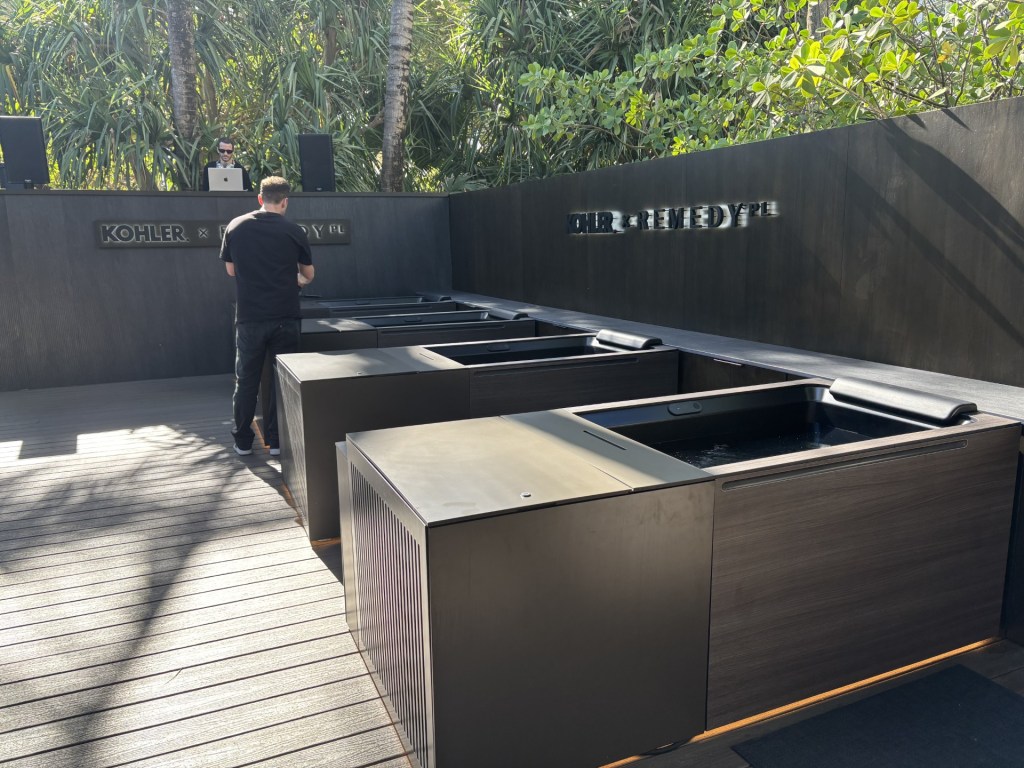
Ice Bath, as I suspected means temperatures 36 degrees F; there were for participants sample and take the plunge. I did take my bathing suit, but no, I did not take the plunge. Overall, it was a great way to start the morning.
Next stop was an art stop, the Spinello Gallery in Allapattah. One piece that caught my eye was a painting by local artist, Reginald O’Neal. It captured on canvas his sculpture that opened the Meridian’s section at Art Basel last year see Dec. 8, 2023 post).

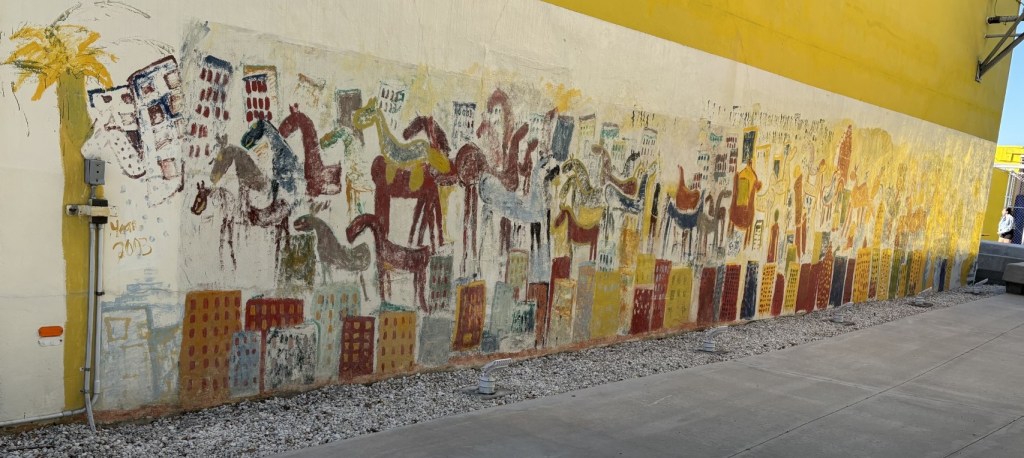
On the way Carter Project, we stopped for a minute at the Bakehouse, where an in situ mural by noted local artist, Purvis Young, was recently restored. Replete with horses, one of the figures found in repeatedly in Young’s art.
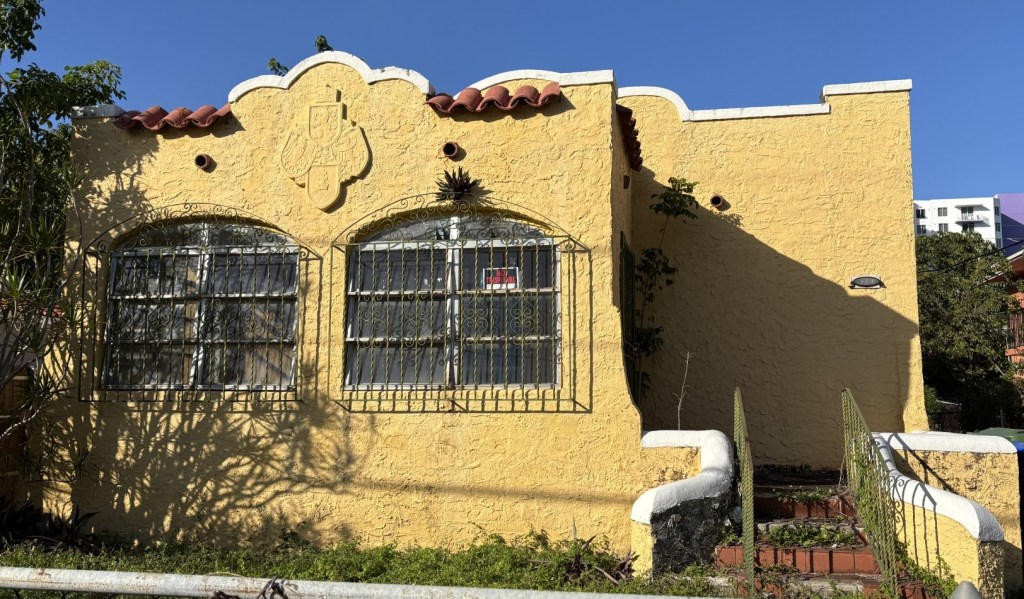
An aside. I have written in the past about the charismatic and different architecture found around town, often commenting upon the practice of “demolition by neglect.” This stucco beauty was across the street from our parking space. If only the walls could talk to tell the story behind the heraldic shield.
The Carter Project (https://thecarterproject.miami/about/) is a Live/Work/Experiential space located in Miami’s Wynwood Norte neighborhood. Designed by artist Christopher Carter, the property showcases its innovative use of shipping containers into the architectural design.

Several recent fellows of the AIRIE program at Everglades National Park were part of the “Elements of Being” exhibition and performances. AIRIE, Artists in Residence in Everglades supports residencies in the park throughout the year. Projected around the expansive walls of one of the spaces was Gentry George’s film “Reverie.” “Chant,” choreographed by George was performed.
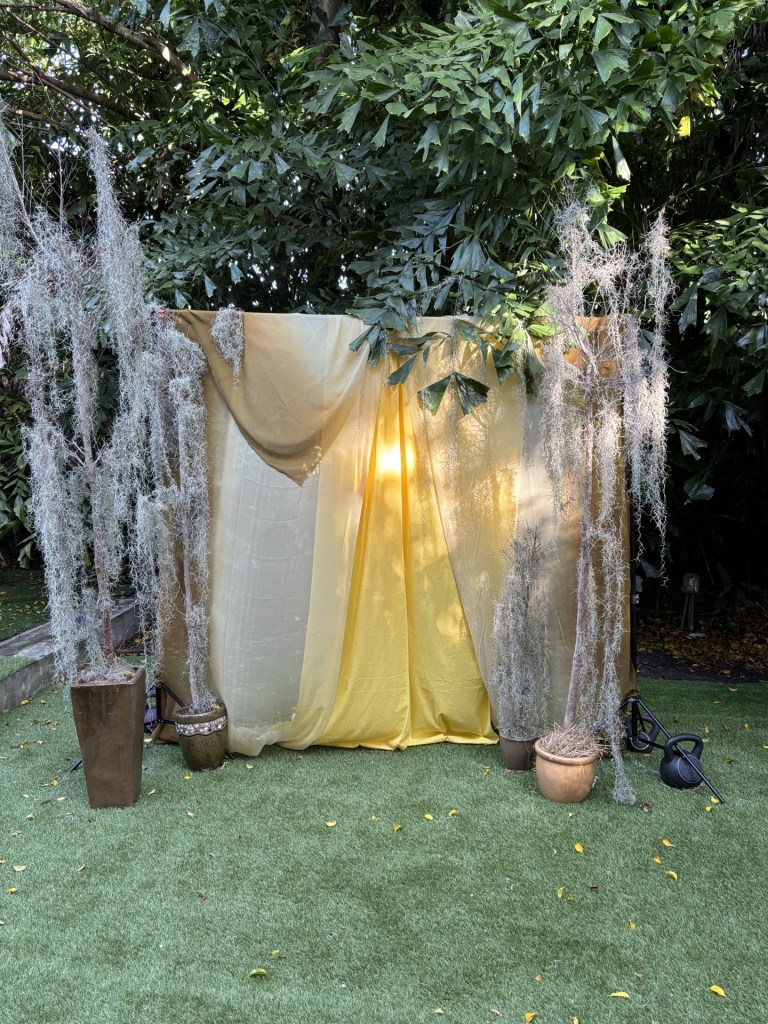
Diana Eusebio’s installation, “Itla-Okla,” in the yard was constructed of fabrics dyed with colors derived from Spanish moss.
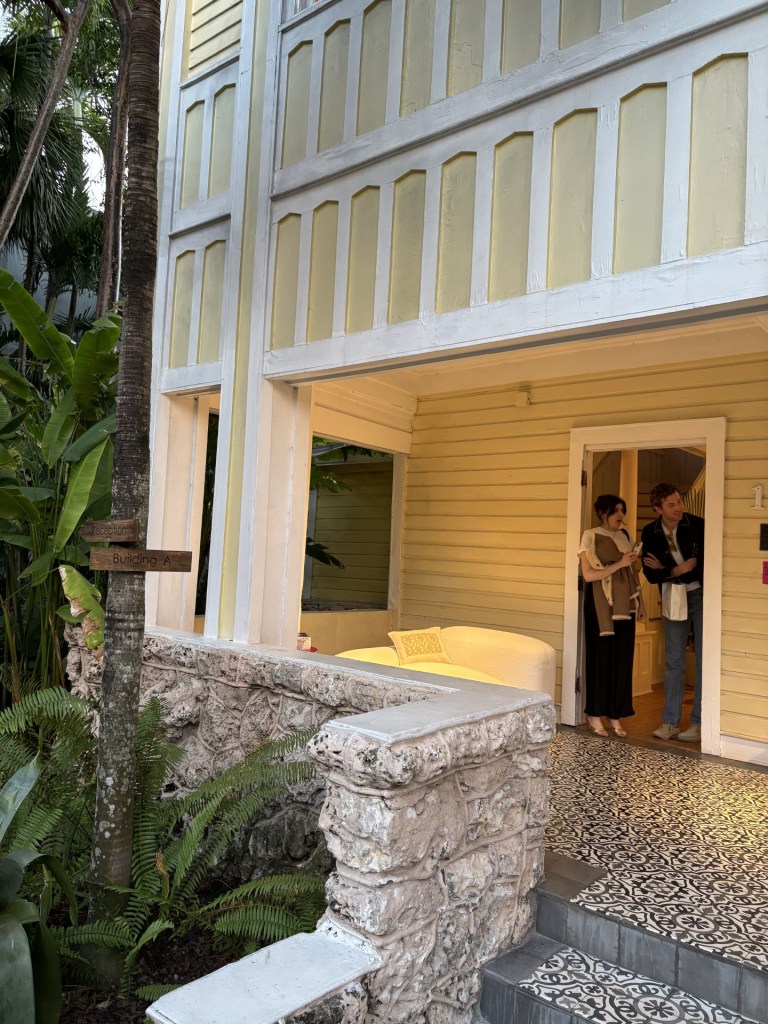
Our next stop was the second annual ALCOVA design expo held at the Miami River Inn, said to be the city’s oldest hotel. It was originally built as a boarding house in 1908, for tourists and new residents in a young city. Four beautifully restored pastel colored wood frame Florida vernacular houses, listed on the National Register of Historic Places, surround a bright courtyard.
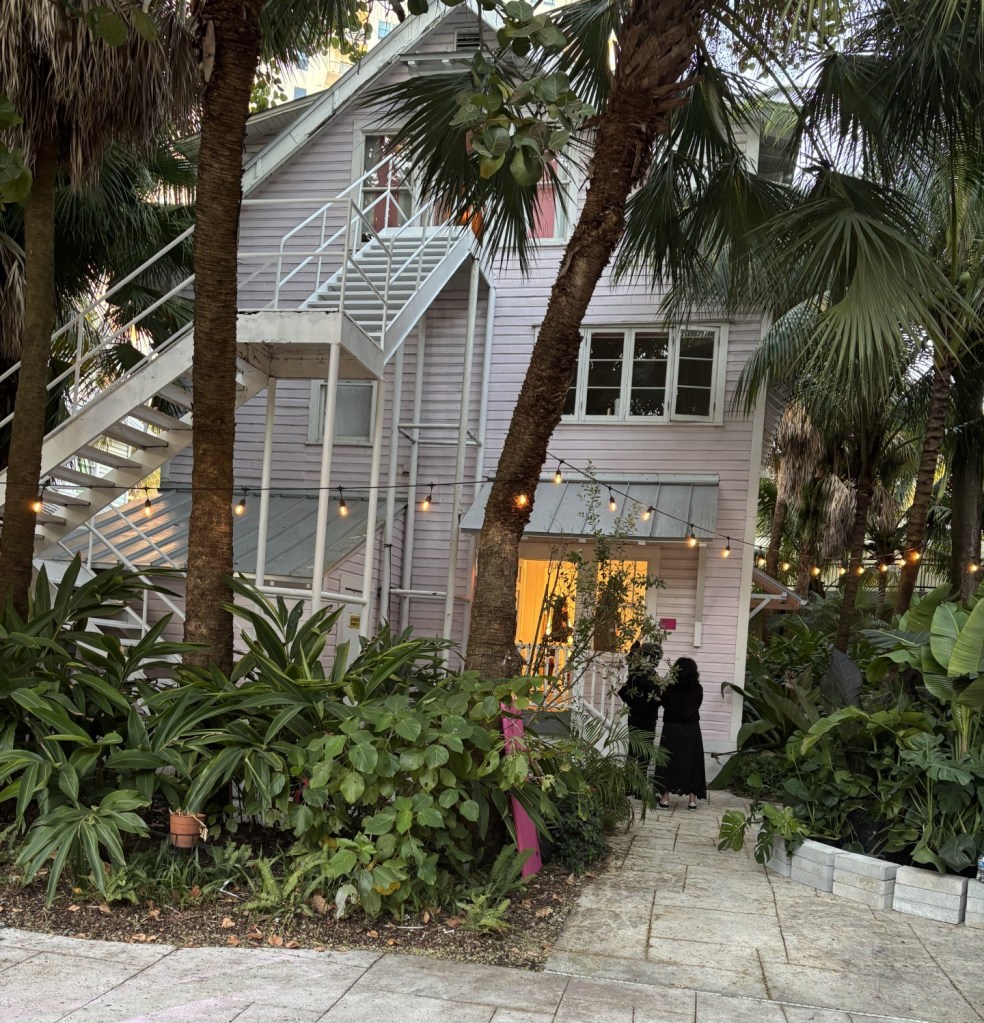
This year’s Alcova fair featured contemporary designs from over forty international exhibitors from the Netherlands, Belgium, Germany, France, UK, Italy, Japan and more, scattered in the rooms of the structures. One exhibit in the swimming pool combined thoughts of waste in the food production chain with aspects of sustainability and our relationship with natural resources, in this case water.
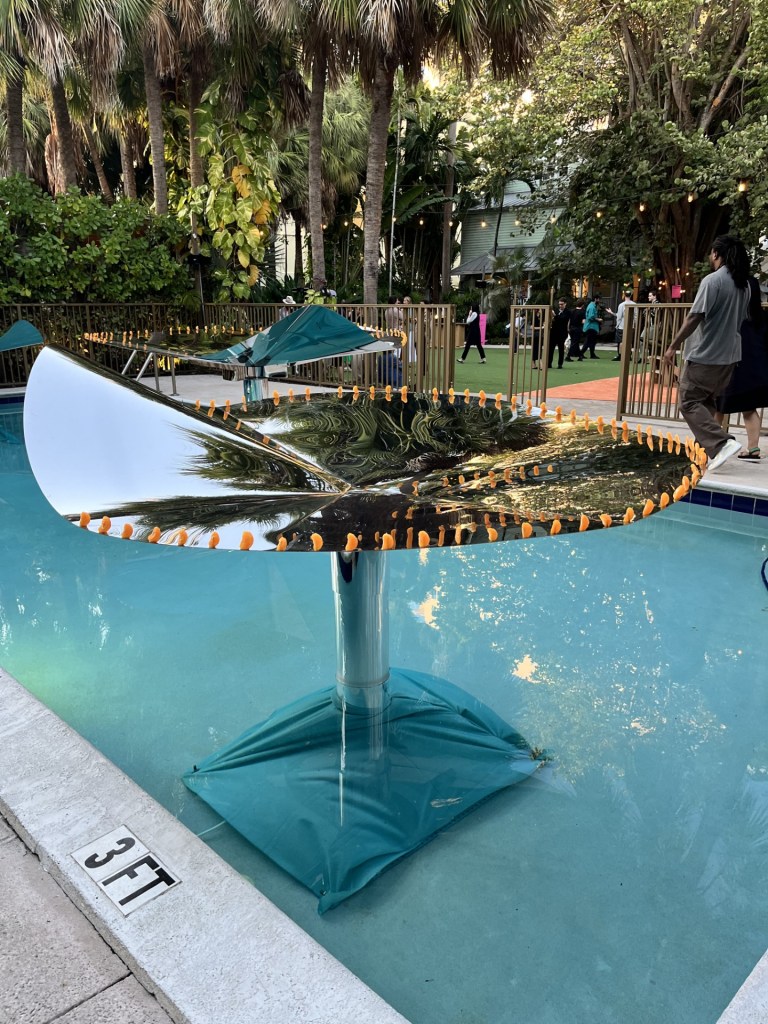
The installation was created by Ananas Ananas, a food art studio in LA. The point of the installation was that the pool contains over 17,000 gallons water, the amount needed to produce 1,033 tangerines. Guests could either sample the tangerine segments on the motorized, rotating steel vessels or enjoy dried tangerine peels dipped in chocolate.

Several displays caught my attention. First was the display of implements and décor made from gourds by Gourd Revival, a company based in Rhode Island.
I wandered through the buildings, actually drawn more to the architectural features like the oolitic limestone used on the original porch.
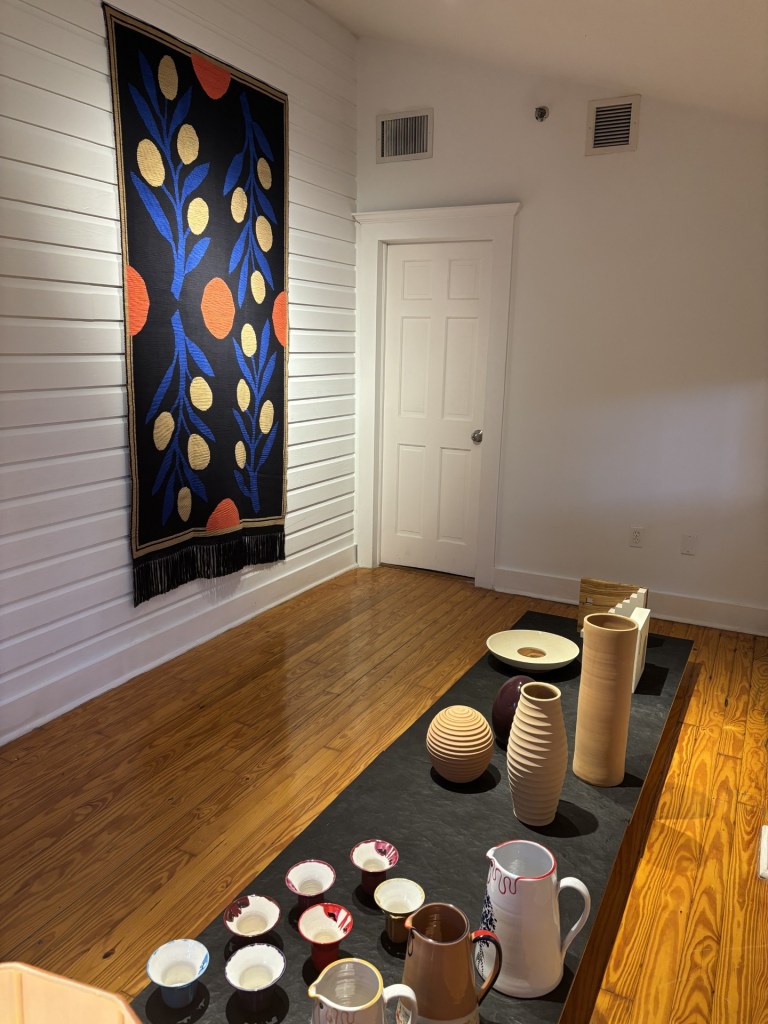
A group of ceramics, the work of Terraterra, under a brightly colored tapestry by Le Constantine were among the artisans from Puglia, presented by the Regional Tourism Board of Puglia, Italy.
Finally, I fell in love with the finely detailed clay sculptures made by David Aliperti (https://www.davidaliperti.com/). I first noticed the artist who is a doppleganger for a long-time, dear friend in Slovenia. Then I saw this work, it struck me as such fun. Aliperti works with what he calls foam clay, something like papier mache. Wouldn’t you know that when Constant Companion and I compared notes later, he was also taken by this artist’s work!

On the way to our final destination, we popped in to an exhibit called “The Open Invitational” in the Palm Court of the Design District.* Showcased in this exhibit were works from artists with mental and physical disabilities, what some term “outsider art.” I prefer to call this “folk art” or work of untrained artists. This form of folk art is not necessarily related to any aesthetic traditions long held in a community, but the imaginings and expressions coming from the creative minds of individuals with minimal art instruction. Outsider art poses the ever-present question of who is insider? What makes an insider?
*I have another day scheduled to ramble around the Design District to enjoy the 2024 art.
We ended the evening at the Historic Hampton House Museum. This year’s exhibit, “Invisible Luggage” touches on themes like freedom, displacement, and memory. The works of over fifty artists explore “what is lost and what is maintained as we travel, migrate and carry on.” The exhibition title refers Ralph Ellison’s groundbreaking novel, “Invisible Man.”

Notable pieces include: “5 on #7” by Hugo McCloud, made with plastic merchandise bags on a wood panel, depicts a scooter rider carrying piles of bags.
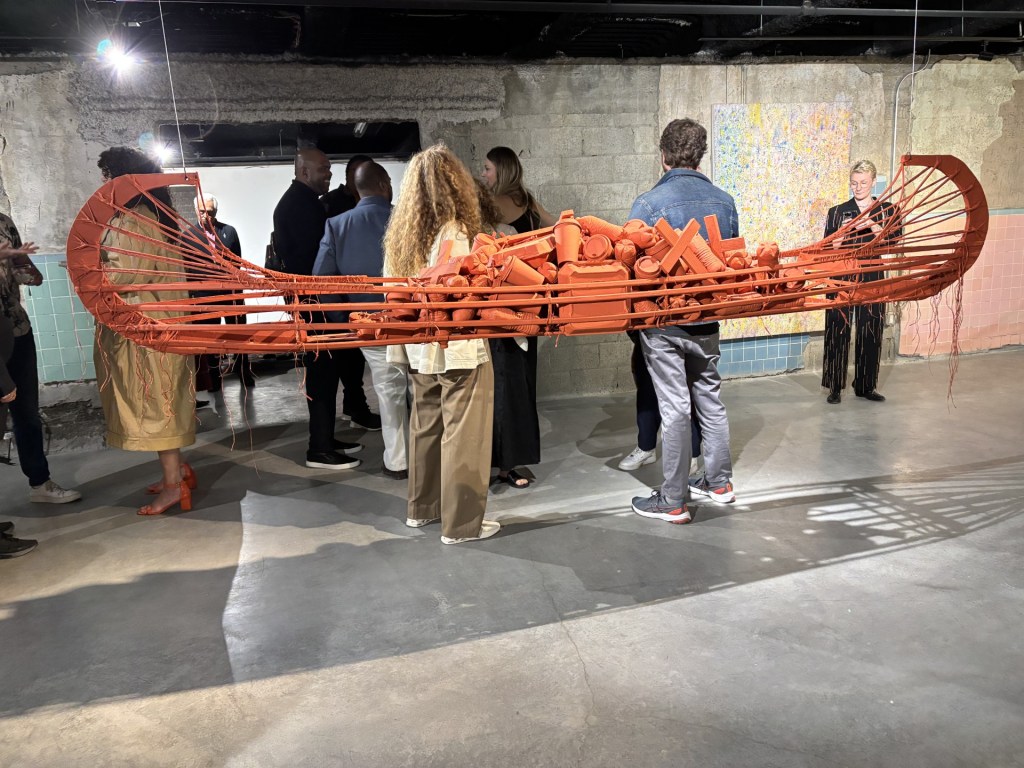
Of the many other artists represented included Native American artist and curator Jaune Quick-to-see Smith.
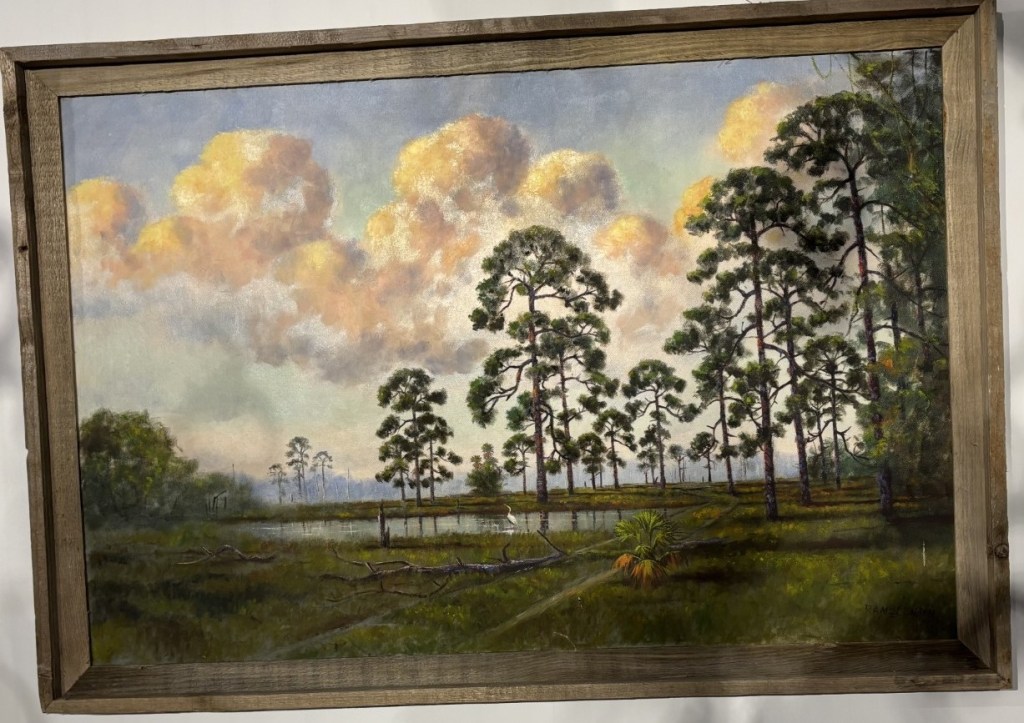
Several enigmatic and recognizable Florida Highwaymen landscapes in the corner of one gallery drew lots of attention.
One of the wonderful aspects of Art Week is the chance or planned meetings of friends. We all live busy lives doing whatever it is, wherever we live. During the frenzied art gatherings our paths cross and we steal moments to hug and catch up. It’s a real joy. Curiously, Day 1 started and began with reminders of two absolutely remarkable women whom I am honored to have met while living in Miami and whom we lost this year.
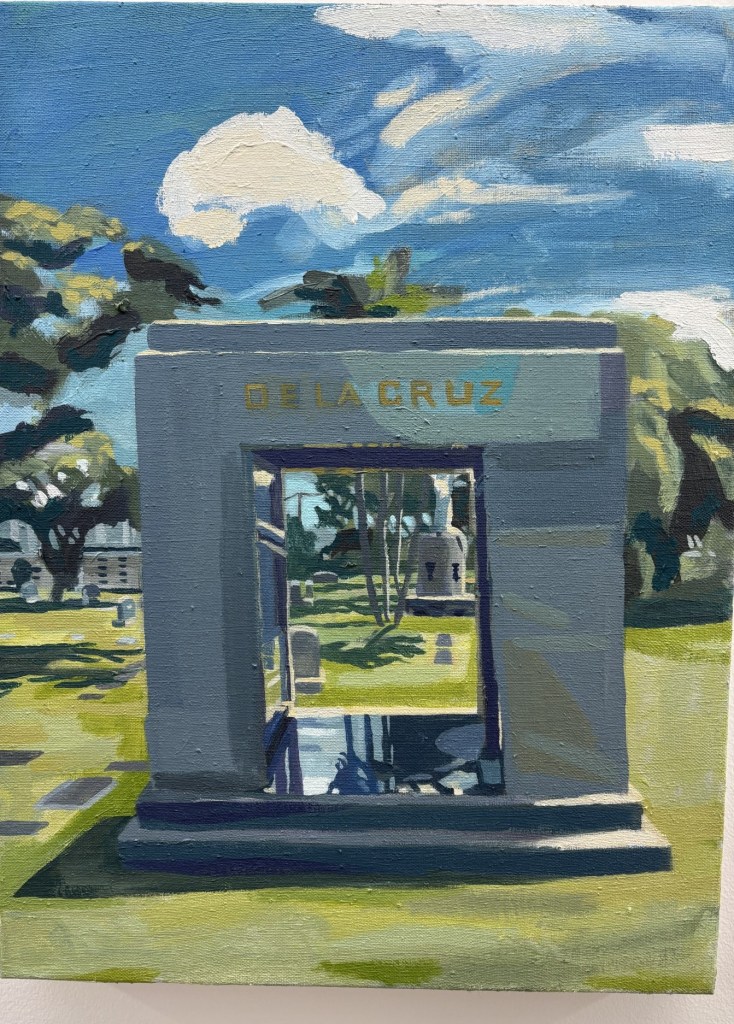
At the Spinello Gallery, our second stop, while Constant Companion chatted about the state of our community’s art world with artist Eddie Arroyo, I admired his small painting of Rosa de la Cruz’s final resting place. Over many years, Mrs. de la Cruz amassed an unsurpassable collection of contemporary art that was housed in a private museum in the Design District. Every year, during Art Week, she and her husband graciously opened their home for many of us to catch glimpses of more of their incredible collection. After a long illness this gracious lady was called home, as some say, this past year; her collection was gifted to museums and went to auction. Eddy grew up in Little Havana near this large cemetery on Calle Ocho, and her resting place resonated with him. Rosa’s presence is surely missed in the art world worldwide.
Constant Companion and I ended Day 1 at the crowded, raucous exhibitioin opening at the Historic Hampton House. As he in his inimitable way chatted with friends at the end of the evening, I wandered off to see if one element of last year’s exhibit remained in place. The display of musical instruments recalling the Black Book’s role in Miami’s entertainment scene was indeed still on display. The instruments suspended from the ceiling of the room reminded me of an early exhibit I curated at the nascent Tulsa (Oklahoma) Jazz Hall of Fame; I, too, suspended instruments from the gallery ceiling.

Deep in the space I caught a glimpse of an unlighted portrait of Dr. Enid Pinkney. Dr. Pinkney (you never called her any other way) was the driving force behind the preservation of not only the Hampton House, not only other buildings in black Miami, but the deep and significant history of the African American communities that make up South Florida. Long ago, she called on me for advice when her dreams of a museum in this historic structure were forming. In the intervening years whenever our paths infrequently crossed, she always greeted me with her warm, wide smile that radiated into her eyes. “Dr. Fromm,” was her greeting.
I felt like I’d closed the day well, having been able to formally say goodbye to two remarkable, irreplaceable, selfless women – women who’s paths I wish I could follow.
 Creatively Annette
Sent from my iPad
LikeLike
Merci beaucoup. J’admire votre eloquence…Waiting patiently to enjoy Art Week by reading your blog.Sent from my iPad
LikeLike
Wonderful post about the local, which tends to get lost in the Art Basel coverage I see from other places. Wonderful tributes to Rose de la Cruz and Dr. Enid Pinkney as well.
LikeLike