Holidays, no matter what it is you celebrate, are often a time to gather and share a meal. They afford a time to either bring out the tried and true recipes that have been enjoyed at other meals. They might be a time to attempt something from a new cookbook or a newrecipe that crossed your desktop. I did a bit of both for this year’s (5785 on the Jewish calendar) meals – Rosh Hashanah and Yom Kippur.
We invited two friends to join us for the first night of the Jewish New Year. What a lovely way to welcome the New Year.
While I was away in India, Constant Companion grazed through lots of food in the pantry, as he should have. I found a partial jar of gefilte fish in the fridge in the almost bare fridge when I got home. A recipe for fried gefilte fish came across the desktop and I asked that he kindly not finish the jar. Even though there were just a few remaining pieces, I tried something Ashkenazi-centric for an appetizer as our guests gathered around the kitchen table. It’s a keeper for the next orphaned jar of the stuff.
Fried Gefilte Fish. The recipe calls for a loaf of frozen gefilte fish, defrosted. I had a few pieces and adjusted the recipe accordingly. Heat some oil* in a frying pan, cut the pieces of fish in half and roll into balls. Drop into the oil. Leave them for til nicely browned. Turn and repeat. Remove the fried gefilte fish balls to a paper towel-lined plate. Sprinkle with fine sea salt while still hot. Serve with mayonnaise mixed with paprika, dill and some caviar if in your pantry.
*The only time I use more than a few tablespoons of oil is when I make latkes, but that’s another holiday.
Rich Vegetable Soup (from the Sephardic Spice Girls).+ Based on Talmudic sources, a variety of symbolic vegetables, or simanim, are blessed as part of some Sephardic homes at the the Rosh Hashanah meal.* The Aramaic names of each are meaningful puns. Each prayer starts with the phrase “yehi ratzon” (May it be God’s Will). This soup is rich with most of the vegetables that have traditionally been part of these seasonal blessing.

+Warning, this calls for lots and lots of chopping and makes lots and lots of soup and takes lots of time. It’s worth every minute.
*For the past few years, this set of prayers have been codified as a Rosh Hashanah seder. I contend that this is an old practice which is being codified as a “tradition.”
Like most of my soups, I start my stock with a zip-lock bag or two of frozen vegetable trimmings. Bring to a rolling boil, then simmer for an hour. Drain and discard the vegetables. Next add a chicken carcass also from the freezer with some salt and simmer for another hour. Drain, remove the bones, and salvage the bits of meat. Remember to SAVE this very rich broth. Then start the soup for real (or skip these steps and go straight for the soup).
In the same soup pot, heat some olive oil, add 2-4 cleaned and sliced leeks. Saute for 5 minutes. Add the following, most are peeled and cubed or diced: 1 green apple (or quince), 2 small sweet potatoes, 4 Yukon gold potatoes, 4 stalks celery, 3 large carrots, 2 parsnips, ½ small cabbage thinly sliced, 2 Tbsp chicken consommé powder, ½ tsp white pepper, 1 tsp turmeric, salt to taste.
Add the reserved stock. Bring to boil, simmer for 1 hour. Add 2 zucchini and 2 cups butternut squash (I used pumpkin/calavasa), both cubed. Simmer for another 30 minutes. Add 1 bunch of Swiss chard, stems removed and chopped thinly. Simmer another 30 minutes. We enjoyed eating this soup for the next few days.
For the rest of the meal I returned to a few recipes that have proven to be family favorites and just perfect for a holiday dinner. For lack of an essential ingredient (pomegranate molasses), I chose this chicken recipe. The jeweled rice is just festive. And the fennel/celery salad that we eat every once in a while; it’s is refreshingly seasonal. They have already appeared on these pages:
Palestinian Roast Chicken with Sumac and Red Onions (Mussakhan) (see 7-17-20 post)
Jeweled Rice (see 9-18-24)
Celery Fennel salad (see 1-20-20)
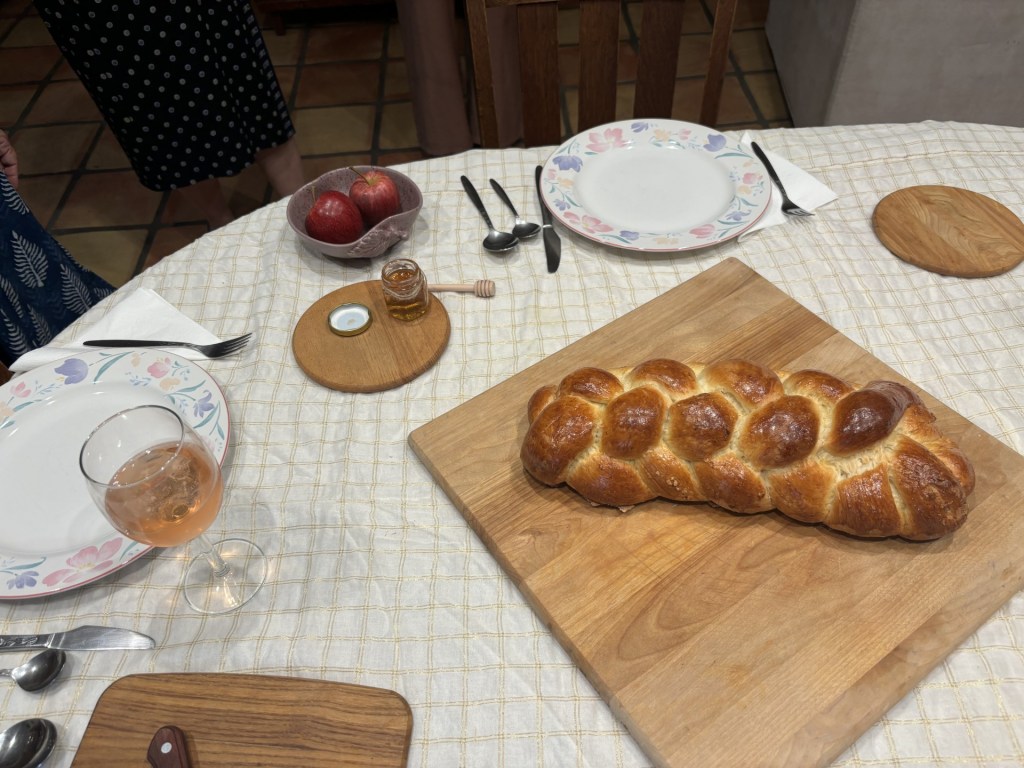
Daughter contributed to the meal by baking a very beautiful challah.
Just the family partook of the two Kippur meals at the kitchen table. I went out on a limb with some new recipes that looked interesting and not too difficult. For the eve of the holiday, in preparation for the fast, another, different vegetable soup, chicken with a delicious sauce graced the table.
Two of the new dishes were Moroccan-nesque. Before the fast, we enjoyed a Saffron-Lemon Chicken; part of the breakfast meal was a Leek, Lentil, and Chickpea Tagine.
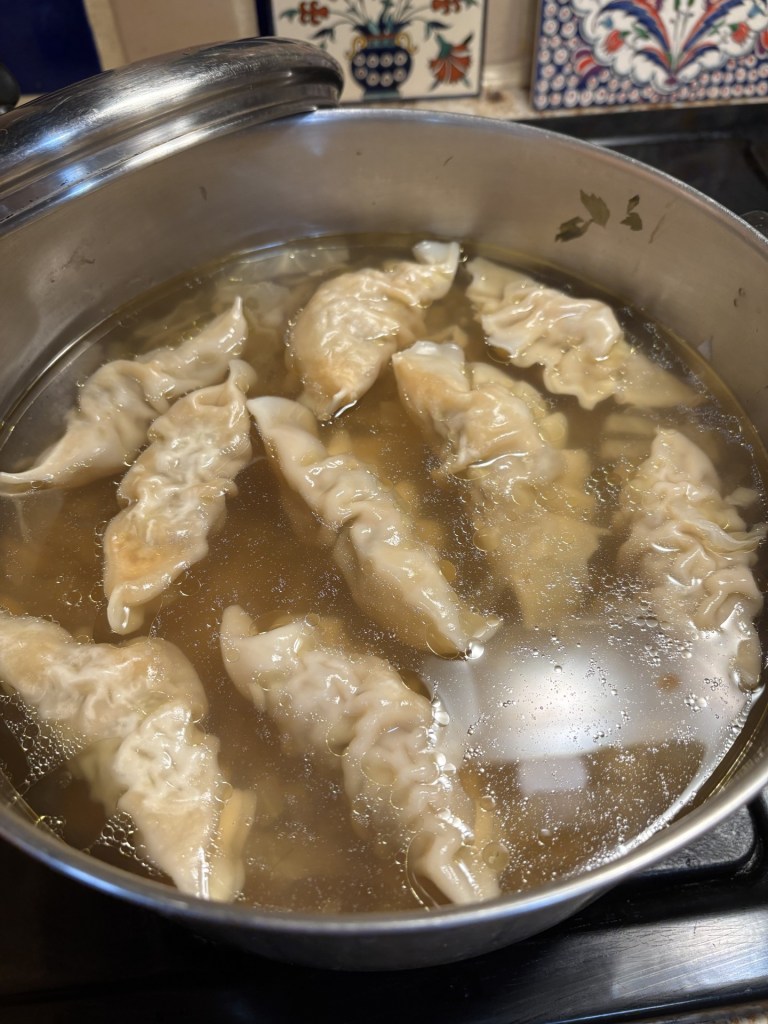
Soup to start (enjoyed both nights). Again, I started the process with frozen vegetable trimmings, they were predominantly fennel, saved from the previous weeks salad). Follow the directions above, without the chicken. To the broth add thinly sliced cabbage and chopped onion, parsnip, and celery. The “Jewish” touch was to add frozen Korean mandu during the last 5 minutes of cooking. Mandu were a great substitute for traditional Askenazi kreplach.
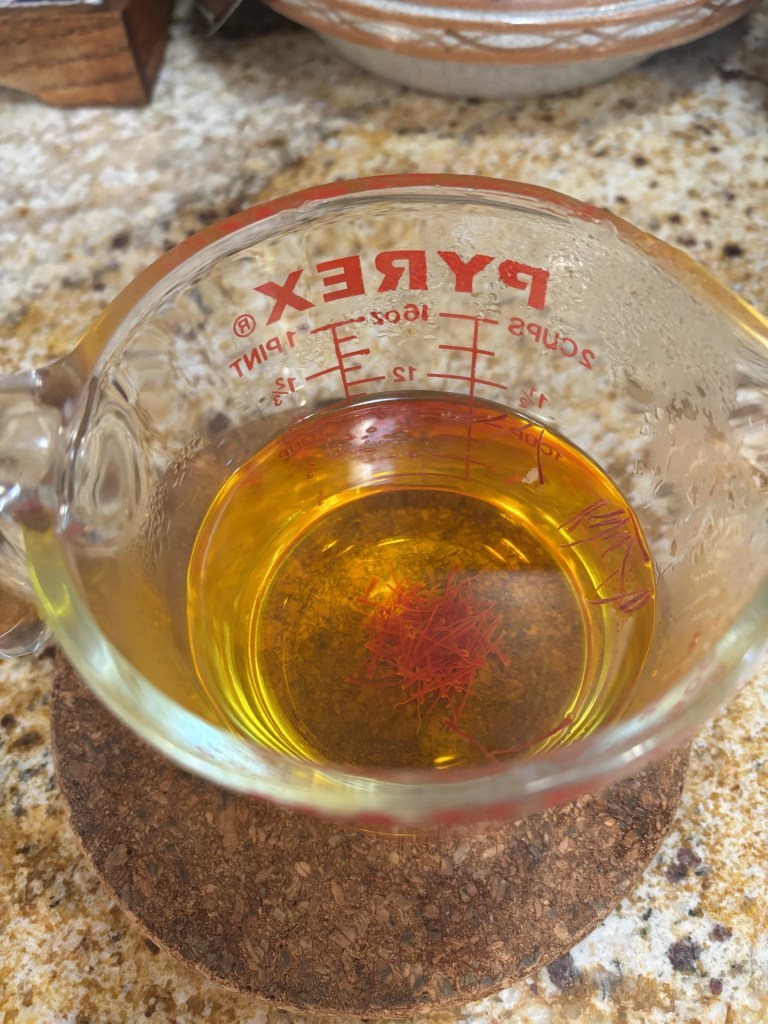
Saffron-Lemon Chicken. Put 1 ½ tsps. saffron threads in a small bowl, pour 1 ½ cups boiling water over them. Let cool, stirring once or twice, then set aside.
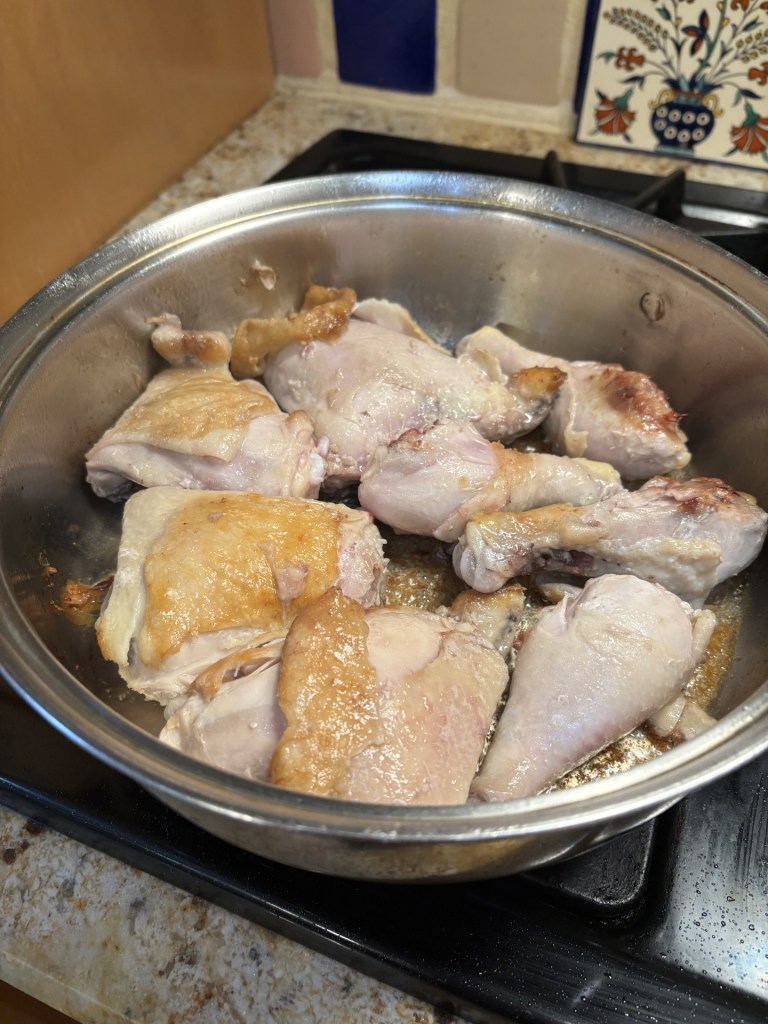
Season the chicken (I used 4 bone-in thighs and drumsticks) with salt. Heat vegetable oil in a heavy-bottomed skillet. Add the chicken and brown both sides, 10-15 minutes. Add 1 head of garlic, cloves separated and peeled and saffron water to the pan. Cover and simmer 1 – 1 ½ hours. Remove skillet from heat and cool 15 minutes.
In a small bowl, whisk together 5 large egg yolks and 2/3 cup fresh lemon juice. Pour egg/lemon mixture into chicken cooking liquid, swirling til sauce is blended. The recipe says: “You can test for doneness by dipping a large spoon in the sauce and running your finger across the coated spoon; if your finger leaves a clear track that doesn’t instantly run back together, the sauce is ready.”
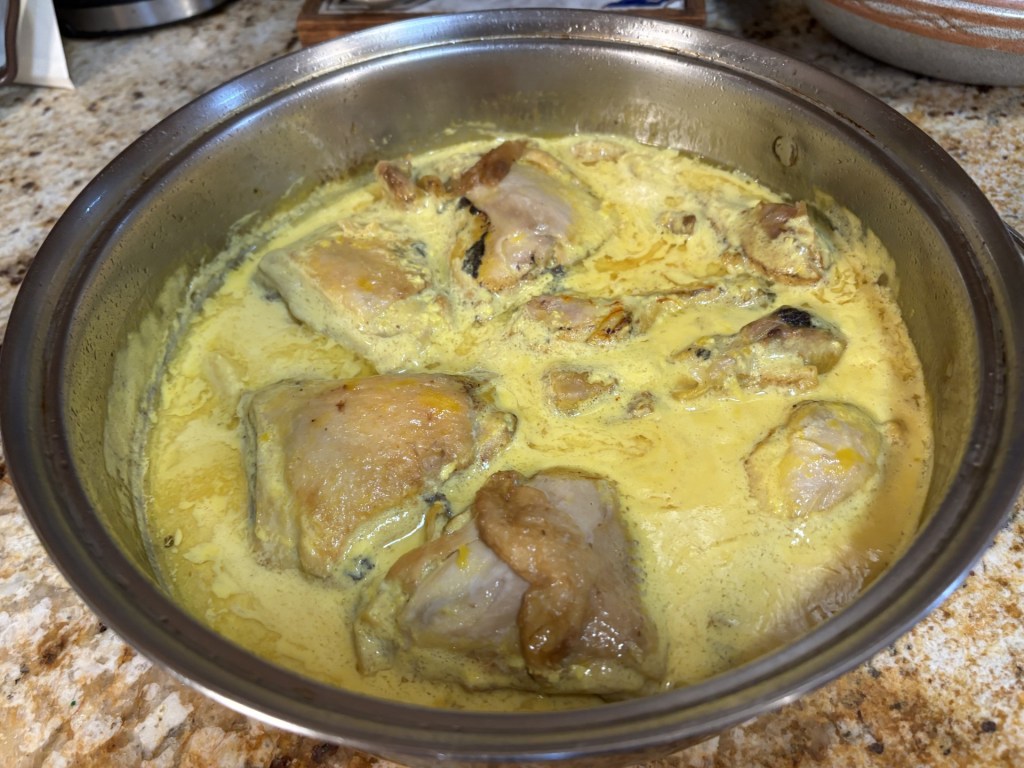
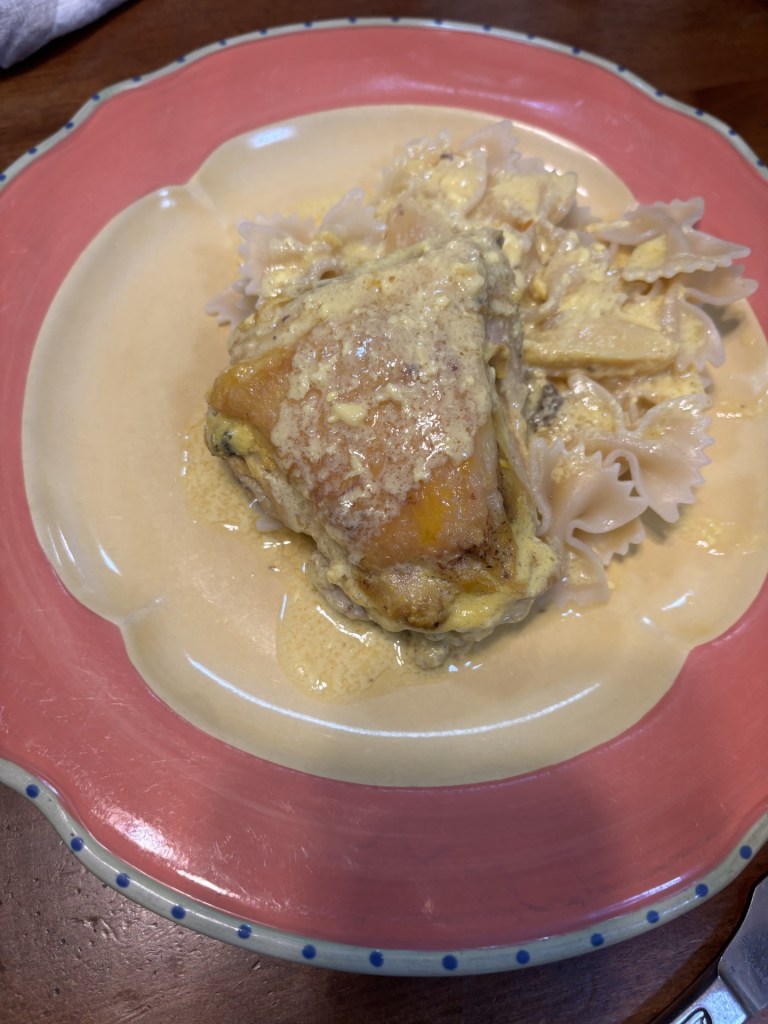
Wide egg noodles were recommended to accompany the chicken. Lacking them, I used farfalle, or bowties, perfect to catch the sauce.
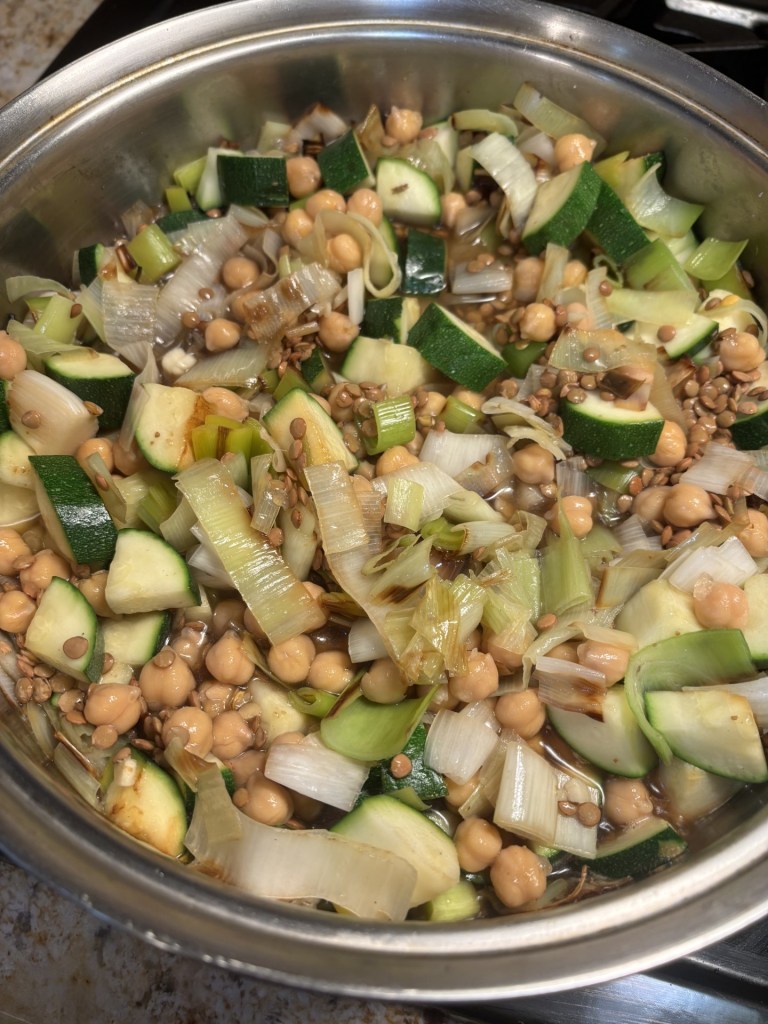
Leek, Lentil, and Chickpea Tagine (https://aish.com/leek-lentil-and-chickpea-tagine/). Heat olive oil in a tagine or a Dutch oven over medium-high heat. Add 3 roughly chopped and cleaned leeks and 2 cubed zucchini, cook for 5 minutes. Add 1 minced clove of garlic, ½ tsp cumin and coriander, cook for another 2 minutes, until fragrant. Add 1 can, rinsed chickpeas, ½ cup lentils, ½ tsp salt, and pepper and mix well. Add 1 ½ cup of vegetable stock. Bring to boil, simmer for ½ hour. The recipe calls for placing the Dutch oven or tagine in the oven, uncovered, and broil for 1–2 minutes, until the surface crisps up. I skipped this step.
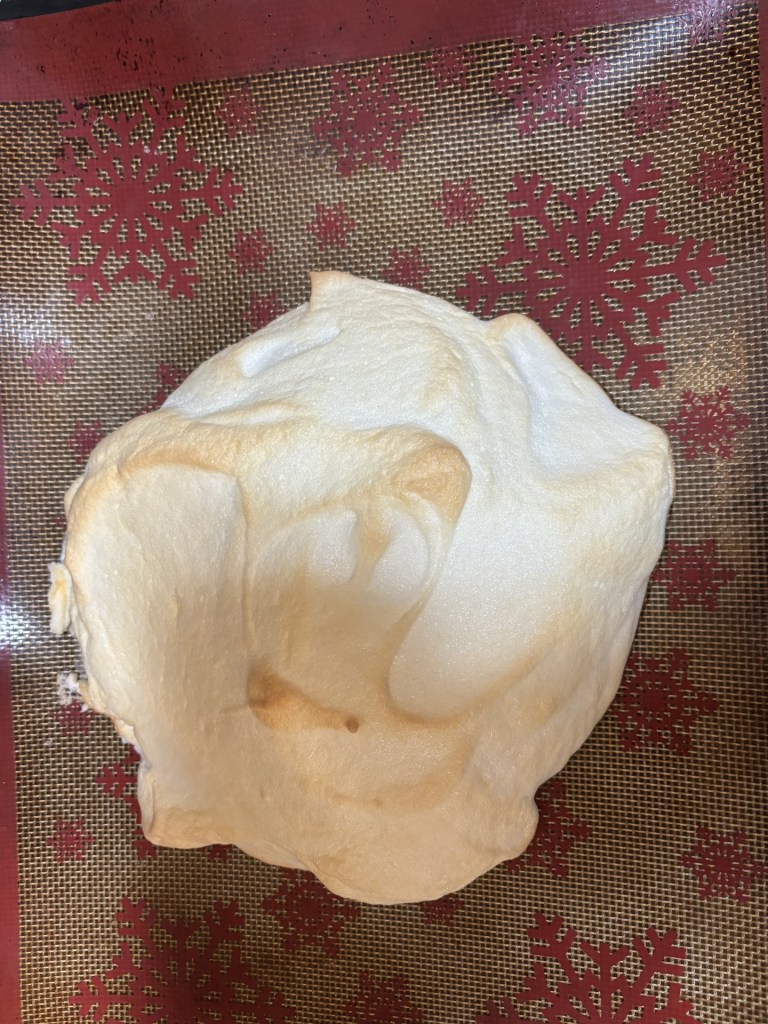
The saffron-lemon chicken dish calls for egg yolks. Our dessert I used the reserved egg whites to make a meringue, a favorite dessert enjoyed by all of us. It was a perfect close of the breakfast meal.
And if you wonder what I might have cooked up in the in-between days, one dish was a pita or vegetable pie. I had left over chard; a friend had brought over some CSA mustard greens. And I had foraged two large bunched of beet greens.*
*I might have written previously that every few months, I ask my supermarket produce man if I can take some of the beautiful beet greens. Most people throw them away.
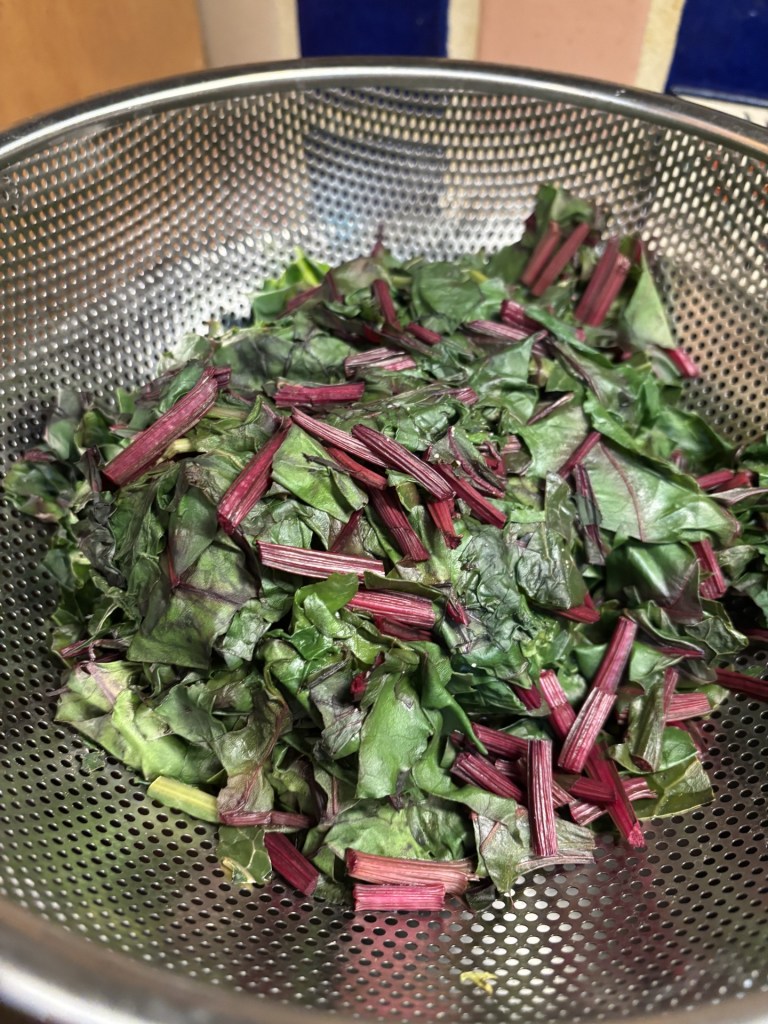
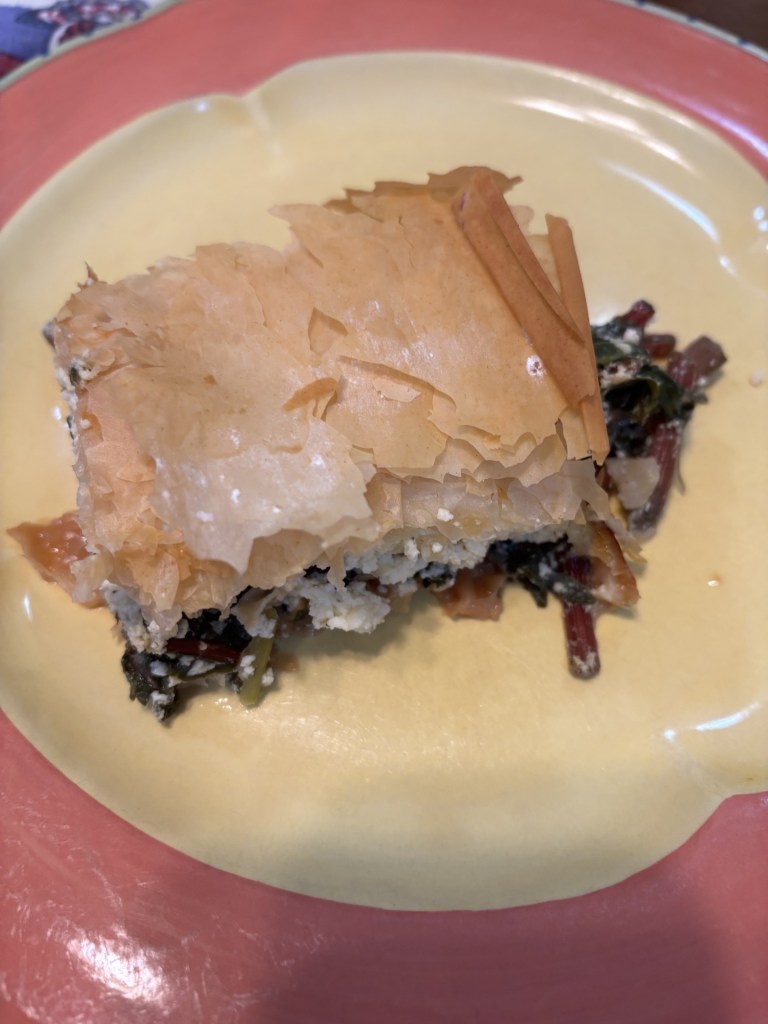
Mixed vegetable pita. First, thoroughly clean the greens and chop. Next, steam them gently in bunches. I also sauted some onion and garlic. Cool both and mix together. Throughly mix a large container of ricotta cheese, with about 16 ounces of feta cheese and 2 beaten eggs; add salt and pepper to taste.

Liberally butter or spray a baking pan (I used a large one to accomodate all the greens). Open your packet of filo and gently unwrap. Line the pan with about 6 layers of filo, butter each layer (Constant Companion cannot eat butter, I use olive oil for this step). Gently add the greens, top with the cheese-egg mixture.* Top the pan with another 6-8 layers of filo, making sure to tuck in the edges around the pan.
*I decided not to mix the greens and cheese as you would for a spinach pie frankly because I did not have a bowl large enough!

Bake one hour in a moderate over (350F). I think I should have scored it before putting in the over, making it easier to cut. Interestingly, the greens which tend to be sharp when raw where quite mild after cooking.*I decided not to mix the greens and cheese as you would for a spinach pie frankly because I did not have a bowl large enough!
I think that was enough cooking to hold the family for a while. Or maybe not.
 Creatively Annette
Great recipes! Happy and Healthy New Year!!!!
LikeLike