My folklore radar was activated several times my recent adventurous sojourn in Jaipur, India. It started clicking shortly after I arrived, with the celebration of the Teej festival (see 9 August 2024 post). This was real live traditional culture in action.
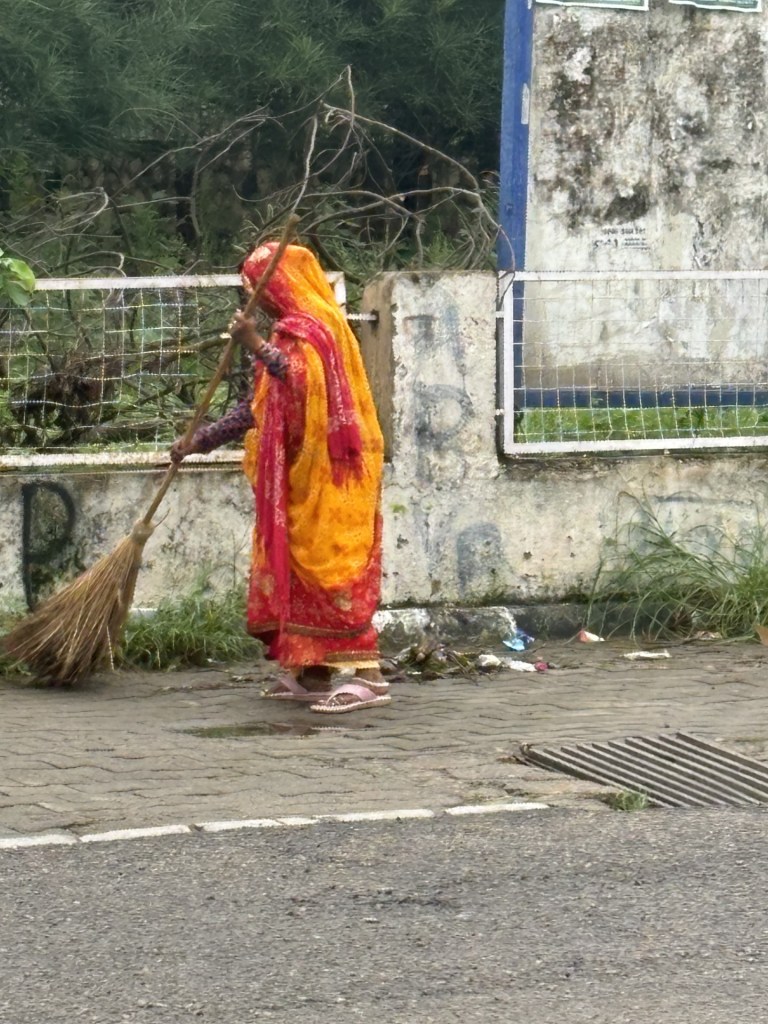
Aspects of folk culture and folklore engulfed me daily: the foods I was served, the women I watched at the university campus cleaning with broomstraw brooms, and what seemed to be a celebration every week that disrupted by carefully laid plans of five days of teaching.
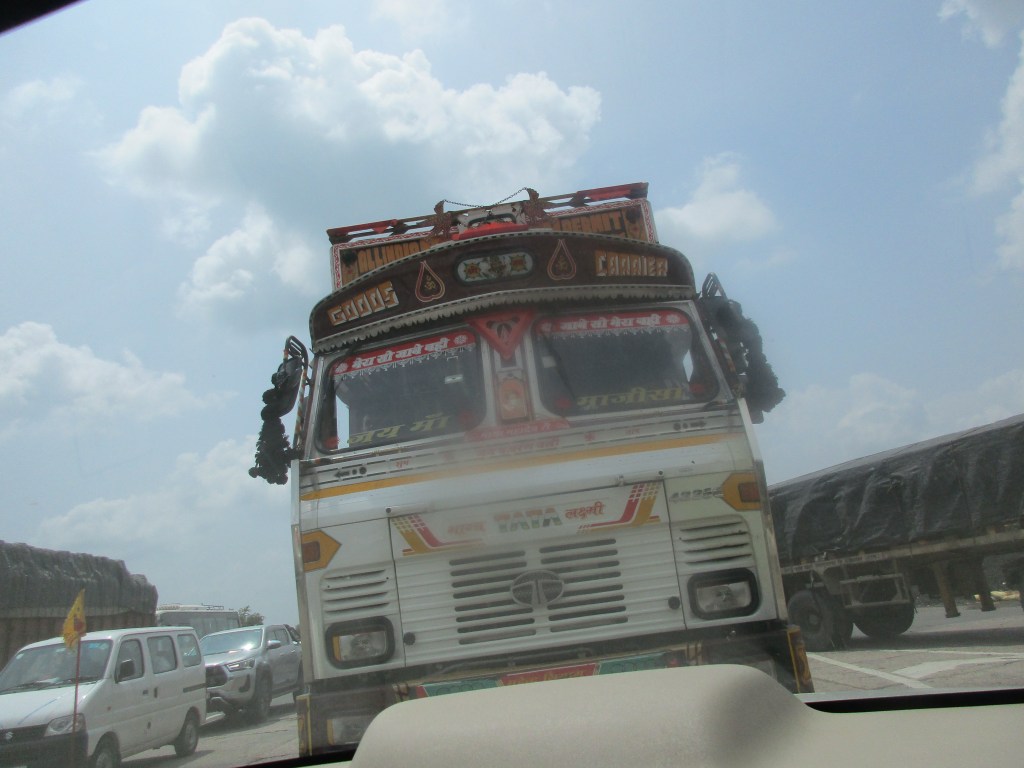
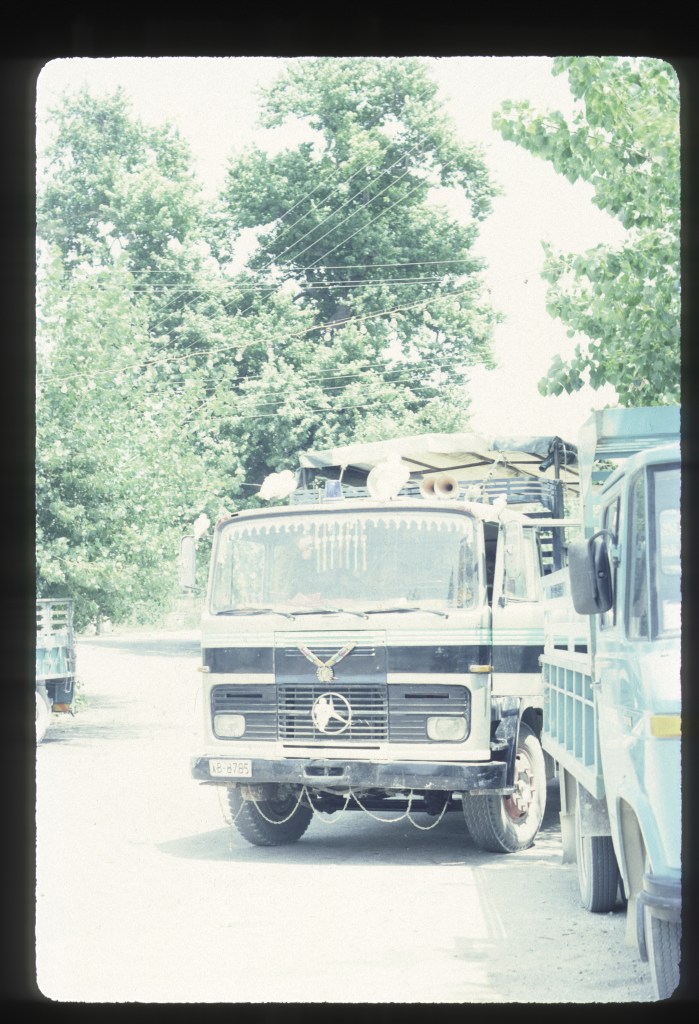
On our excursion to Agra to see the Taj Mahal – a must-do for every visitor to India – there it was, aspects of traditional culture. On the long drive, among other things, I started noticing large black yarn tassels suspended from the front mirrors of large trucks we passed on the road.
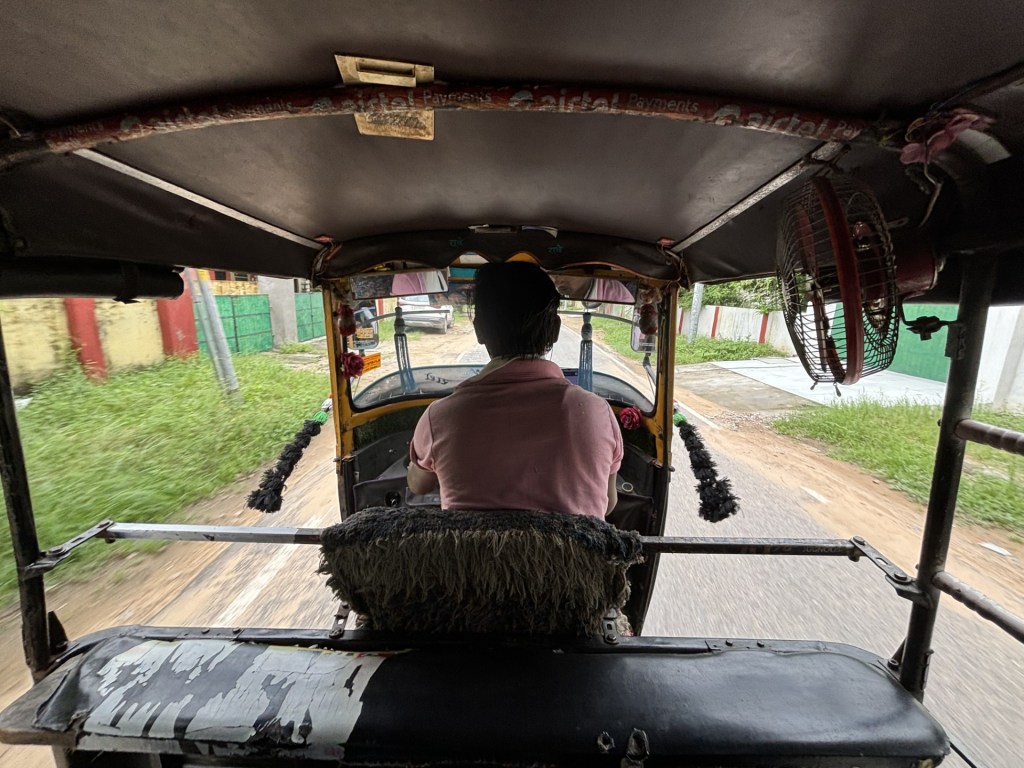
The next few weeks these mysterious tassels appeared on other vehicles almost everywhere I went. I saw them on the auto rickshaws or tuktuks around town, even on a few cars. They usually were suspended on the sides of the vehicles, sometimes on the rear bumper.
Immediately, I was reminded of a belief learned in my childhood from my Greek-Jewish mother, who learned it from her mother. My nona firmly believed that you had to be careful what you “to mat,” “the eye.”
One of my students pointed out that trucks carry another message to ward off the evil eye. The Hindi phrase “Buri Nazar Waale Tera Muh Kaala” or “Evil eye bearer, may your face turn black” can often be read behind vehicles and on other property. The person casting the evil eye will have their face blackened, which is meant as a curse for their malicious intentions. It is meant to keep away any jealousy or bad intentions someone might have. I’m not sure if I saw this as I do not read Hindi.
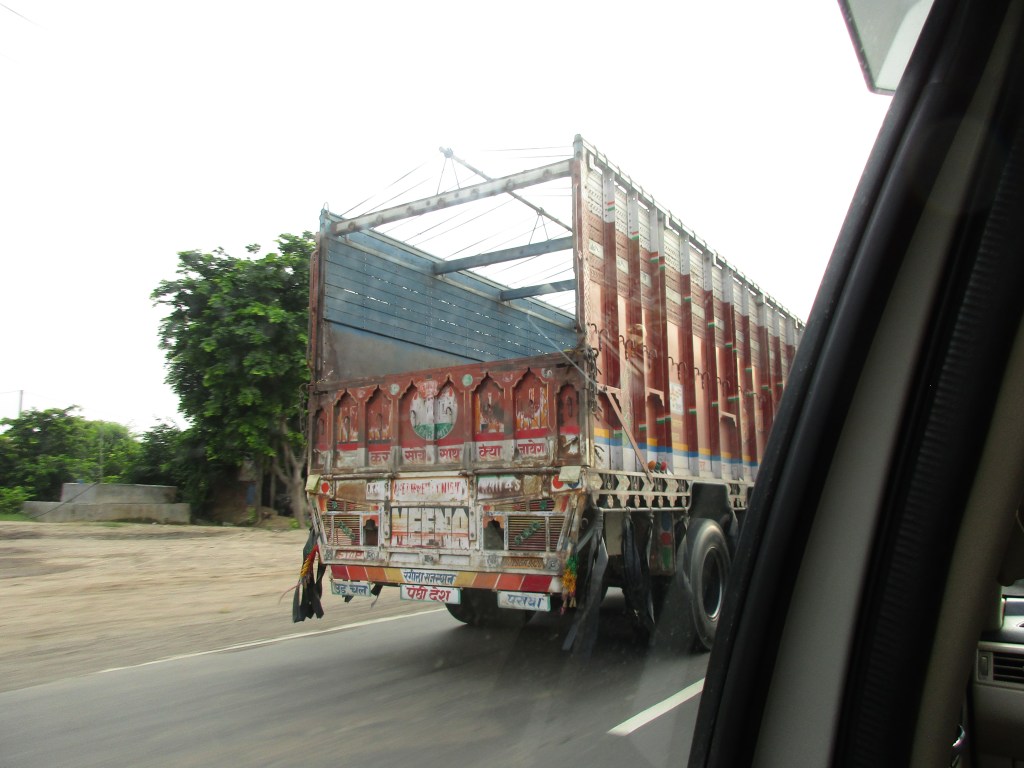
Upon asking, I was told that yes, it was a protection against “the eye.” I was also told that before motorized vehicles replaced animals for transportation, the animals had some form of protection.
This practice reminded me of one I saw in Greece in the 80s. Cross-country trucks also were festooned with beads (as animals had been in the past) to counter the evil eye. Here’s Greece and India …


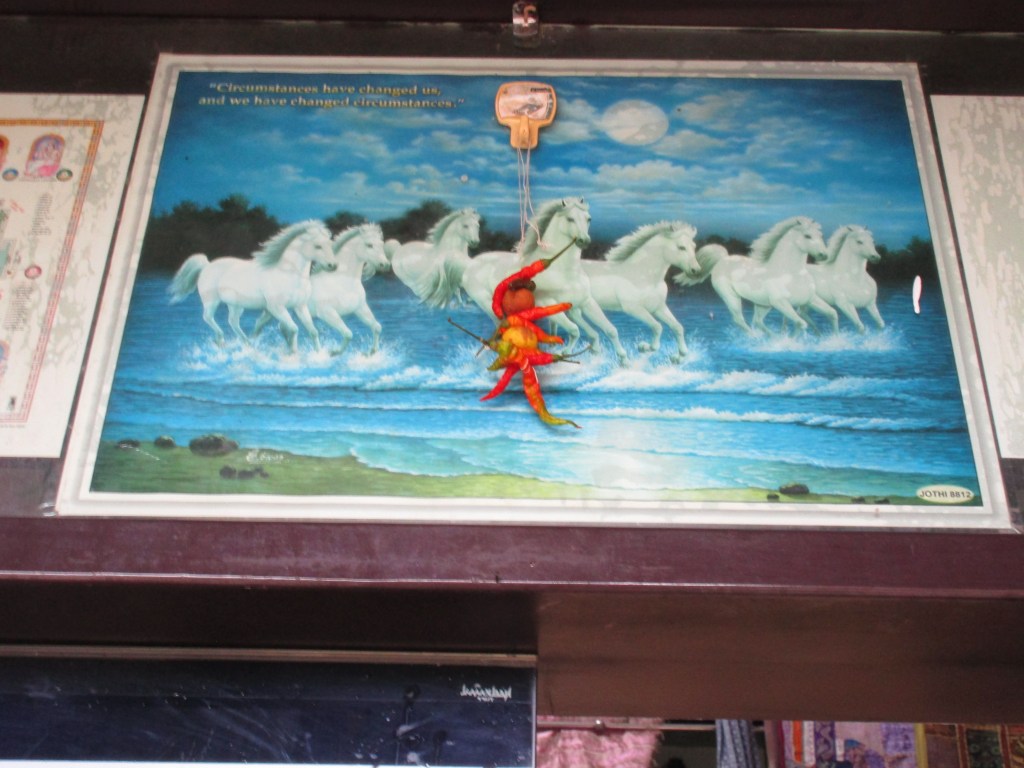
In Agra, I noticed a strand of peppers suspended high above the entryways of several businesses. Yet another material form of protection of the ubiquitous evil eye. After that, I seemed to see this talisman on doors of shops in Jaipur.
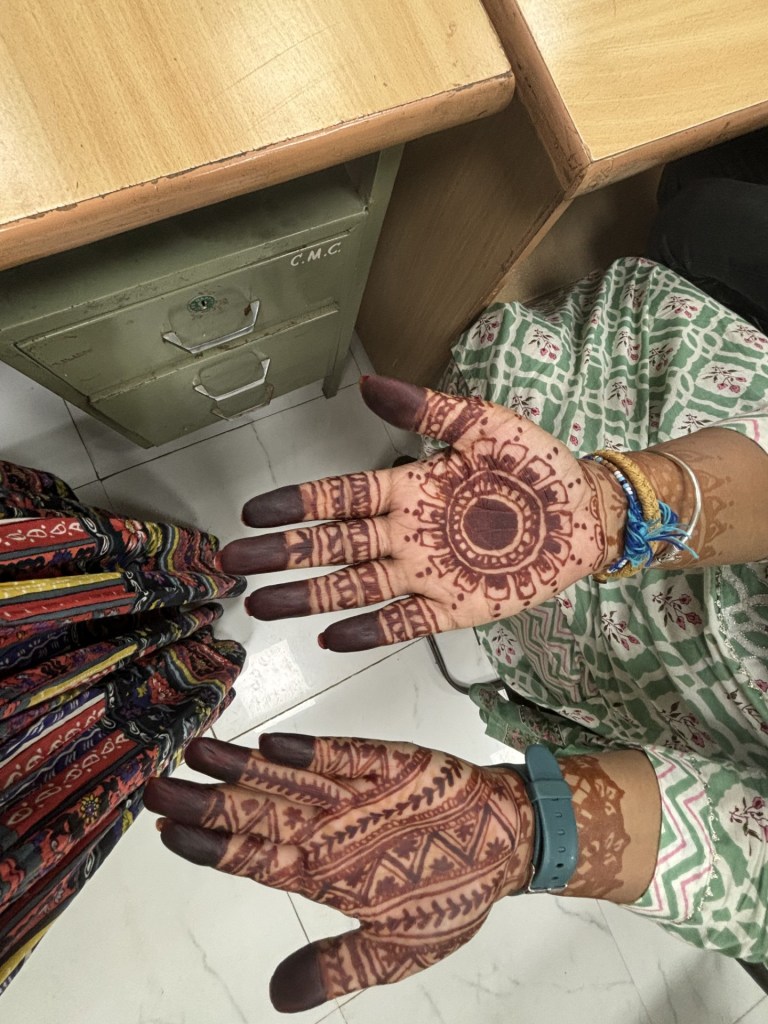
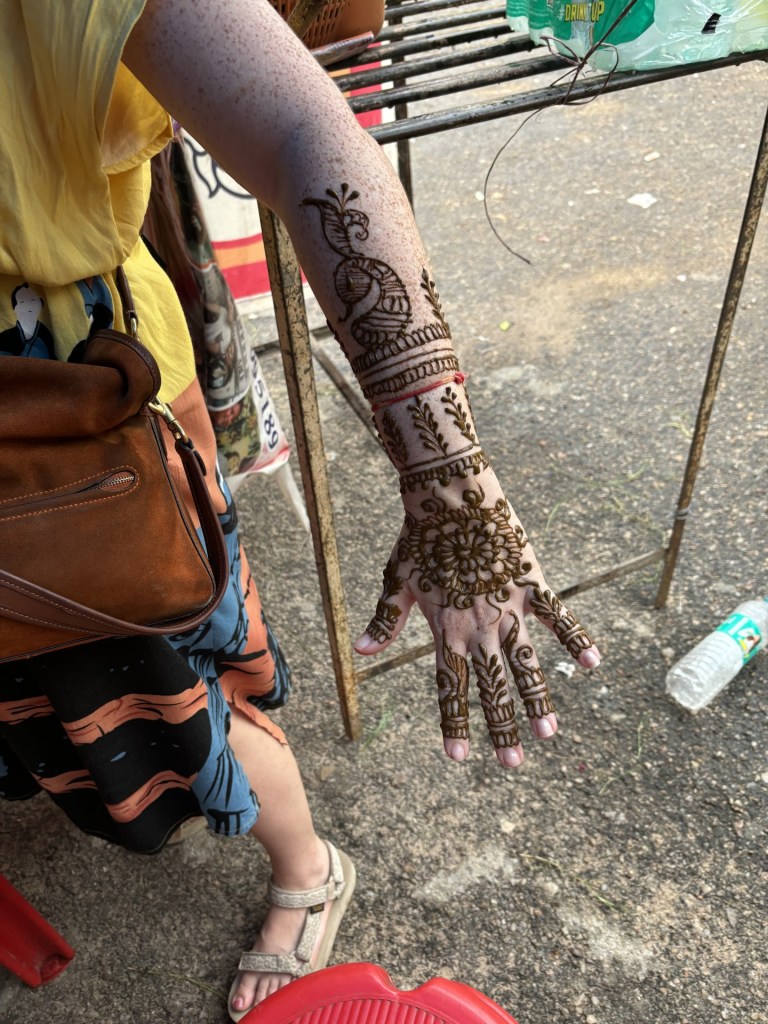
I’ve already written about the mehendi or henna work. The wonderful patterns show the transition from wishes for prosperity and good health to a fashion statement. Here’s a few more examples of the intricate patterns.
The Hindu festival of Raksha Bandhan (Brother and Sister Day) fell on August 19, another day when class was cancelled; too many students were going home. Translated from Sanskrit, Raksha Bandhan meaning translates to “bond of protection,” as my students explained to me. The festival honors the special bonds shared between siblings, relationships that are rooted in deep care and love for one another.
As part of the festival practices, sisters tie rakhi to their brothers’ wrists. This thread represents the siblings’ love and wishes for each to find fulfilling happiness. In doing so, they pray for their brothers’ good health and long life.
Merchants at towns along the road back from Agra were preparing for the holiday. Brightly decorated stalls were being set up. I noticed red strings in front of many of them. The following day I found out they were the rakhi.
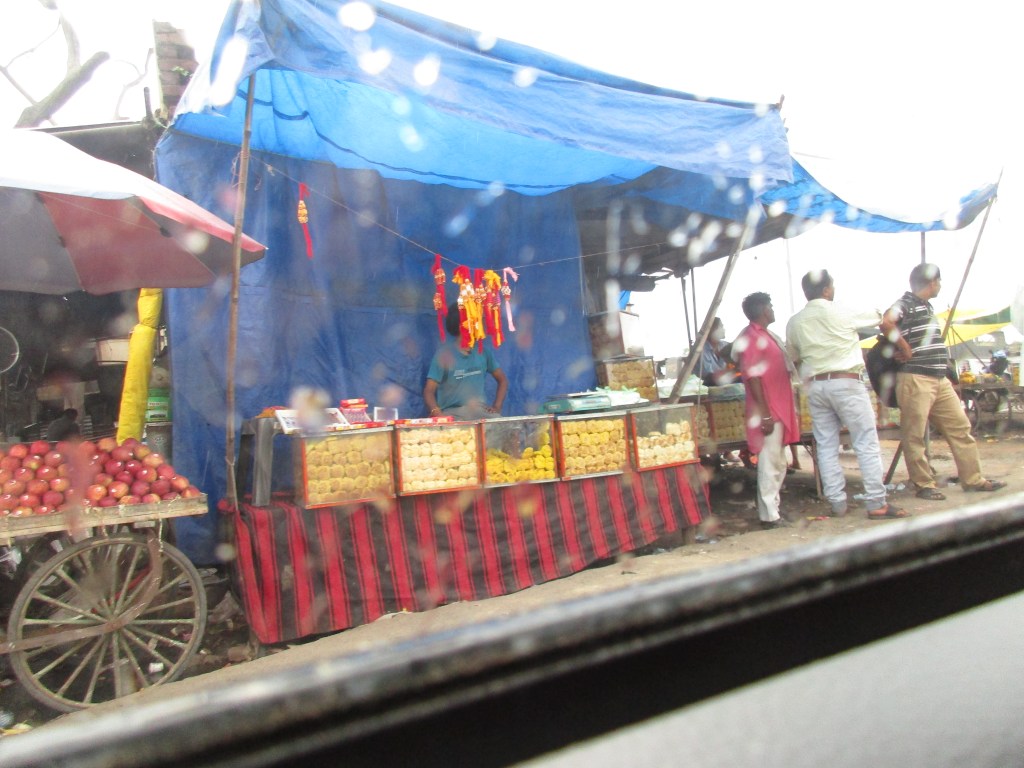
Merchants at towns along the road back from Agra were preparing for the holiday. Brightly decorated stalls were being set up. I noticed red strings in front of many of them. The following day I found out they were the rakhi.

And again, this was a case of once it caught my eye, I saw men’s wrists with a variety of different rakhi.
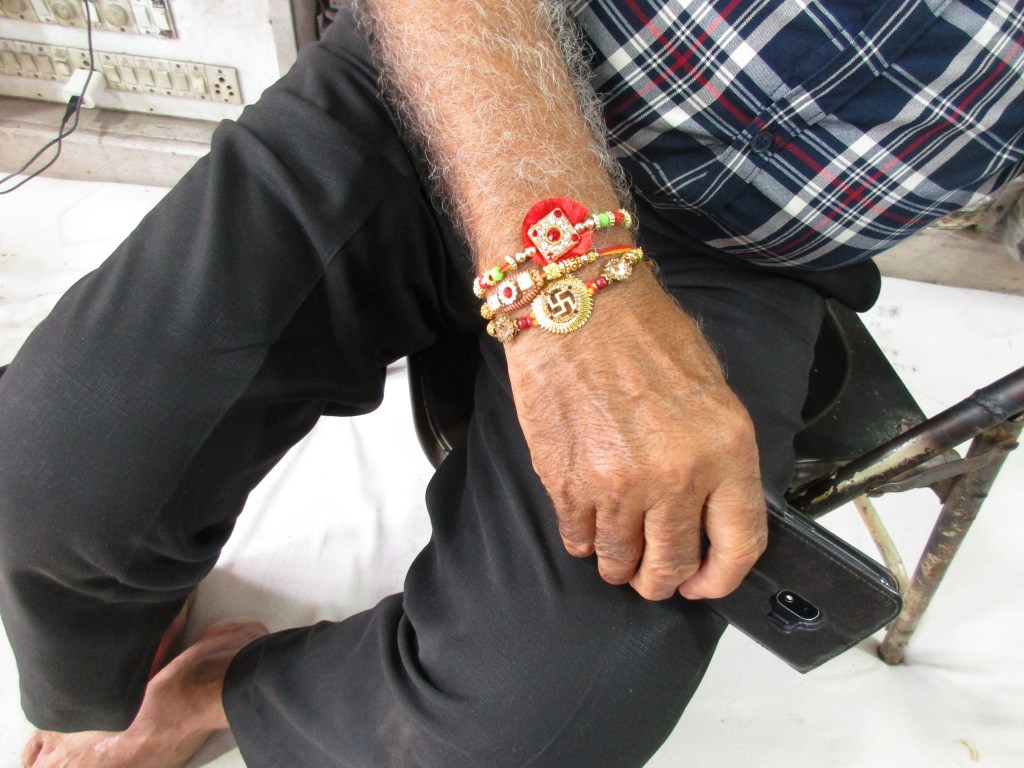
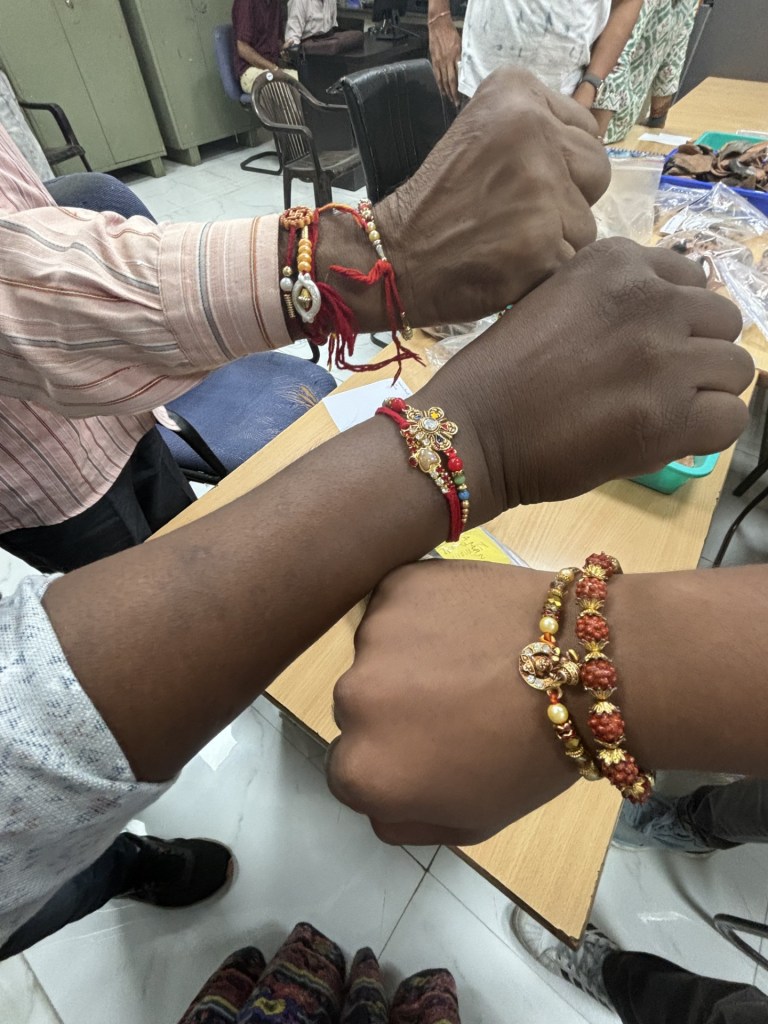
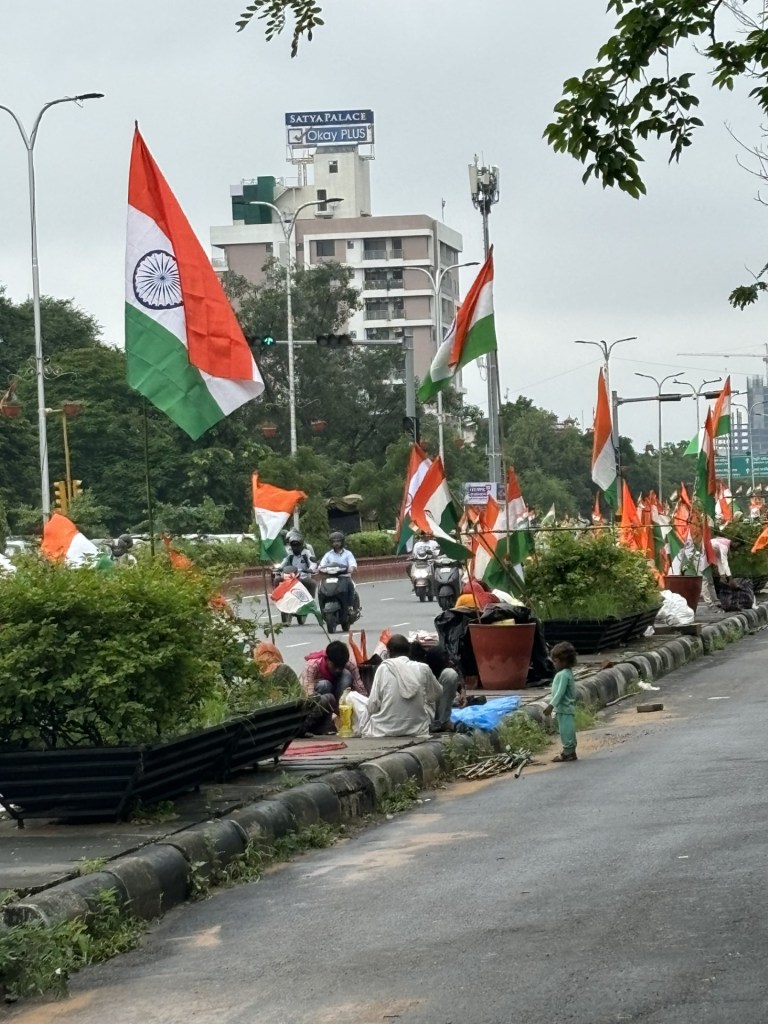
Another holiday that interrupted my teaching schedule was Independence Day (August 15). I was unable to attend because the morning was marred by a seasonal rain storm.

On the days leading up to the holiday I saw vendors set up impromptu stands selling goods to celebrate the day as I walked to the University.
It’s funny how we notice the things around us. Maybe you are somewhere and see something and you wonder what it could possibly be. Then after that, there it is, everywhere, all the time.
 Creatively Annette
I really enjoyed this blog. It was so interesting. Myrna
LikeLike
Thanks, Myrna
LikeLike
This is really, really, good – thank you for sharing this with us!
Still think you should compile everything at some point into a single volume.
LikeLike
Thanks so much Martha
LikeLike
Very good article that perfectly describes the Indian festivities and the desire to always be protected from the evil eye. India is, undoubtedly, a country where mythology and beliefs are palpable in everyday life.
LikeLike
Thank you so much
LikeLike