One of the features of the built environment of Rajasthan is its forts. Their presence reminds me of traveling through some parts of Europe where castles cling to hilltops overlooking the surrounding lands.
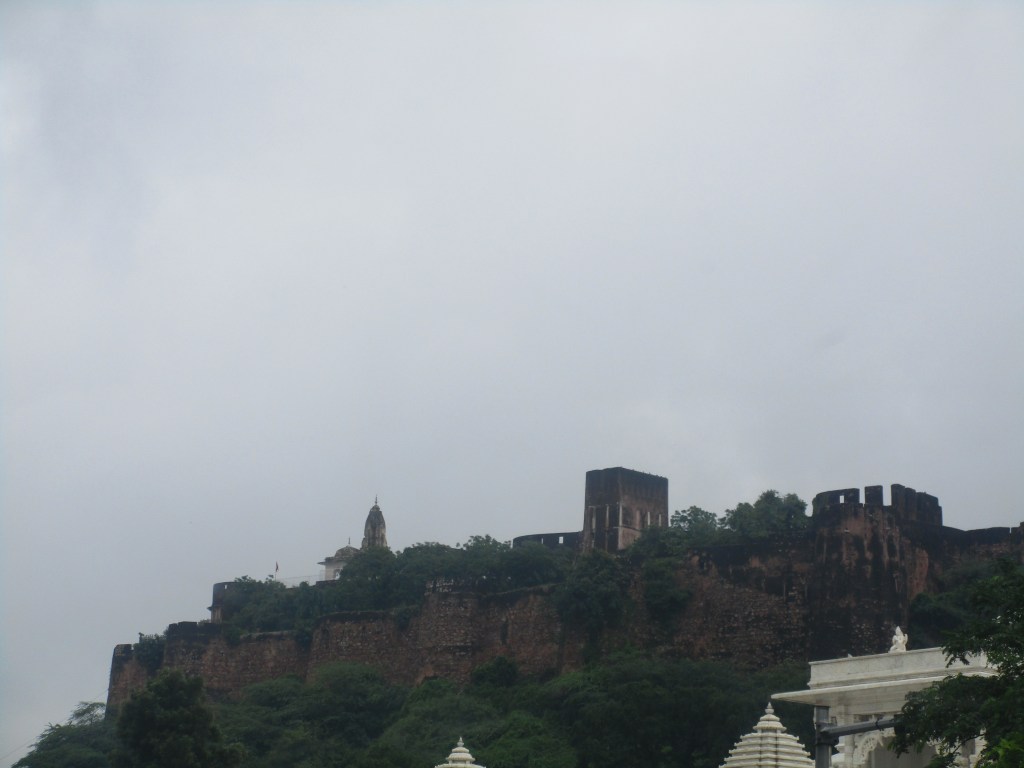
On my first day in Jaipur, I almost immediately noticed one such fort quite near the University high above a neighboring temple. I was told that it is a private fort, closed to the public except for one day a year when the temple in its grounds is open.
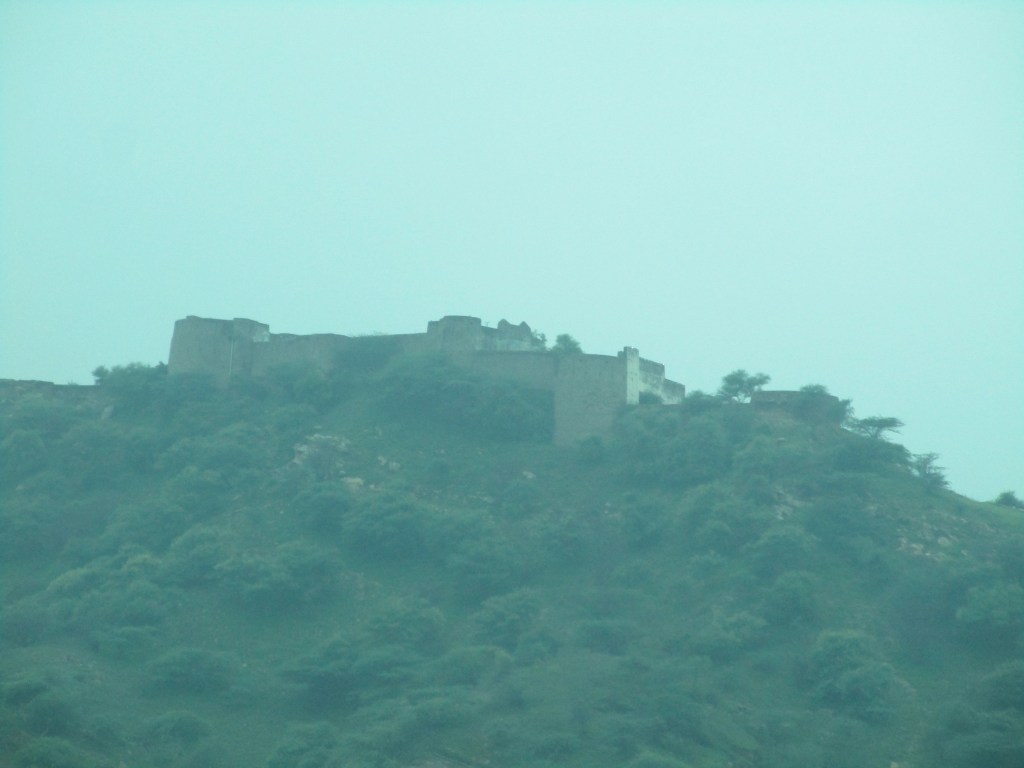
Over the weekend, during the long train ride to Jodhpur, I could not help but notice a hilltop fort in the distance.
In the past week, one of my hosts took me to two of the three forts in the environs of Jaipur and a third after a long train-ride away in Jodhpur. There are so many shared features in these sprawling structures as well as distinctions that I caught my attention.

The Amer (or Amber) Palace Fort sits on a hill overlooking Maota Lake outside of Jaipur. It is an extensive palace complex built of sandstone and white marble, a fusion of Mughal and Rajput architecture. The Amber Fort was constructed in 1592 by Raja Man Singh and expanded over the next 150 years when the capital was moved to Jaipur in 1727. The palace was the residence of the Rajput Maharajas and their families for many, many years.
The four sections of the fort have their own courtyards. The sections include the King’s quarters, the women’s sections, gardens, temples, and more. Raja Man Singh had 12 queens so he made 12 rooms, one for each queen.

The main entry is through the Suraj Pol (Sun Gate) which leads to the first main courtyard, Jaleb Chowk, where returning armies displayed their plunder. The Royal family’s women watched through the latticed windows.
A temple dedicated to Shila Devi, a Goddess of the Chaitanya cult, is at the entrance to the palace.
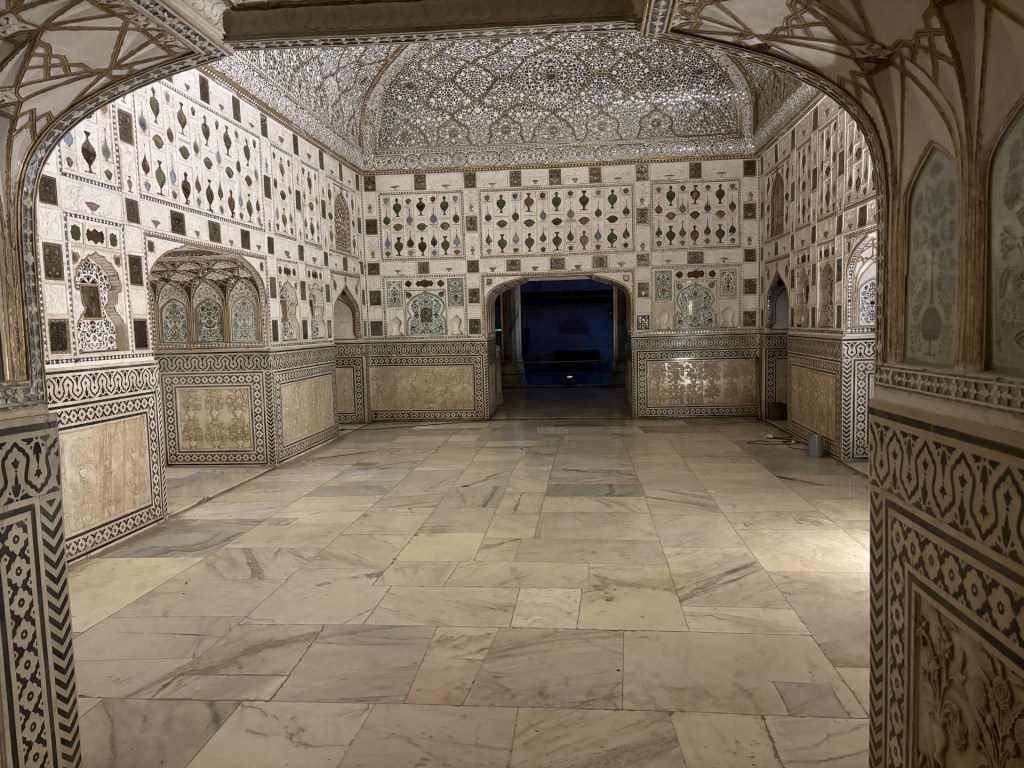
Another notable area of the Amber Fort is called the Jai Mandir, or Sheesh Mahal (mirror palace) for the exquisite mirror mosaics and colored glass lining the walls and ceilings. The mirrors are designed with colored foil and paint which glittered bright under candlelight during its heyday. It was begun by Man Singh in the 16th century and completed in 1727, the foundation year of Jaipur state.

The garden was built by Mirza Raja Jai Singh in the 17th century. It is laid out with narrow channels marble-lined around a star-shaped pool with a fountain at the center. Water for the garden enters through channels from surrounding corridors.

The oldest part of the palace fort is the pillared pavilion in the central courtyard which was used as the meeting place by the maharanis (queens of the royal family). All sides of this pavilion are connected to several small rooms with open balconies.
Nahargarh Fort is the second fort we visited. With Amber Fort and Jaigarh Fort, this once formed a strong defense for Jaipur in the past. It was ever attacked in its long history. Nahargarh meaning “Dwelling of Tigers.”
The Nahargarh Fort was constructed on the Aravalli hills, said to be one of the oldest mountain ranges in the world, by Maharaja Sawai Jai Singh II, in 1734, as a retreat destination for royal family women. It was also a hunting residence of the Maharajas. The almost single lane road twists and turns up the mountain revealing views of the city along the way. How my host was able to drive with traffic of all shapes and forms competing for space going up and down amazed me.
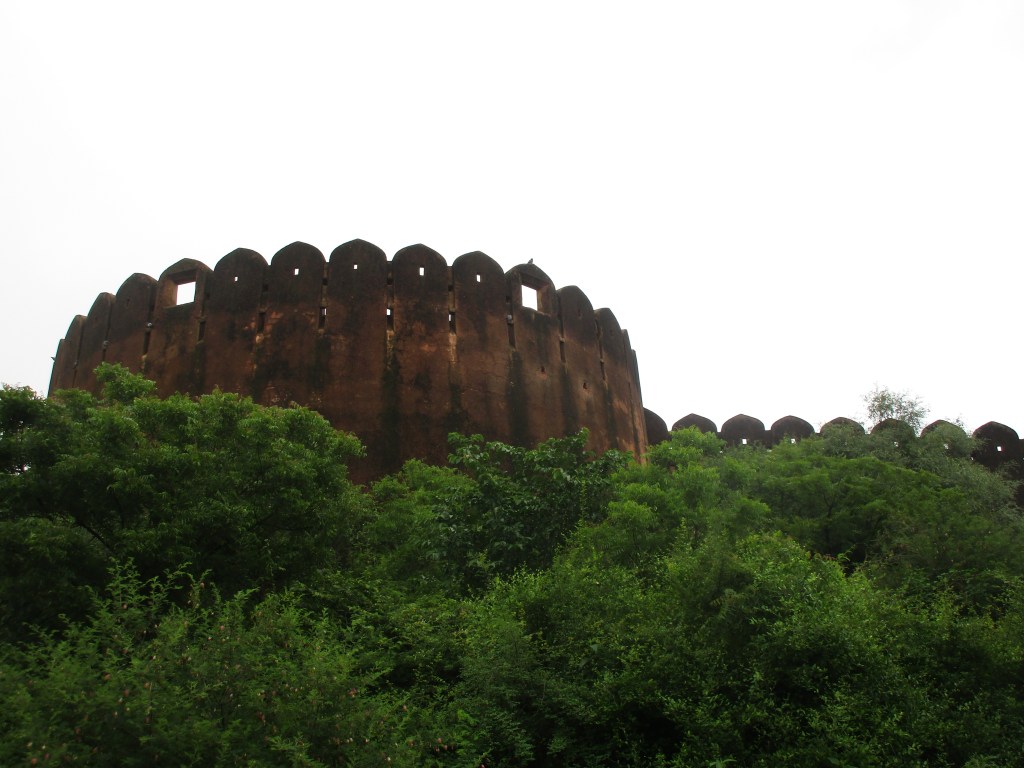
In 1868, King Sawai Ram Singh refurbished the fort. It was rehabilitated in 1880 by Maharaja Sawai Madho Singh who added wall paintings and stucco patterns. The fort follows Indo-European architectural forms.
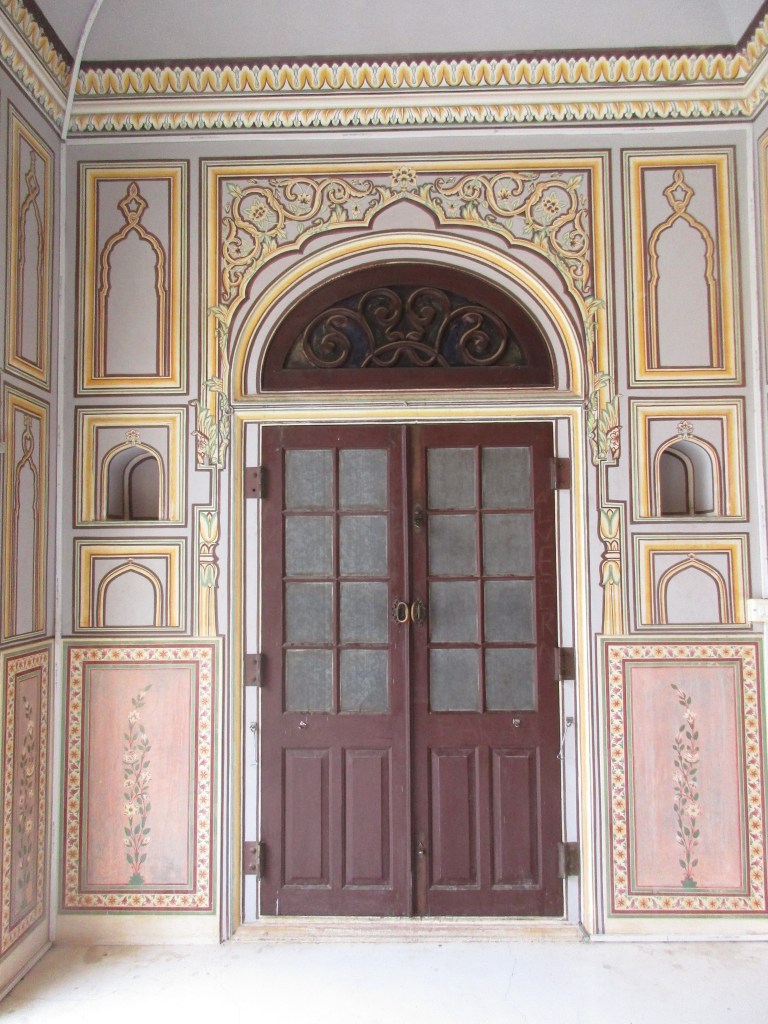
A temple dedicated to the deity of Jaipur rulers is near the entrance gate ‘Tadigate.’ Another temple, dedicated to the Rathore prince, Nahar Singh Bhomia, is inside the fort.
Another attraction in the fort is the ‘Madhavendra Palace’ built by Sawai Madho Singh in the 19th century. The Palace was divided into nine identical apartments and each with a lobby, bedroom, toilets, kitchen, and storage.
As we wandered through the seemingly endless rooms and courtyards of the fort, I noticed several rooms that were locked and closed to the public. They were part of the 4th edition of the
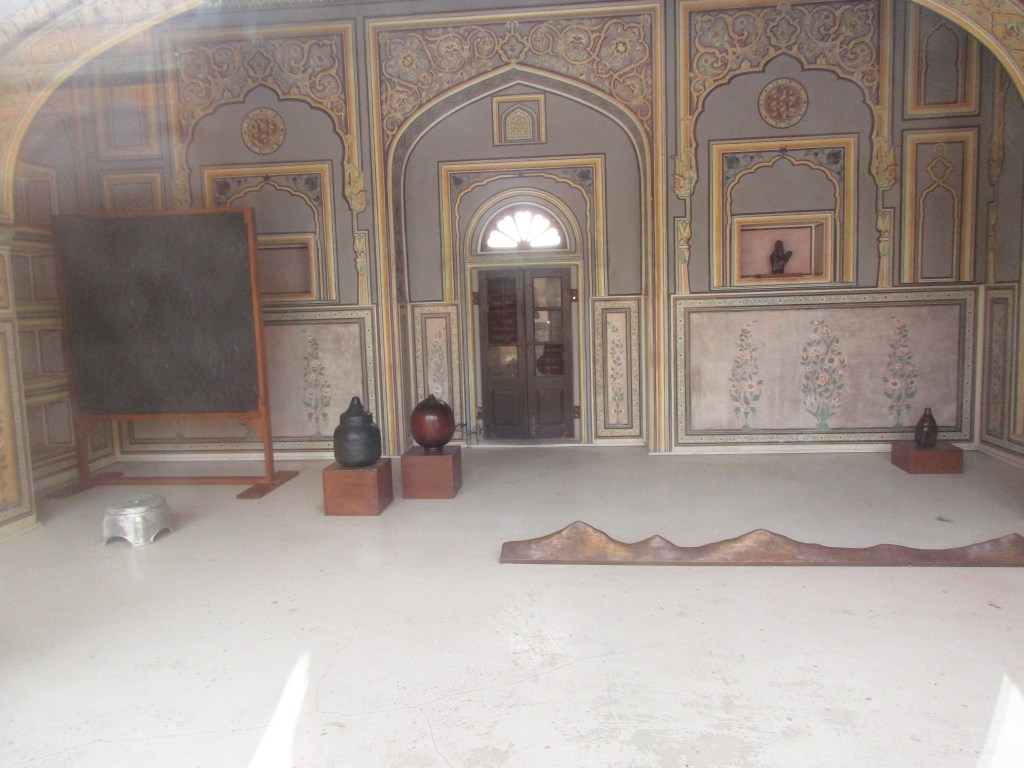
‘Sculpture Park’ at the Nahargarh Fort, a collaboration between the Rajasthan government, Saat Saath Arts Foundation, and a host of corporate sponsors. The current edition includes works by eleven artists in the courtyard and apartments of the 19th-century Madhavendra Palace. The philosophy this year is the same as in previous editions: to put contemporary art into a heritage structure and to escape the white box of the museum and gallery space. The curator Peter Nagy, director of New Delhi-based art gallery Nature Morte, has chosen from Indian and international artists every year.
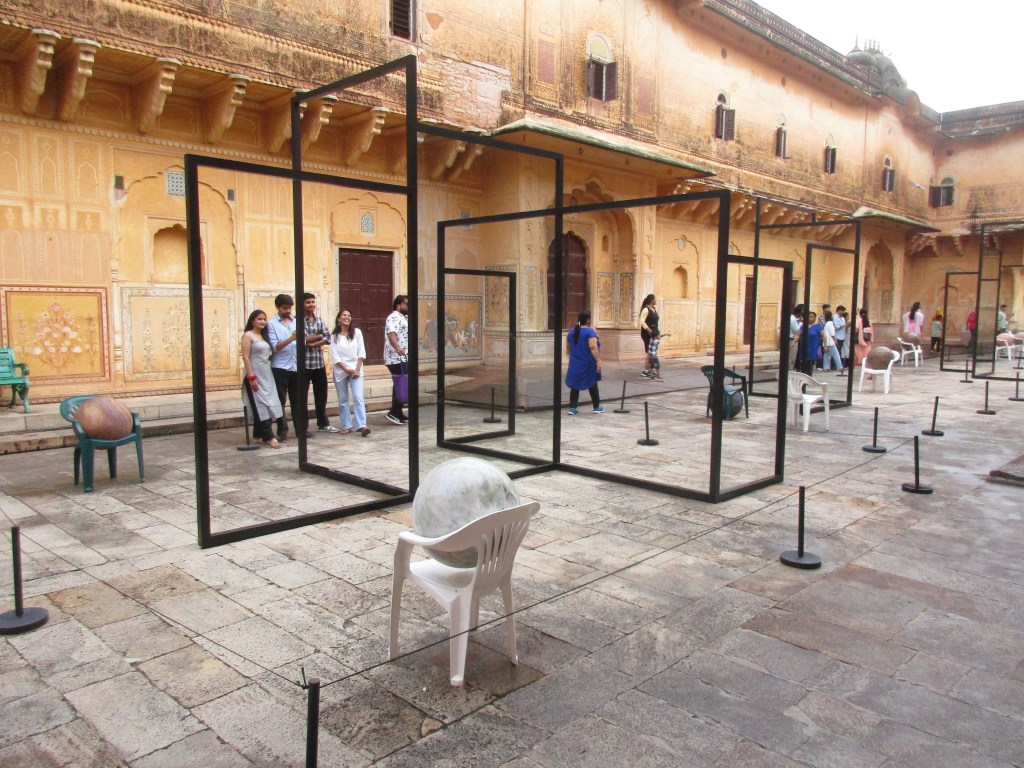
I first saw similar installations of contemporary art in an historic site at Vienna’s Belvedere Palace. The practice has grown; our Vizcaya Museum and Gardens hosts an artist-in-residence every year. I was thrilled to see a few of them in this fort. One was totally overlooked by other visitors who did not realize the structures were art; the other is a selfie spot! I was sad that the
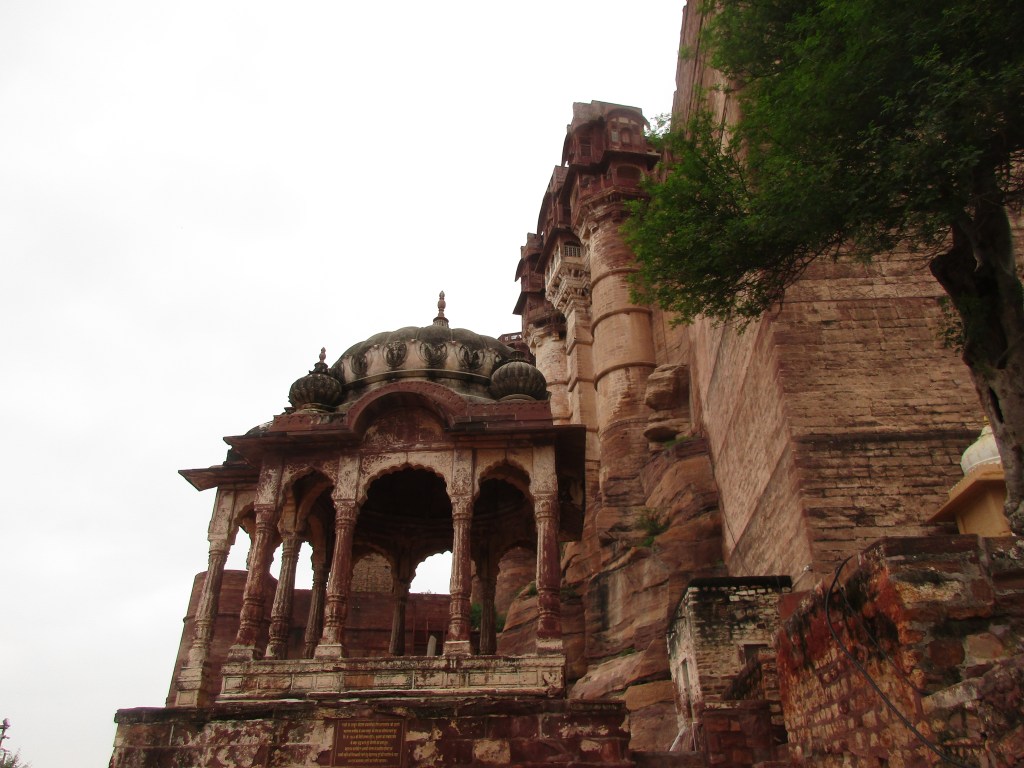
Next stop or fort was Mehrangarh in Jodhpur, one of the largest forts in Rajasthan. For over five centuries it has been the headquarters of the senior branch of Rajput clan known as the Rathores. Unlike the two previous historic sites, Mehrangarh is also a museum filled with thoughtfully presented exhibitions of a vast collection of artifacts, including weapons, textiles, paintings, and royal palanquins, providing a glimpse into the opulent lifestyle of the Rajput rulers.
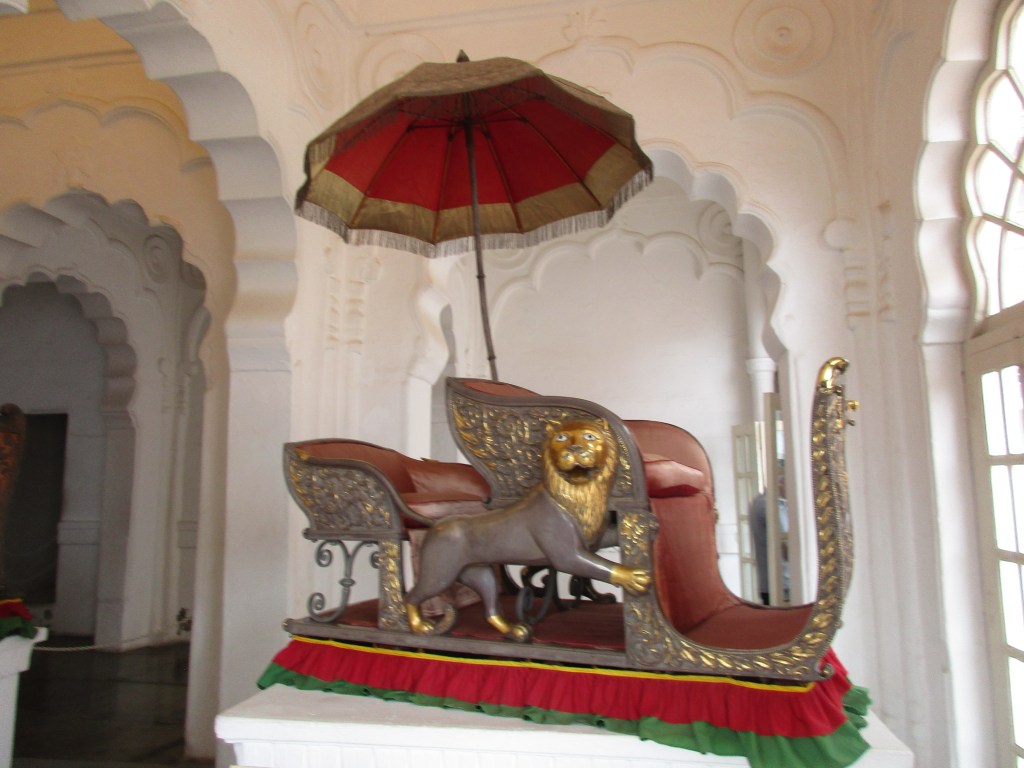
The fort was begun in 1459 by Rao Jodha, a Rathore ruler and founder of Jodhpur. It is located on top of a high hill at the center overlooking the city spreading below. The name Mehrangarh means ‘fort of the sun,’ a reference to the clan’s mythical descent from the sun god Surya. The palaces in the fort are filled with intricate carvings, latticed windows, and beautiful courtyards.

The current head of the Rathore clan, Maharaja Gaj Singh II, is committed to the preservation of the buildings and the precious family possessions that are a record of the legacy of his predecessors. In addition, visitors to Mehrangarh are also given amazing views of Jodhpur, the blue city spreading below the fort.

One point I try to emphasize to my students is that often the building housing a given museum should not be overlooked. The building is also part of the collection, along with the materials and exhibits it houses. Three astounding forts in Rajasthan clearly illustrate this point. Taken alone, the structures document the lengthy history of this area. The artistry for which Rajasthan is renowned is preserved in their structures and spaces. Then, there are wonderful additions – the innovative inclusion of contemporary art installations in one, the interpretive exhibitions drawn from the impressive family collections in another – each of which enriches visits to these important historic forts/palaces.
 Creatively Annette
What amazing places! Thank you for sharing.
LikeLike
Rajasthan is abode of many Forts and fortresses. We have 6 forts inscribed as UNESCO World Heritage Sites. Amer is the one you have visited. Rest are: Chittorgarh fort, Kumbhalgarh fort, Gagron fort, Jaisalmer fort and Ranthambore fort.
LikeLike
I so enjoyed everything . Just fascinating. Thank you for sharing!
LikeLike
Thanks for sharing this history! So much to learn about!
LikeLike