I had the wonderful opportunity to partake in two of my passions this week – museums and folk culture. My student’s first assignment was to convene at the Albert Hall Museum for a walk through and exercise in analysis. Later in the day, one of the students rescued me and off we went to the city center for the annual Teej Festival.
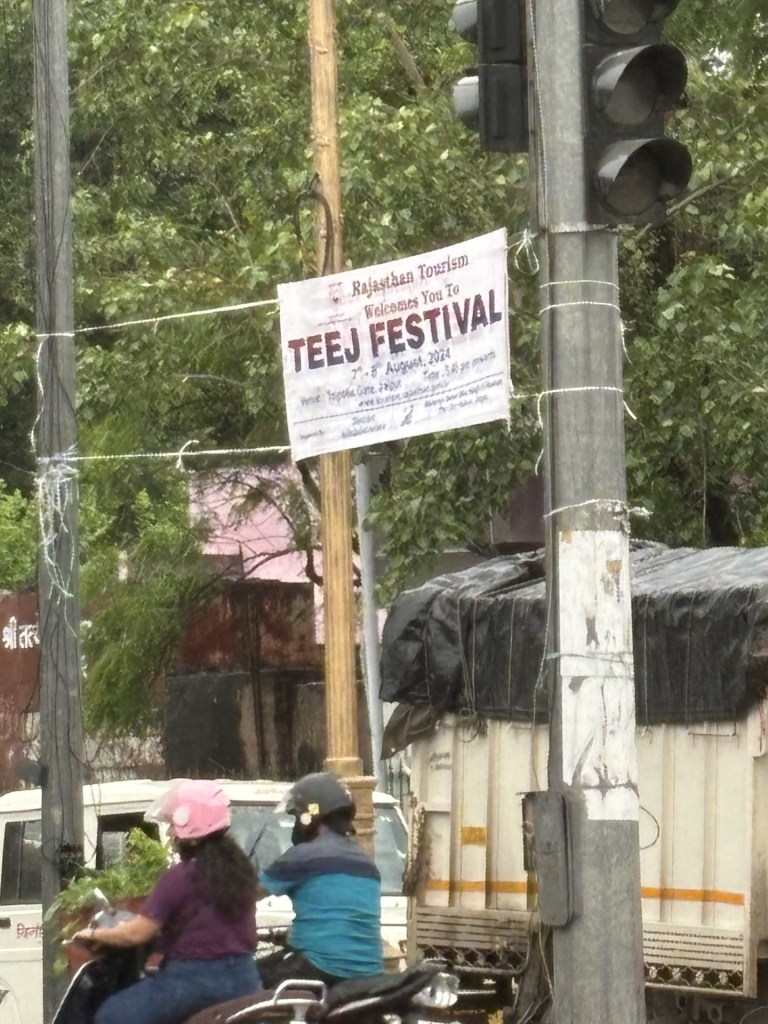
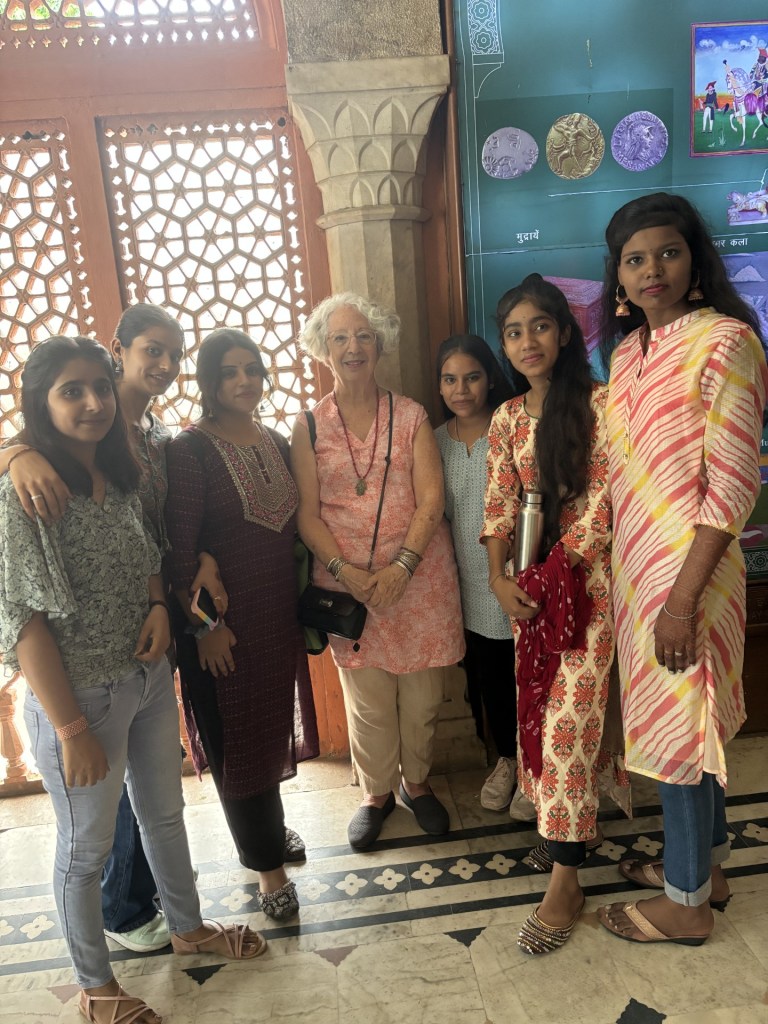
Believe it or not, the two are connected, same founder, Sawai Ram Singh II. The museum was filled with people, young people, old people, families with small children. When my students were off to complete an assignment, I spoke to several visitors (actually, they approached me several times for photo opps!). I asked if this was their first time at the museum. Yes, was the reply; they had come to Jaipur for the Teej and were filling the day at the museum. Hmmm, I now wonder if I was part of the displays?
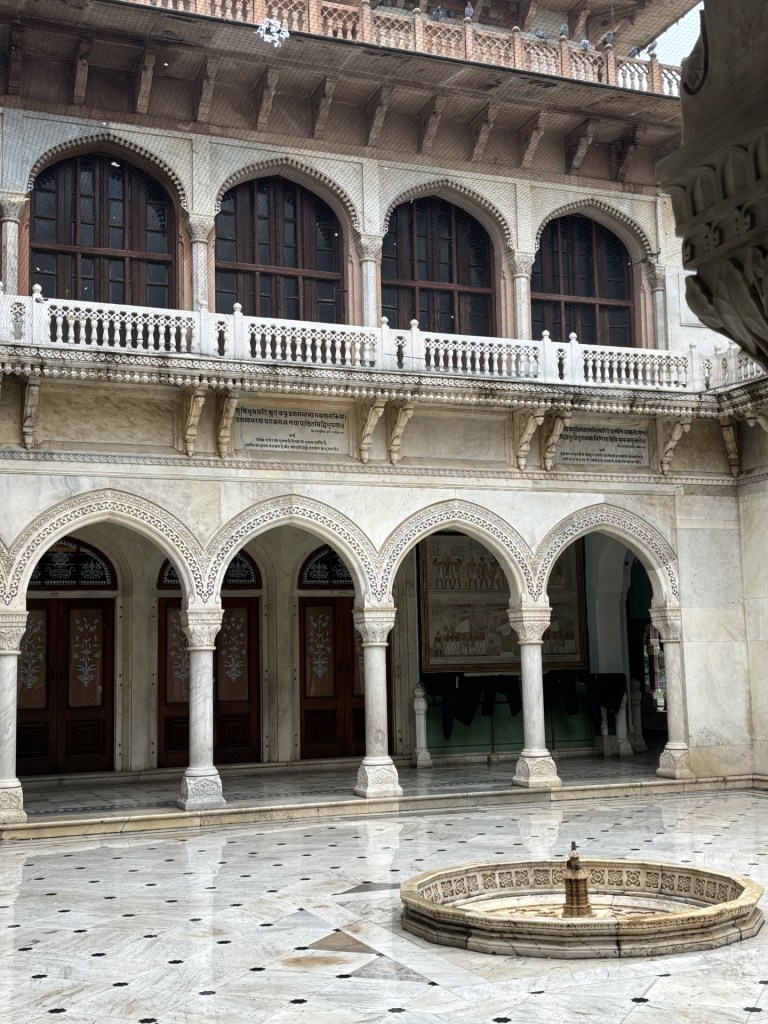
The Albert Hall Museum is the oldest museums in Rajasthan; it was considered one of the best 19th century museums for the variety of its collections. My students informed me it is an example of Indo-Saracenic architecture, a revivalist architectural style used by British architects in India in the later 19th century for public and government buildings and the palaces of rulers of the princely states. Stylistic and decorative elements came from Indo-Islamic architecture, especially Mughal architecture.
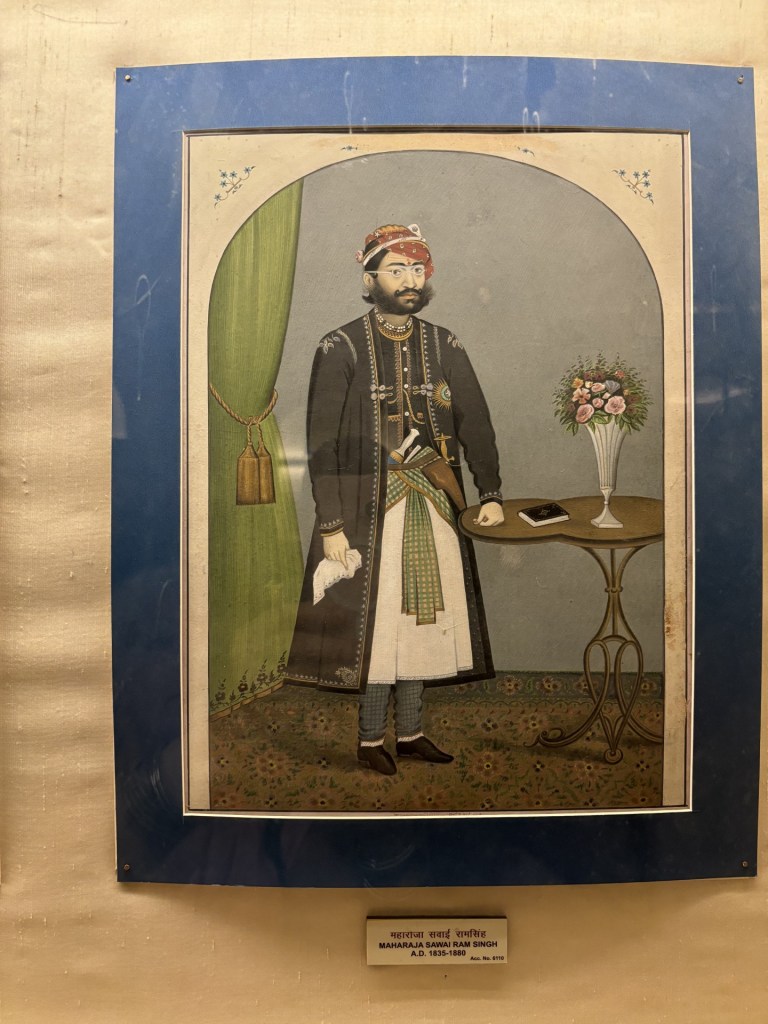
Of all of the exhibitions of Indian arts and exotic wonders held during the colonial period, the Jaipur Exhibition of 1883, the genesis of this museum, was perhaps the most significant. It was the first time when the Indians themselves presented their treasures. The exhibition emerged from the passion for local arts of two successive Jaipur maharajas – Sawai Ram Singh II and Sawai Madho Singh II. The former built up Jaipur as a center of the arts (see Museum of Legacies below for the connection).
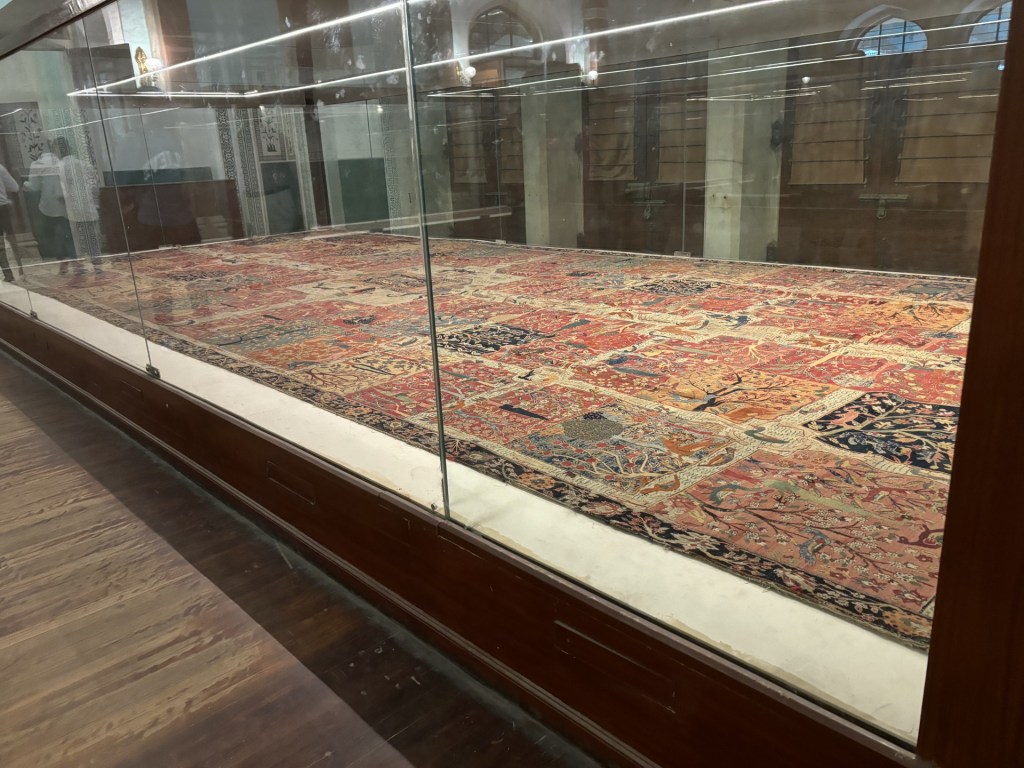
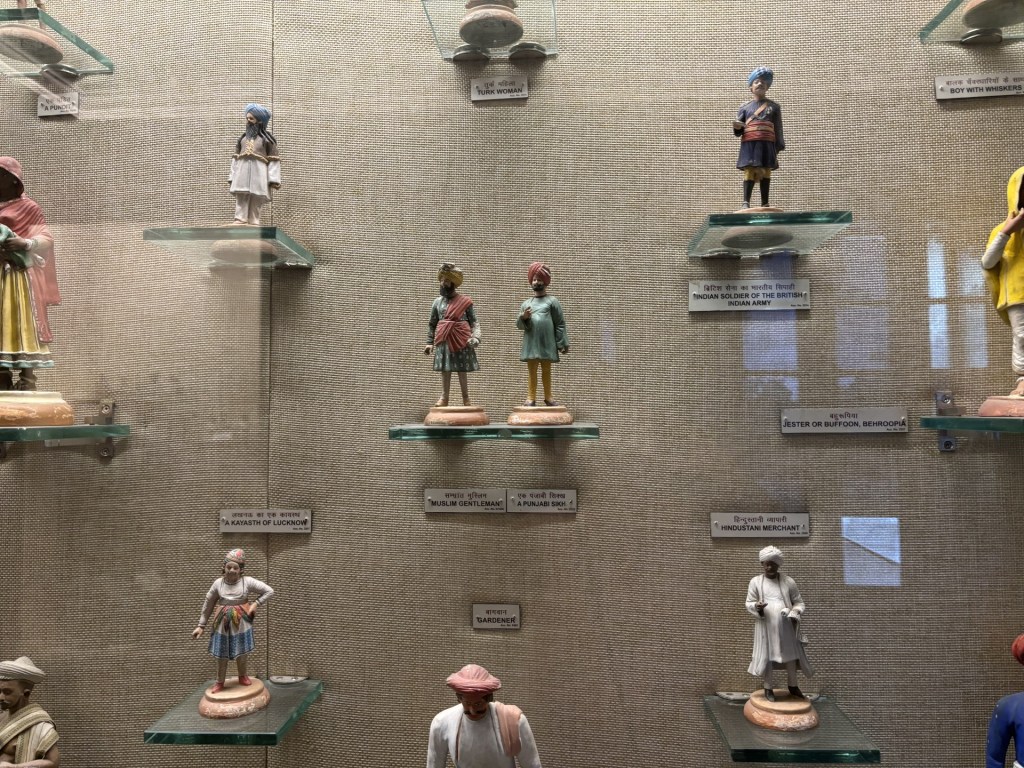
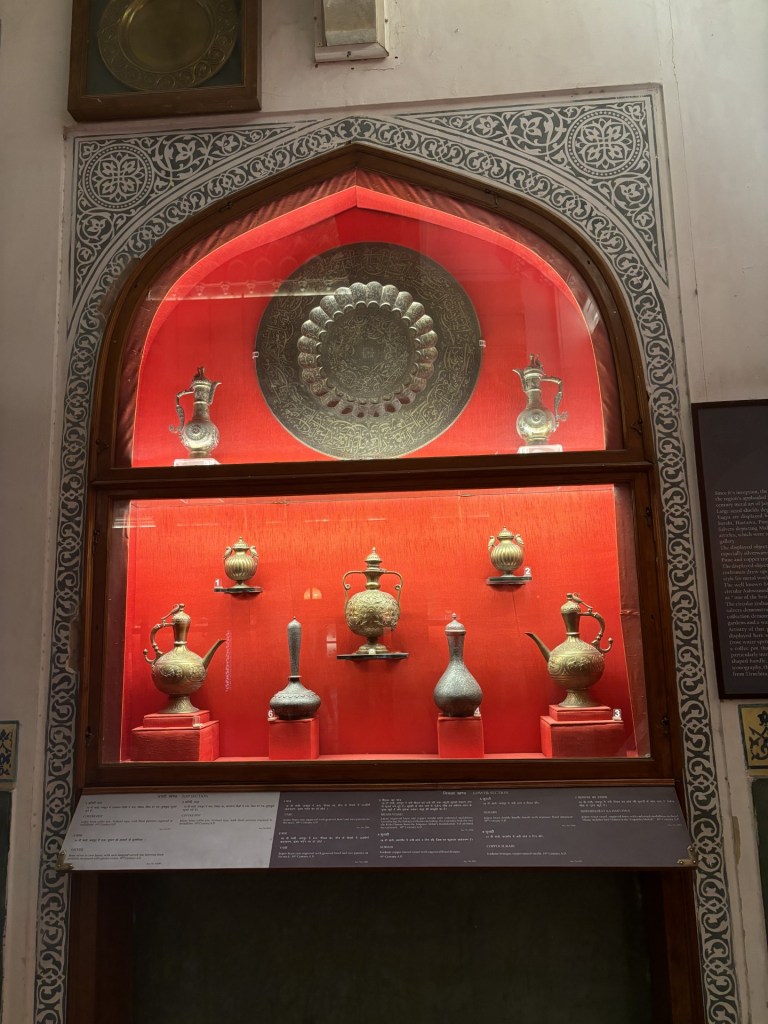
The 1883 exhibition, in a hall attached to the Jaipur City Palace, contained hundreds of examples of embroidery, pottery, textiles, stone and wood carving, and various forms of metalwork. The museum still contains excellent examples of all.
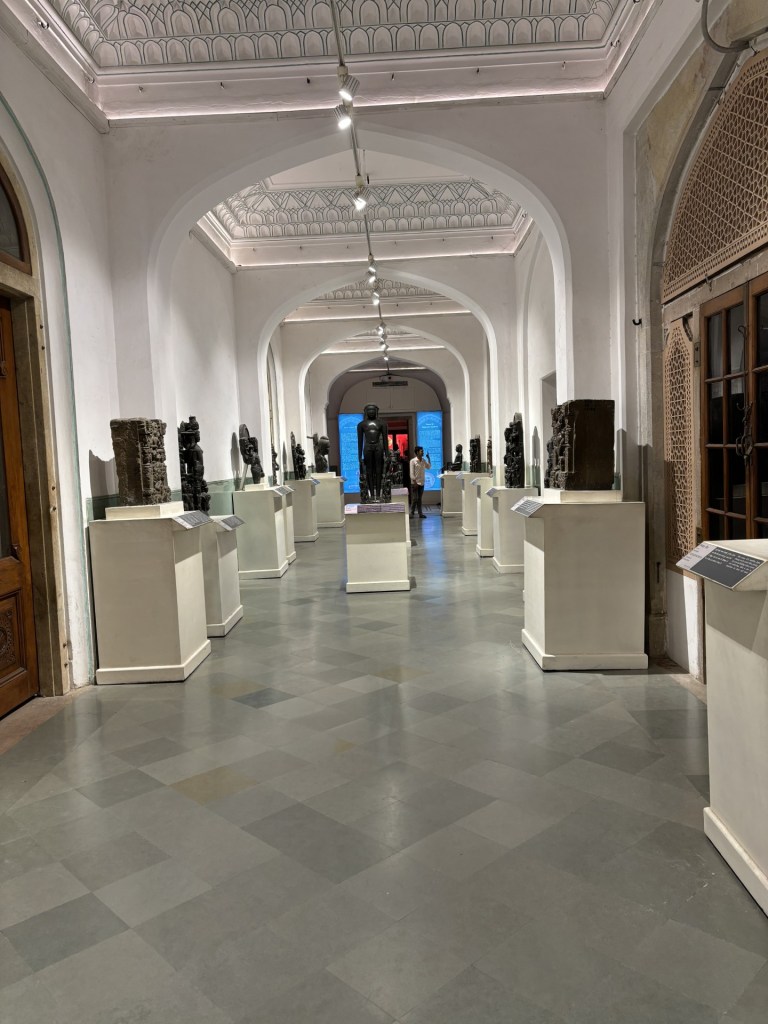
In 1887, it was reinstalled in the newly built Prince Albert Hall, named after Prince Albert’s 1876 visit to Jaipur (King Edward VII, Albert Edward). Quite uniquely, visitors were allowed to borrow pieces to study and replicate, demonstrating the museum’s role as a resource for local craftsmanship and not only as a tourist destination for colonial travelers. The ‘South Kensington Cases’ used in the exhibition (and still there today) were copies of those at London’s present-day Victoria and Albert Museum, and were considered to be at the forefront of museology practice. Just a few highlights:

(read more at: https://www.southasiamonitor.org/societyculture/why-1883-jaipur-industrial-arts-exhibition-was-important-india#google_vignette)
The Festival – Hariyali Teej is celebrated on Tritiya Tithi (Third Day) of Shukla Paksha (bright fortnight) in the month. The festival is dedicated to Goddess Parvati and her union with Lord Shiva, leading to Parvati being known as ‘Teej Mata.’
Hariyali Teej is an important festival for Hindu women. Married women observe a fast to pray for the well-being and longevity of their husbands.
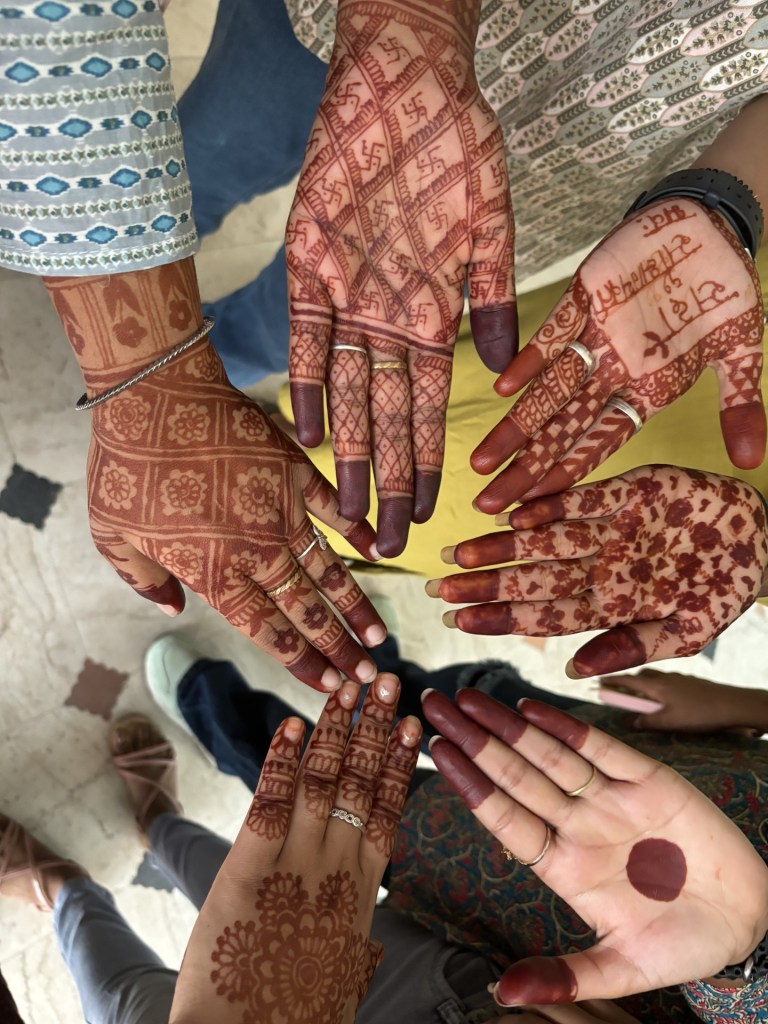
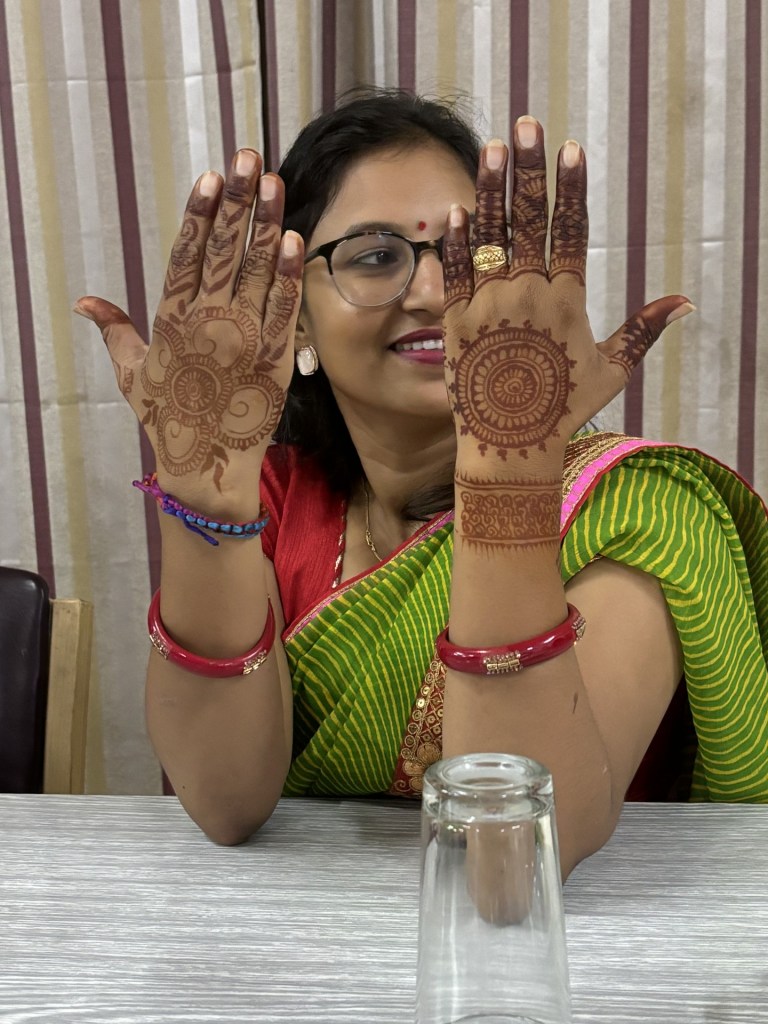
The depth of affection from husbands is believed to be reflected in the darkness of the mehendi (henna patterns), the deeper color signifies greater love.
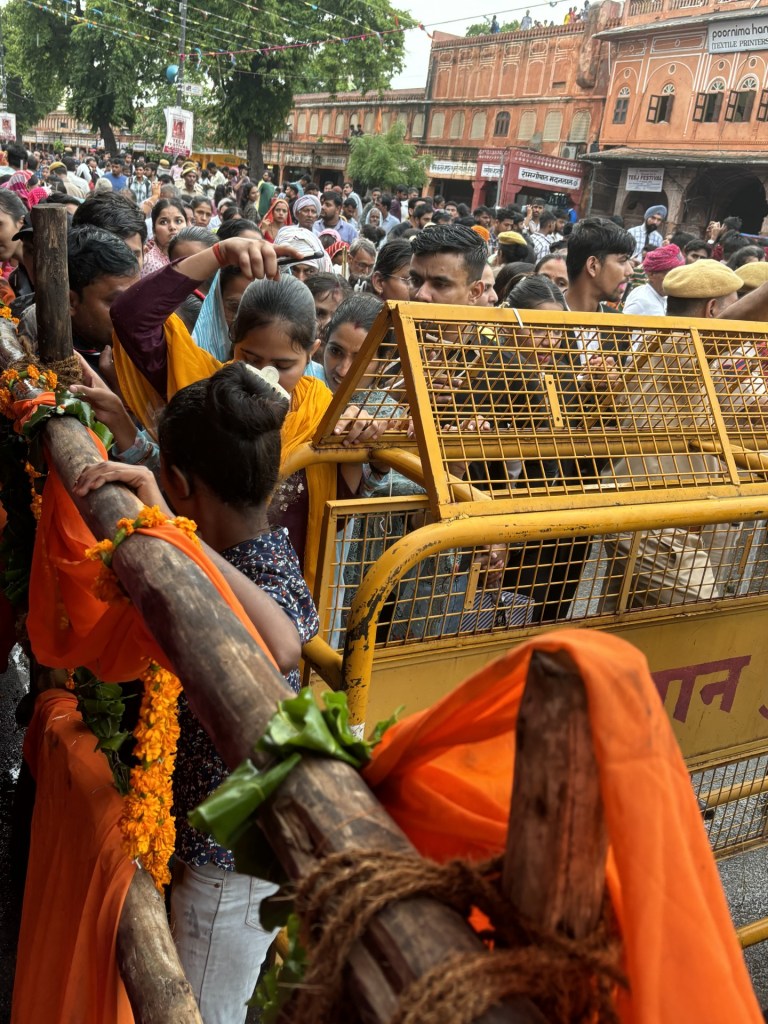
It is celebrated with a religious procession that starts at the Tripolia Gate in the city center. Crowds descended on the city center from mid-afternoon. The processions started around 7 pm, shortly after we arrived (a student was assigned to take me).

Wow, what a crush of humanity. I did glimpse some camels passing by; the rest I saw from the screens. Mostly, I just saw the many, many backs of people – what an experience.
Quickly, the crowds dispersed joyfully and we have breathing room to meander the streets and observe what the remains of the day!
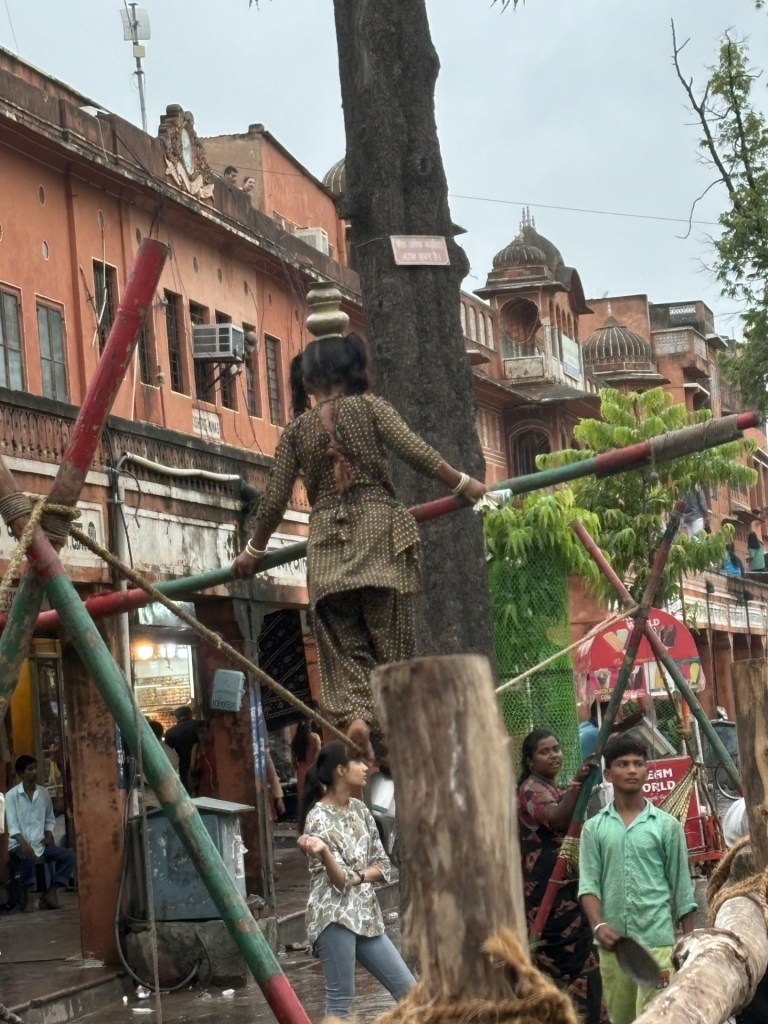
After our festival experience my escort, along with two friends who joined us, wandered through the center seeking a place to pick up transport back to the university.
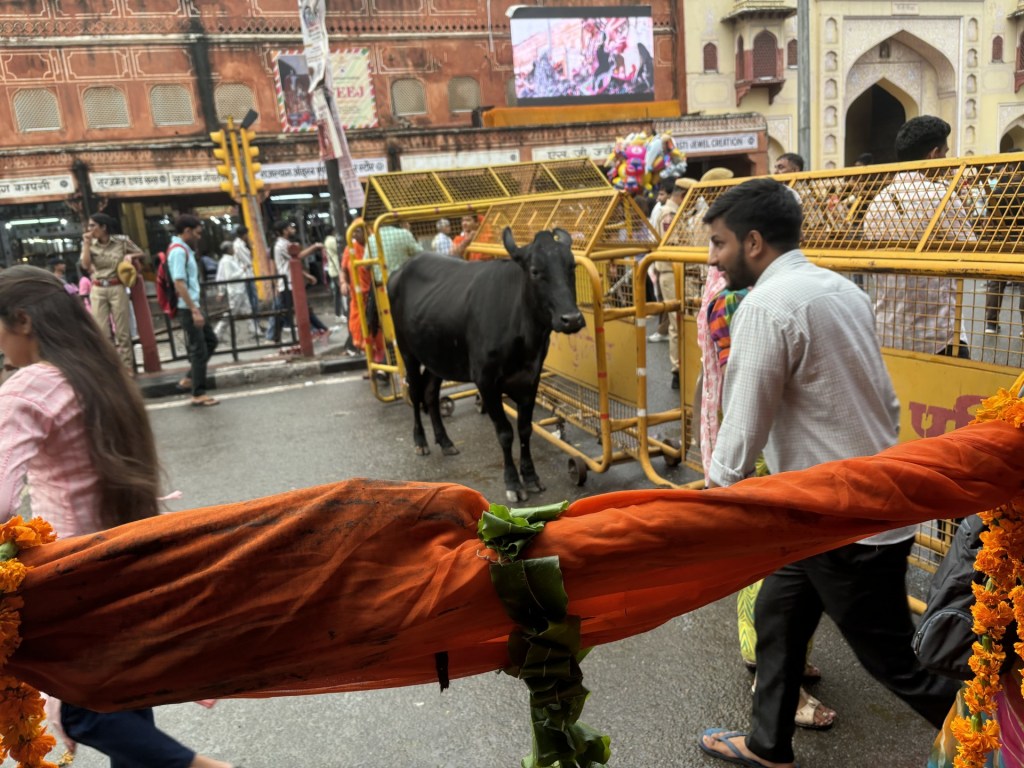
We passed numerous street food vendors (yes, I resisted my natural curiosity and tried nothing), shops with interesting foods, small and large temples and a few mosques, and beautiful architecture. One especially beautiful building carried the sign, Museum of Legacies. I had seen mention of the museum during my pre-trip research.
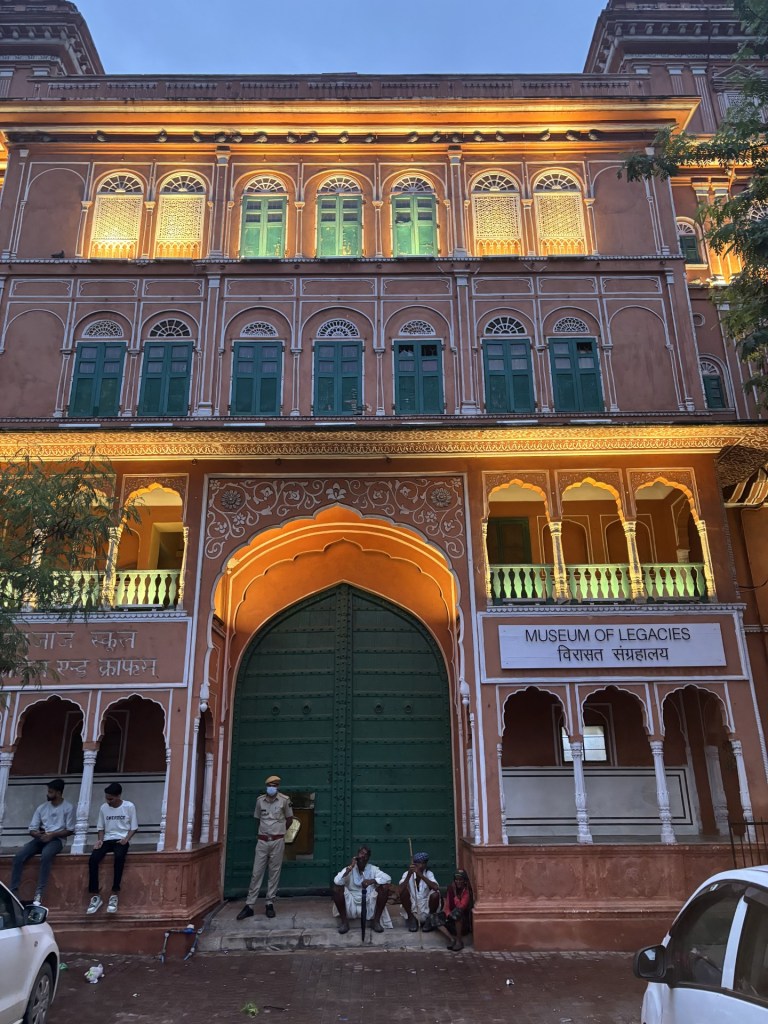
The museum is housed in a nearly 200-year old building, a haveli, in the historic Kishanpole Bazaar of Jaipur’s Pink City.* It was built as a residence of Pandit Shiv Deen, minister in the court of Ram Singh II. It is thought that he donated the home to the ruling king to be converted into a school of art, known as the Rajasthan School of Arts, Since 1857, it housed what later was the Maharaja School of Arts and Crafts, established by the Sawai Ram Singh II.
*It was unclear if or when the museum is open. The guard in front said it was no longer open.
Note: A haveli is a traditional mansion located in a city or town, usually with historical and architectural significance. The word haveli from Arabic hawali, meaning “partition” or “private space,” popularized under the Mughal Empire with no architectural affiliations. Later, haveli came to be used various styles of regional mansions, manor houses, and townhouses in the Indian subcontinent.

 Creatively Annette
It’s so nicely put up here in the words by you. I had some work otherwise I could have joined you for the Albert Hall’s visit. As I have yet to go through your other blogs, but they seems really enriching pieces of ground zero experiences by you Mam. Keep sharing like this.
Regards,
Anshuman Mathur, PhD Scholar, Centre for Museology and Conservation, Jaipur
LikeLike
Thank you so much. Hope to see more of you in the class, as your schedule allows
LikeLike