It must be the season for greens. A few weeks ago, my food basket was filled with collard greens (see July 25, 2023 post). Upon being challenged with what to do with this bounty I turned to my wonderful collection of cookbooks. Well, last week, once again lots of collards appeared but none of my friends with whom I share my food baskets wanted them. This time, I turned to my little-used African cookbooks and found something that looking interesting in one.
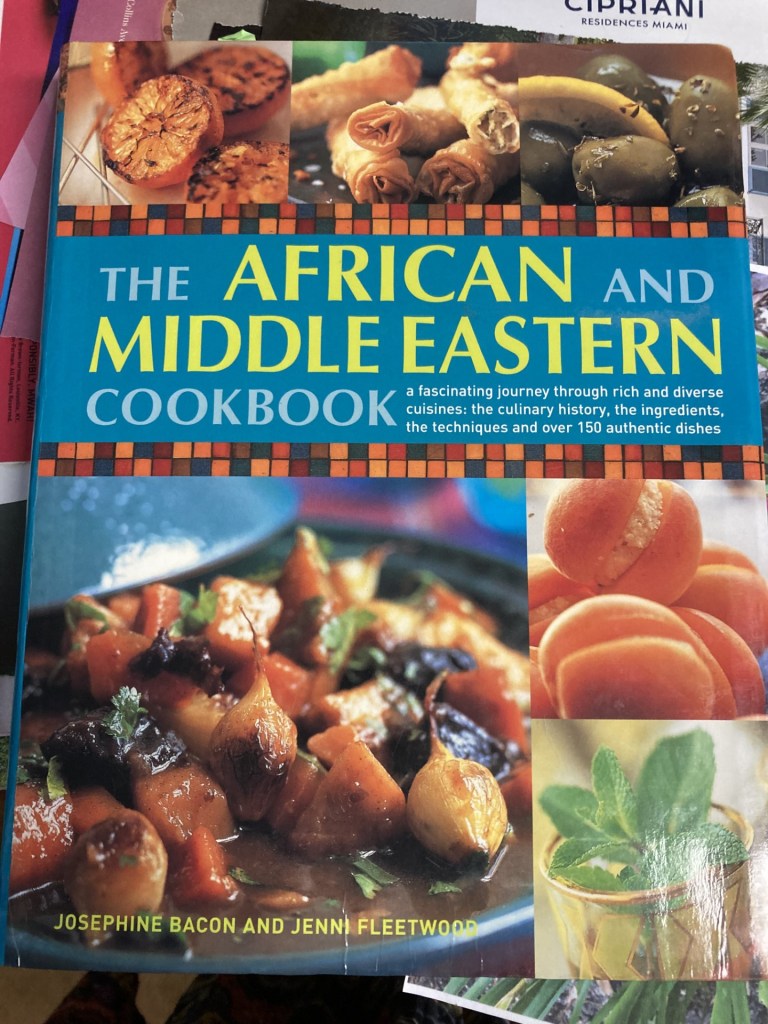
I found this particular series of cookbooks, published by Hermes House, in the hours I enjoyed spending in Borders bookstore. Not only are their beautifully illustrated recipes often good, detailed information about the history and nature of the ingredients in the region or genre of food is included. I have and use a number of them ranging from this one to Jewish, Greek, and Mexican cooking to Baking, in general; Bread, specifically; and everyone’s favorite, Chocolate.
The origins of the recipe for collards found on page 202, is credited to Ethiopia where it is called abesha gomen. It is recommended to serve with the traditional Ethiopian bread, injera. No, I did not try to make that. The collards are a spicy dish, like much of the delicious food from Ethiopia; it includes two seeded and sliced green chilies. In deference to spice-averse Daughter, I did not use this ingredient. The flavor remained high on our house’s delicious meter.
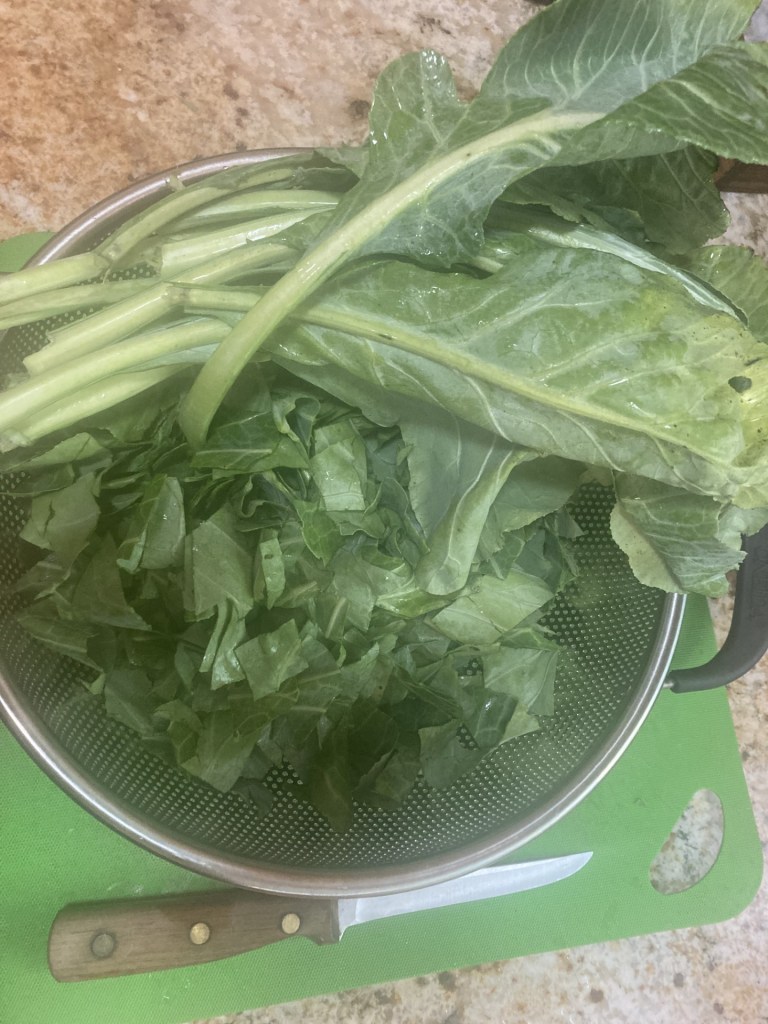
Ethiopian collard greens. Wash the greens, then strip them from the stalks and steam the leaves over boiling water for 5 minutes. Set them aside in a colander pressing out the excess water. Slice the greens very thin (you’ll see somehow I missed this step!). Finely chop two small red onions then fry in a skillet of heated oil. Add one crushed garlic clove and 2 tsp grated fresh ginger. Add the chiles (if using) at this time as well as a little water or vegetable stock, cook for 2 minutes. Add the greens, 1 sliced red pepper, and 2/3 cup a vegetable stock. Season with salt and pepper, mix well and cover. Cook over a low heat for about 15 minutes.

It’s recommended that if you have time to increase the liquid and cook for about 45 minutes. Also recommended to substitute cabbage for the collards – maybe I’ll try that with the cabbage languishing in the fridge crisper.
While I was cooking, I thought to repurpose some leftover brocoli that neither Daughter or Constant Companion seemed inclined to finish. I went to an old standard (it might be in one of these posts), a tasty Sephardic dish.
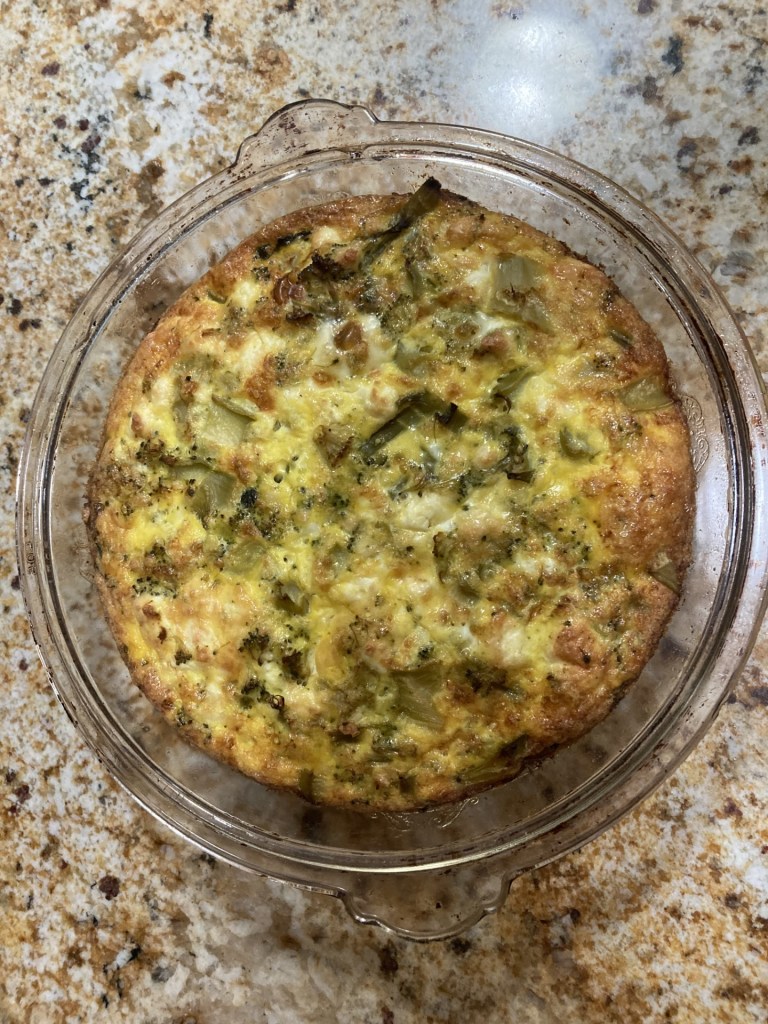
Brocoli fritata. Cut the brocoli into small pieces. Beat together several eggs (depends how much vegetable you have) and about 4 ounces of crumbled feta. Add salt to taste. Bake in a moderate (350 F) oven for an hour. Really good straight out of the oven and left over.
 Creatively Annette
Great source of calcium, too! 😊
LikeLike