A few weeks ago, prompted by the lure of an art exhibit, Constant Companion and I spent the afternoon exploring another noteworthy community in our area. As a kid, the child of Manhattanites growing up in the Midwest, I consumed the New York Times every Sunday. The travel section ignited dreams of going to faraway places. Fortunately, I’ve been able to pursue that dream to some satisfactory degree.
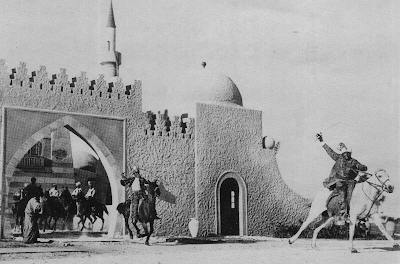
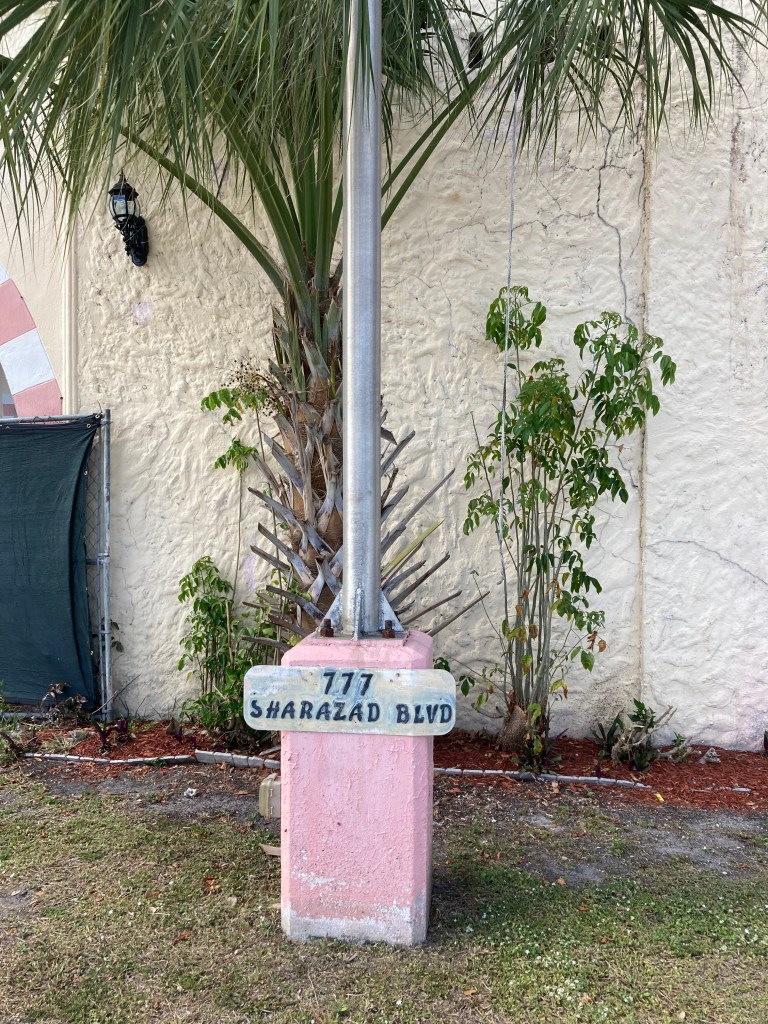
Miami, Florida, stood out as a glamorous place with beaches and more. The nearby magical city called Opa-Locka fascinated me because of the high level of fantasy it prompted, and the horses – what pre-teen girl was not horse crazy? Opa-Locka, with Ali Baba Boulevard, Shrazad Avenue, and Aladdin Street, was promoted at The Land of the Arabian Nights and the Baghdad of Dade County.
This town built on 4.2 acres was developed in the 1920s by Glenn H. Curtiss, of airplane fame, at the same time that he and his partner built the neighboring cities of Miami Springs and Hialeah. The development was originally named “Opa-tisha-wocka-locka” or “a big island covered with many trees and swamps,” a Seminole place name.
Architect Bernhardt Muller designed 86 public and residential buildings in Moorish Revival style. The buildings included onion-shaped domes, minarets, crenelated parapets, arches, watchtowers, exterior spiral staircases, and mosaic tiles. After finding our way through the art exhibit, we spent a brief time exploring the public buildings. We did not have time to find the remaining private homes scattered along the exotic named streets.
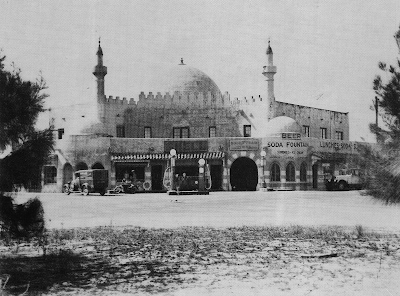
First stop was the Harry Hyrt (or Hunt Building), the home of Opa-Locka’s first Post Office. Looks like gas pumps in the front.
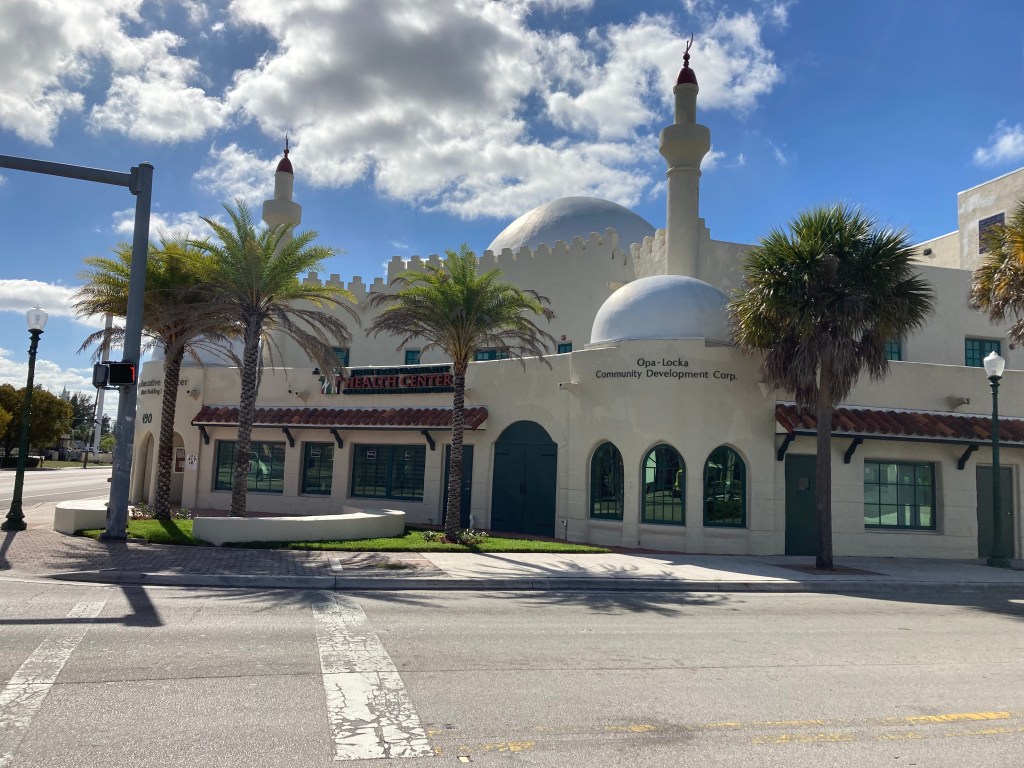
Across the street was the Seaboard Air Line Railway Station, built in 1927. When the station opened, it welcomed the inaugural run of Seaboard’s “Orange Blossom Special” from New York.
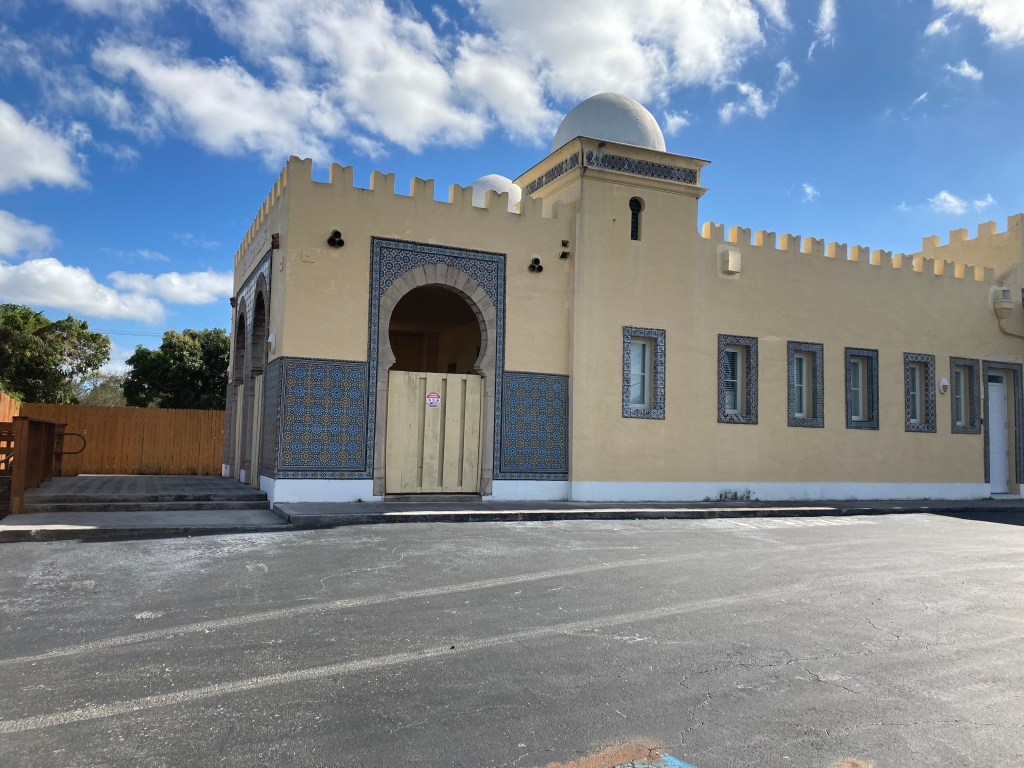
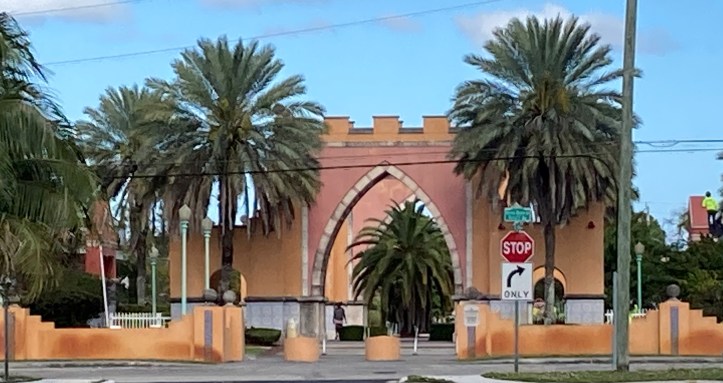
The Administration Building (ca. 1920) was a short drive away. Along the way, we passed an Arab-inspired plaza entrance and the plaza itself.
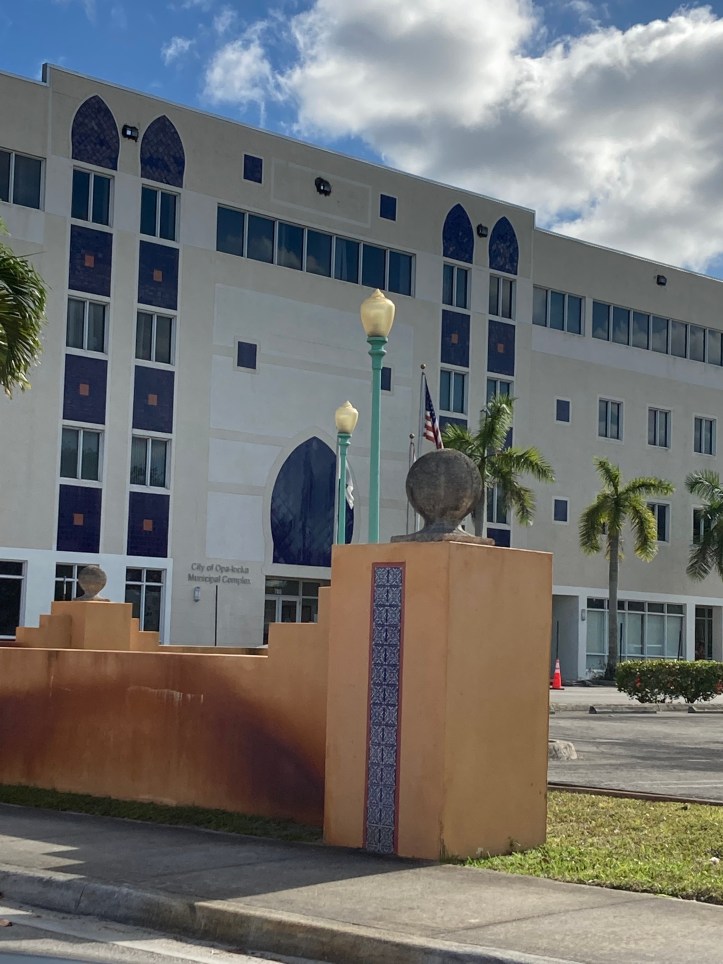
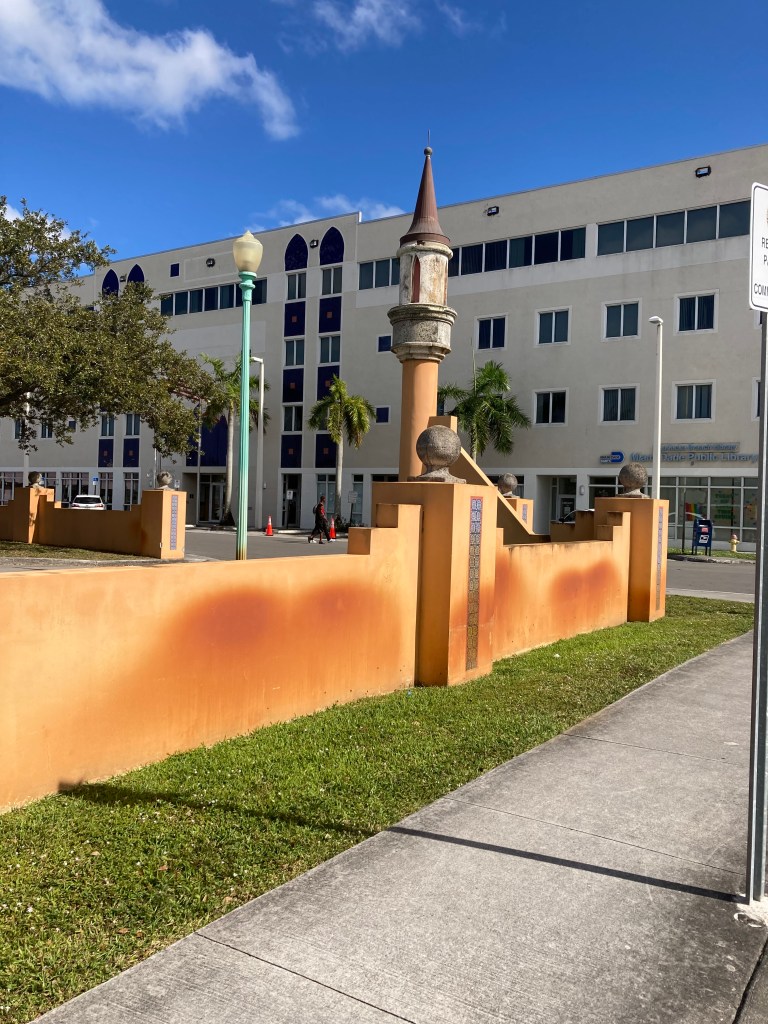
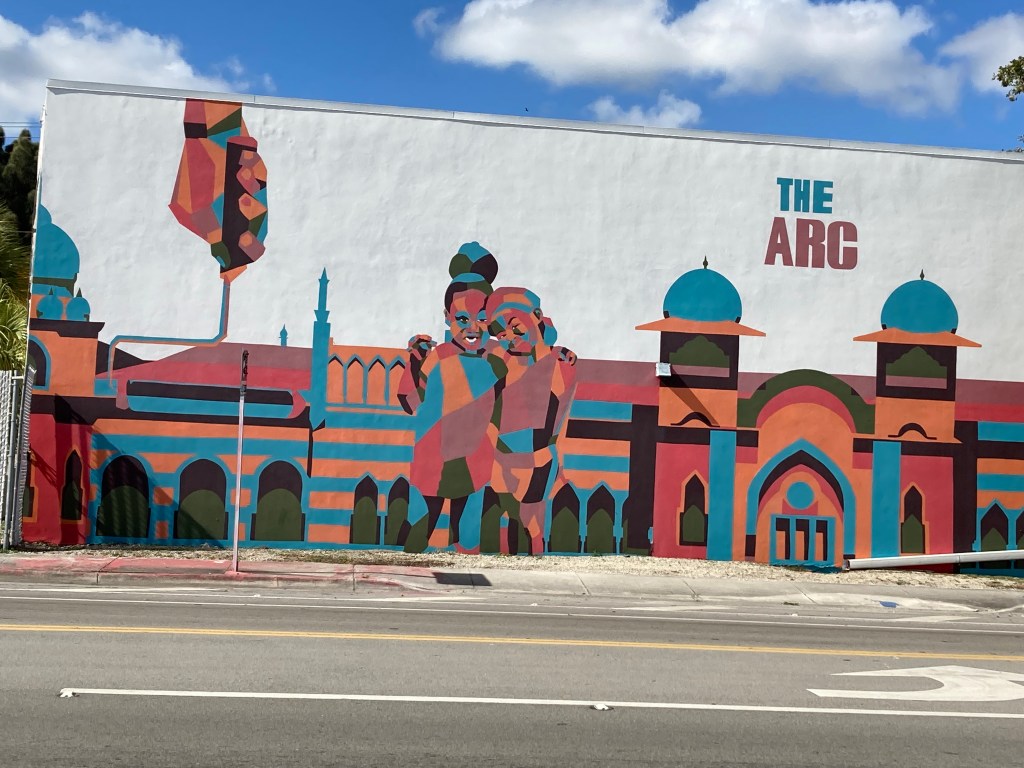
At least one mural in the center of town tries to capture the profile of Opa-Locka’s architectural history, archways, domes and minaret.
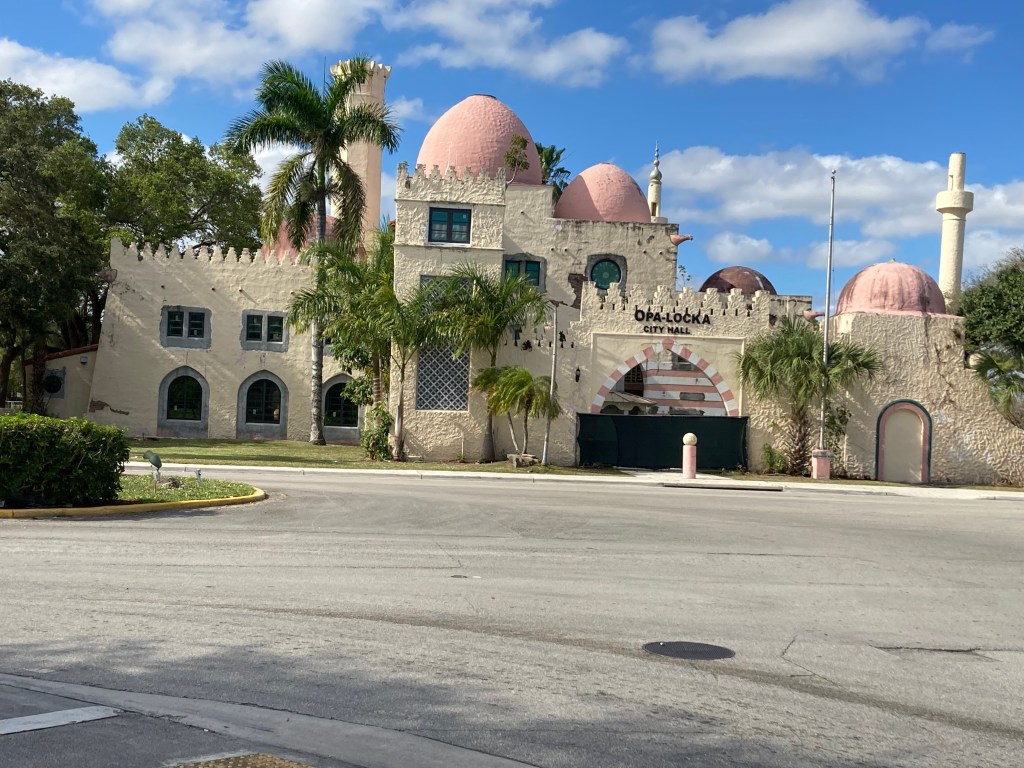
The Administration Building, including its enclosed courtyard, was inspired by the palace in the tale “The Talking Bird.” At one point, this magnificent structure served as the City Hall. Now, unfortunately, like many of the other buildings are in various stages of disrepair.


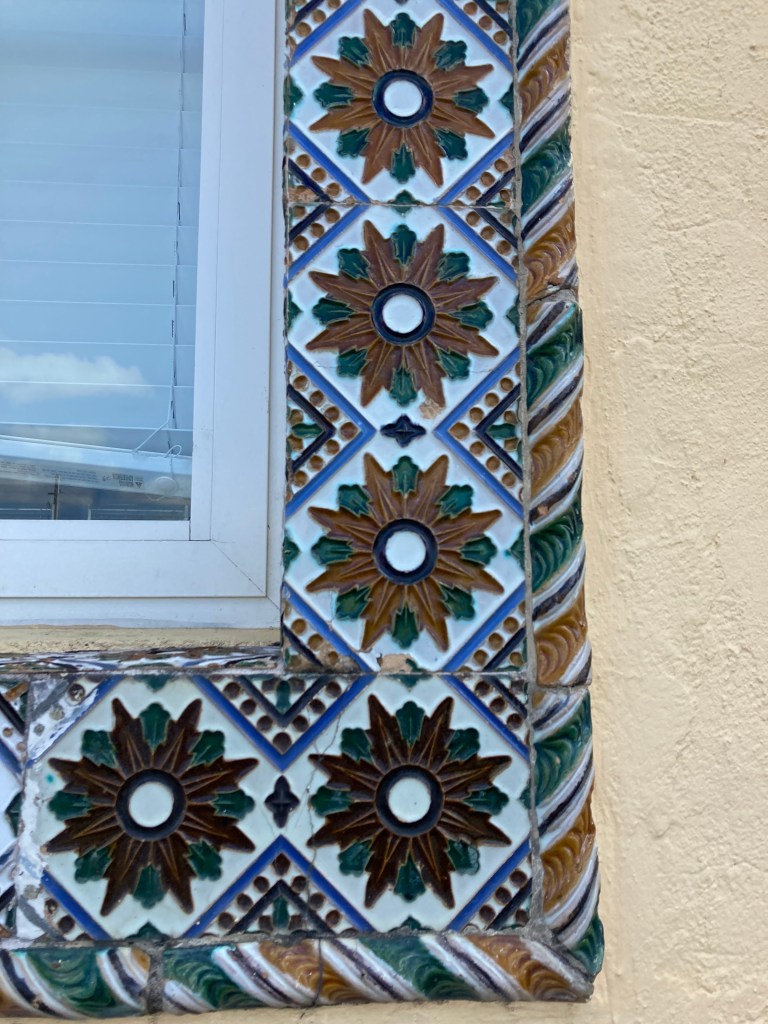
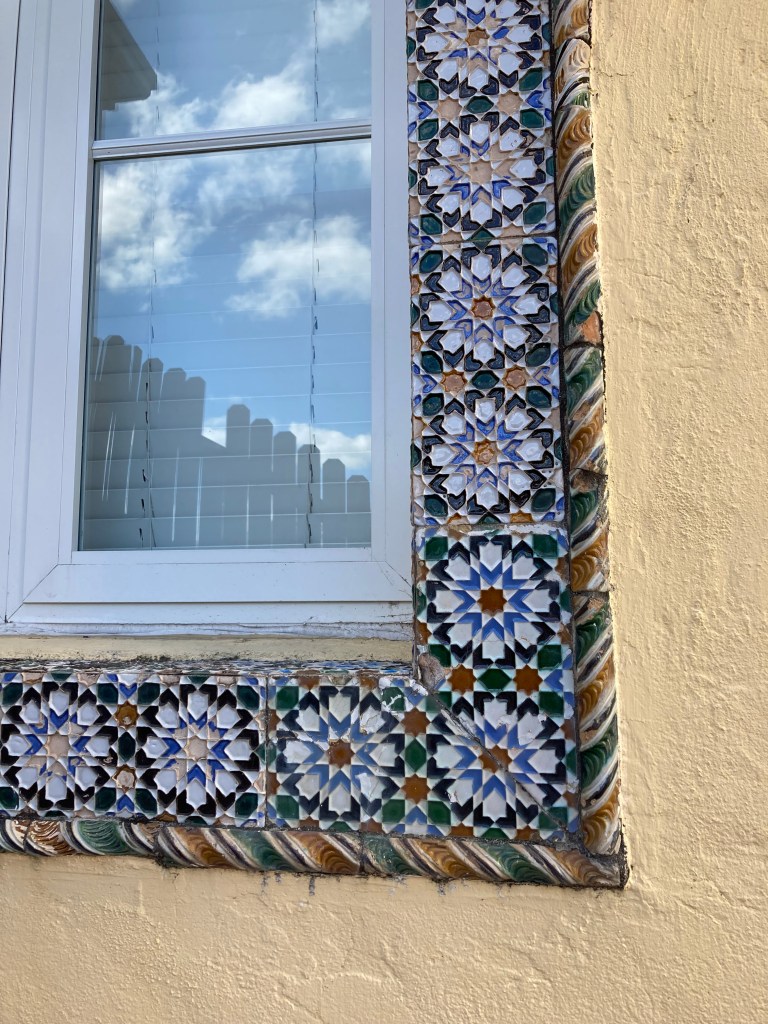
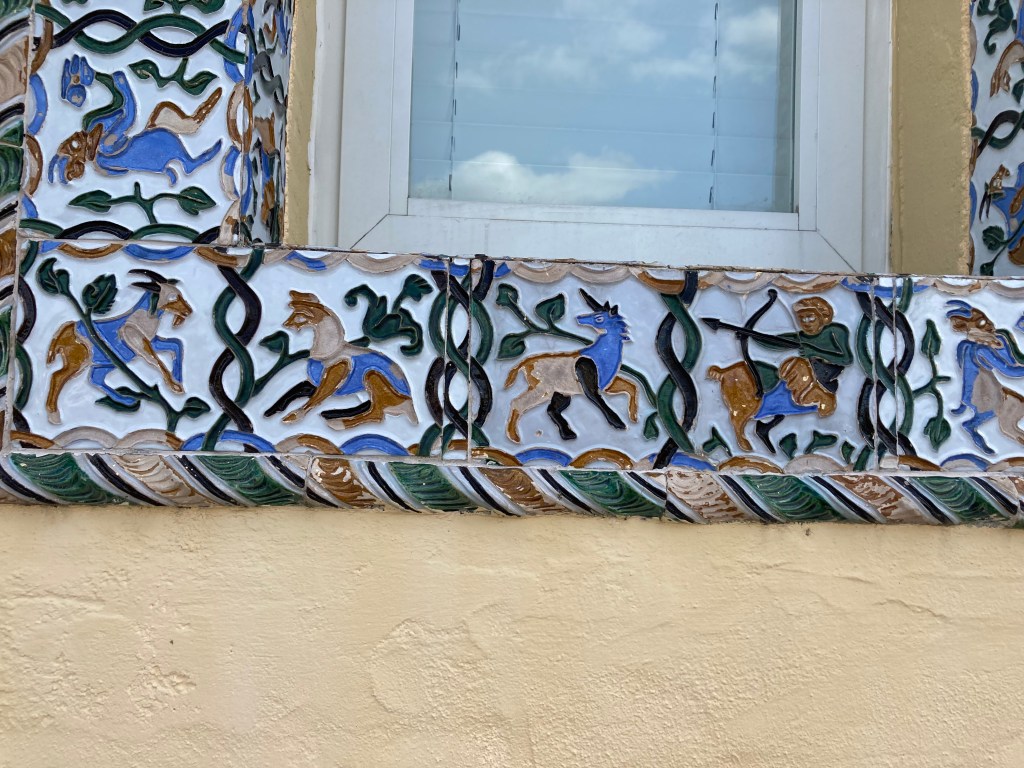
Here is just a sampling of the original tilework at the Railway Station:
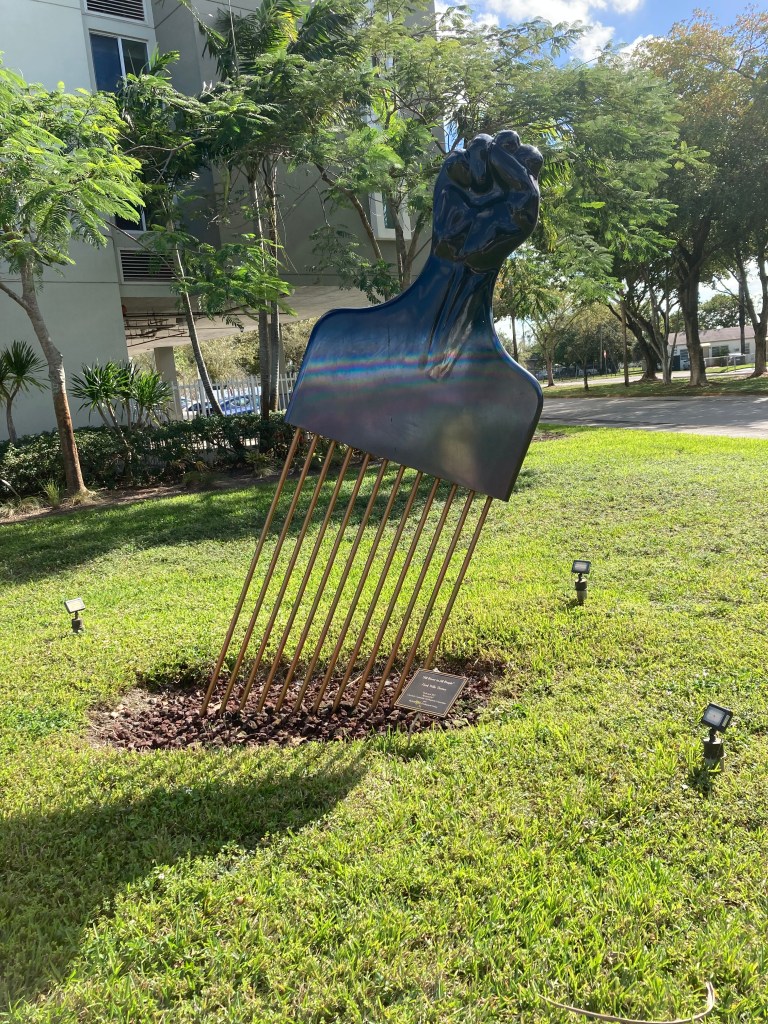
A touch of the modern is the 2017 sculpture by Hank Thomas Willis, “All Power to All People,” installed outside of the Town Center Apartments, an affordable community for the elderly. The sculpture’s title reflects that artist’s inclusive humanitarian outlook. The oversized Afro-pick can bring to mind the equally oversized work of Claes Oldenburg. The clenched fist topping the sculpture reminds of the Black Power movement, but its use around the world has a long history. In 1917, it was a logo for the Workers of the World; later Taller de Gráfica Popular, a print shop in Mexico that used art to advance revolutionary social causes, popularized it. During the Spanish Civil War, it was sometimes known as the anti-fascist salute.
If you’d like more visual of Opa-Locka here are two short videos:
First a glimpse at a a past Arabian Nights Festival which made the city famous:
Next an activation by local poets that lit the streets of the city:
 Creatively Annette
Love this!
Alison Negrin Chef Consultant 925-588-9150 http://www.chefalisonnegrin.com
>
LikeLike
Next time you’re this way, we’d love to take you!
LikeLike
Annette, this was a fantastic (and I mean that in all senses of the word) glimpse into the history of Opa-locka!
A wonderful read.
LikeLike
Great architectural history!
LikeLike
Too bad it’s decaying …
LikeLike