Recently, I saw and copied a few lines about Miami’s Dorsey Park. This brief mention dated the park to 1917 when a large parcel of land was sold to the city by Miami Black businessman, Dana Albert Dorsey, to create a park for Black residents during segregation. The park became a vital community gathering place.
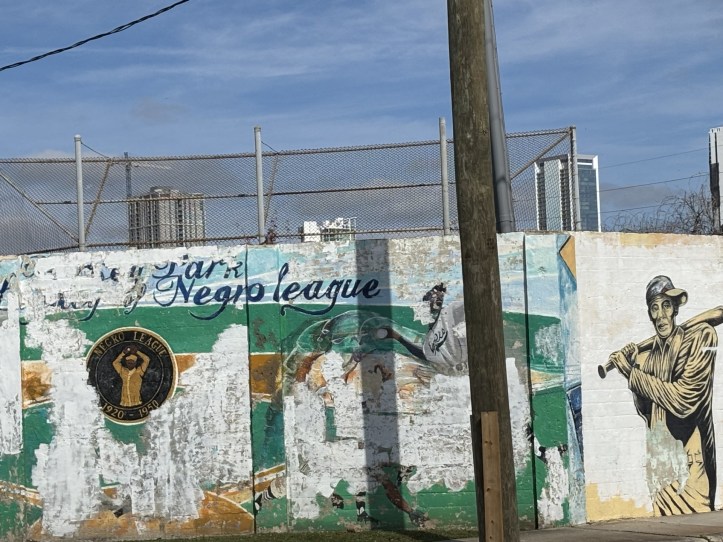
Dorsey Park rang a visual bell in my brain of mural that Constant Companion and I ran across when we were rambling around town sometime in the not too distant past. While cleaning up my computer desktop, I remembered it had to be during the past Art Week. Yes, it was, when we visiting different fairs around town on Day 5 (see 12-5-25).
After seeing the recent post and identifying the location, I got curious. I give tours of the city and I am continually intrigued by the intricacy of its history. I like to add information that I can share with visitors to our city.
Dana Albert Dorsey (1872–1940), son of former enslaved people, migrated to Miami from Georgia in 1896. He was their first child not born into slavery. Dorsey was a businessman, banker, and philanthropist. He became one of Florida’s first African–American millionaires.
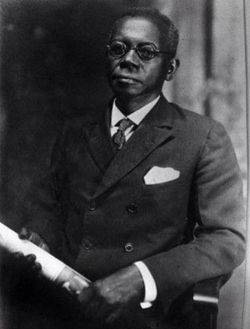
Dorsey worked as a carpenter for the Henry Flagler Florida East Coast (FEC) Railroad alongside many other Black laborers. He recognized the need for housing for Black workers. Dorsey went on to develop Black neighborhoods in Miami with the purchase of small lots, where he built a series of rental houses. It has been said that the first parcel of land he purchased in Colored Town cost him $25.00. As he grew successful, he shared his wealth by donating his time, money, and property to the community. Among his many donations was the land for the construction of the Dorsey Memorial Library.
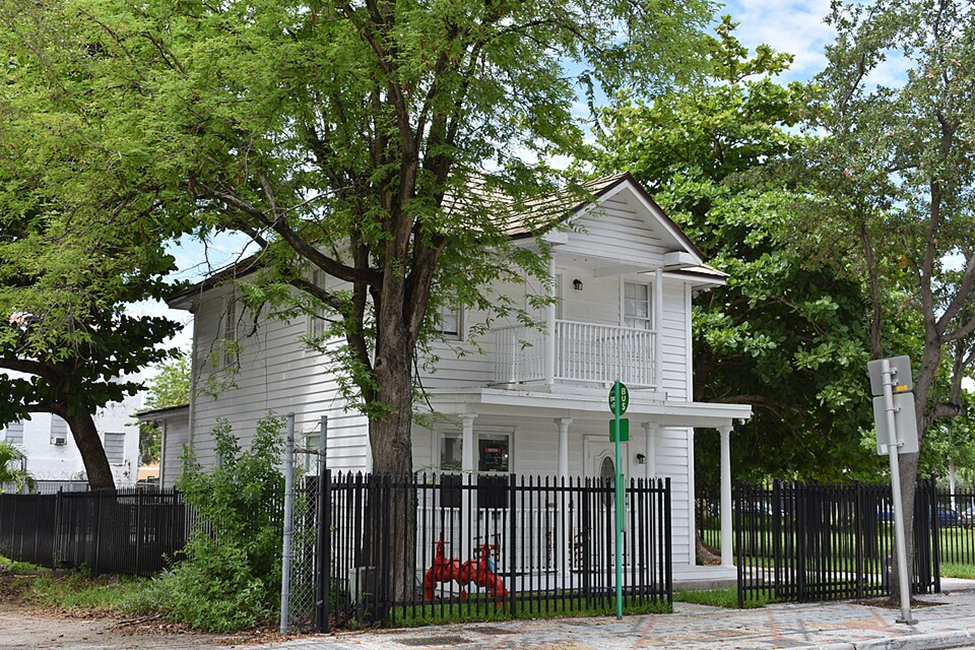
Dorsey built a white frame home for his wife in 1915. This house offers a glimpse into the past and provides an understanding of the city’s history. It is now a significant historic site town, now owned and operated by the by the Black Archives (https://www.miamiandbeaches.com/l/attractions/d-a-dorsey-house/5846).
The murals in Dorsey Park honor the players, stories, and spirit of the Negro Leagues which played there during the Jim Crow era. As a central hub for Black baseball during segregation in the 1920s-1940s, it hosted barnstorming teams, including the Miami Giants and the Ethiopian Clowns, which later became the Indianapolis Clowns. Hall of Famer Josh Gibson of the Homestead Grays played a notable game there, hitting home runs over the railroad tracks. The park, historically important as a safe haven in Jim Crow Miami, had a dedicated area for white spectators to watch games alongside the Black community.
The mural was painted in 2011 through the MLK Mural Project with Urgent, Inc. and community partners. Kadir Nelson, author and illustrator of the award-winning book We Are the Ship: The Story of Negro League Baseball, was one of the project’s lead artists. They were created over a three year period. Part of the project is a mobile app and website that offers a self-guided tour of the murals. Unfortunately, in 2025, a section of the Dorsey Park mural was defaced with racist and anti-Semitic graffiti. They were quickly restored.
Dana Albert Dorsey is also significant in Miami’s development because he was an early owner of what is also known as Fisher Island, just south of the southernmost part of Miami Beach. In 1918, he purchased the 21 acre island with plans to develop a resort for Blacks during the Jim Crow era. The Miami Daily Metropolis incorrectly put it on the front page: “Negro Buys 1/3 of the Keys To Erect A Colored Resort.”
Shortly afterward, he sold the island to the land to developer Carl G. Fisher’s Alton Beach Company in 1919. Was it racial pressure and logistical challenges that forced him to sell? Sometime afterward, Fisher traded the island to William K. Vanderbilt II for a yacht and developed into the restricted, high-income area known today.
 Creatively Annette
Thanks Annette. Dorsey Park also appears in the documentary about Miami and Negro League Baseball, “Never Drop the Ball,” which appears on WLRN-TV from time to time.
LikeLike