Constant Companion and I like to take short, one-day staycations exploring the communities, community history, and architecture around town. Miami Springs, just north of the airport had been calling for some time. Last year we heeded the call and spent an afternoon exploring.
Because of my involvement in the restoration of the Curtiss Mansion I was familiar with “the Springs,” the Miami home of aviator and inventor Glenn Hammond Curtiss (curtissmansion.com). Over time, his magnificent mansion had suffered vandalism; the home and the gardens were neglected. After an admirable grass-roots effort that restored it to its original beauty, the mansion opened in 2012. It serves as a community center offering a range of public programs.
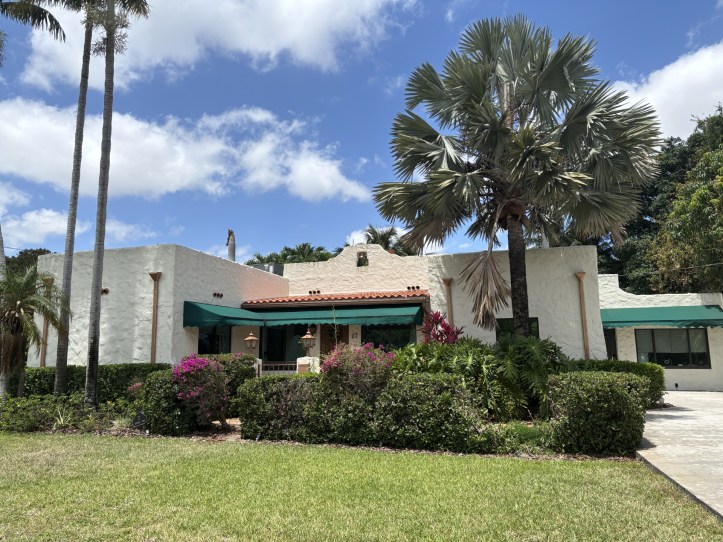
Glenn Curtiss was a contemporary of the Wright Brothers. Like them he made originally made is living with bicycles, then motorcycles, and finally airplanes. Curtiss and rancher James Bright established three planned communities in Dade County in the 1920s, Hialeah, Opa-Locka, and Country Club Estates, renamed Miami Springs in 1930. The latter was a planned community and a division of Hialeah. The architecture of Opa-Locka (see 4-5-2022 post) featured an Arabian Nights fantasyland. The early buildings in Miami Springs were in Pueblo Revival style. Features of the homes and public buildings include rough textured stucco finish, entrance porches with arched openings, parapets, and wooden log vigas or decorative exposed log beams.
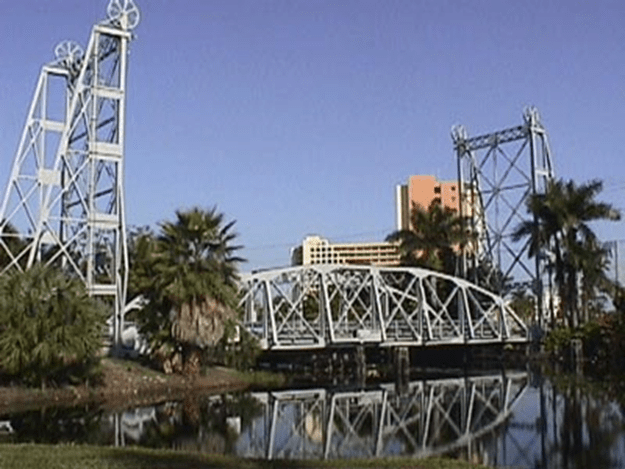
Two neighboring and distinct bridges over the Miami River Canal lead to and from the commercial center of Miami Springs. The Warren Pony Swing Bridge was donated to Dade County in 1923 by city founder Glenn Curtiss in response to the heavy volume of both the Miami Canal and auto traffic. The 1941 restoration of the bridge removed the swing mechanism and it remains fixed in a closed position. The Parker Truss Vertical Lift Bridge was constructed in 1927.
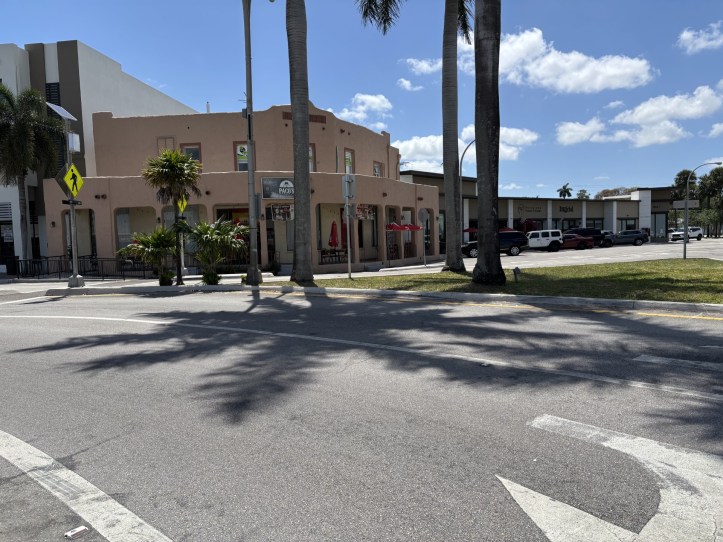
Our first stop after crossing the Swing Bridge was the Clune-Stadnik Building, one of the first buildings constructed in Country Club Estates and the only surviving structure in the original “civic center” envisioned by Glenn Curtiss. A number of small businesses have occupied the building including a luncheonette, an Eastern Airlines ticket office, and a photo shop. In 1946 pharmacist John Stadnik bought the building and converted it into a drug store. For many years, the second floor it was home to the original Miami Springs Historical Museum. The building sets the theme of the Pueblo Revival theme seen around the community.
Next we drove to the Hotel County Club or Fairhavens. This impressive building was built in 1926 when the new community was still largely rural with fewer than five other permanent structures. When it first opened, the luxurious hotel was intended to anchor the development of the community. It was furnished in Southwestern style with hand-woven Pueblo Indian rugs on the floor and handcrafted solid mahogany furniture.
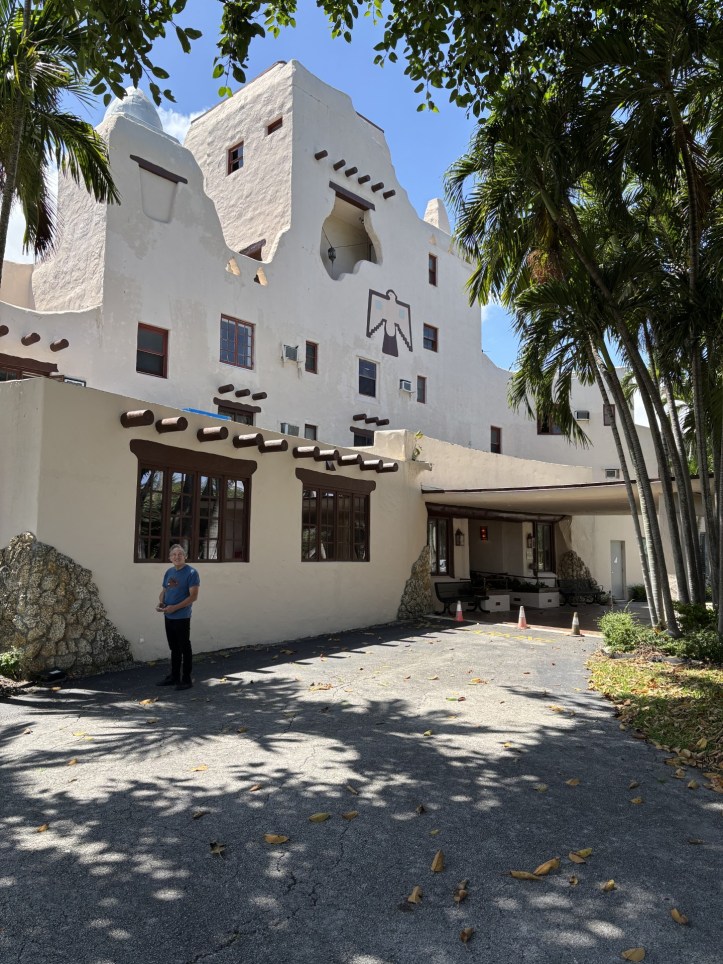
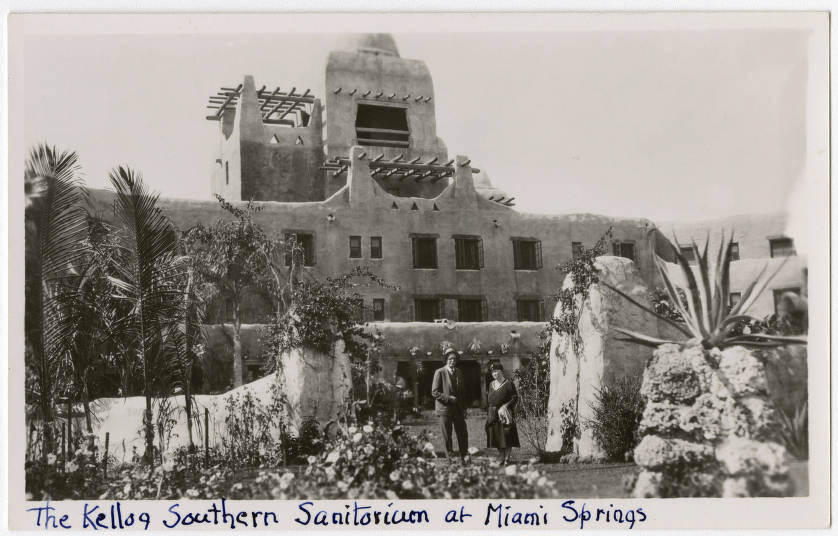
Curtiss sold the hotel to his friend, internationally recognized health and wellness expert Dr. John Harvey Kellogg, in 1929 and it became known as it known as “Miami Battle Creek Sanitarium.” During the 1940s, it was rented to the Air Transport Command for recuperating military personnel, then reverted to the Kellogg operation until 1959. Then it was sold to the Palms Spa Corporation in 1959, and then to Lutheran Services for the Elderly, and then Fairhavens Realty Corp. LLC for use as a home for the elderly, which it still is today.
In 1925, Glenn Curtiss designed his own home, a two-story Pueblo Mission style mansion that he named Dar-err-aha (House of Happiness). It was the largest of Pueblo theme houses in Country Club Estates, his home until his death 1930. When the estate was sold in the mid-50’s, it became the world renowned Miami Springs Villas. In 1970s, the mansion was the victim of several arsons and vandalism. It was lovingly restored to its original beauty in 2012, an example of a grassroots effort.
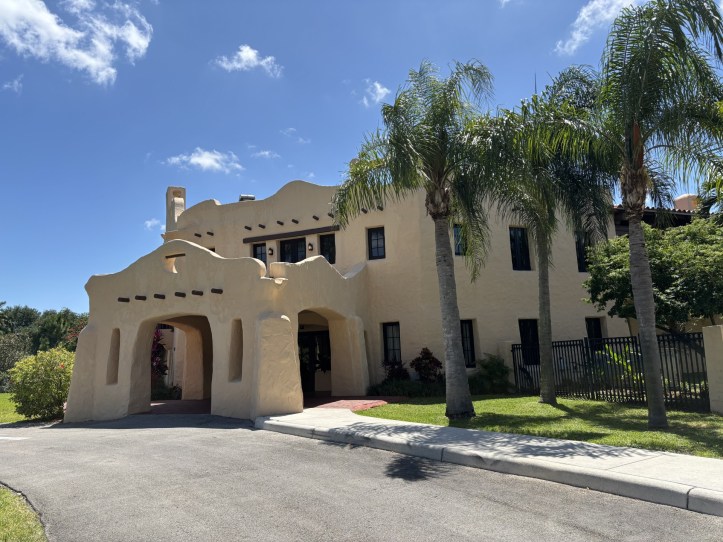
Here are only some of the original Country Club Estates homes and buildings that we saw.
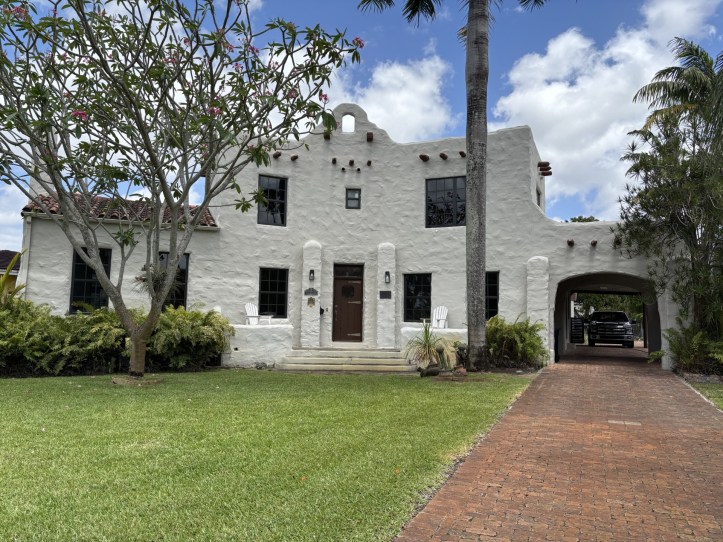
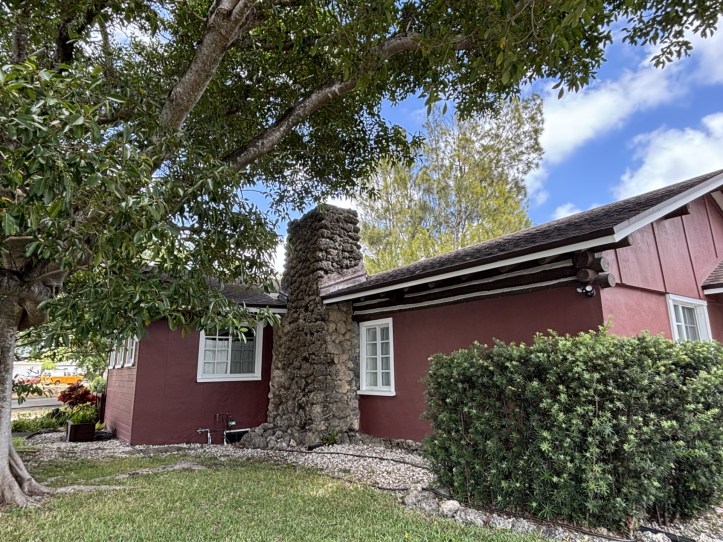
Curtiss built two homes for his mother, Lua Curtiss, when she moved to Florida. “The Alamo” was the first one. It is a Y-shaped two story Pueblo Revival style-building. The large windows with a northern exposure for Lua Curtiss who liked to paint by natural light. The interior features a large living room with a timbered cathedral ceiling and a floor-to-ceiling stone fireplace. When she felt it did not meet her needs, her son built a larger home nearby.
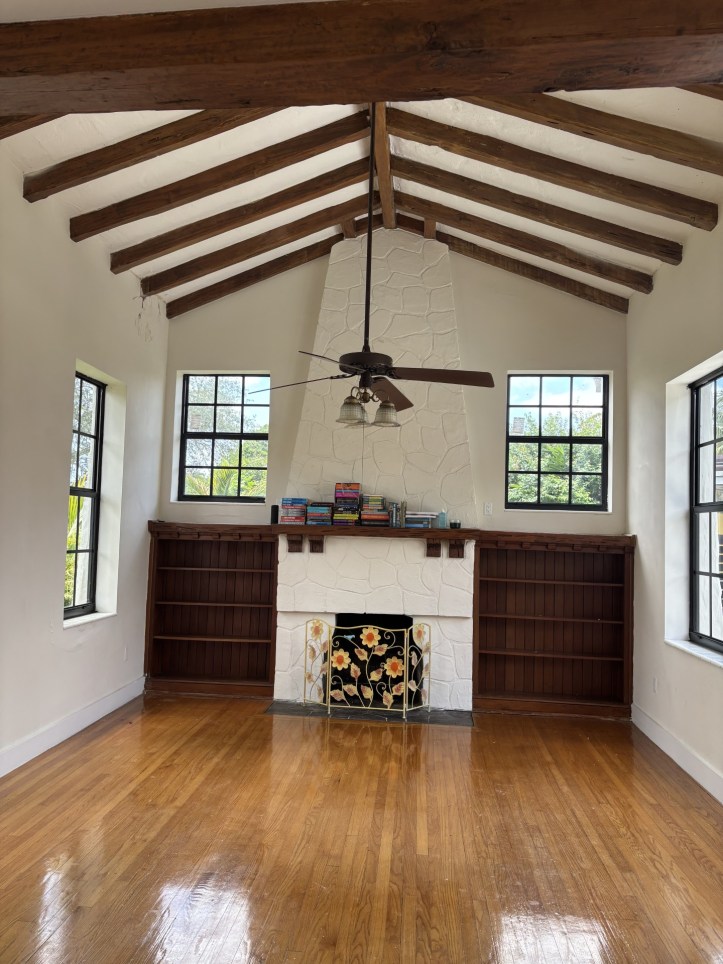
When she felt her house did not meet her needs, her son built a larger home nearby. Curtiss’ mother was as a “clubwoman” as well as a painter and patroness of the arts until her death in 1935. This home was featured in a 1926 Country Club Estates promotional brochure as being built on a block “set apart for residences only, to cost not less than $10,000 each, exclusive of architect’s fees and cost of outhouse and garage.”
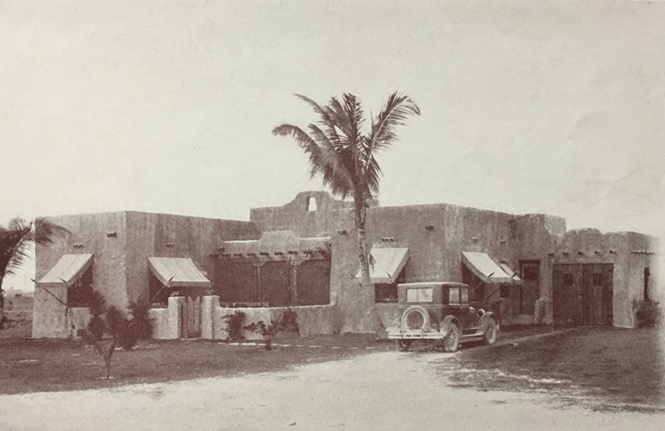
The home of realtor J. Alden Michael, an old friend of Glenn Curtiss, is 27 Hunting Lodge Drive in Country Club Estates. He and his wife Minnie are considered the first residents of Country Club Estates. Michaels real estate office was located in the Clune Stadnik Engineering building at the Circle in 1926.
A number of the original Pueblo Revival style homes were built along Hunting Lodge Drive, the winding road leading to the Hunting Lodge. The Hunting Lodge is thought to be the first structure Glenn Curtiss built in the Everglades area later named Country Club Estates. Originally built for his own use in the early 1920’s with special logs from Kentucky and Tennessee, it was featured in a 1924 Curtiss-Bright promotional brochure for Hialeah as the “Hialeah Shooting Park.” This rustic building pre-dates the Pueblo style that was later adopted in Country Club Estates. It was the center of many social activities in the new community before the golf clubhouse and Hotel Country Club were built. At the end of the 1920’s, it was converted into the “Country Club Estates School,” the smallest school in Dade County at the time. The school closed in 1933.
The Osceola Apartment Hotel, or “Azure Villas,” was built between 1925 and 1926. Part of the original development plan for Country Club Estates, it is the only apartment building constructed by the Curtiss-Bright Company. It was promoted as “one of the best appointed apartment houses in the state.” It was also the gathering point and shelter for many townspeople during the disastrous September 1926, hurricane which caused extensive damage in the area.
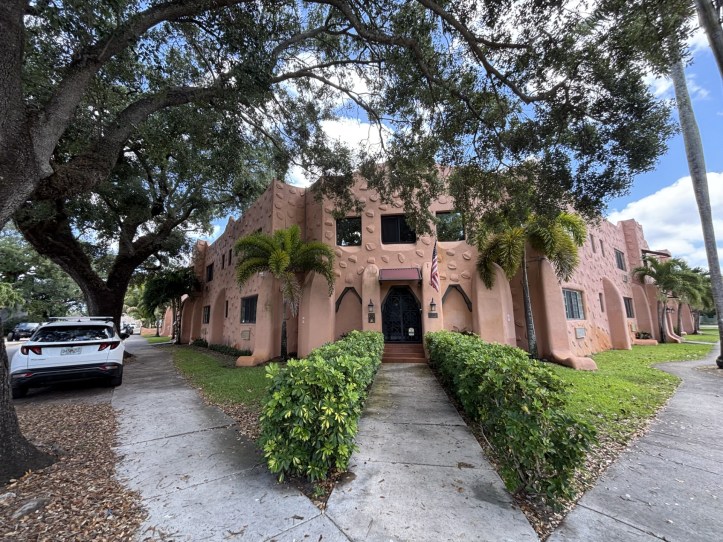
The original main building is a two story V-shaped building with 21 apartments and a central interior garden-style courtyard enclosed by a low, irregular stuccoed wall. The Osceola exhibits all the architectural elements and details that characterize the Mission Revival style: flat roofs, irregular parapets, small tower-like elements emphasized by irregular-shaped openings, prominent water spouts (canales), arched breezeways, mission bell cote motifs and rough textured stucco finishes.
These are not all of the remaining distinctive homes in Miami Springs. Other sites along the way that we missed on our explorations include, 1949, The Miami Springs Golf Course, established in 1923, the oldest municipal golf course in South Florida.
When you take a drive through Miami Springs, don’t forget a stop at the Historical Museum at 501 East Drive. Well worth a visit.
 Creatively Annette
Great look at Miami Springs! It truly is a historic treasure.
LikeLike
Wonderful story! Thank you for an interesting tour of Historic Miami Springs!
LikeLike