Earlier this week, Jewish people around the world celebrated the festival of Purim. On this joyful holiday the redemption of the Jews living in Persia, ancient Iran, is commemorated. The story is long, filled with suspense, and celebrated with delight (for more see 3-9-2020 and 3-16-2025 posts). In addition, the celebration of Purim ushers in the month of Adar, the lucky month!
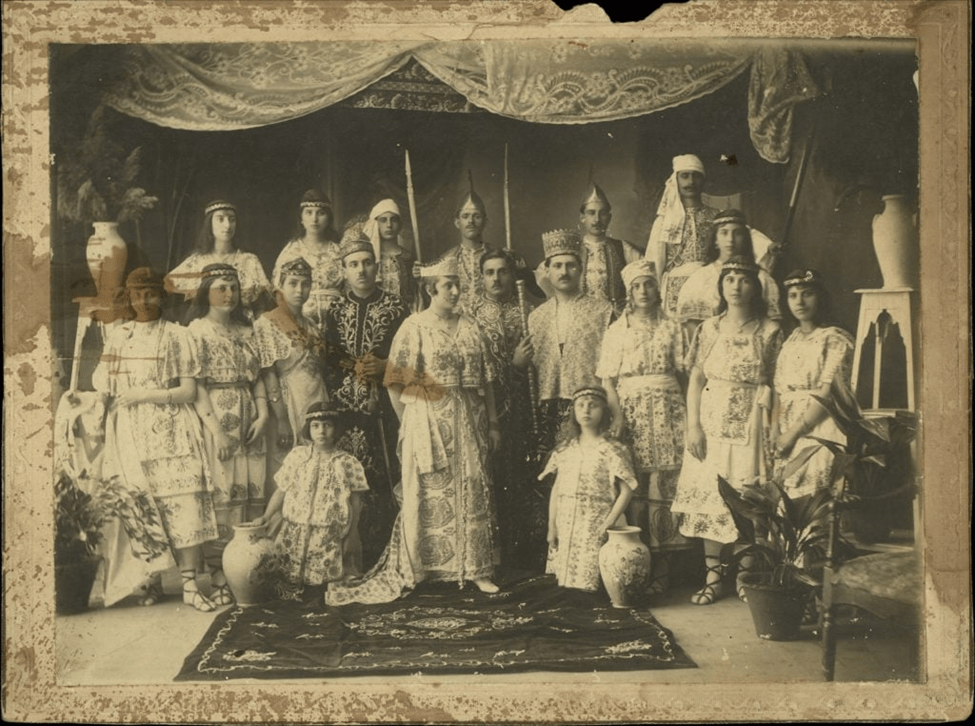
Food, of course, is part of any celebration no matter what your heritage might be. My mother told us that her mother did not make sweets, so our home was bereft of Greek Jewish desserts. I seem to remember that she bought hamantaschen, the triangle shaped, poppy seed-filled cookies. Their shape recalls the hat worn by Haman, the antagonist in the Purim story. Many other Purim sweets reference Haman: Haman’s ears, Haman’s hair, Haman’s teeth, Haman’s fleas.
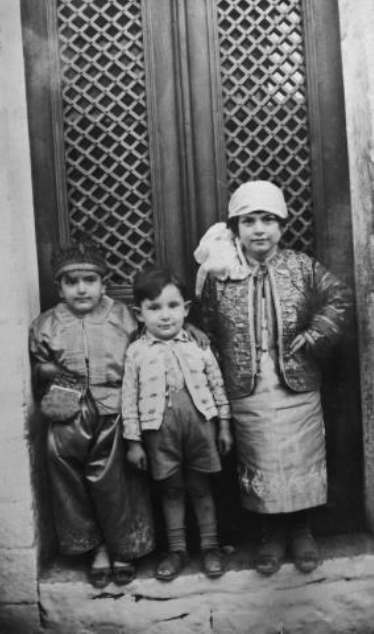
I’ve been on my own for Purim. To see how I’ve tried to solve this lack see the earlier posts referenced above. This year, I turned to marzipan (masapan), a sweet I learned to make during the long days of the Covid pandemic. Many non-Ashkenazi communities, from Morocco to Greece to Iran, make this sweet for severeal celebrations including engagements, weddings, a brit mila or a Bar or Bat Mitzvah, and Purim. Unlike the marzipan made in Eastern Europe that are colored and fashioned into small shapes, Sephardic marzipan remains natural white, often topped with whole almonds or decorative silver jimmies or dragees for a more dressy appearance.
During Covid, zoom cooking classes filled the airways and a few of the recipes from that time took root. I’ve made the masapan that was shared by the Sephardic Learning Kitchen of Seattle’s Ezra Bessaroth Ladies Auxiliary back in September 2020. Seattle, Washington, is the home of one of the prominent Sephardic communities in the US. Several variations are found on Bendichas manos comes from the island of Rhodes, once the home of a thriving Sephardic community (https://bendichasmanos.com ).
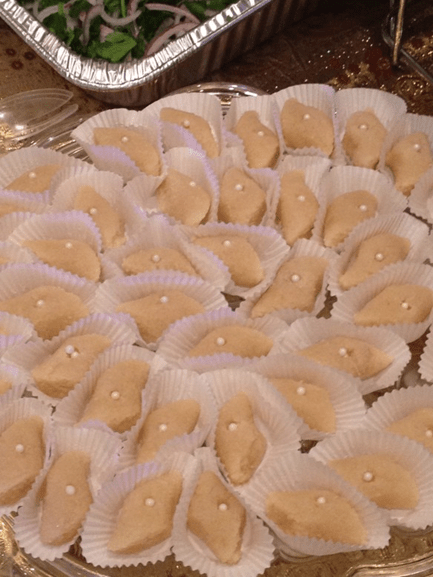
The recipe I used is from a Jewish family whose perigrinations took them from Morocco to Israel to Paris where they have proudly continued many of their family traditions (https://www.jewishfoodsociety.org/recipes/quesino-marzipan-with-lemon-curd-or-chocolate).
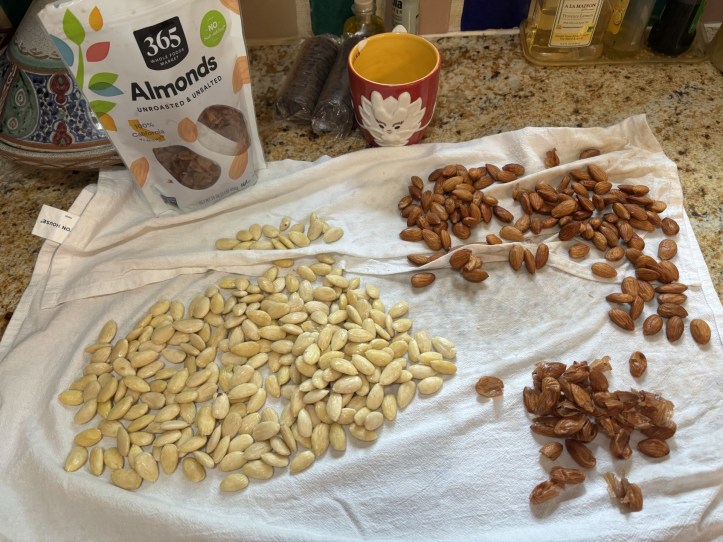
Moroccan Marzipan. Start with 2 cups of raw almonds. Blanch the almonds.* Put almonds into the food processor, pulse 8-10 times until finely ground and sandy. Add 1 cup of powdered sugar (I used a bit less and they were plenty sweet), pulse 4-6 times to combine. Add lemon zest, one egg white, and ½ Tablespoon Grand Marnier (lacking this ingredient, I used Cointreau). Process until a smooth dough forms, about 30 seconds.
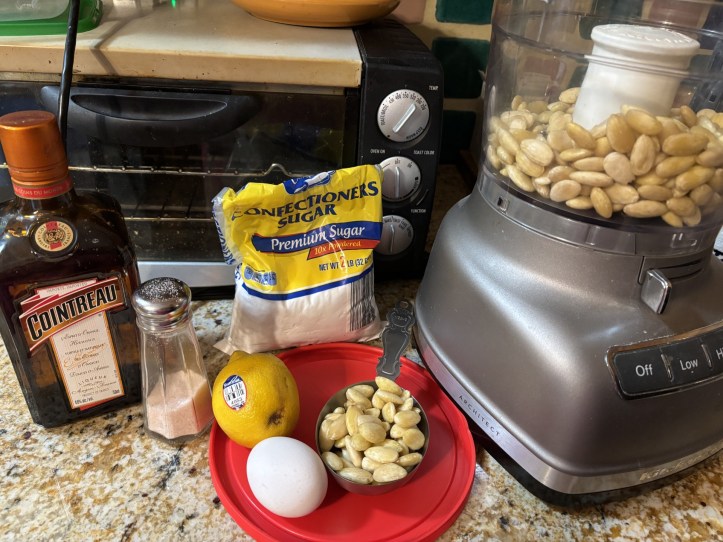
Roll the marzipan into a small, cherry tomato-sized balls, cover with plastic wrap. Keep in the fridge for up to 4 days.
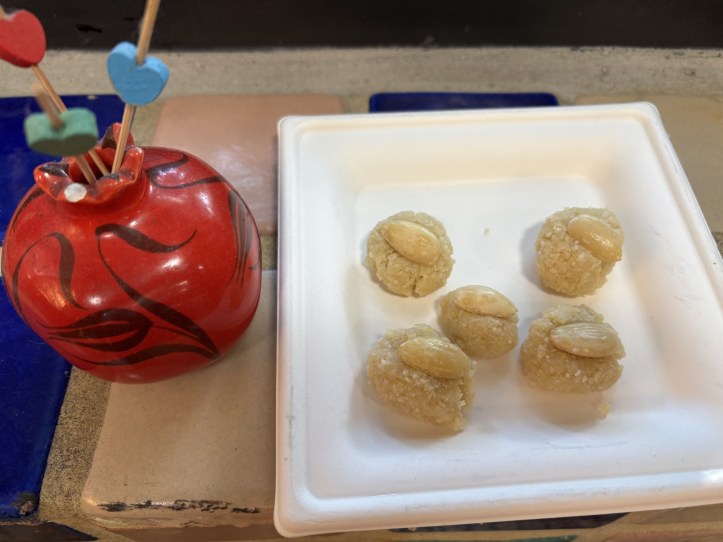
***To blanch almonds, put them into boiling water for only one minute – time it! Drain in a colander, put into a clean kitchen towel, and rub. The peels come off quickly and cleanly with this method.
 Creatively Annette
I love Marzipan, at Purim or any other time of year! 🙂
LikeLike