Sunday, race day! And now it’s Monday, try to return to normal life.
It was the final day of the annual Art Fair madness that engulfs South Florida. Constant Companion and I tend to remain centrally located in Miami Beach with a few forays onto the mainland all week long. First, the traffic is simply a bear or unbearable. It streams right past our house going both ways. Second, enough activities are taking place in our neighborhood. Though I’m drawn to a few on the other side of Biscayne Bay there was no compelling need to go, considering all that I’ve already seen.
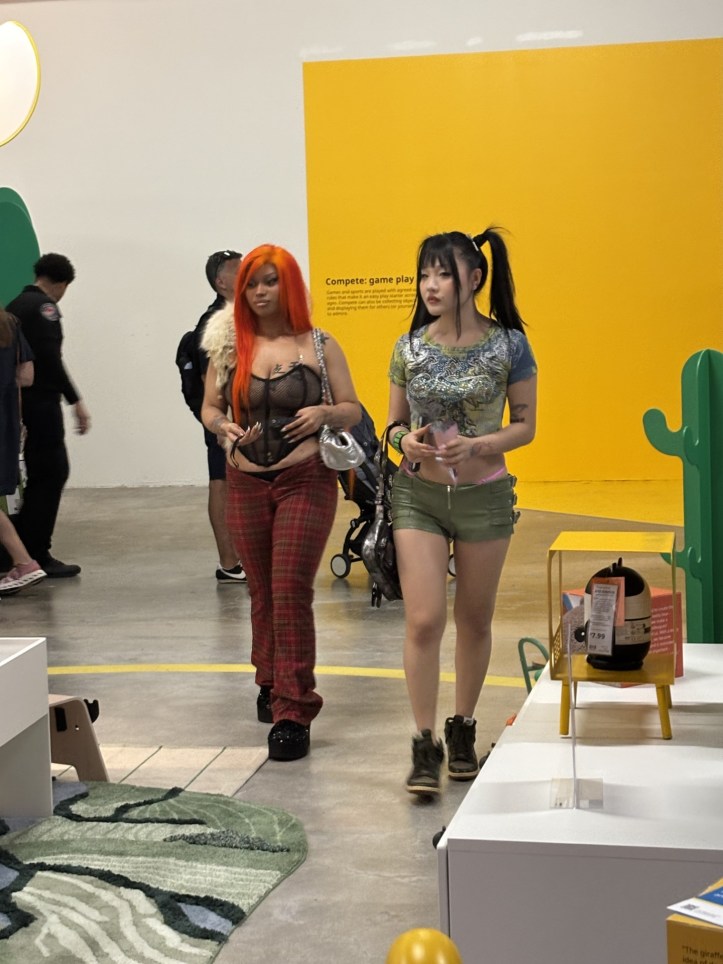
I’ve seen a lot of art and everything else, though I missed a few features I had wanted to take in: Lincoln Road’s mysterious pop-up and the new public art editions there are a few examples. Late Saturday afternoon, Constant Companion and I caught this year’s IKEA pop-up yesterday, very much a family-oriented play space. Not as good as a few years ago.
As for the public art, I’ve seen only a few pieces. Much of it will be up for a few months and I’m sure to make the time to see more of it. Yesterday, I could not imagine walking home (only a 20 minute hike) while Constant Companion did his best to get more art. My feet are crying for a break!
Amid all that we took in Saturday and the previous days, what else did we miss (you can google most of them to learn more)? Alcova, an interesting design fair, was in its third year at the historic Little River Inn. The Es Devlin installation on the beach had been another potential destination, one of the installations sponsored by Faena Hotel. Actually, we’ve never gotten to any of Faena’s inventive installations because parking around there is especially difficult. Our agendas are marked in the next two weeks to see their No Vacancy piece and all the others we’ve missed.
Two other venues deep in Miami that we missed are the in historic Opa Locka. I wonder why so much effort is expended to put together make what are purported to be significant exhibitions for only four to five days. Couldn’t they extend for another week or more for arts lovers like us who prefer and chose not to venture far from the Beach?
We’ve also missed the Historic Hampton House, the beautifully restored green book hotel. That show will remain in place for a while so we can cross the Bay and see it.

In the midst of just a sampling of what we missed, what did we take in on Saturday? We started in downtown Miami (oh, a special concession to getting off the island) for the tour of some of the public art installed in the newly opened Osvaldo N. Soto Miami-Dade Justice Center (https://miamidadepublicart.org/app/art/collection.page?facilityFacet=Osvaldo+N.+Soto+Miami+Dade+Justice+Center). The large crowd of curious was broken into groups to see the 14 site-specific commissions, exhibitions and art acquisitions highlighting Miami-based artists, and beyond.
A bit of history before the art we saw Saturday morning. Osvaldo Soto was a Cuban American lawyer who led the fight in the 1980s to repeal the county’s English-only ordinance that, among other things, stopped clerks from conducting courthouse weddings in Spanish.
We only saw a few of the over 90 individual artworks acquired from 25 Miami-Dade County and south Florida-based artists lining public areas such elevator lobbies and corridors. The large scale commissioned artworks are in the lobbies outside of courtrooms on the 13th – 24th floors.
Members of the tour groups were especially lucky to meet the artists of many of the commissioned works and learn about their influences and practices.

Included in the commissions was a monumentally scaled artwork by celebrated Miami-based artist Edouard Duval-Carrié. Ode to the Everglades welcomes visitors to the building’s main lobby. The artist’s depiction of this complex ecosystem is replete with countless species of birds, mammals, reptiles, and fish.

Environmental artist Jennifer Basile’s Coastal Anchor behind the judges’ bench in the Ceremonial Courtroom of the Civil and Probate Courthouse is drawn from her “voracious appetite to document landscape.” she chose to depict the enduring and familiar image of a Seagrape tree because it embodies qualities of resilience, stability, and growth—echoing the foundational principles of the public court system.
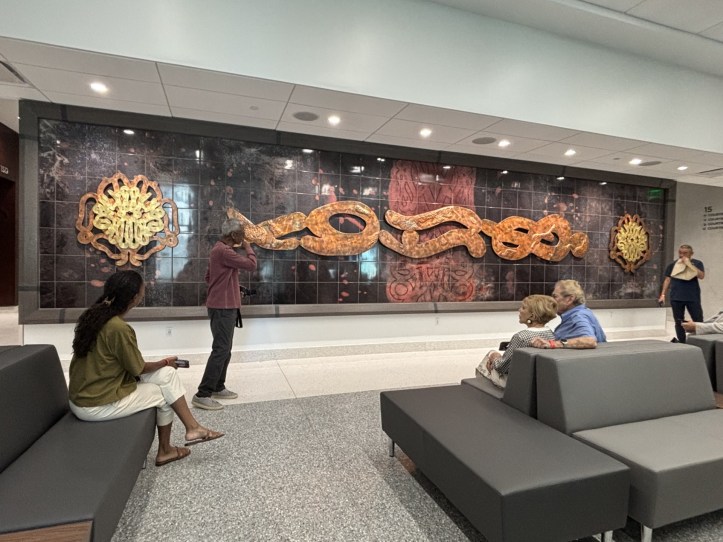
On the 15th floor, Onajide Shabaka created serpentine forms in copper and brass inspired by the architecture of termite and ant colonies. “Beyond The Personal Touch” uses historical and ethnographic research, geology, and botanical sciences to create artworks in various formats.
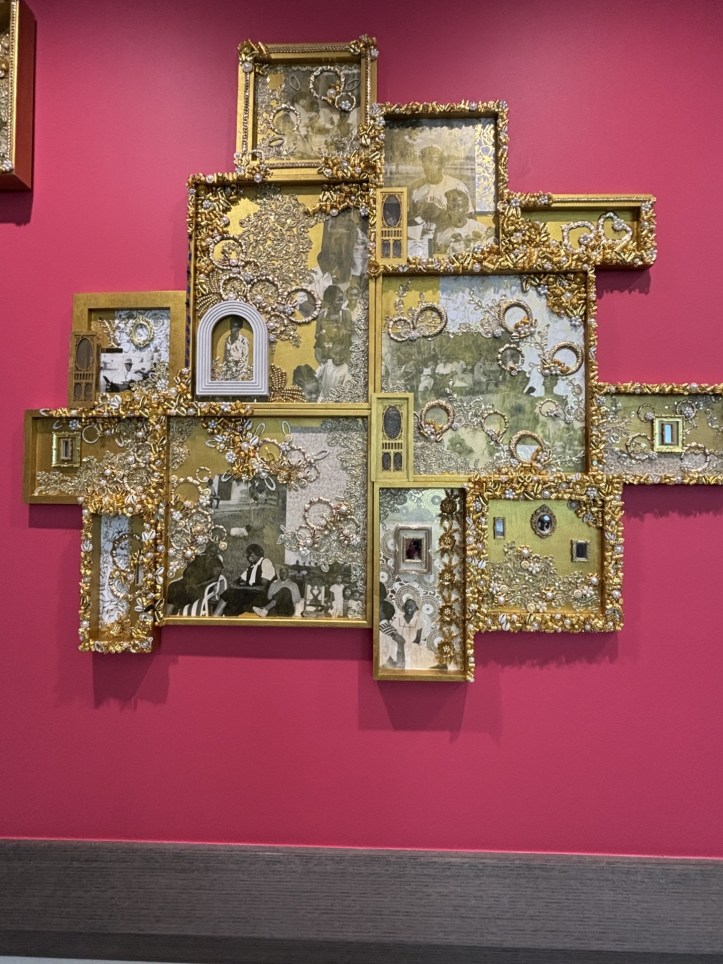
His Arrow Never Misses The Mark… by artist Loni Johnson is a group of tableaux that stretch across the space wall. Each group brings together personal and public archives to hold memory, migration stories, heritage, and ritual, encapsulating broader histories of South Miami-Dade County where the artist was raised. Her wish is that this multi-faceted artwork will be a moment of pause and rest and serve as a place to reflect and see themselves for people waiting to enter the courtrooms. I had wished for more time to be able to study this amazing and complex art work.
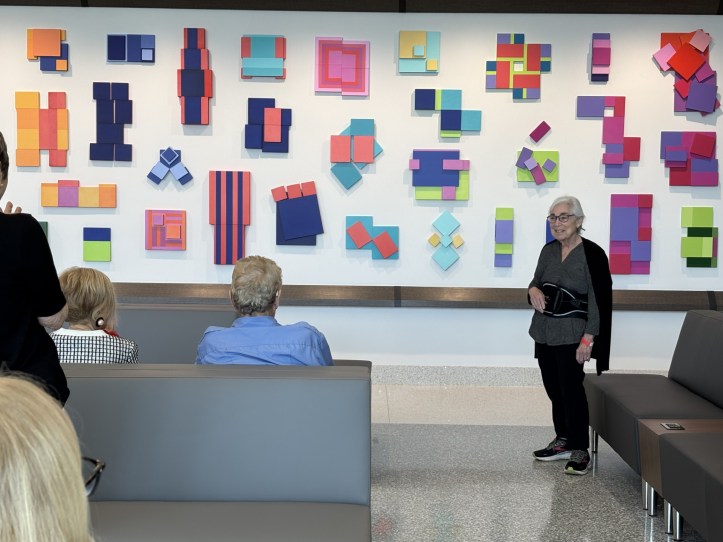
Building Blocks of Color was long-time Miami artist Karen Rifas‘ response to the call for artwork. She uses hard-edge geometric abstraction to investigate the interplay between color, form, geometry, and architectural space. The palette she used, ranging from saturated primaries to luminous fluorescents and soft pastels, draws from South Florida’s vibrant light and urban landscape.
I’ve only opened a window to a selection of this remarkable new collection of public art. For more information, see https://miamidadepublicart.org/app/art/collection.page?facilityFacet=Osvaldo+N.+Soto+Miami+Dade+Justice+Center
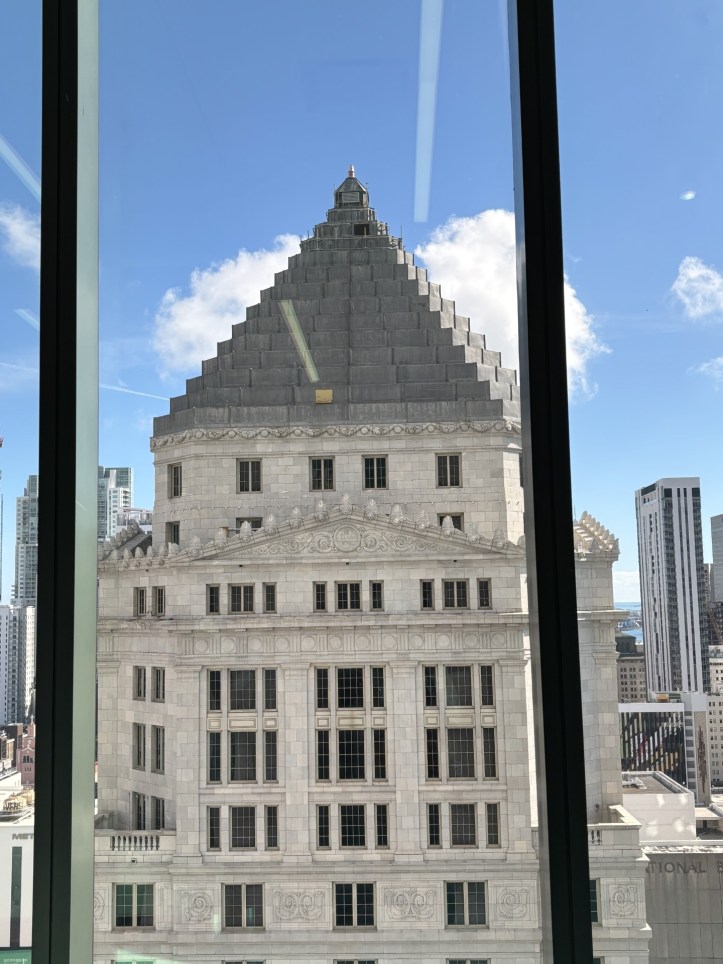
A real treat of the morning was the almost eye-to-eye view of the original County Courthouse when our group reached the upper floors. When it was built in 1925-1928, it was the tallest building the city of Miami and state of Florida. Its pyramid roof is now overshadowed by the much tall buildings engulfing downtown Miami in the past ten years.
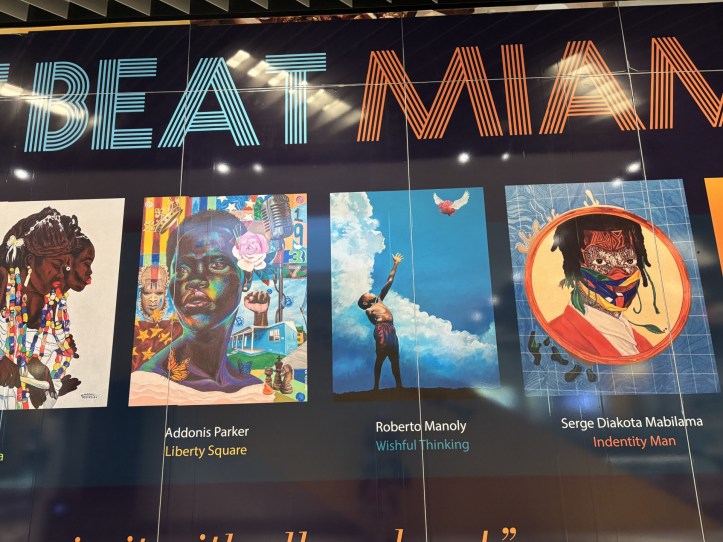
When we left this amazing tour, our destination was the Design District to see this year’s experiential Cartier exhibition. Hunger took over instead and I remembered that I’d RSVP’d to Art Beat Miami’s Caribbean Brunch in the Brightline* depot. Luck was with us as we found a parking space right front of the station.
*Brightline is the deathly dangerous high speed train between Miami and Orlando)
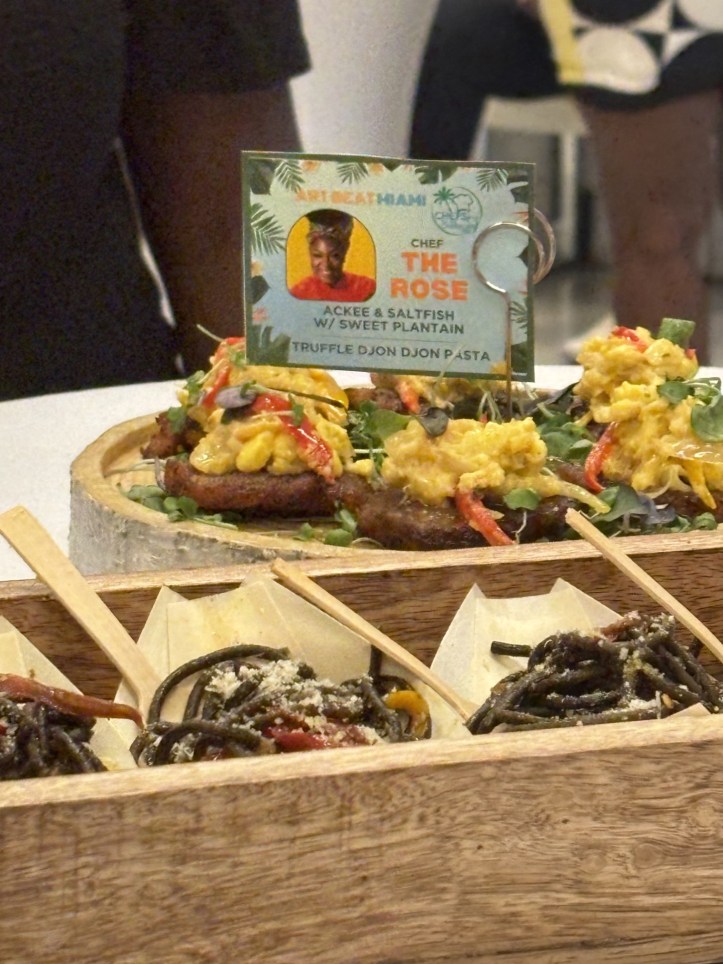
Art Beat Miami, is an annual satellite art fair presented by Little Haiti Optimist Club, Welcome to Little Haiti and Chefs of the Caribbean showcasing emerging and renowned artists from Haiti and around the world. This festival brings together multidisciplinary artists working in collaboration to highlight the culturally rich and diverse creativity of local artists and the Caribbean Diaspora here and beyond. Included are experience with art, cultural exchange, food, fashion, and music inspired by Haiti and artists worldwide.
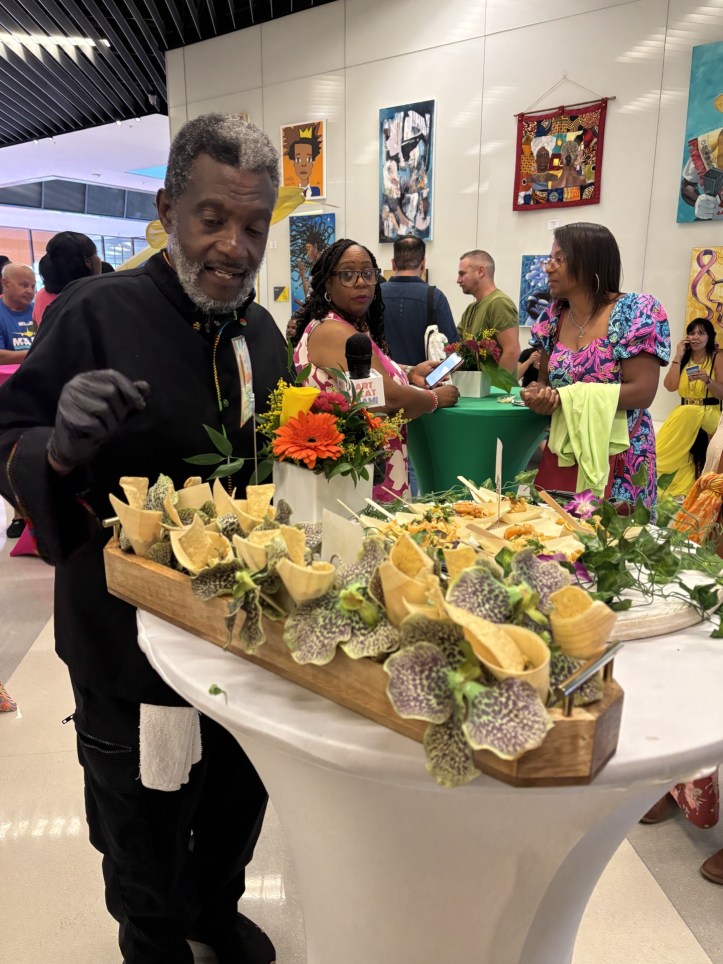
The Chefs of the Caribbean Celebrity Brunch is the final destination for your Passport to Creative Expression. We enjoyed many creative, delicious bites and left revived for our appointment with Cartier.
The Design District and the annual commissioned art installation and displays in the high-end, bougie shops always peak my curiosity. Unfortunately, we only had time to be immersed in what is now an annual Cartier extravaganza. Last year, it was the centennial of the Trinity collection. In 2023, it was all about watches. This year’s edition, “Into the Wild,” traced the origins and path of their iconic panther or Panthère.
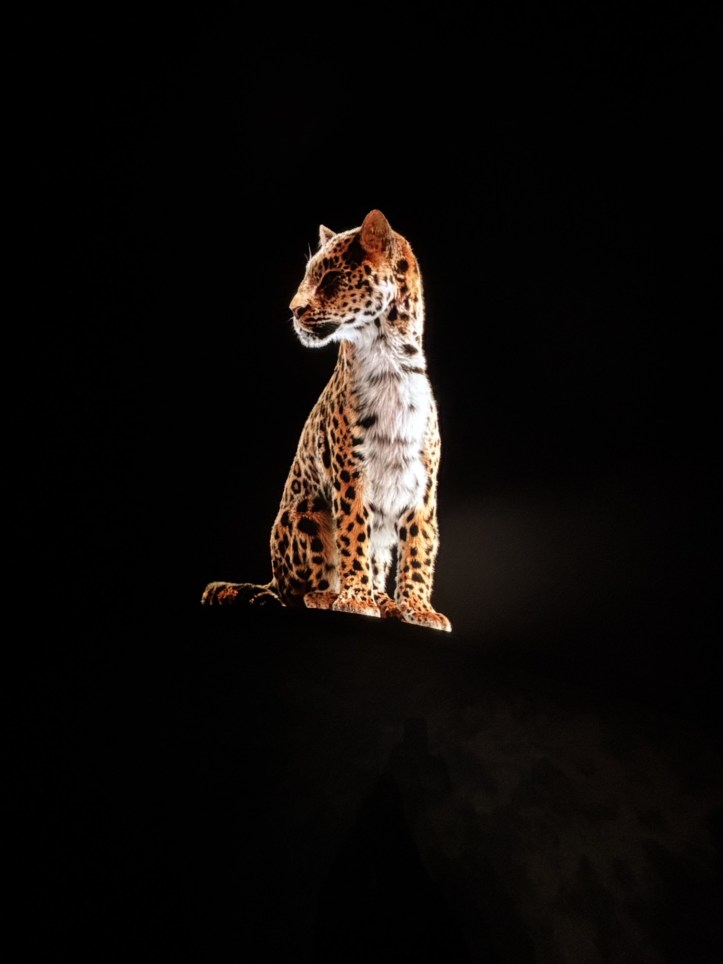
The former home of the De La Cruz Collection, one of Miami’s noted private museums, was transformed into the early 20th-century Place Vendôme and the Cartier shop and studio including Jeanne Toussaint’s Louis XIV desk, sketches, and purse. Toussaint was the creator of the original Panthère. Visitors are next ushered into an area where the intricate, time-consuming process of making the jewelry, the panther and her spots is explained.

Finally, “Into the Wild,” where the full Cartier menagerie appears: birds, giraffes, nuzzling parrots nestled in display cases framed by a lush botanical landscape.
With that, we left District and the annual Jeffrey Deitch Art Basel exhibit and more. Like Lincoln Road, some of the art will remain for us to catch another day.
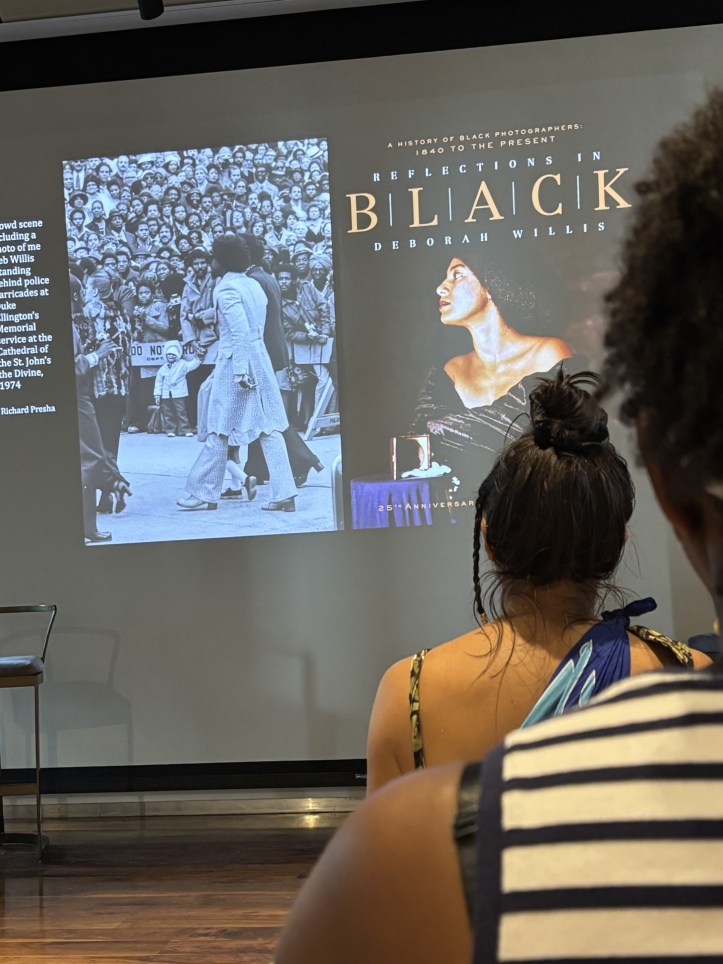
Our next stop to hear Dr. Deborah Willis celebrate the 25th anniversary of her book, Reflections in Black: A History of Black Photographers: A Reframing, 1840 to the Present at the Betsy Hotel on South Beach. This landmark publication was the first history to center on Black photographer, reframing the visual narratives of family, identity, and freedom.
Wow, reading this, I realize why I sat out Sunday, race day! We did a lot in just one day and I have not yet put the spotlight on all the Art Basel offered. That’s to come, sometime this week!
 Creatively Annette