Call it nostalgia, or whatever, a few weeks ago on the occasion of the belated celebration of my milestone birthday Constant Companion and I traveled to Oklahoma. We met and married there, and Daughter is proud to have been born in Oklahoma. Though it seems so long ago, our life-changing sojourn in the heartland imprinted on all three of us.
Over five days we saw friends with whom I’ve kept in touch over the years. We took in sites we’d not seen for so long or never saw. In keeping with our shared interests, we visited our fair share of museums in Norman, Oklahoma City, and Tulsa, some of which I worked and left my mark in. Along the way, we saw lots of art, culture, and history.
I have a particular perception of the elements that anchor good, not to mention exceptional, exhibitions. Central to these components are choice of artwork, design or layout, and label text. When woven together well, a visual and written story is effectively communicated. The result is what I consider a well-curated show.
We spent one afternoon at the Fred Jones Museum of Art on the campus of the University of Oklahoma. Approaching the building, we were greeted with a sculpture by internationally acclaimed Israeli artist, Menashe Kadishman. He frequently uses the imagery of the Akedah, the Biblical story of the sacrifice of Isaac, in his artwork. I was taken back of an evening in Tulsa, when Constant Companion and I were invited to join a dinner with Kadishman. As we chatted he dashed off a charcoal sketch of the same image and gave it to us. A unexpected rush of nostalgia.
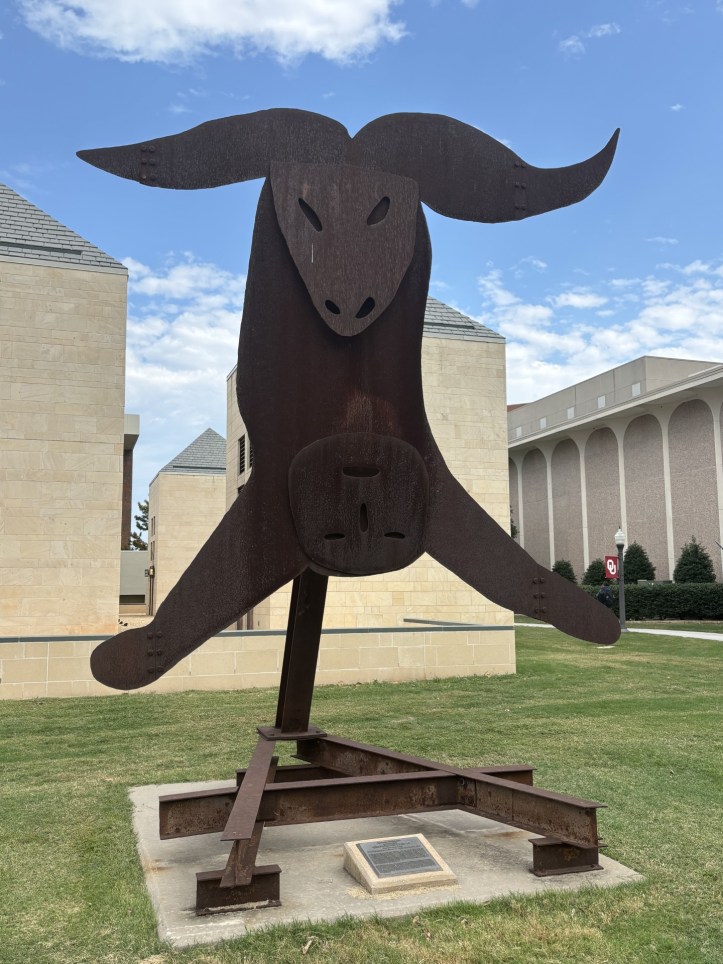
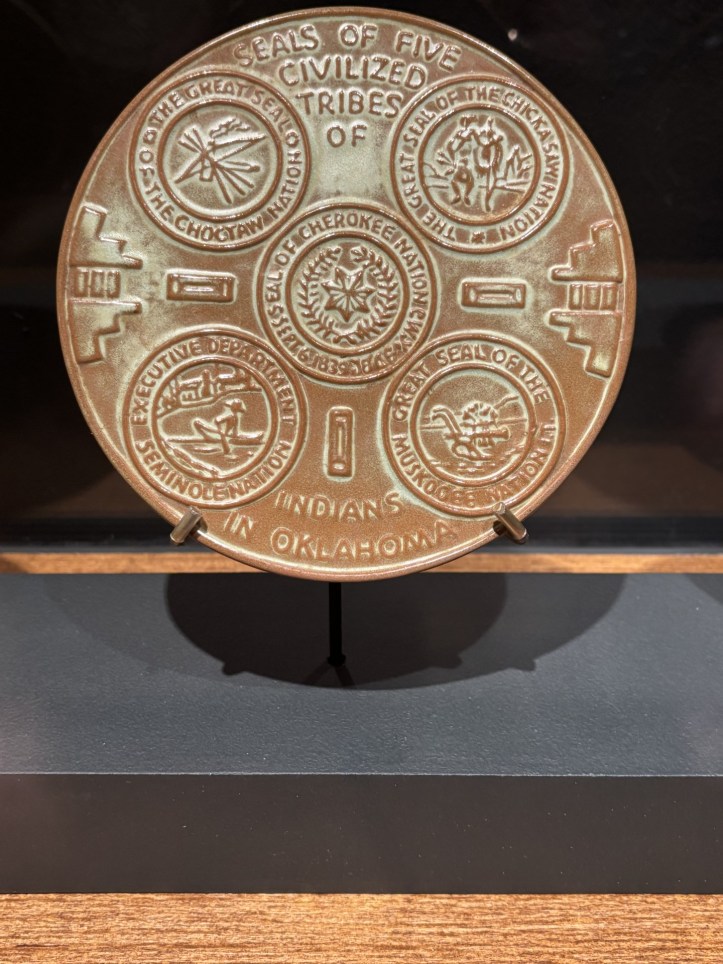
More memories emerged as we passed through the museum’s exhibits. Initially our goal was to see a temporary exhibition of Frankoma Pottery Company. When we lived in Oklahoma, I often found pieces of their enigmatic pottery at garage sales. Just before the trip, I pulled out my collection of trivets before our trip; Daughter immediately put her dibs on them, one more collection not to be parted with. Yes, our Five Tribes Trivet, though in a different color, was in the exhibition.
The exhibition filling the second floor of the museum placed the art of noted early 20th century non-Native artists working in the American Southwest side-by-side with works by Native American artists in the region. Here, I found my three anchors of a well-done exhibit speaking loud and clear.
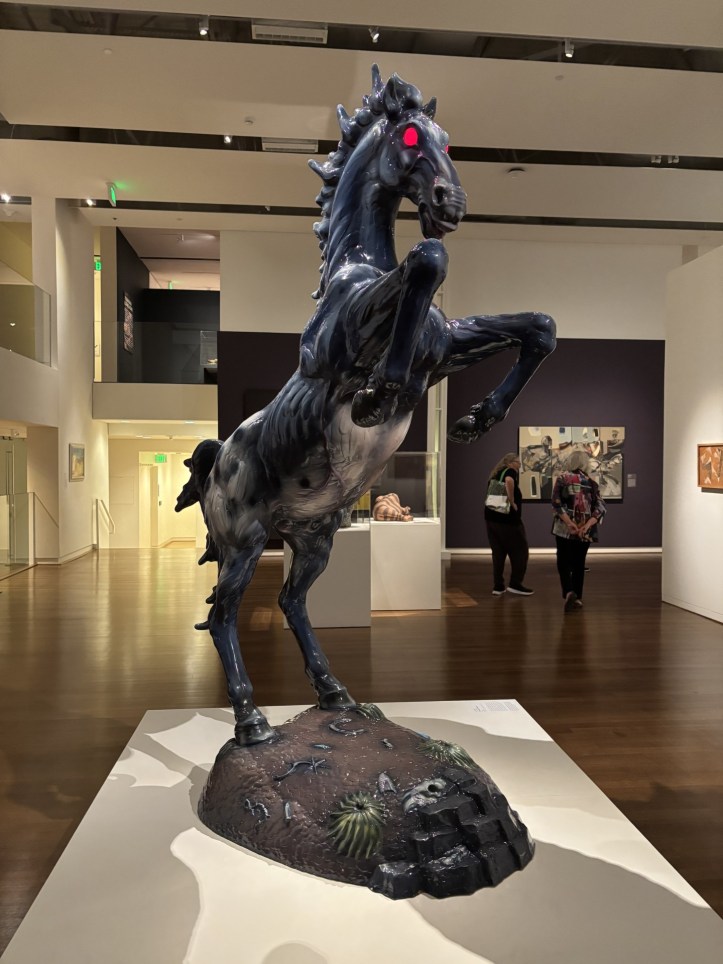
1- Choice of Artwork. First of all, when we drove up to the museum I noticed a favorite sculpture, Mustang by Luis Jiménez, no longer loomed over the corner of campus, alive with its glowing red eyes. Instead, it was corralled in the museum, no longer startling passersby like the train mural in Fort Pierce (see August 26, 2025 post).

We were greeting when we entered the exhibit by Fritz Scholder’s enigmatic painting, Indian with Tear, frequently reproduced in posters. Who knew how large this canvas that filled the entire wall is! Other Native artists in evidence were T.C. Cannon and Alan Houser, whose sculpture greeted us upon our arrival the Oklahoma City airport.
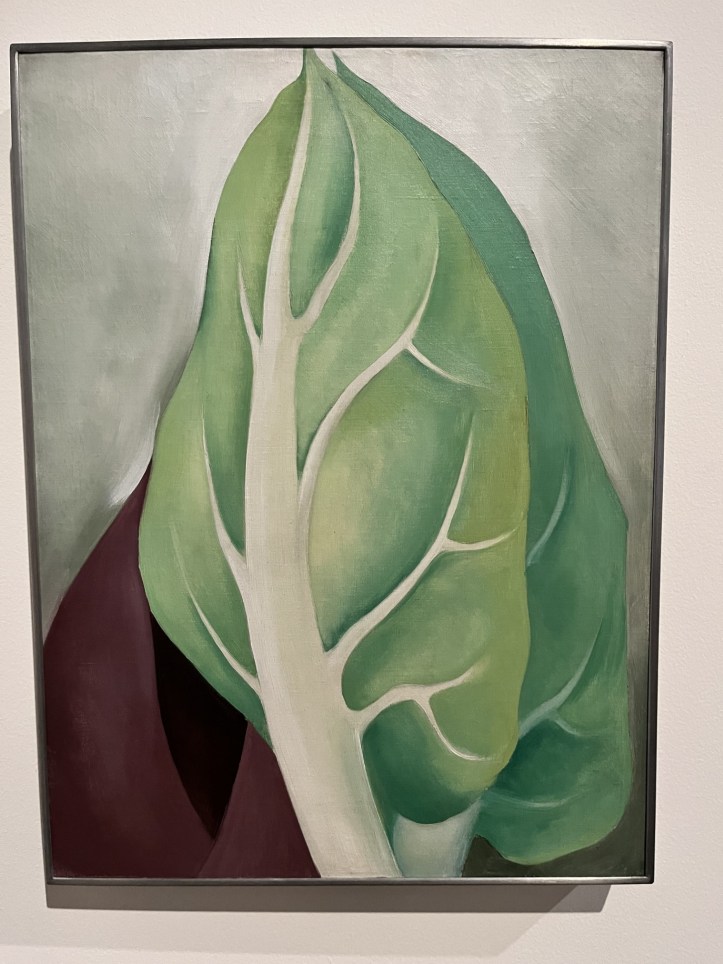
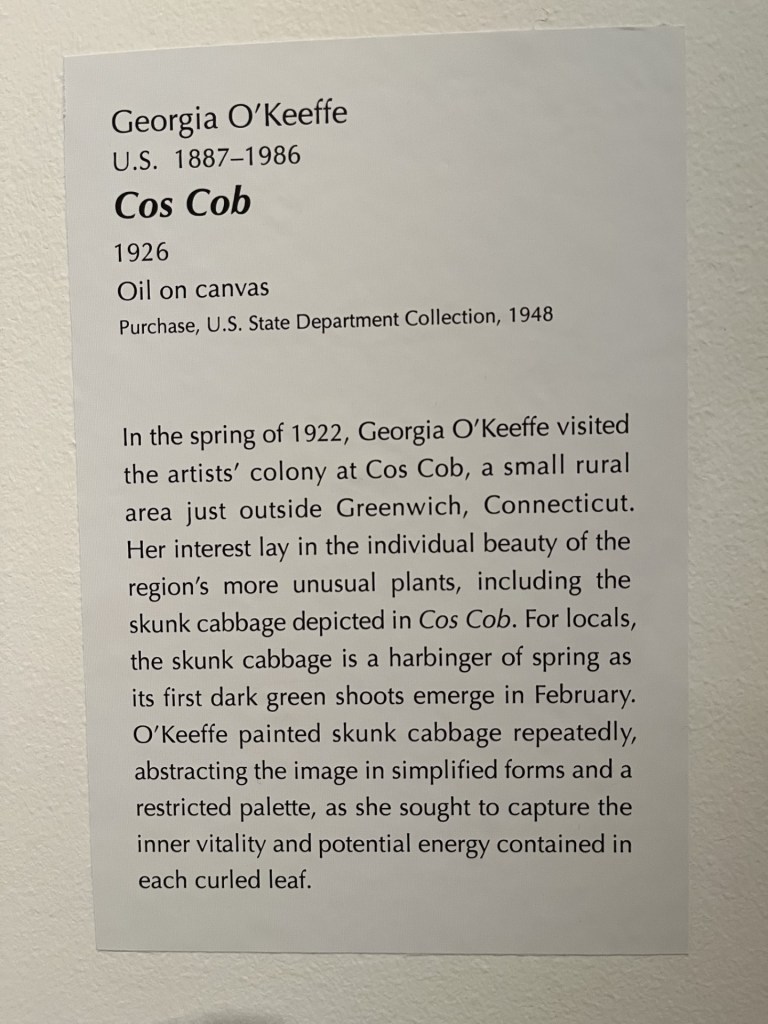
Many of the usual non-Native artists were in attendance including Georgia O’Keefe and Alexandre Hogue, as well as other names with which I was unfamiliar.
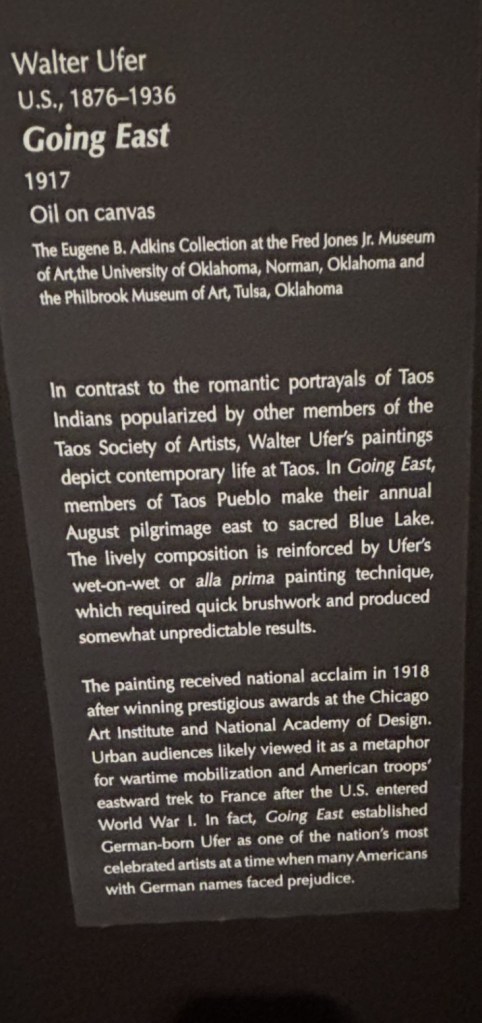
2 – Design or Layout. We were drawn to the sections of the exhibit in different designated areas throughout the spacious gallery. The design organically led from topic to topic. One area however stood out for its brilliance. Walter Ufer’s painting, Going East (1917), depicts a contemporary scene of members of Taos Pueblo on an annual pilgrimage. Among the possessions carried by the travelers is a large piece of blackware pottery.
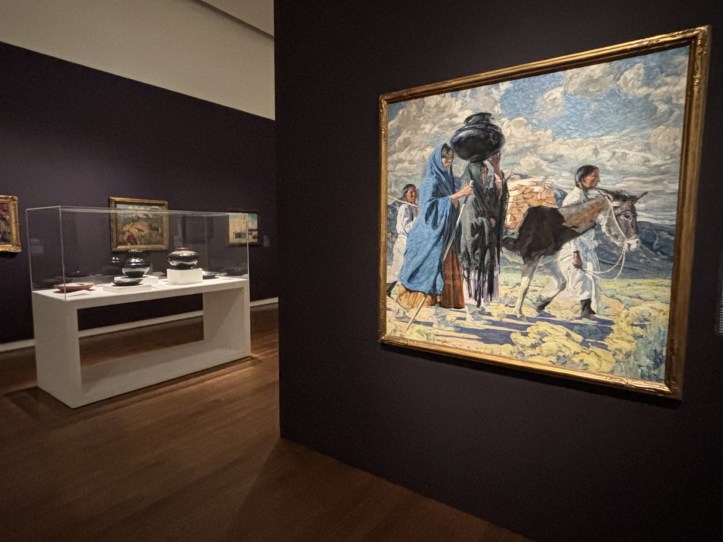
A vitrine holding similar black on black pottery was on display within vision to the side of the painting; both the pottery and the painting can clearly be seen, bringing to life the scene.
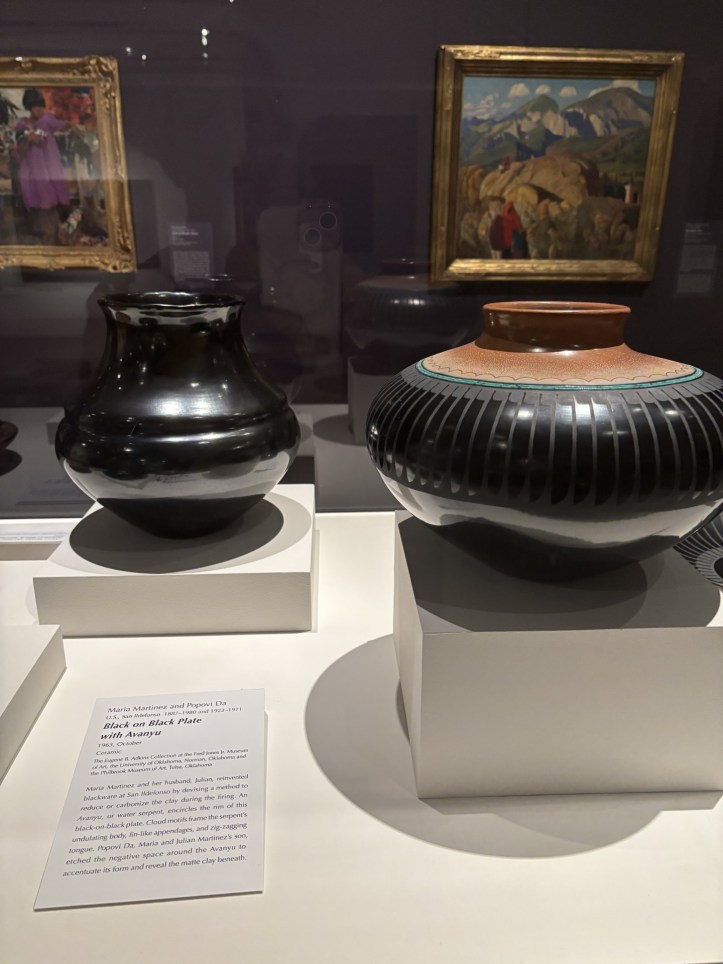
3 – Label Text. Refreshingly, the label text throughout the extensive exhibition – wall text and artwork labels – informed us about the content of the artwork, about the artists’ backgrounds and achievements, about their practice. The language used is clear and straightforward information not jargon-filled rhetoric found all too frequently.
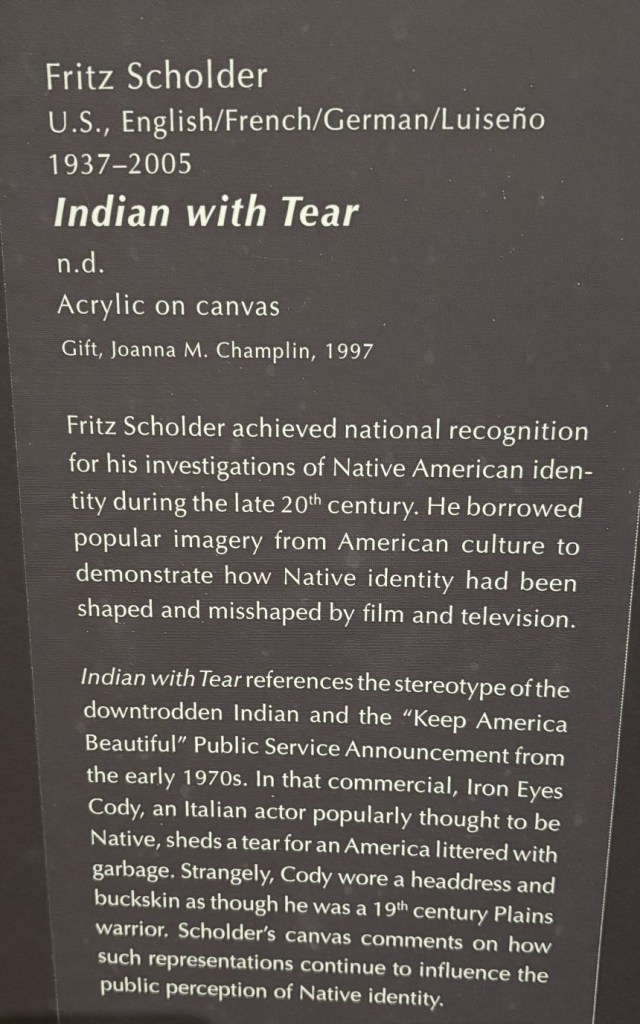
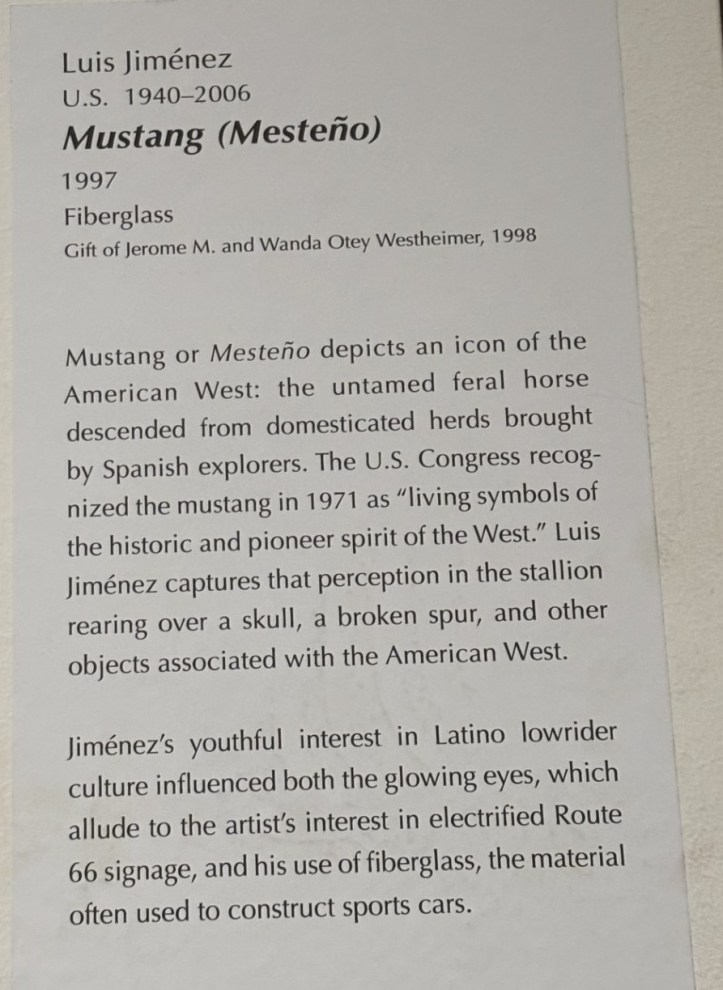
Both Constant Companion and I left our visit to the Fred Jones Museum, after an absence of 20-some years, fully satisfied and satiated. We saw art that appealed to us and that was curated – chosen, organized, displayed, and written about – in a way that we had many take-home messages. This was an approach that over the years I tried to impart to my students.
 Creatively Annette
Wonderful post!
LikeLike
What a beautiful exhibit. I love the deep brown color they chose for the walls/theme.
And WOW, that MUSTANG is gorgeous with those red eyes and the detail on the base.
LikeLike