There’s a sweet, quiet, little, neighborhood around several corners and across the canal from my own very busy and loud neighborhood. It’s a mixture of the typical, historic Mediterranean revival, Art Deco, and Midcentury Modern homes built in the 1930s, 1940s. and 1950s. The the large, white featureless dwellings charateristic of the 21st century with floor-to-ceiling windows are slowing making their intrusive mark. I call them “Tropical Bauhaus.”
On a Saturday morning, I enjoy strolling through the tree-lined streets – poincianas, mangos, and others – to enjoy the ambiance of this secluded community. Here’s some of what I have discovered.
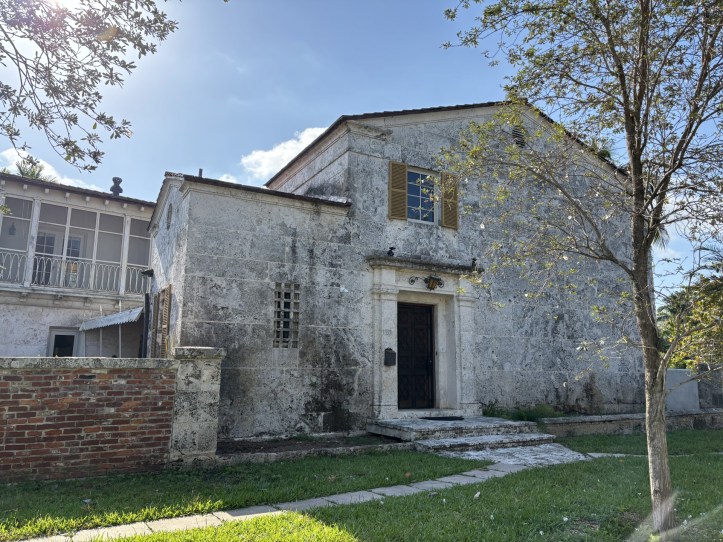
The corner house is a monument to oolitic limestone, the predominant limestone abounding in our area that is more frequently found in rough form used to build walls. This two-story house, built in 1934, might be one of the earlier homes when the neighborhood was being established around St. Patrick’s Church, built in 1929.

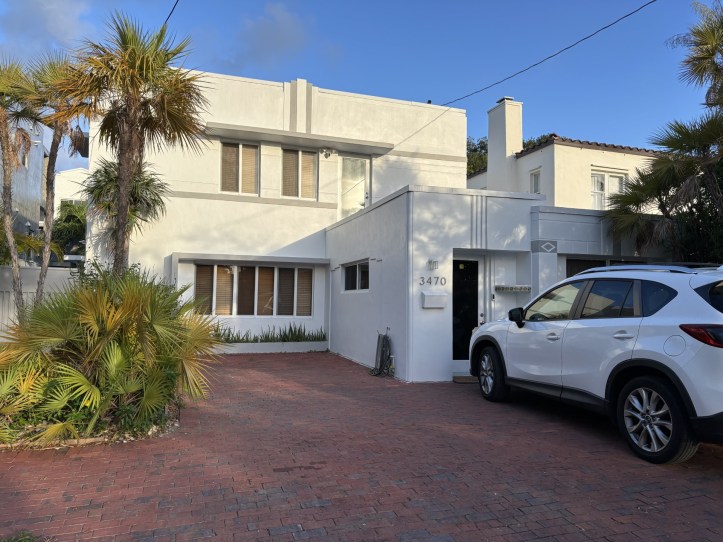
Next is this quietly stated Art Deco house built in 1938. It has just a few stand-out elements of the period: the stepped or ziggurat roofline in the center of the second story and the hard-to- make-out horizontal racing stripes along the second story.
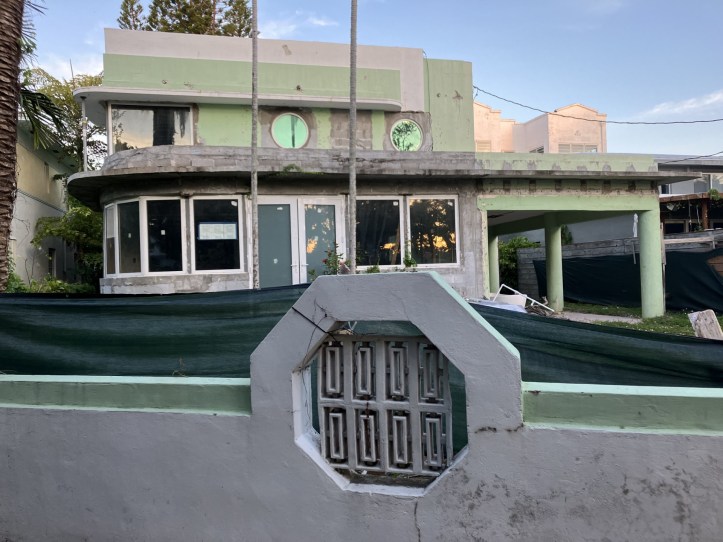
The home across the street, also built in 1938, shows many of the features associated with Miami Beach’s distinctive Art Deco. Start with the “eyebrows” or ledges over the windows above and below, the windows hugging the curve of the first floor, and the rounded “port hole” windows on the second floor. The octagonal chinoiserie element in the wall also an element of the period that referred to ocean liners, archeology, and more. I look forward to seeing the finished careful restoration.
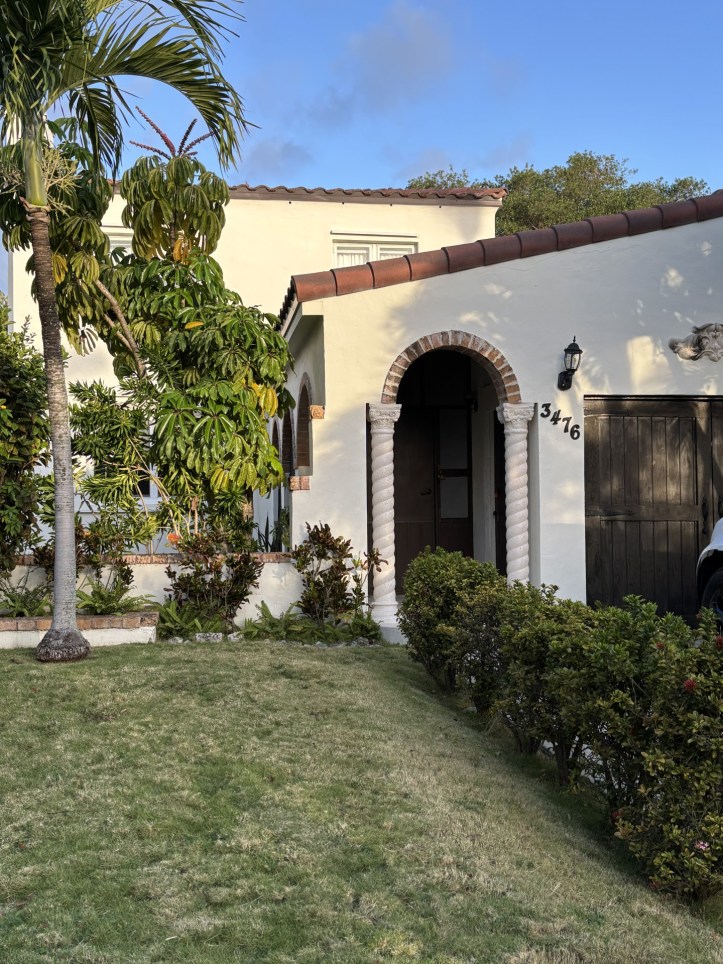
At least two homes that stand out were added to the street two years later in 1940. This home is a hold-out of Mediterranean revival styles with the curved openings, the twisted columns lining the entry way, and the terracotta tile roof.
This is another two story Art Deo beauty. The corner windows in this case are squared rather than rounded. The steps to lovely rounded entry way still have the original tiles on the risers. The raised flower beds could be precusors of the Midcentury Modern architectural styles soon to come.
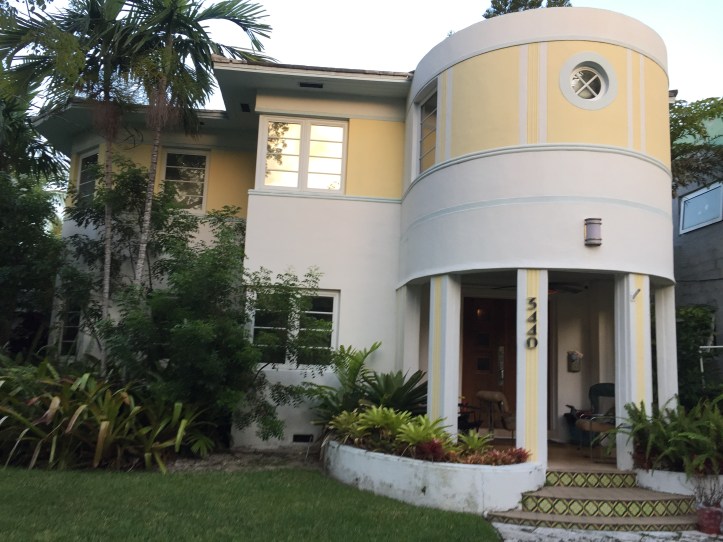
Midcentury Modern architecture came here primarily post World War II. This next house, built in 1950, falls into that time period. Its the thickly wooded front yard and amazing sculpture garden which stands out more than the building.
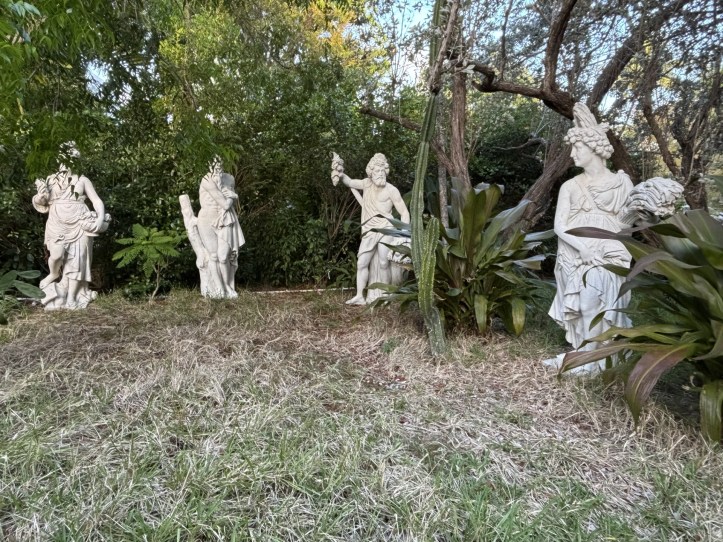
How did this veritable wonderland that takes you around the world come to rest in this neighborhood?
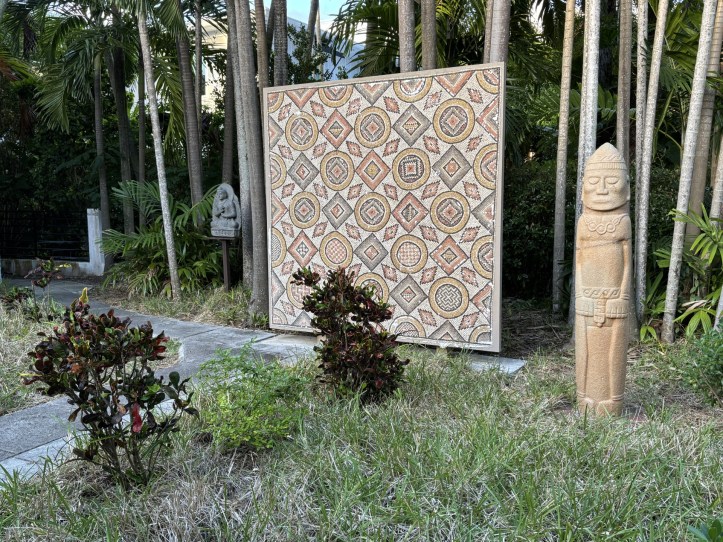
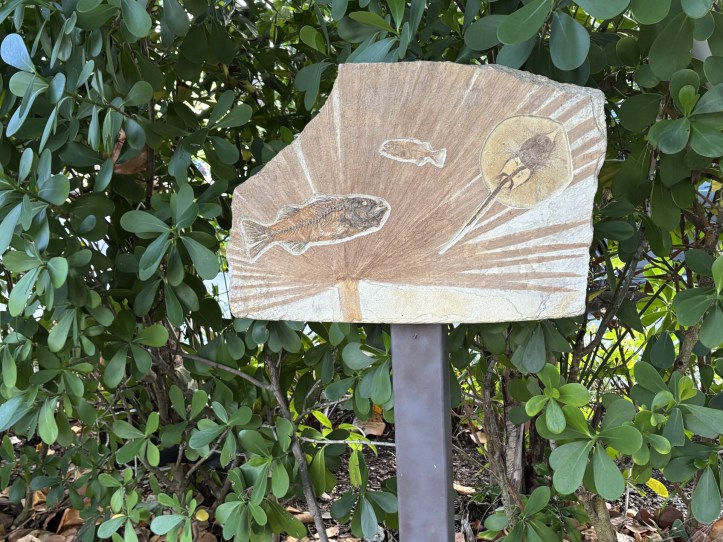
Including mosaics and fossils of all varieties
Could this Nok head be in conversation with an Etruscan and a citizen of the subcontinent?
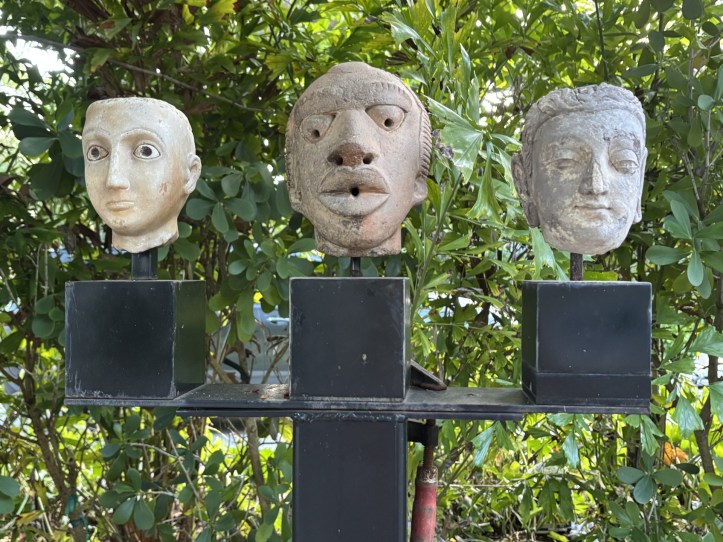
No, I do not have the courage to knock on the door for the answers to these and many other questions?
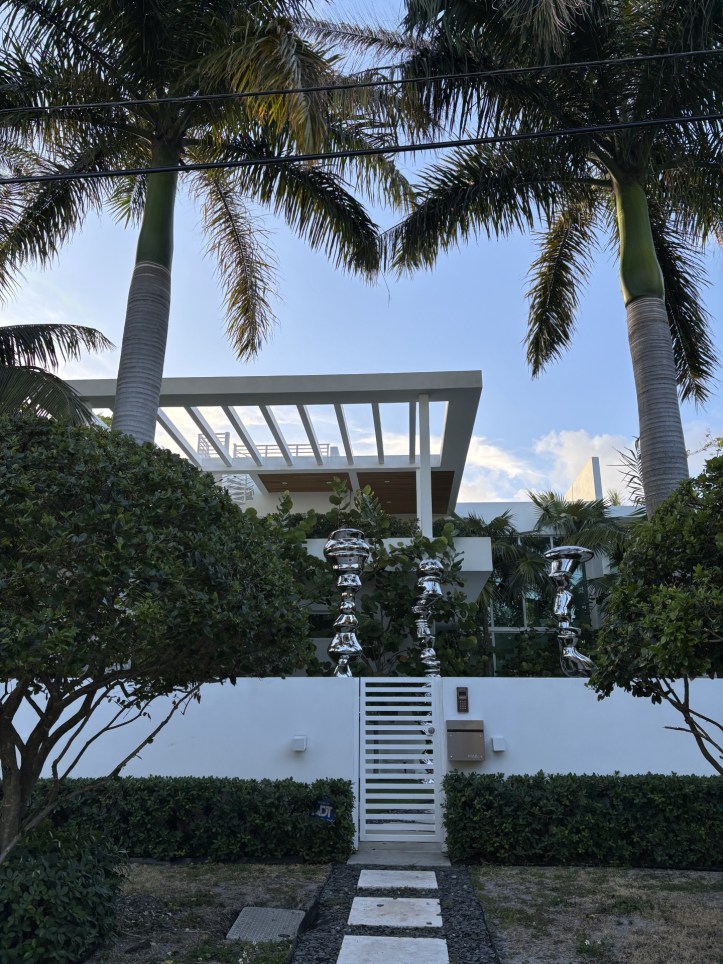
Finally, is the shout out to the 21st century clean lines of Tropical Bauhaus, also with sculptures in the yard. I cannot imagine they are by Anish Kapoor!
And one stand-alone document of Art Deco, replete with characteristic glass bricks flanked by port hole windows.

The glass block (or glass brick), invented by Swiss architect Gustave Falconnier in 1886, first gained popularity as factory windows in the early 1900s. Early bricks were hand-blown until 1932, when the Owens-Illinois Glass Company began mass producing translucent glass blocks. The hollow glass block became a hallmark of the burgeoning Streamline Moderne and Art Deco styles commonly associated with sunny Miami Beach. While letting in natural light without glare, they also provided comparatively effective insulation from the heat.
 Creatively Annette
Fantastic article!
LikeLike
Great to see! There’s always something different to discover around each corner.
LikeLike