What a pleasure it is to travel to the same place over a span of years. You cannot help but see changes, however. Sometimes you embrace the changes, sometimes, well … I also enjoy the memories.
My first trip to Ioannina in northwestern Greece was in the summer of 1982. I spent a few days there to detemine if this was a site for me to pursue doctoral research in folklore. It was and I returned for the 1983-84 academic year.* Since then, I think I’ve made four or five return trips to this beautiful Ottoman city on the lake.
*My dissertation has been published: Folklore and Ethnic Identity of the Jewish Community of Ioannina, Greece, Lexington Books, 2007
Most of my trips between Athens and Ioannina were taken on the bus rather than the much shorter flight.
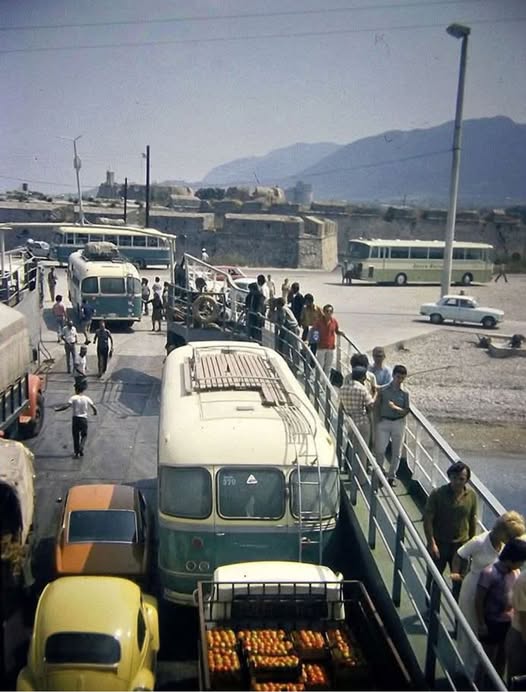
Once again, I found myself back on the lengthy road trip last September. What used to take hours is somewhat shorter thanks to changes … new roads and the bridge.
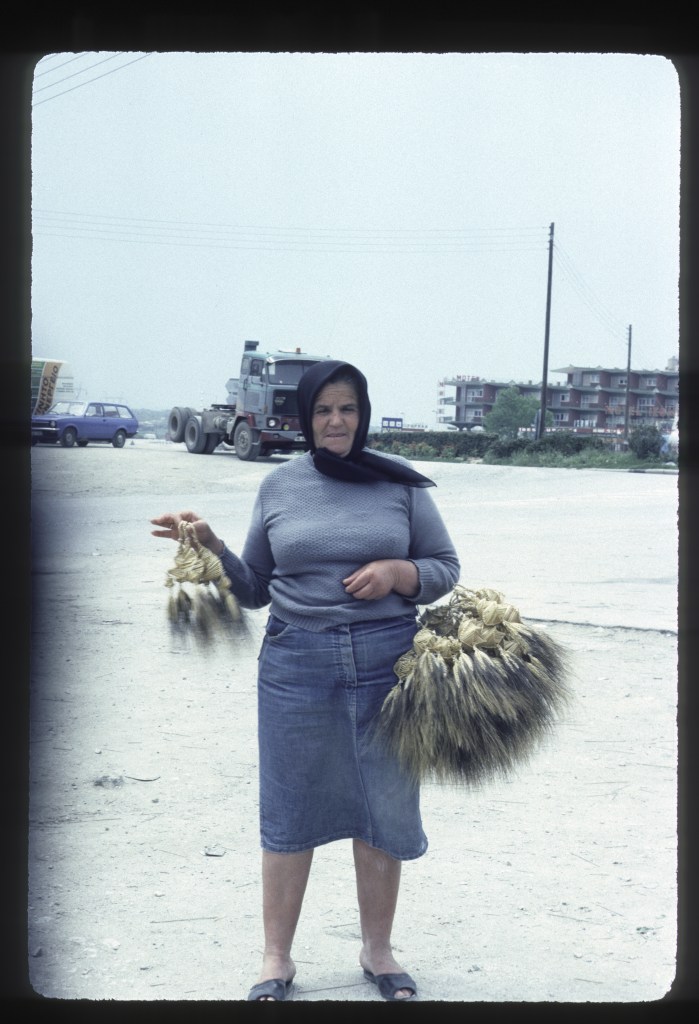
The route goes south out of Athens over the amazingly beautiful Isthmus of Corinth and along the southern edge of the Gulf of Corinth to its western mouth.
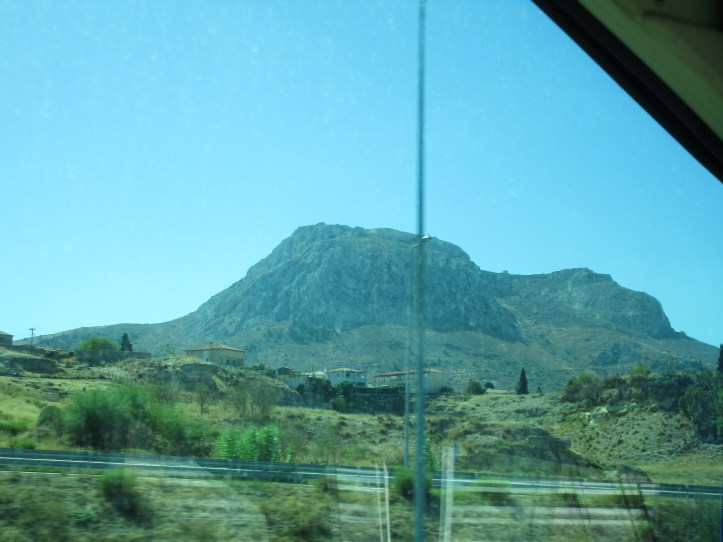
Mountains fill the bus windows on one side, while the azure blue sea is on the north side. In the past, a ferry boat took travelers across the western edge of the gulf.
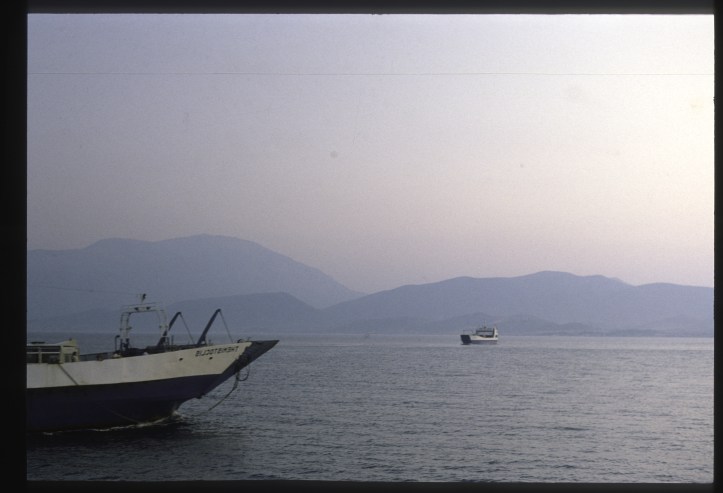
I grew up in land-locked Pennsylvania and Ohio; I love riding ferries no matter where I am. The crisp wind over your face, the expansive 360 degrees views, and the open sky enchant me.
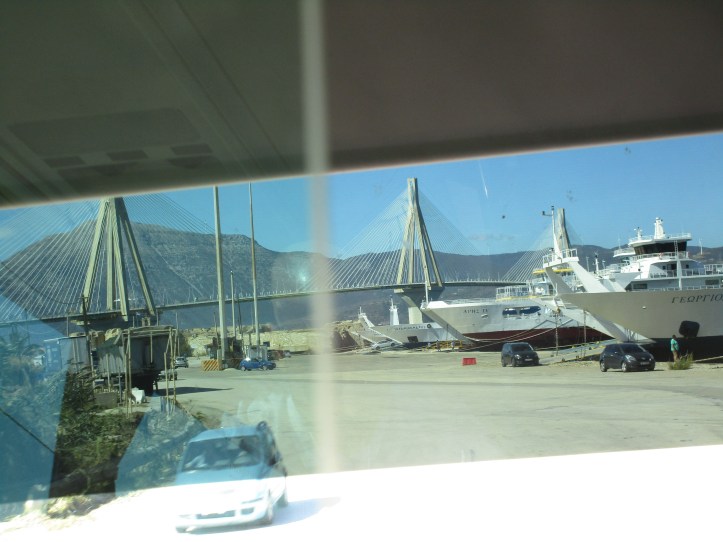
Now, the waterway is spanned by the 1.8 mile-long Rio-Antirrio Bridge, one of the world’s longest multi-span, cable-stayed bridges, built for the 2004 Summer Olympics in Athens. Its official name is the Charilaos Trikoupis Bridge, named after the nineteenth-century prime minister of Greece who was the first man to imagine such a span connecting the Peloponnese with Central Greece.
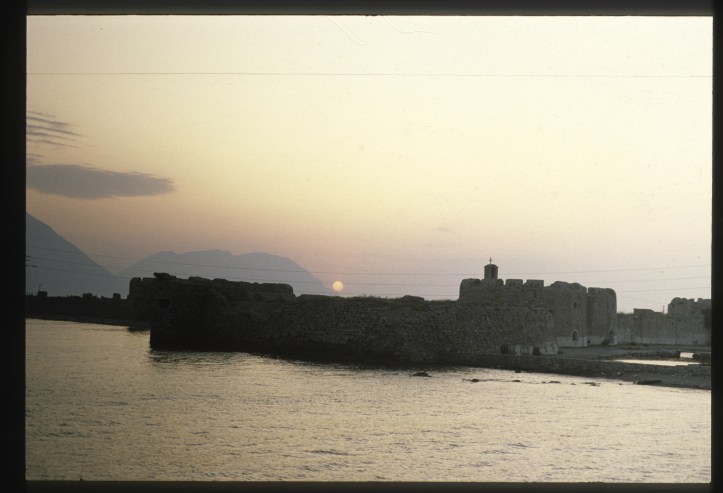
The bridge links two ancient ports, each with a medieval fortress: The historic Port of Rio on the western side and the historic Port of Antirio (“opposite Rio” in Greek) on the eastern side. Rio is next to Patras, the third-largest city in Greece; Antirio is near Nafpaktos, a Venetian jewel of a town. It also spans two gulfs: The Gulf of Patras and the Gulf of Corinth, separated by the Strait of Rio.
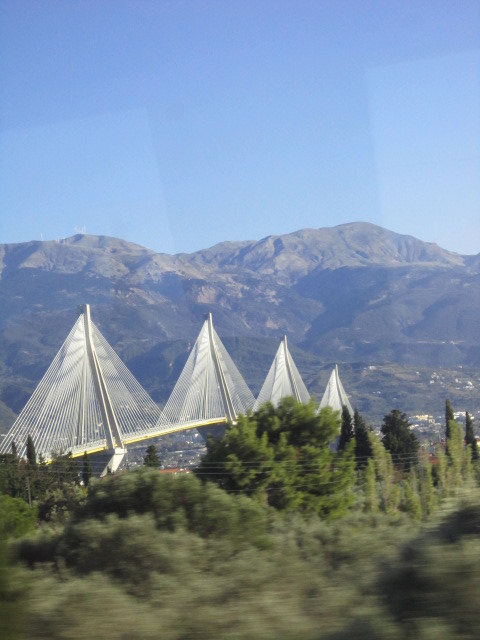
The building of the bridge was somewhat an engineering feat. The seabed had to be reinforced and stabilized with pier footings that rest on a bed of gravel to allow movement in the case of an earthquake. Since it was built, the economic landscape in Greece has changed, the transport of passengers and cargo was made much easier and quicker. Tourists have also benefitted from the addition of the bridge.
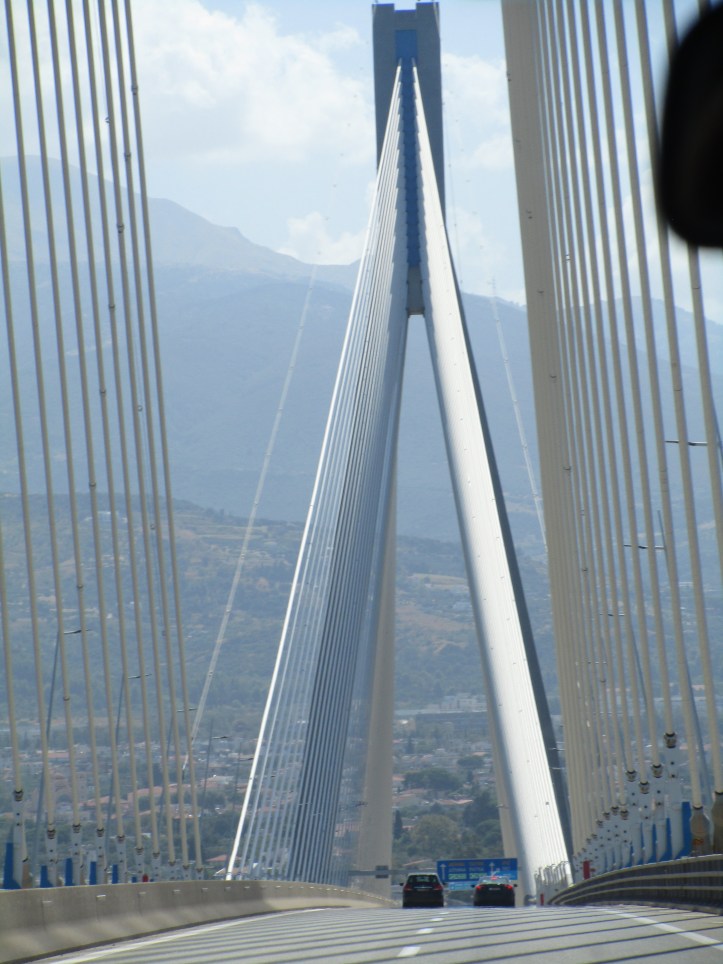
The Rio-Antirrio Bridge is a beautiful sight. Yet, I still miss the leisure afforded by the ferry of the past. And don’t ask me about the changes in the roads that now by-pass Arta* and its bridge made famous in a folksong.
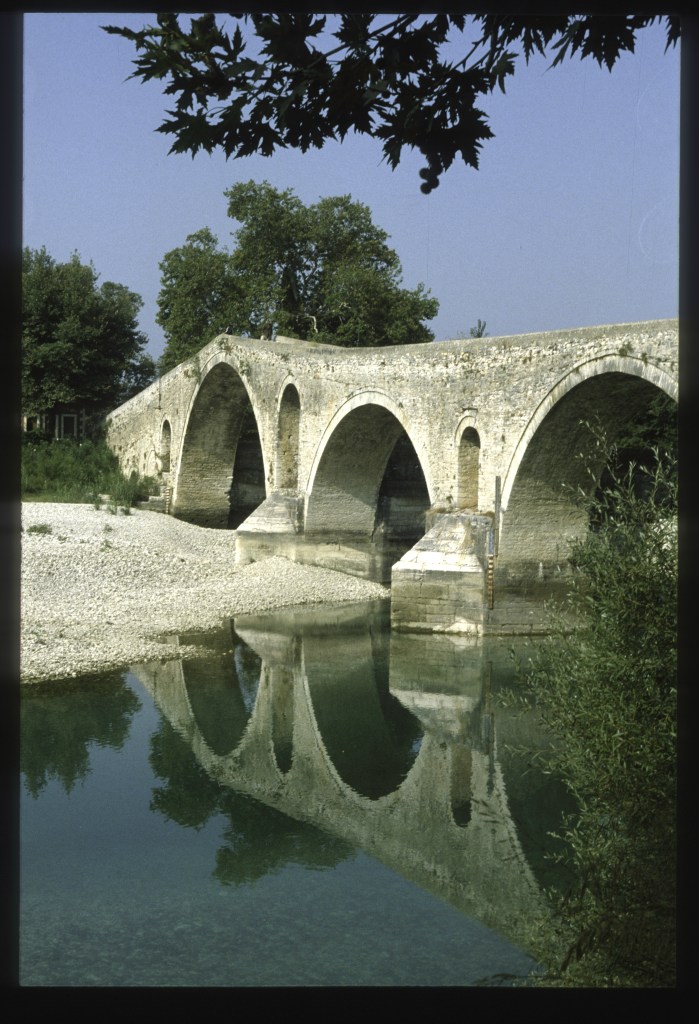
*Read more about the folksong here https://effrosyniwrites.com/2025/02/14/legends-stone-bridge-arta-parigoritissa/
 Creatively Annette