It seems that I’ve barely cooked a dinner at home since the great Spring cooking marathon, otherwise known as Passover. And that’s a month ago already. Between our schedules of whatever it is that so occupies our time, Constant Companion, Daughter, and I have been running. I don’t know about the others, but I’m beat. It’s all good, just constant motion in different directions.
Recently we took a break. The theater where I work four evenings a week is dark, so I can cook dinner and not rush off to welcome another group of avid or not so avid theater goers. The other two family members still have evening arts happenings,* but a nice dinner or two preceded their rush out.
*We’re back to it this week. Constant Companion has enrolled in a two week seminar doing with Afro-Brazilian art at one of the contemporary art museums. I’m sitting it out this time.
I paired to an old standard that I’ve not made for quite a while with a new recipe using an unusual item. A third new dish has entered my inbox a few times. The was right time for all of them.
Dinner with salmon loaf and roasted boniato. The boniato, also known as Cuban sweet potato, was the unusual item in the pantry and, truthfully, the two cans of salmon also had spent some time there, too.
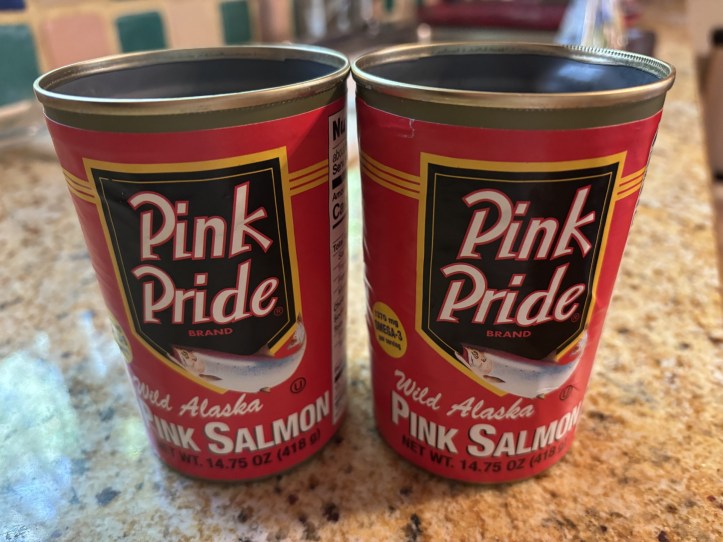
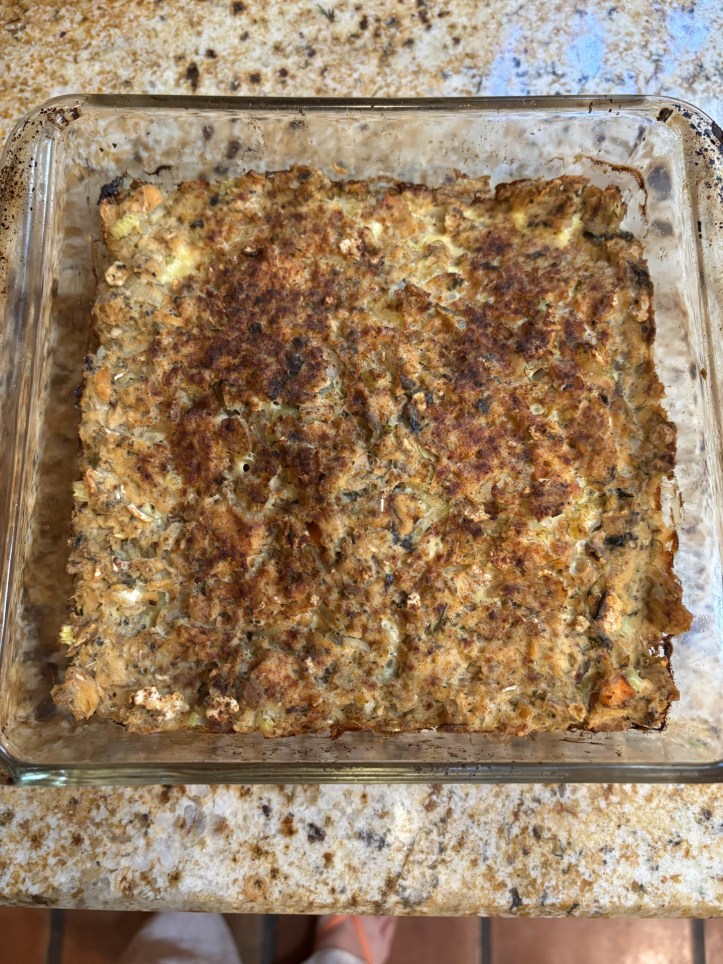
Salmon loaf. You can simply take any recipe for salmon patties and instead of frying put the mixture into an oiled baking pan and bake for an hour in a moderate oven. For mine, without a recipe, I thoroughly mixed the ingredients of the two cans of salmon (skin and all) with chopped onion, chopped celery, two beaten eggs, and a handful of breadcrumbs (or maybe matzah meal). I probably put in some dried parsley, no fresh on hand. If you like spice, add some red pepper flakes to taste. After putting the mixture into the baking pan, I sprinkled the top with paprika. Baked it for an hour and served with some aioli in the fridge. It makes good leftovers as well.
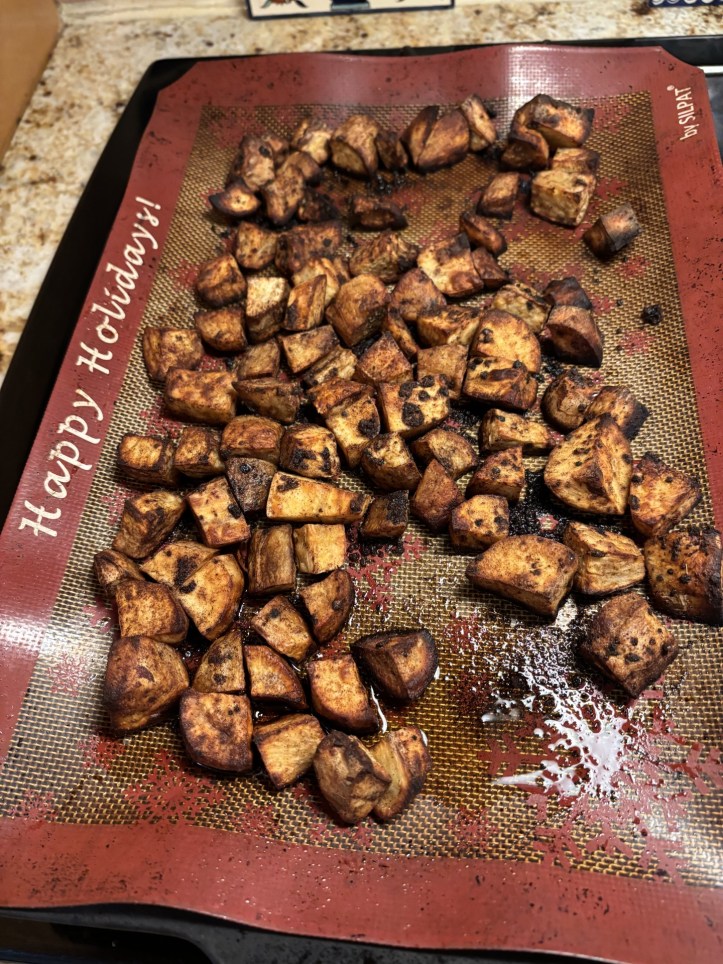
Baked Boniato. Boniato is a very firm root vegetable. Wash and peel then cut into 2” chunks. I seasoned it with salt and pepper only, I think. Toss with olive oil and put in the moderate oven with the salmon loaf. Online recipes recommend adding turmeric, cumin, and/or rosemary. I just wanted the simple. After about thirty minutes gently stir so all sides cook. I left mine a bit too long and it, well, burned. But … the crunchy burned part added to the melting consistency of the finished boniato. Seal of approval from Daughter.
Fried Cabbage with Noodles. The origin of this dish is lost somewhere in the depths of Eastern and Central Europe: Slovakia, Romania, Poland, and Ukraine, where it’s the national dish. There the name of the dish referred to one of the ingredients: haluski or dumplings, made with wheat or potatoes. The Viennese version was known as “krautfleckerln,” after Vienna’s eggy pasta specialty is called “Fleckerln,” or patches. InYiddish this dish was known as kraut lokshen or kraut pletzlach.
When this dish migrated to the US with Jews from shtetls and cities in the early 20th century, egg noodles took the place of the dumplings. And the dish became associated with Hungarian Jews.
Assembled quickly with a few ingredients, it can be served as a main course or as a side dish. Ours was the latter. The key to the dish is slowly cooking and caramelizing the onions and cabbage. One writer points out that Viennese version included a generous sprinkling of powdered sugar, making it a sweet dish.
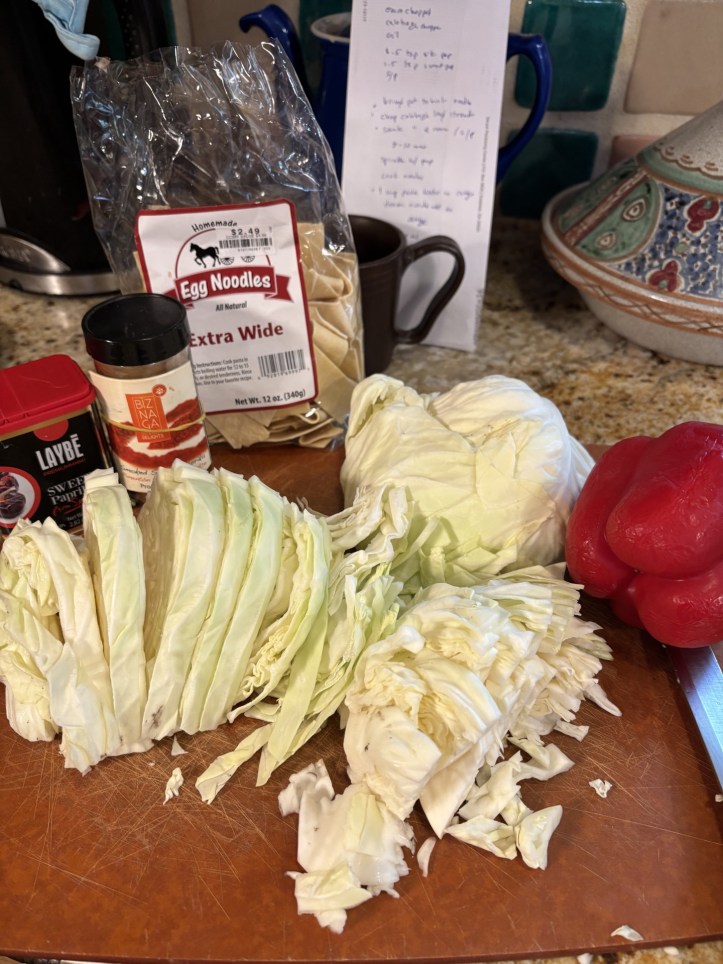
Fried Cabbage with Noodles. Put ¾ stick of butter or 6 tbsp olive oil into a large skillet on a medium heat.* At the same time bring a pot of lightly salted water to boil in order to cook the noodles. Cut a medium head of cabbage into quarters, remove the core and slice into strands. Dice one medium onion. When the butter/oil is hot, add cabbage and onions; season with kosher salt and ground pepper. Stir frequently for about 8-10 minutes until caramelized. Add 1 ½ tsp of both smoked paprika and sweet paprika.+ I added sliced red pepper because we had it! Put one package (12-16) ounces of egg noodles into the boiling water, follow the package’s cooking instructions.
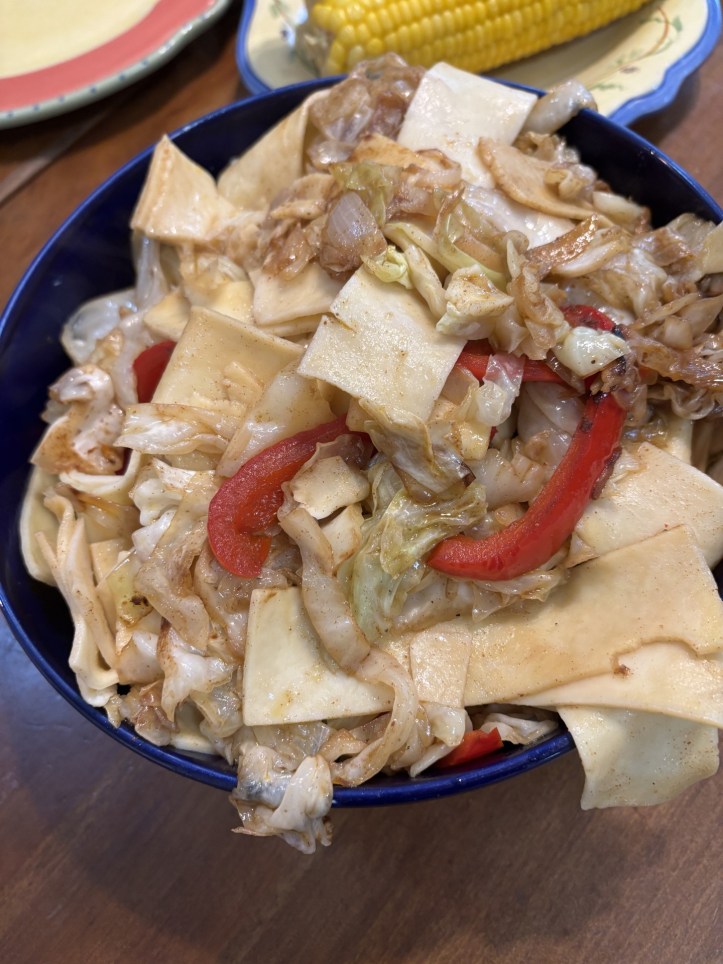
When you drain the noodles, be sure to reserve about one cup of pasta water. It along with thedrained noodles and add to the pan with the onion and cabbage mix
*Jews would have traditionally used schmaltz (chicken fat) or goose fat so the dish could be eaten with a meat meal.
+At this point add one tbsp. of brown or powdered sugar, Viennese style, if desired.
With Constant Companion out at his seminar, there’s no telling what Daughter and I will subsist on this week. However, the vegetable drawer is filled with a large number of eggplants and other vegetables asking to be transformed into deliciousness.
 Creatively Annette
Wonderful to see these recipes (and some that bring back family memories)!
LikeLike