I have several different partially written blog posts, about several different topics, chronicling present day activities and at least one of past activities. A colleague, however, reminded me of an anniversary being marked right now in South Korea. One that impacted me personally.
Last week my colleague participated in a conference to mark the 11th anniversary of the Sewol Ferry Disaster, ‘Rebuilding Future: Memory, Hope, and Education after Disaster.’ The conference commemorated the 250 middle school students and 11 teachers from Danwon High School, Ansan, South Korea, who perished when the overloaded ferry capsized on its way to Jeju Island on 16 April 2014. The students and teachers were on a much-anticipated excursion. In the wake of the disaster, the need for education in maritime safety became a priority and Maritime Safety Experience Centres, including one at Ansan, were established in South Korea to educate children and other citizens in maritime safety procedures.
While in Korea, my colleague observed that the memory of the disaster has been recreated in classrooms, a memory archive, and a number of memorials around Ansan.
Sometime after this inconceivable loss to Ansan and the country, I spent six weeks at the ERIKA Campus of Hanyang University in Ansan. The city and the country was awash with memorials of all kinds. Every time I saw one I was moved by the immense collective sense of loss and sadness that surrounded me.
Yellow and black memorial ribbons were everywhere. In Ansan, a memorial tent remembering all who perished was set up in a public area, visited by many.
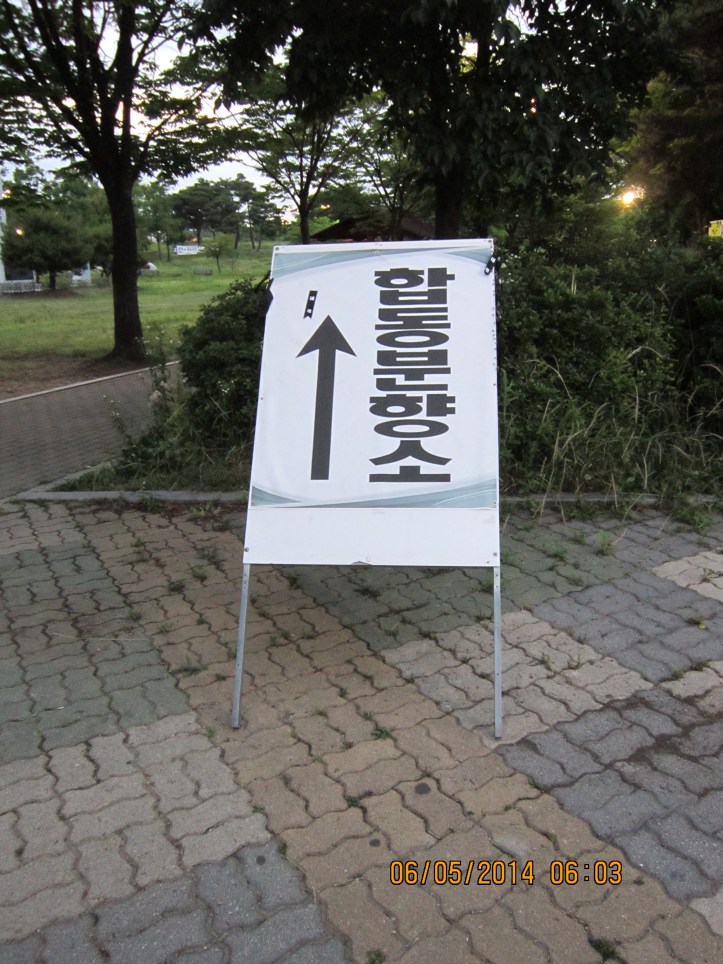
The path was lined with placards filled with hand-written personal notes as well as strings of yellow and black memorial ribbons.
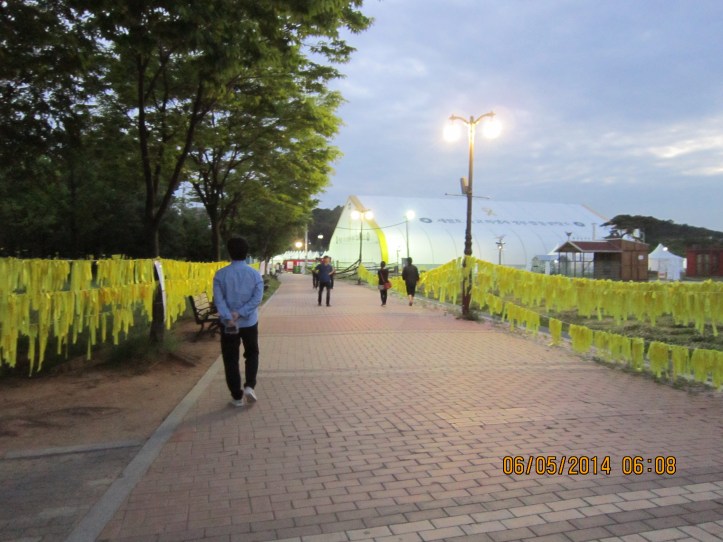

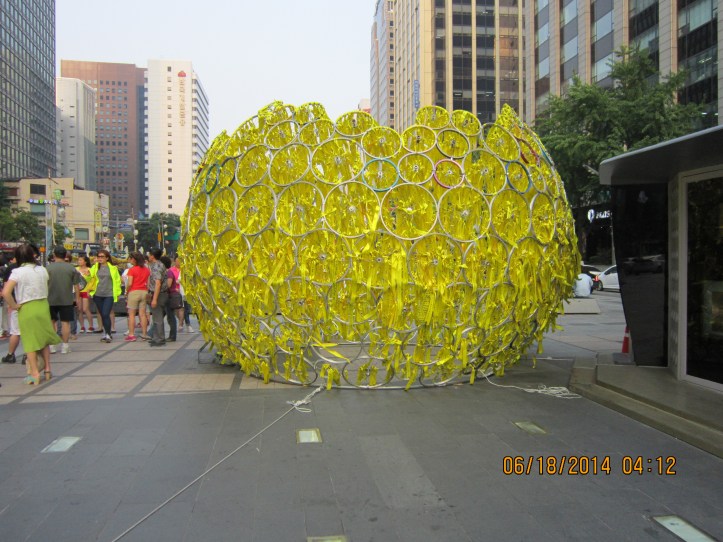
Ribbons in every configuration were all over Seoul including the entrance to the Cheonggyechheon Stream, a wonderful walkway through the center of the city.
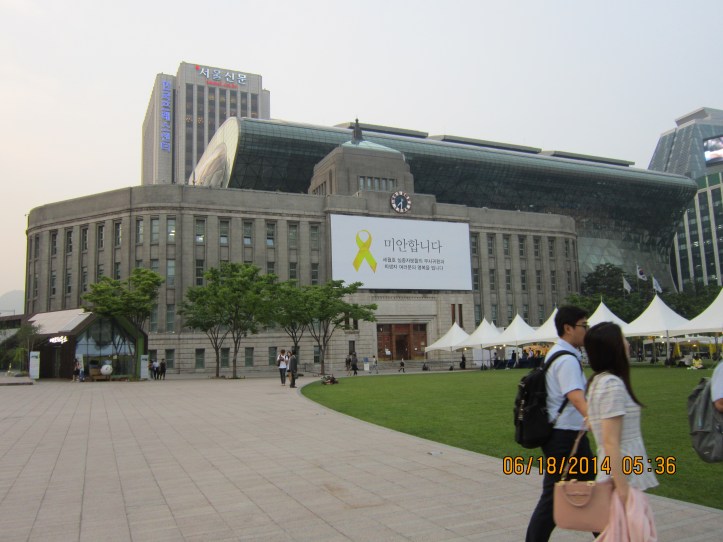
A largesized banner was displayed in front of the Seoul City Hall:
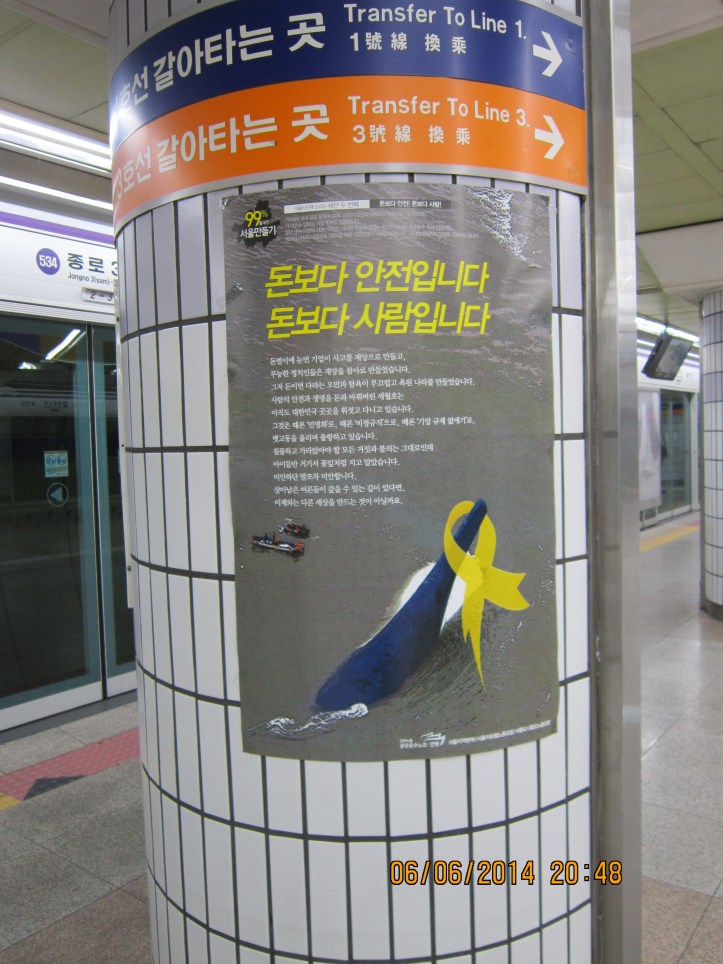
You could not avoid the reminders in the subways:
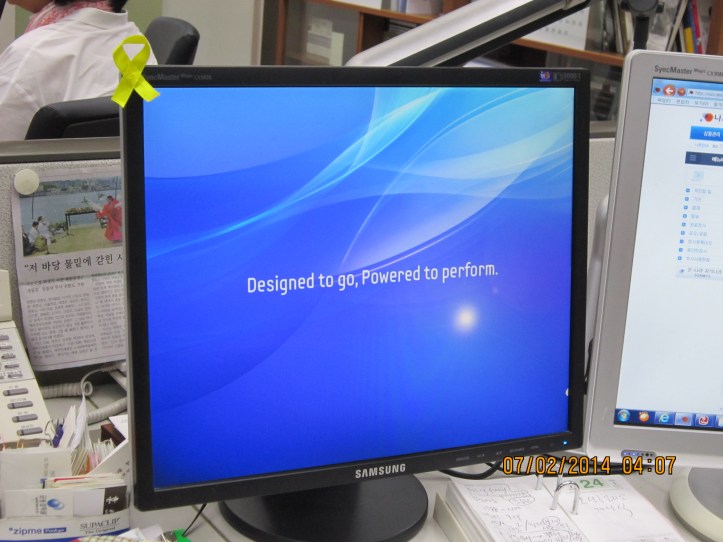
Individual expressions of solidarity were displayed on work places like this computer on the desk of the Director of the Jeju National Museum:
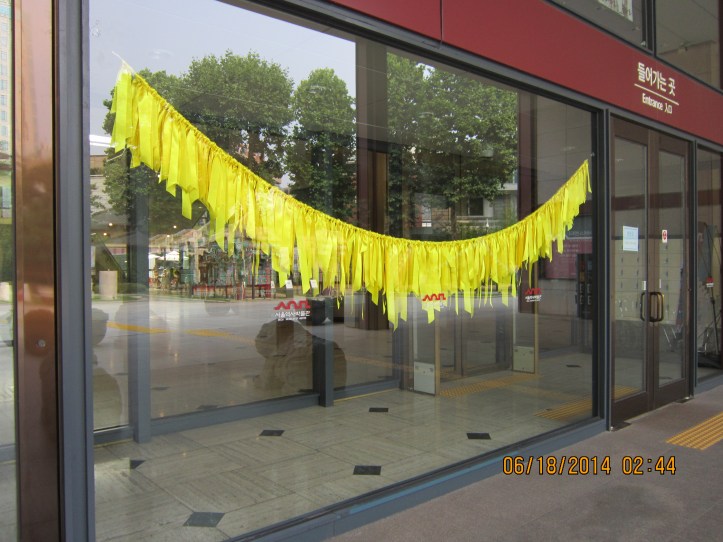
And, of course, museums in different parts of the country provided very public platforms to express the national feelings about the tragedy. Here is the Seoul History Museum:
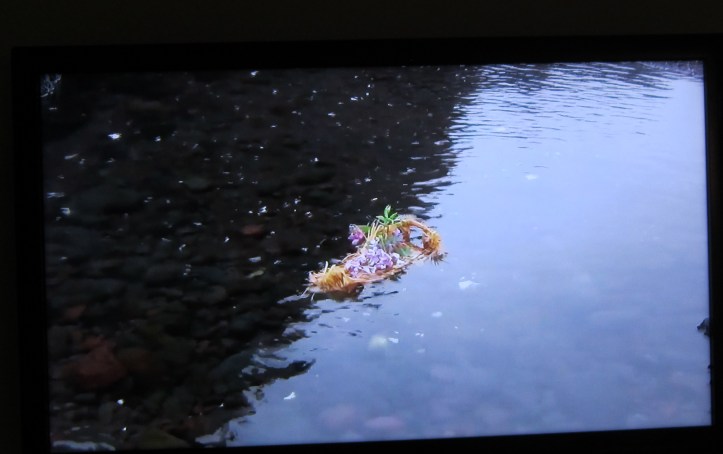
This video exhibit at the Youngeun Museum of Contemporary Art in Gwanju captured the emotions felt by a nation in poetry and images. Unfortunately, I did not capture the artist’s name.
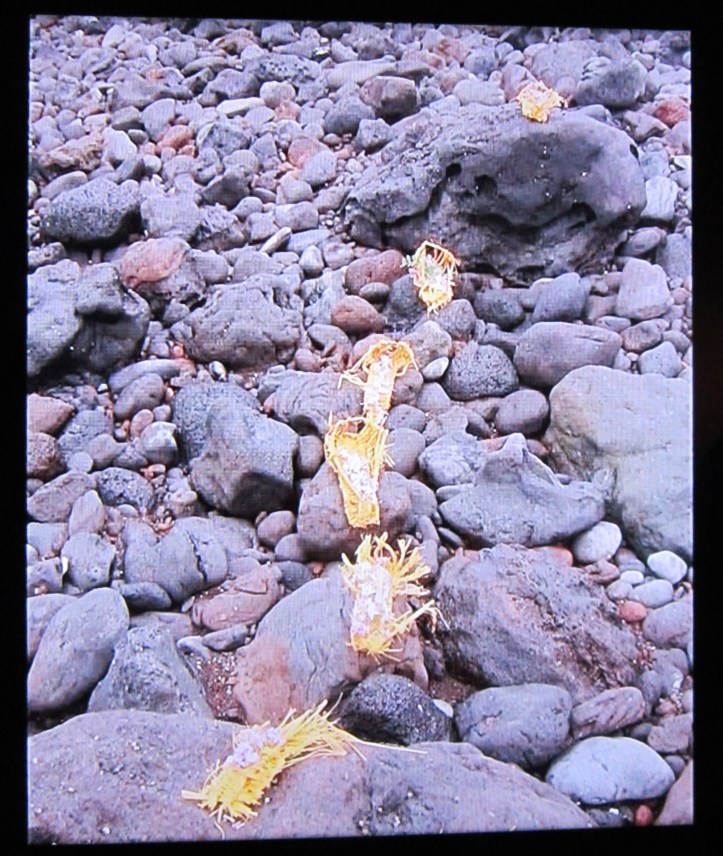
To calling flowers
I send this flowers

You send there flowers (the lifes).
Our world has been filled with so many other tragedies since the Sewol disaster in South Korea. More ribbons are worn by many people who collectively remember their losses. What else can I say?
 Creatively Annette
Very moving post, Annette, and a good example of how to honor the memory of those who have died in such a tragedy.
LikeLike