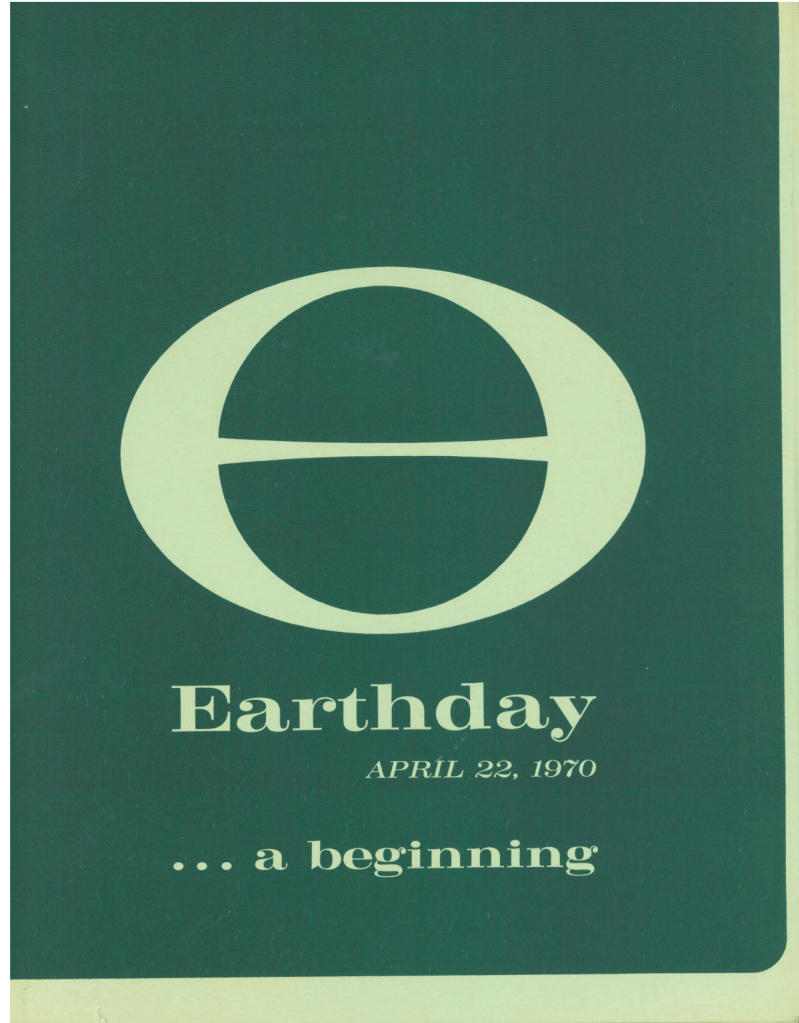
April 22 has been celebrated at Earth Day for the past 50 years. I clearly remember that day, April 22, 1970, from a ground floor office in a turreted building on the oval at Ohio State University where I was in my second year as a dance major. I watched as a huge inflated earth was rolled across the expansive, grassy open space. The past few months had been spent with a small group of volunteers planning the activities of the day. I was most proud that one of the major speakers was my uncle, Mike Frome, then the conservation editor of “Field and Stream.”
Here are two links. One to the program on that day in Columbus, Ohio many years ago. My armband is preserved in the collections of the Oklahoma Historical Society. The second link is an outline of Earth Day’s long history: (chrome-extension://efaidnbmnnnibpcajpcglclefindmkaj/https://senr.osu.edu/sites/senr/files/imce/files/extension_outreach/1970_0422_Earthday_program.pdf) and (https://www.earthday.org/history/).
April 22, 2025, Earth Day, 2025. Constant Companion and I joined a group for a stroll through the Design District to learn about the green space philosophy of this dystopian district for the uber rich. I’ve written here a number of times about the public art for which the District has become known.
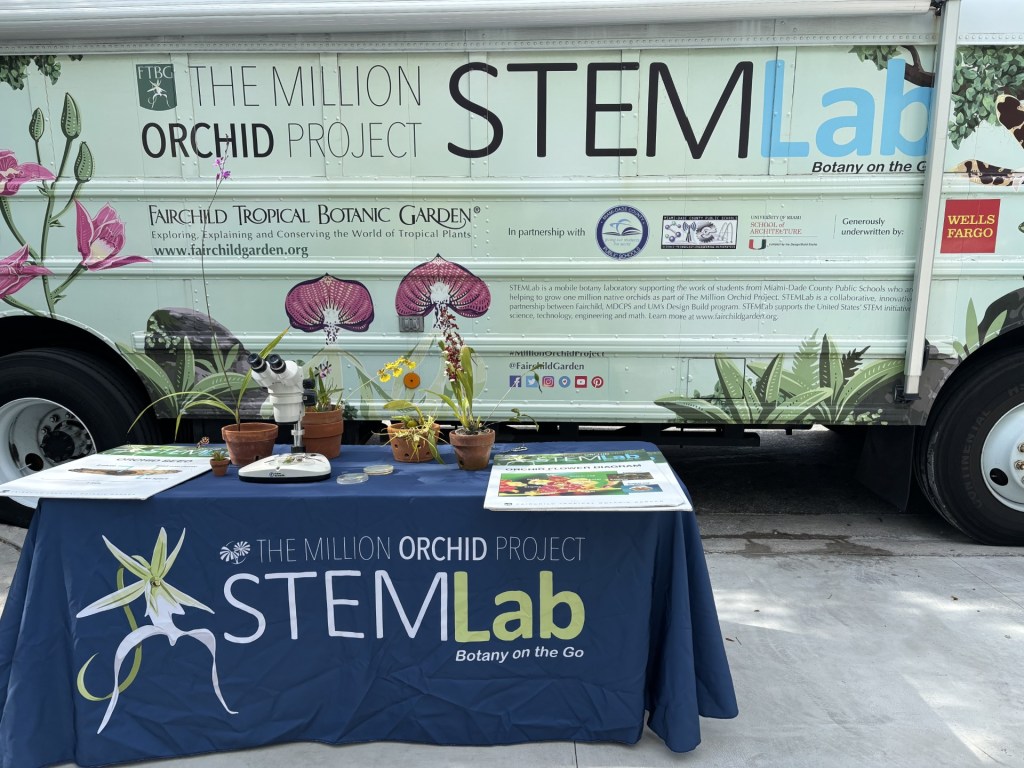
Our tour was led by the Nathan Browning the owner and founder of IPC Island Planning Corporation, a multi-disciplinary landscape design and master-planning firm, along with his staff and the director of Director of Fairchild Tropical Botanic Gardens, Carl Lewis. They all shared their knowledge as we made our way along the shaded streets of the District. The two organizations are working together here as part of the Million Orchid Project, a scheme to reintroduce native orchids all over the county and educate. Along the way, the many orchid plants were pointed out. We will have to return in the future to see them in bloom.
We started in a central plaza under the iconic Tiffany blue mural and the well-known quote by American poet Edwin Markham.

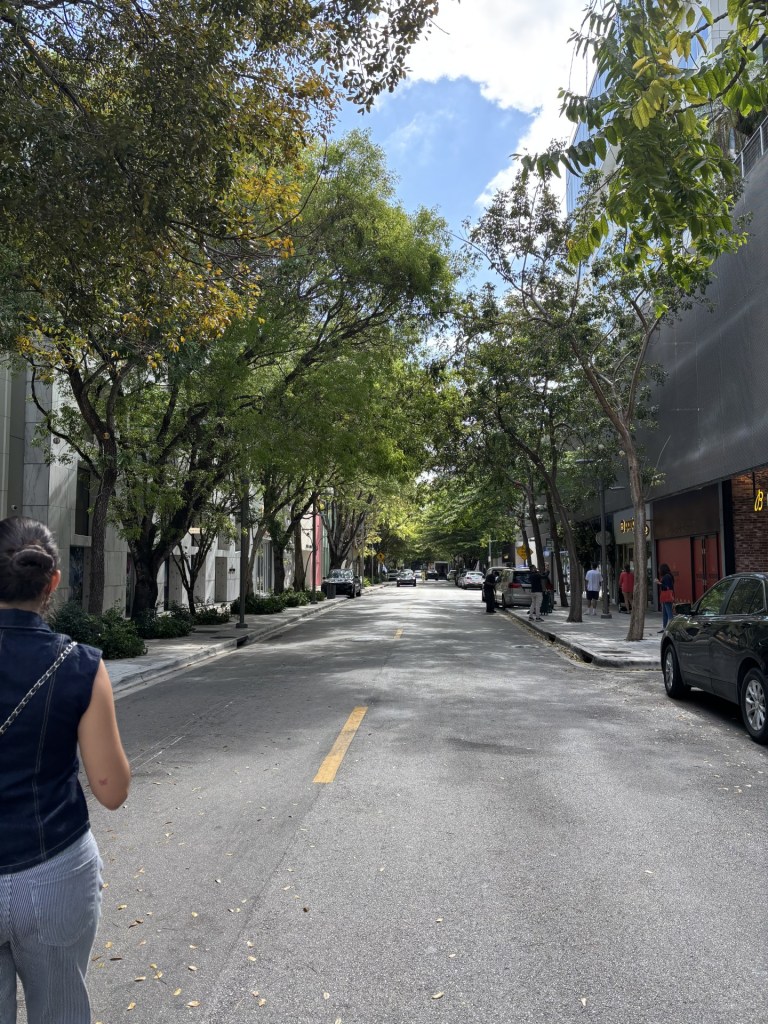
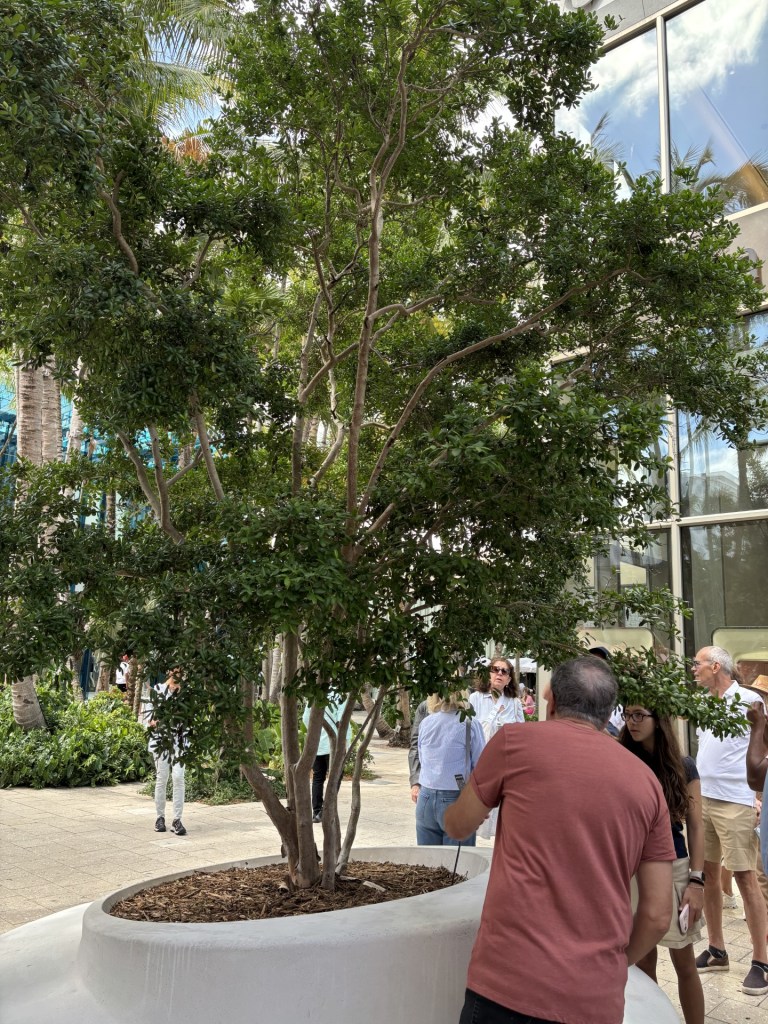
Over five hundred trees have been planted in the sixteen blocks of the Design District, most moved here as mature trees. Including the understory, over one hundred species have been installed. It was pointed out that the pavings are not concreted in; underneath the walkways is a mixture of soils and pea rock to accomdate the growing root systems of all of the trees and plants. In addition, along the paseos and in the plazas, the plantings are planned to coordinate with the abundant public art.
Several design philosophies were pointed out along the way. The overall goal was to create a shaded streetscape where none had previously existed.
Another was the green rooftops with trees and other plants installed in large planters on many of the roofs of the buildings.
Among the mature trees that were pointed out were Triplaris, Ant Plant.
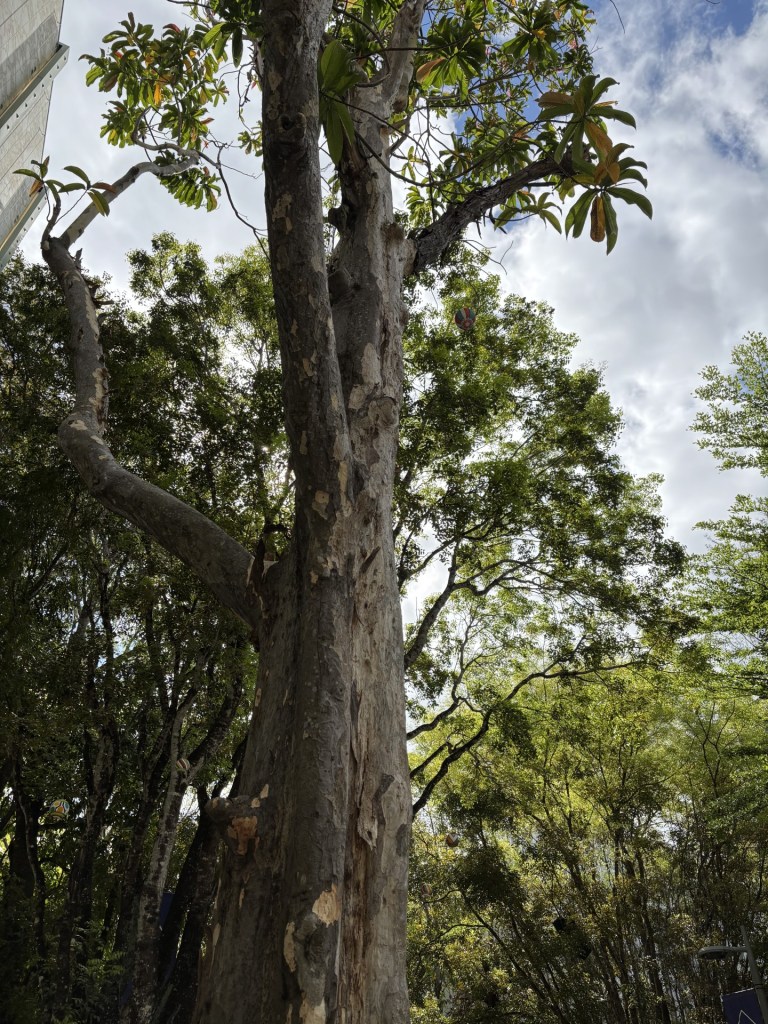
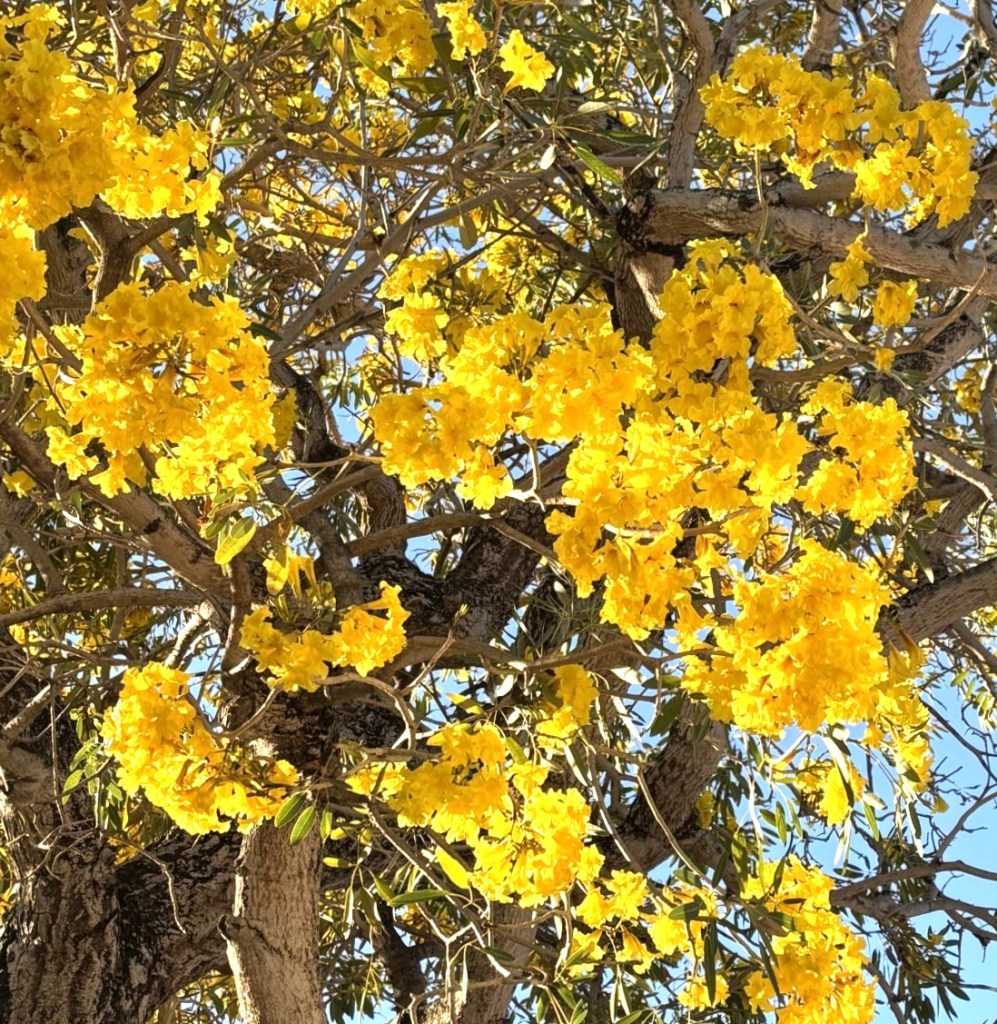
Tabebuia, Caribbean Trumpet Tree, is found all over the county. I love to see it in this season when it is in the midst of bloom, filled with a profusion of bright, beautiful yellow flowers.
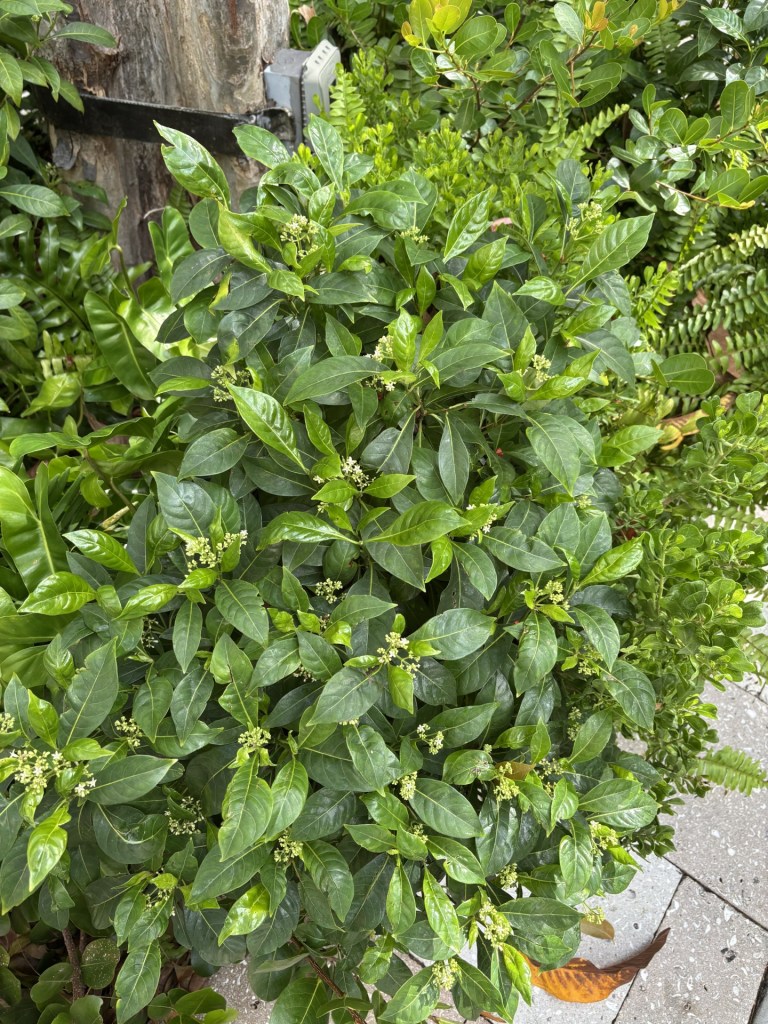
Among the understory were native plants such as the wild coffee and monstera. The former is frequently used in landscaping.
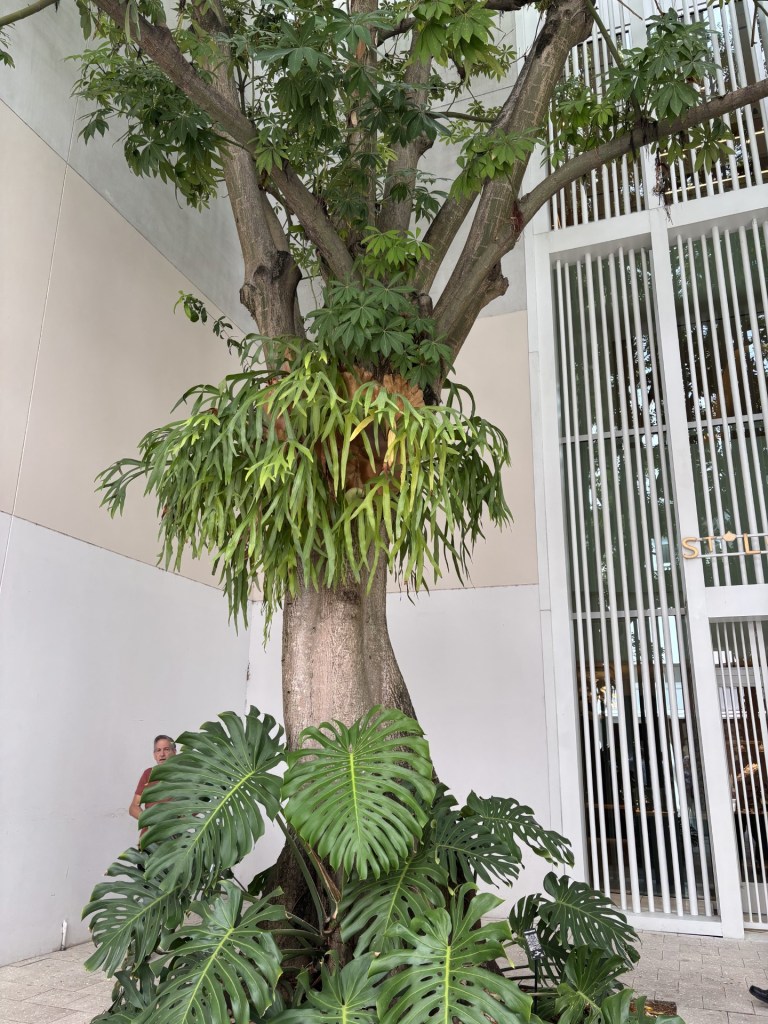
The Guiana Chestnut, money tree plant, was blooming with feathery flowers high above our heads.

Another Guiana Chestnut that was brought to the District from a local yard was pointed out. The homeowner wanted to remove the tree that grew much taller than expected. It has a new life here, covered with staghorn ferna and monstera below. Another orchid variety, vanilla, climbing the limbs of the tree is difficult to see.
Simpson’s Stopper, or Twinberry, is another local or native variety that used to be found locally and was planted here. The name comes from the indigenous use of the plant’s fruit to stop diarrhea.
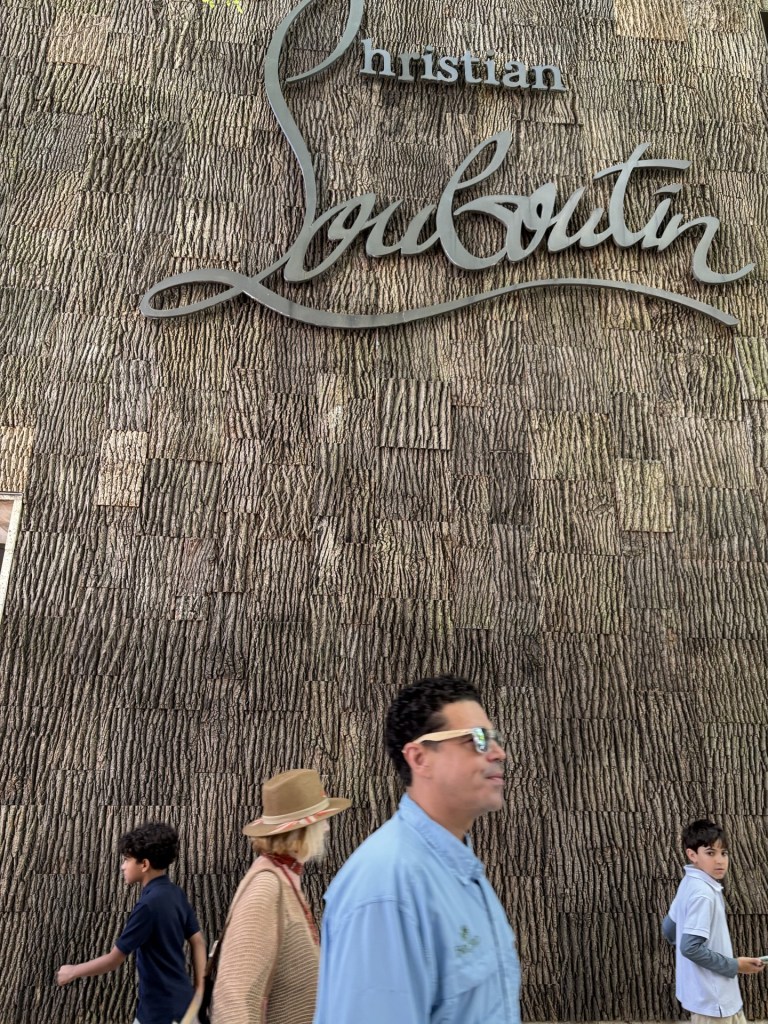
The Christian Louboutin store, known for their red soles, creatively used bark probably from oak trees to face the exterior walls of the building.
We both were glad to be given another perspective of Miami’s Design District and enjoy another Earth Day.
 Creatively Annette