As Purim,the spring Jewish holiday approached, loads of recommendations for special foods flooded my inbox over the past two weeks,. It’s all interesting especially since most of the recommendations were for desserts. What better way to remember and celebrate a potential annihilation than with sweets, especially sweets that censure the antagonist of the story, Haman.
Over the past few years, I’ve neglected my baking skills because our household eats only one or two pieces and the rest remain abandoned. Though we do enjoy some standards that I make for celebrations, especially meringue,* or a cake or two for when we entertain.
*When will I be comfortable to make an egg-rich meringue, a reflection of the quickly escalating prices in the U.S. of what should be a daily item.
A few Purim savory recipes use turkey (see 3-9-2020 and 3-2-2021 posts for explanations and more). In brief, turkeys are generally considered foolish birds. In some Jewish communities, King Ahasuerus, the husband of Esther, Purim’m heroine, has been associated with turkeys because he foolishly listened to the aforementioned Haman’s advice to obliterate the Jews. Also, Ahasuerus reigned from modern day India ‘from India (Hodu in Hebrew) to Ethiopia (Kush in Hebrew).’ Thus, turkey became associated with the Purim celebration meal.
A few months ago, I came across a recipe that allowed me to cook a turkey breast that was nestled deep in my deep freeze. I’m not sure if the recipe’s original source was the New York Times or the legendary Ina Garten. I found this variant on line: https://recipes.oregonlive.com/recipes/turkey-breast-en-cocotte-with-pan-gravy.
Turkey Breast en Cocotte with Pan Gravy. Heat the oven to 250 degrees. Trim a 6-7 pound whole bone-in turkey breast. Pat the turkey dry, season with salt and pepper. Heat two tablespoons of olive oil in a Dutch oven over medium-high heat. Brown the turkey on all sides, about 12 minutes; remove and transfer to large plate.

Pour off all but two tablespoons of fat from pot and heat over medium. Add one chopped onion, one peeled carrot, and one chopped stalk of celery. Cook, stirring occasionally, until softened, about five minutes. Stir in six crushed cloves of garlic, two sprigs of thyme, and one bay leaf; cook until fragrant, about 30 seconds. Take the pot off the heat, return turkey, breast side up, along with any accumulated juices.

Cover the pot with a large piece of aluminum foil pot, seal tightly, then cover with lid. Transfer pot to oven and cook about two hours. Carefully remove pot from the oven. Transfer turkey to carving board, tent loosely with foil, and let rest.
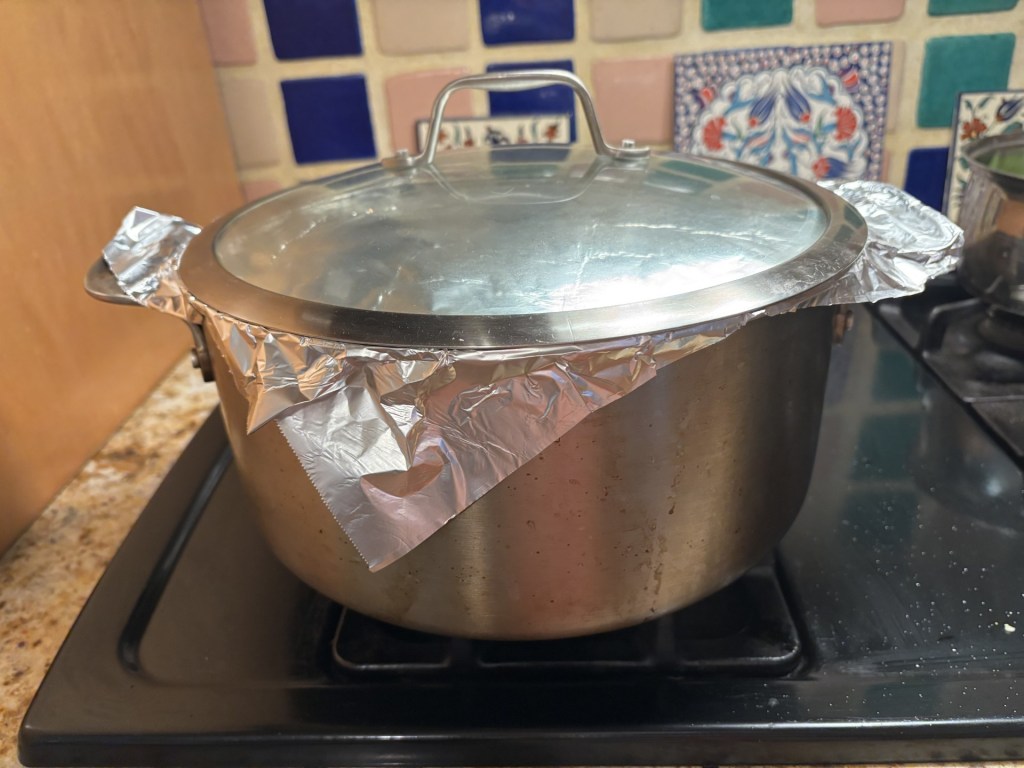
Making Gravy. Bring remaining juices and vegetables to simmer over medium-high heat and cook until nearly all liquid has evaporated, about 15 minutes. Add two tablespoons of flour and stir constantly until browned, 1 to 3 minutes. Slowly add two cups of chicken broth, whisking constantly to smooth out any lumps. Simmer stirring often, until gravy is thickened and measures about 1-1/2 cups, about ten minutes. Strain gravy through fine-mesh strainer and season with salt and pepper to taste.
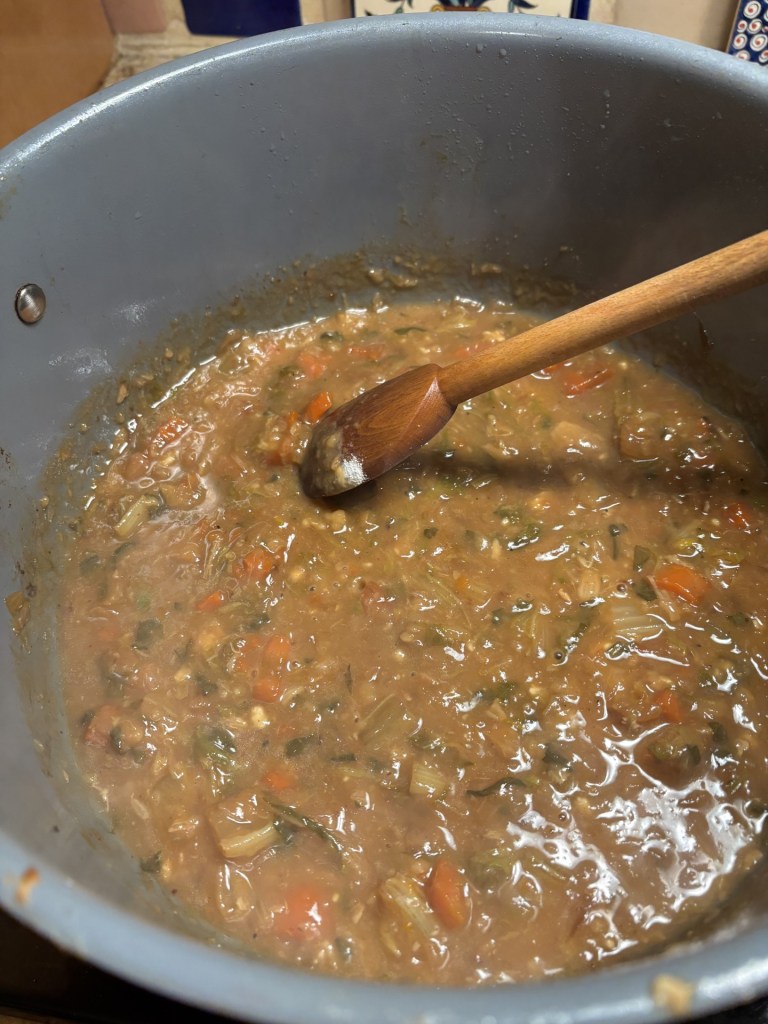
Leftovers. The recipe recommends setting aside about a pound of the cooked turkey breast to use for leftovers. Mine were safely stashed in the freezer. Another new recipe crossed my desktop just in time to solve the problem of what to make for our Purim dinner, and how to you the lovely leftover turkey breast.
Ginger Coconut Turkey Brown Rice Soup. (Note: the original recipe called for boneless chicken thighs.)

Add one tablespoon sesame oil to a large Dutch oven, over a medium high heat. Add ½ cup diced green onion, two chopped carrots,* grated ginger, and one tablespoon turmeric; saute for 3-5 minutes. During the last minute of cooking, add in six minced garlic cloves and saute until fragrant. Slowly add in the six-eight cups of chicken broth, one 15 ounce can of light coconut milk, ¼ cup soy sauce, and one tablespoon red chili paste* until well combined. Add in the chopped up thawed leftover turkey, ¾ cups brown rice; stir. Make sure the turkey is covered with the broth. Bring to a boil, then reduce heat and simmer for 25-30 minutes, stirring occasionally so the rice doesn’t stick to the bottom of the pan.
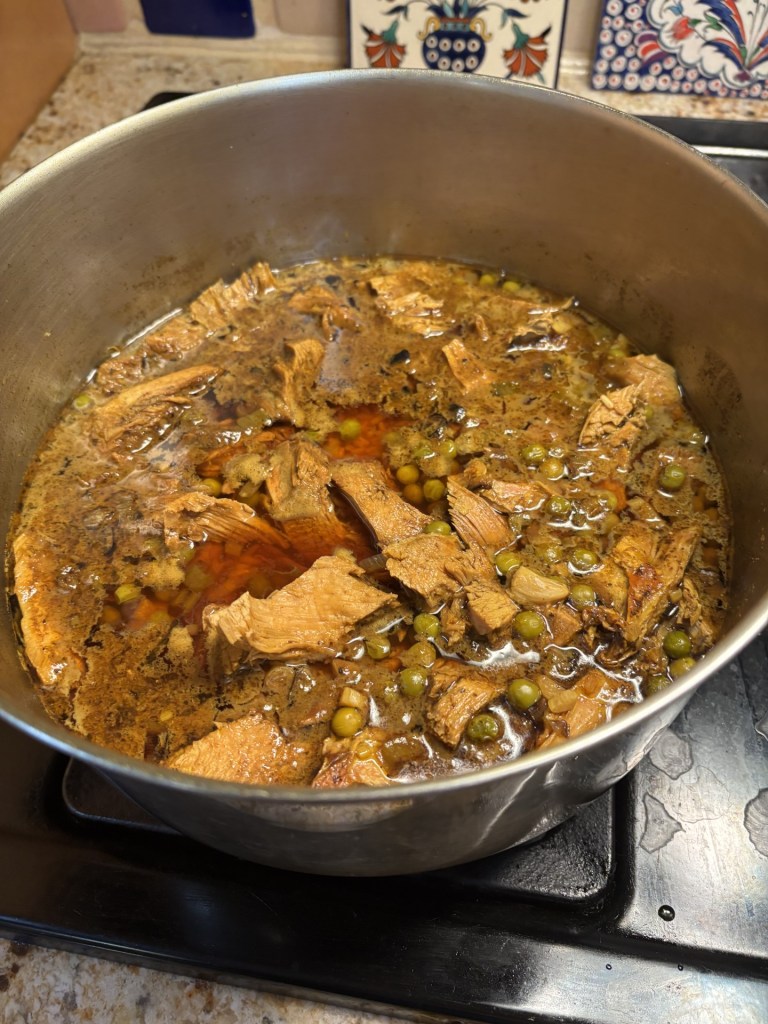
*I omitted carrots as I had none in the house and the chili paste as Daughter does not tolerate spice. I added some frozen peas.
After 25-30 minutes, remove turkey chicken from the pot, transfer to a cutting board; use two forks to shred the meat and return to the pot. Keep the heat on the pot to continue cooking the rice. Add more chicken broth if you like more soup. Cover pot with lid, continuing to simmer on low for 10-15 minutes until rice is tender. To finish, add one-two teaspoons of fish sauce and the juice of one lime; simmer for a few more minutes. Taste and adjust seasonings as necessary. Top with chopped green onion or cilantro.
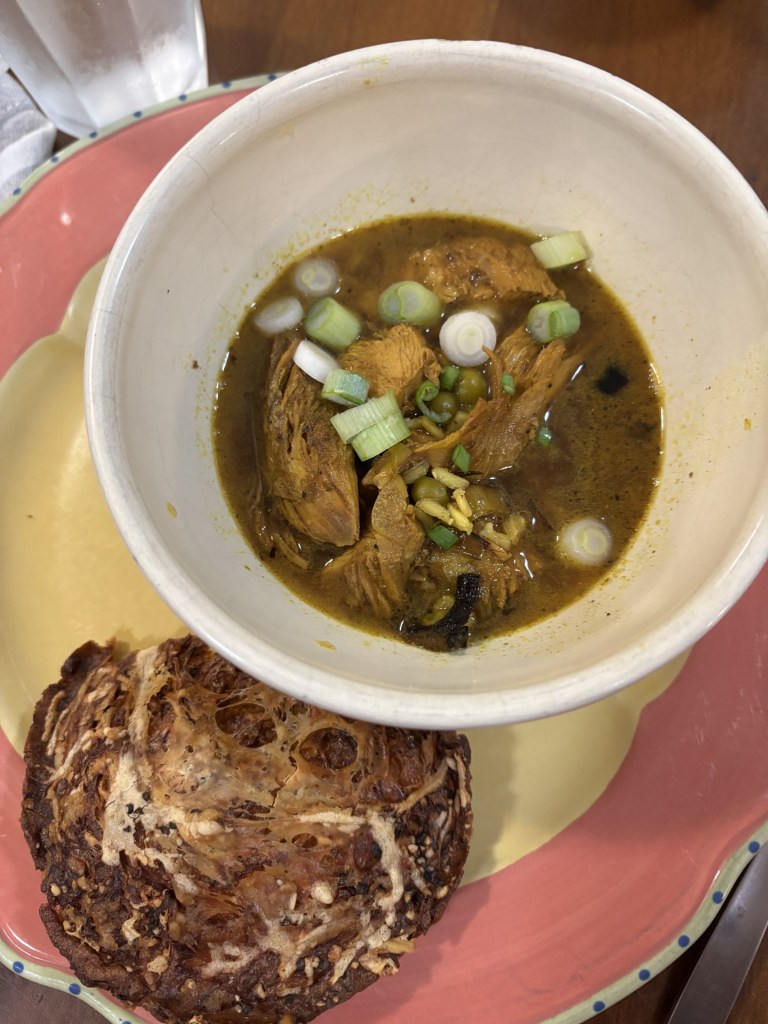
Several mitzvoth or commandments are associated with the annual Purim celebrations. Constant Companion, Daughter, and I enjoyed two of them. The festive holiday meal or seudah, of course. Our neighbors and a friend kindly practiced another tradition, the mishloach manot or gifts of food; we thank them. Sorry, I forgot to take photos, we were too busy eating the delicious sweets! We did not dress up in costumes, however, and we did not hear the reading of the megillah or Book of Esther.
 Creatively Annette
❤️👍good post👍💚
LikeLike
Hope you had a Happy Purim!
LikeLike