Tradition has my guide during the long days of this year’s Art Basel, the massive show itself. Tradition in several senses … First are the sections I traditionally seek out every year, especially Meridians. It’s the artists whose works I enjoy seeing; many whom now my traditional favorites; I have come to regard them as “friends.” Finally, traditional heritage and practices as in the patterns, materials, and other elements many artists draw from. I mentioned several examples of the latter in my Official Day One post (December 5, 2024 post). I’ll try to focus on this theme here.

When Constant Companion and I first stepped into the real Art Basel, I was drawn away like a magnet to this most intricate and beautiful black ash and sweet grass basket by seventh-generation Passamaquoddy artist Jeremy Frey who learned Wabanaki weaving techniques from his mother an as an apprentice at the Maine Indian Basketmakers Alliance. Thus, the start of a search for Native American artists as well as others. *
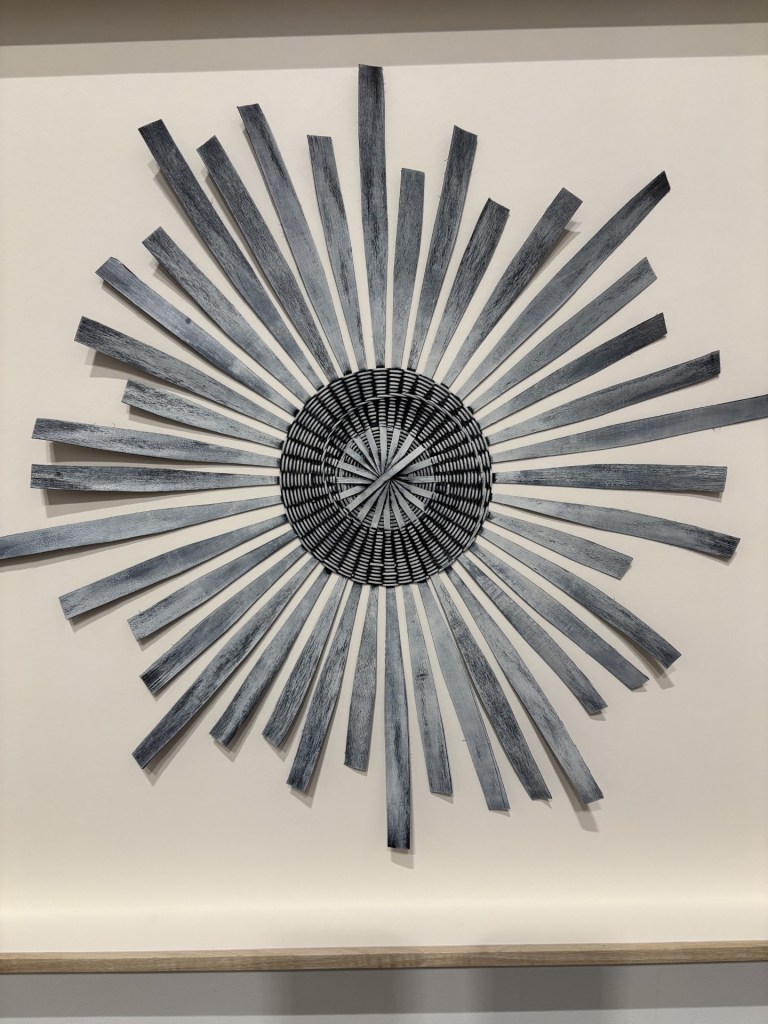
*Be prepared for several uncustomary editorial comments in the next few days. I feel they need to be stated. More and more Native and indigenous are represented at this and other art venues, as they should be.
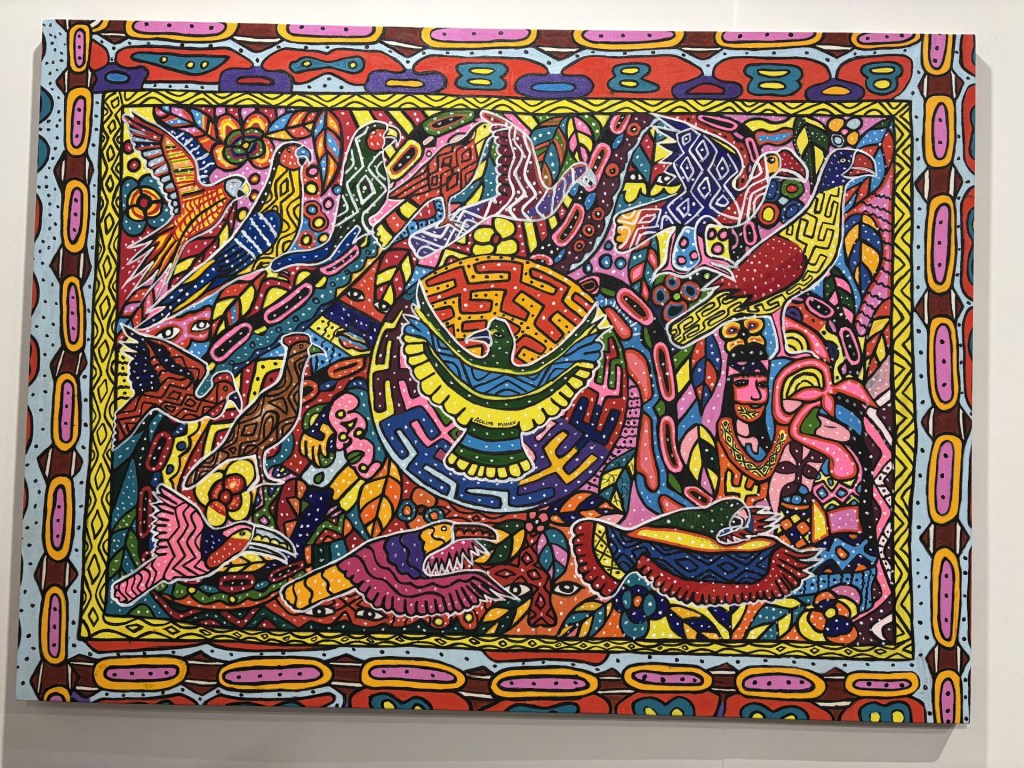
I rarely stop at the Positions section of the Basel fair. This year, it was impossible to pass up. First was the exhibition of dense, richly colored images created by artists presented by the Huni Kuin Artists Movement (MAHKU). Their image-filled paintings are the result of several university drawing workshops held in the upper Rio Jordão region, Brazil, near the Peru border. They represent traditional narratives including the story of kapewë pukeni (the alligator bridge). The myth describes the passage between the Asian and American continents.

Other paintings are the realization of visions attained during nixi pae (ayahuasca) ceremonies.
Next, I saw the iron work of another Brazilian artist, José Adário dos Santos. Dos Santos is from Bahia, the heart of condomble, a nineteenth-century Afro-Brazilian traditional practice I first learned about during my graduate folklore studies. Dos Santos, like Frey, learned his art traditionally through apprenticeship.

His hand-crafted iron sculptures, actually Afro-Brazilian religious artifacts [ferreiro de santo], are part of the condomble practices.
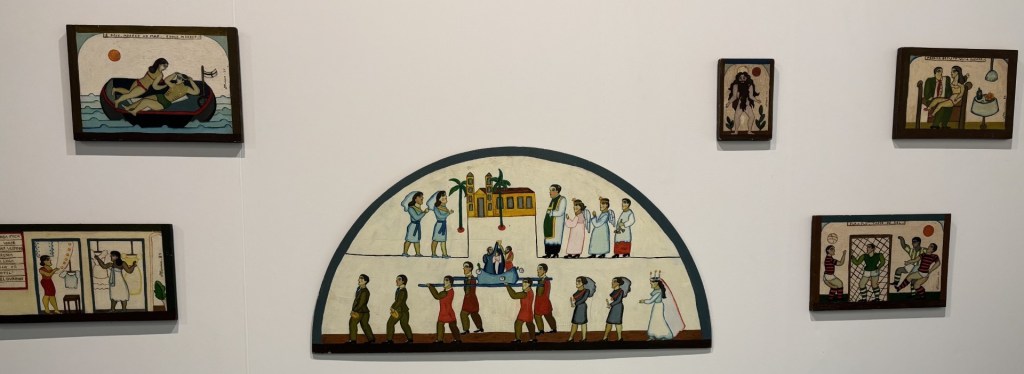
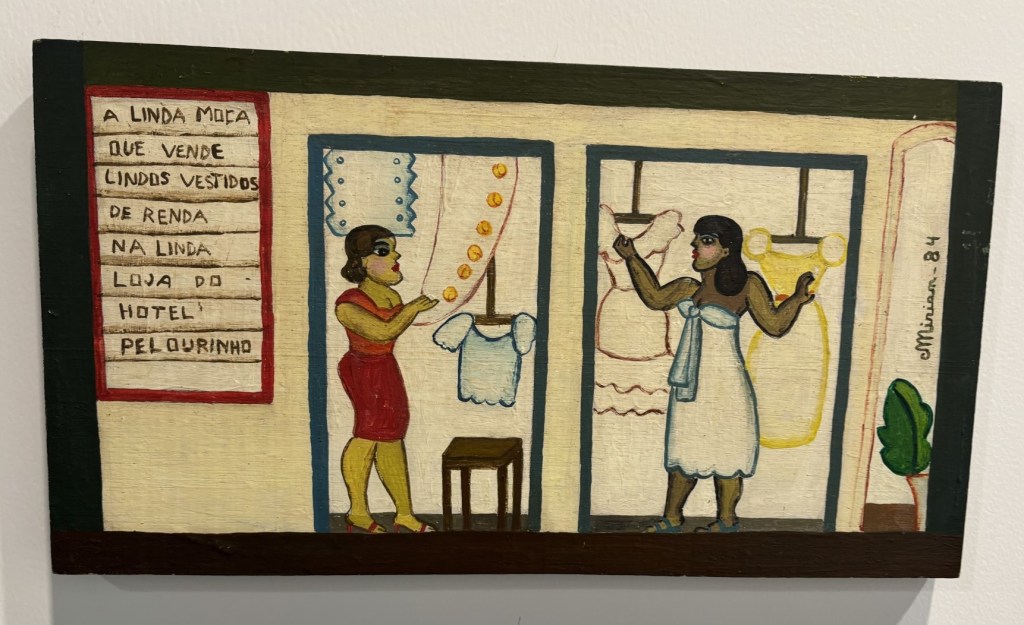
Brazilian artist Miriam Inez da Silva grew up in an area in which there were reports of miracles. She studied art in Rio de Janeiro where she specialized in woodcuts and painting. Da Silva captures in her unique style images of community and family. A collection of her paintings were represented in an Art Basel Kabinett.
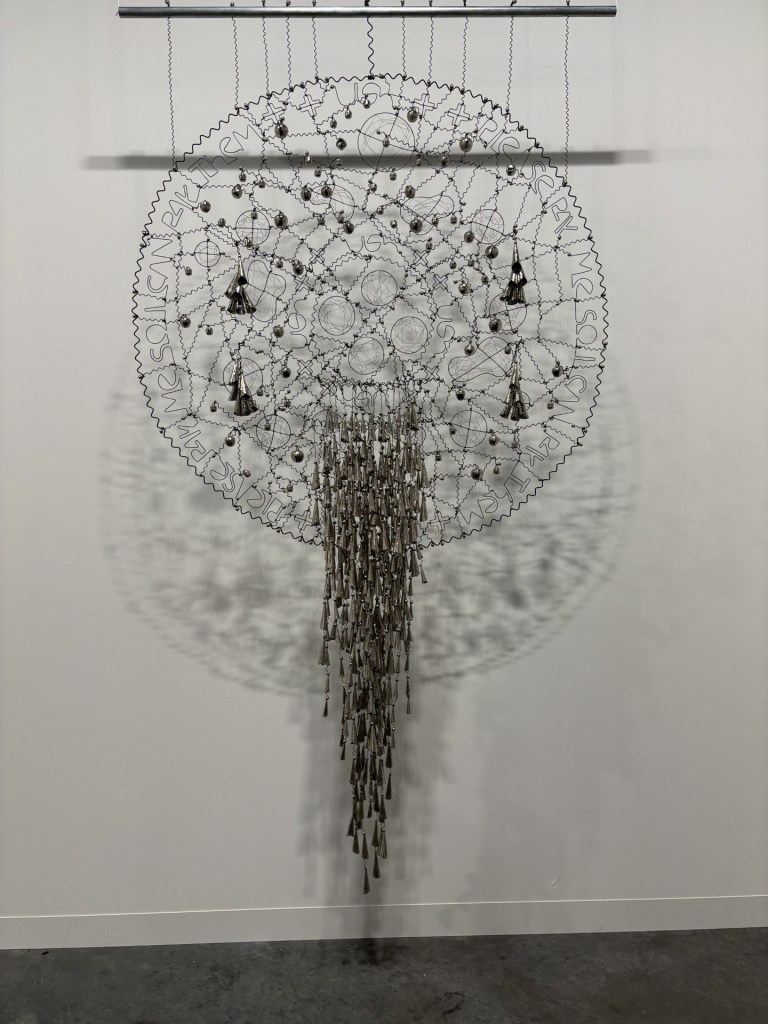
And I found more visual statements drawn from the depths of tradition as I made my way around the huge convention center. This dreamcatcher hung with jingle beads is the work of Brad Kahlhamer. Kahlhamer was born to native parents and adopted by a German-American family. His art brings together real and imaginary worlds into a “third place” which he liminally inhabits.
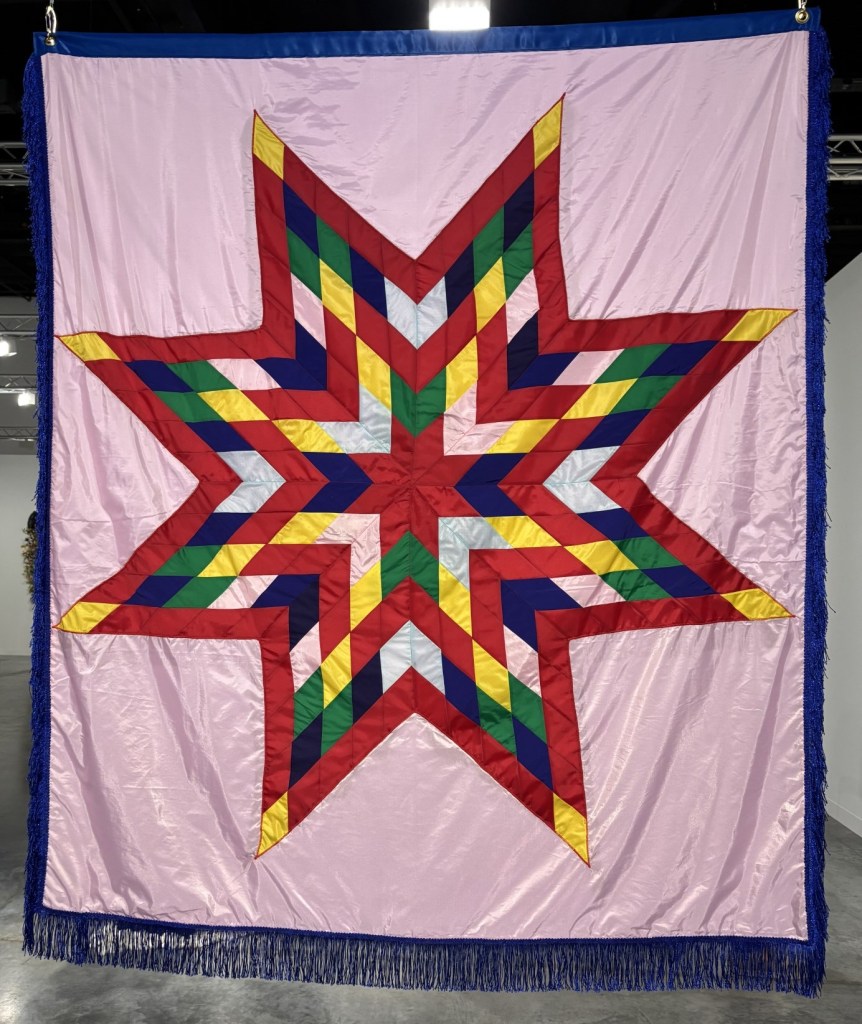
Apsaalooke contemporary multimedia artist, Wendy Red Star, took a traditional route with a star quilt. The start quilt is the essence of gift giving it shows the utmost respect, honor, and admiration of a person or family.
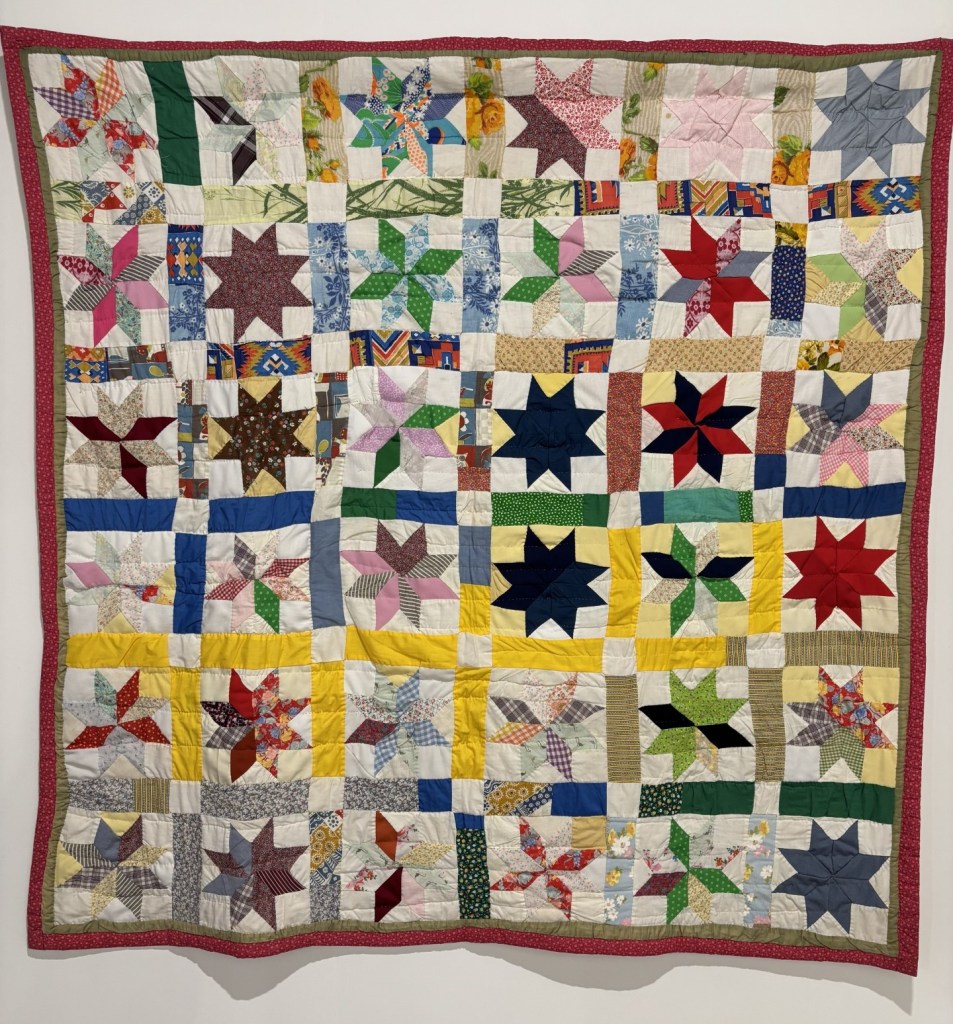
Another quilt in a nearby gallery also took the images of the star and magnified it. This intricately pieced work by Tinnie Pettway comes from the tradition of African-American Gees Bend quilters in Alabama.
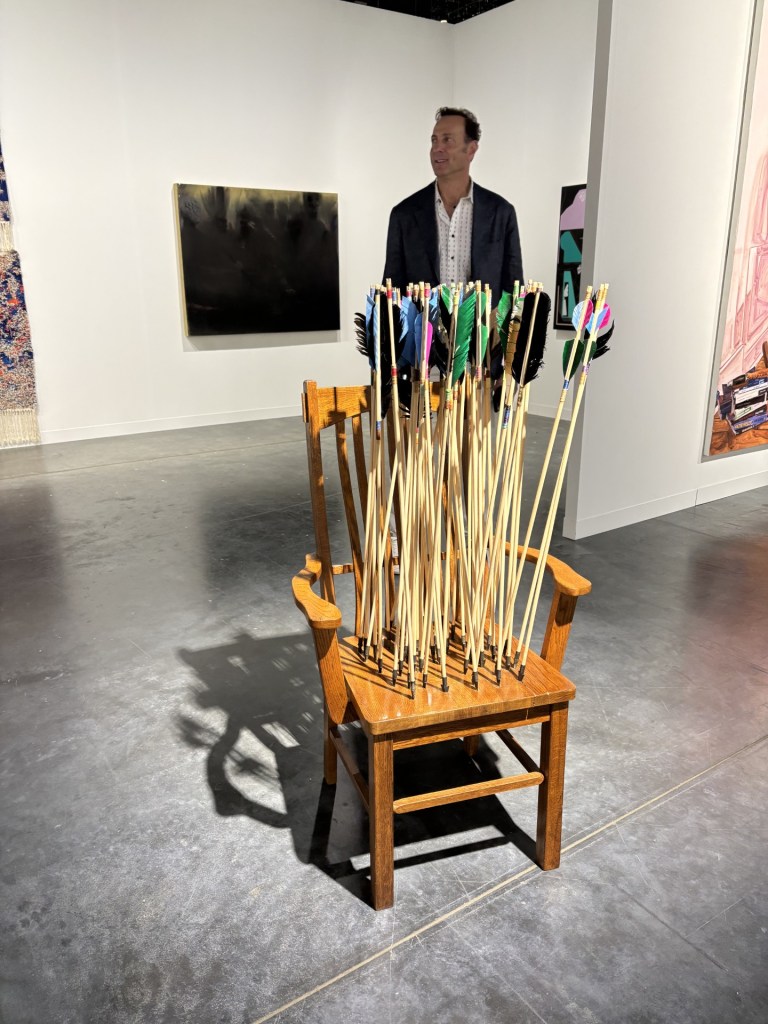
I think I first encountered the work of Brian Jungen while researching an exhibit about Seminole portraits. His statement-filled interpretation of modern materials speak to the history of Native Americans.
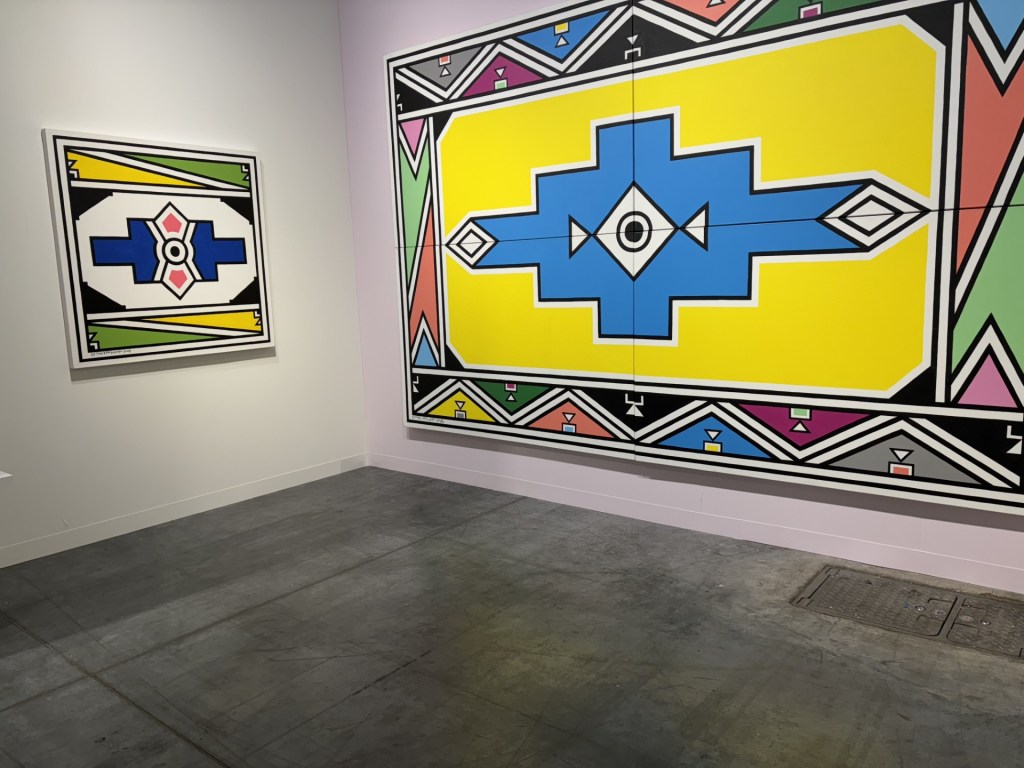
The work of Dr. Esther Mahlangu was also represented in an Art Basel Kabinett. Her bold abstract, geometric paintings are drawn from her South African Ndebele heritage. Here generations of women painted murals on their houses.
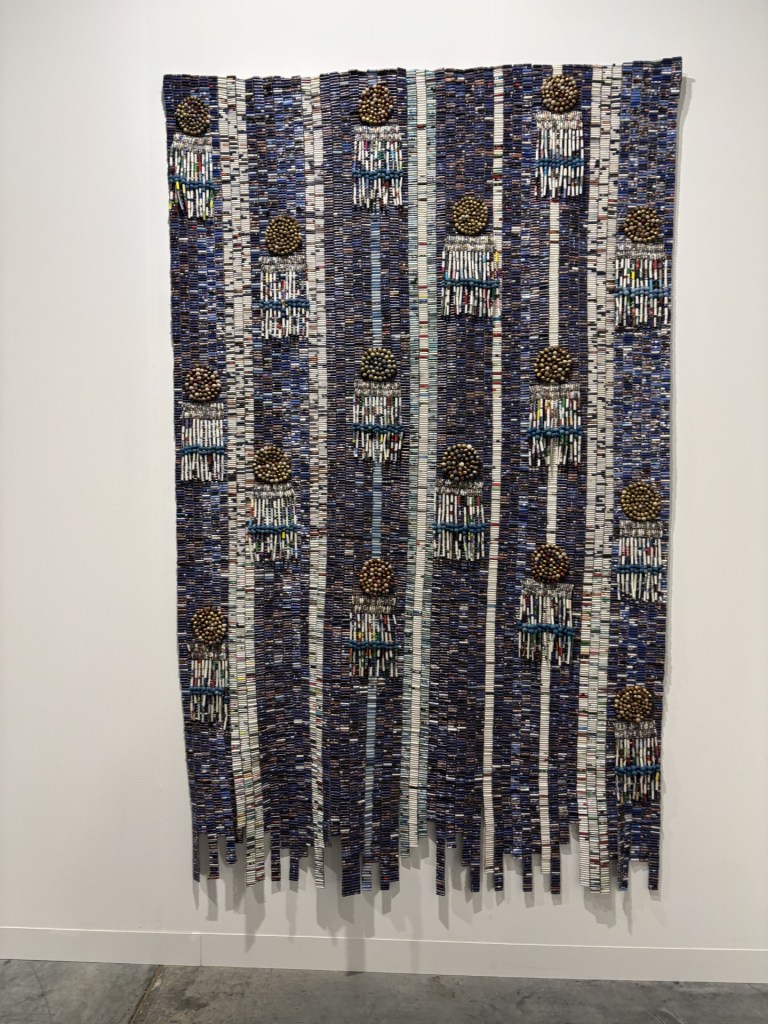
Afriart Gallery is now a perennial favorite at Art Basel carrying the flags and artwork of African artists One they usually show is Ugandan artist, Sanaa Gateja, who popularized the practice of making delicate beads of magazine pages. His art has long gone in another direction such as these large bead “tapestries,” sometimes abstract, and other are figurative.
I know for sure, I’m missing other artists whose work is deeply based on aspects of their tradition, heritage, and history. But I think it’s time to call it another day with art.
 Creatively Annette