My India adventure seems far away now, yet the memories are still poke around, especially when I show photos to curious friends. One student actually phoned me last week with wishes for Diwali, the Hindu festival of lights.
Here are some more food adventures from my month in India.
Street food. Street food was everywhere. Tourists are cautioned not to be tempted in order to avoid the infamous “Delhi belly.” While I carefully followed these instructions and steered away from street food, nevertheless, whenever possible I took photos of lots.
Lots and lots of vegetables for sale along the crowded roads.

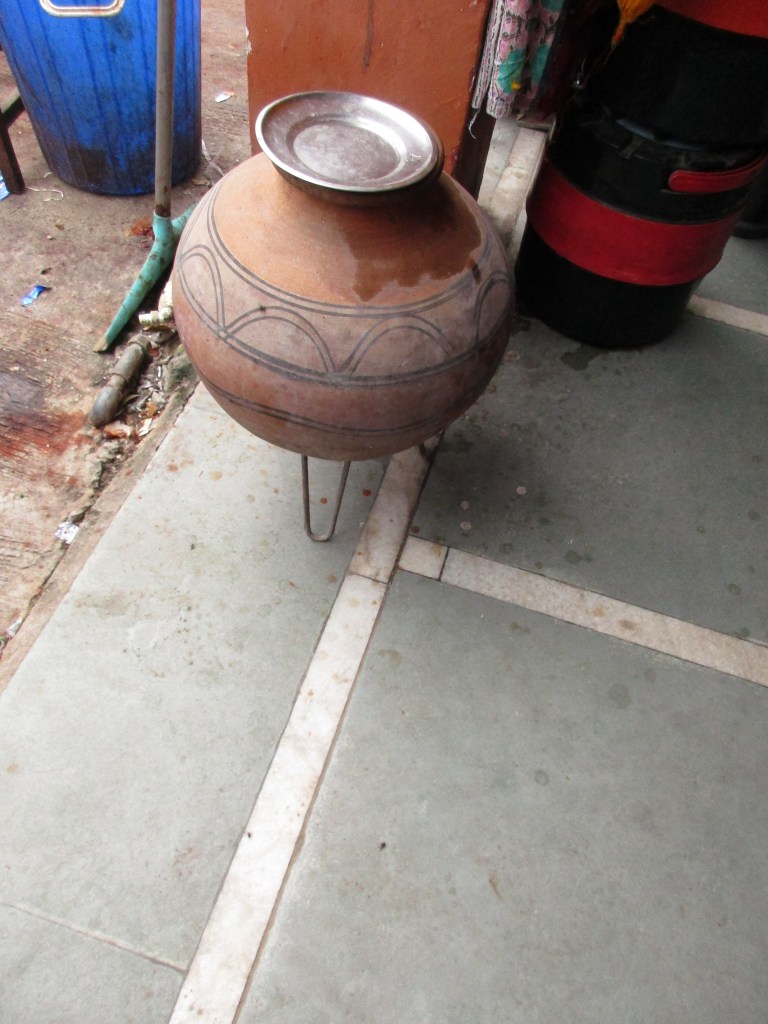
Water and tea, too.
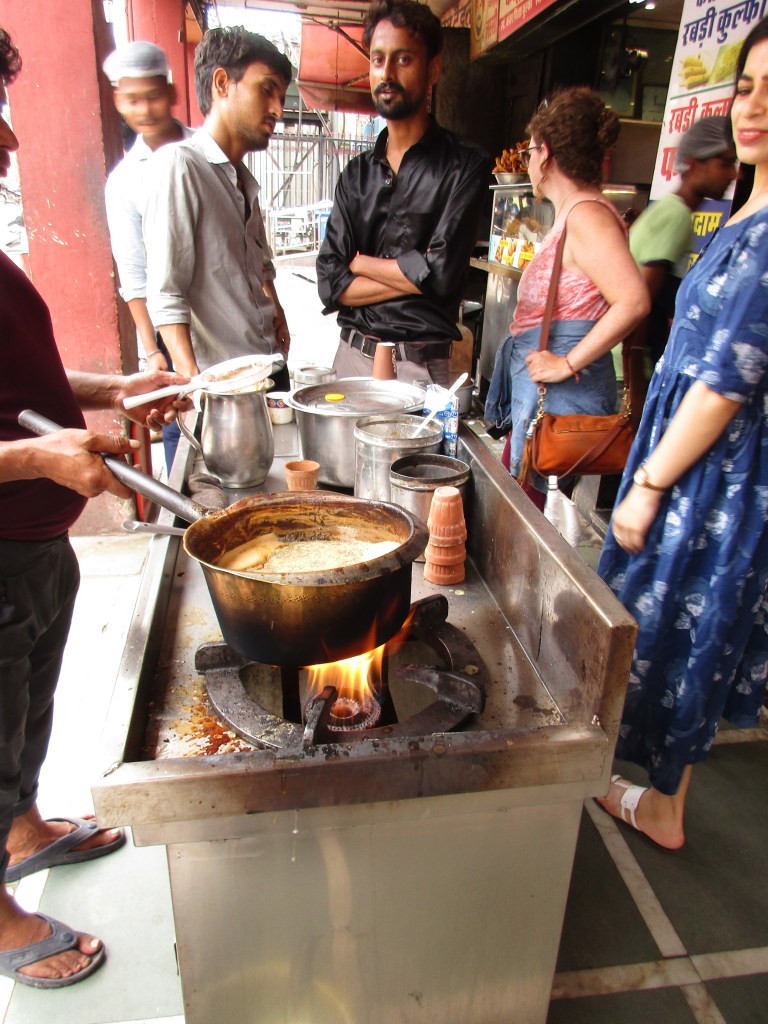
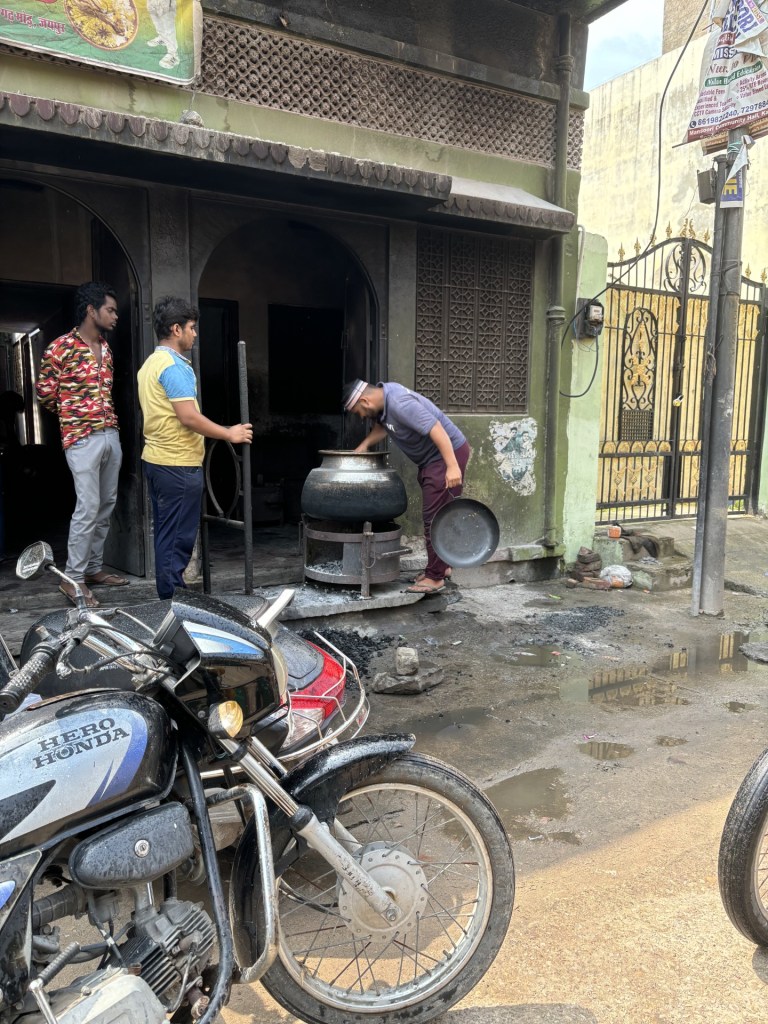
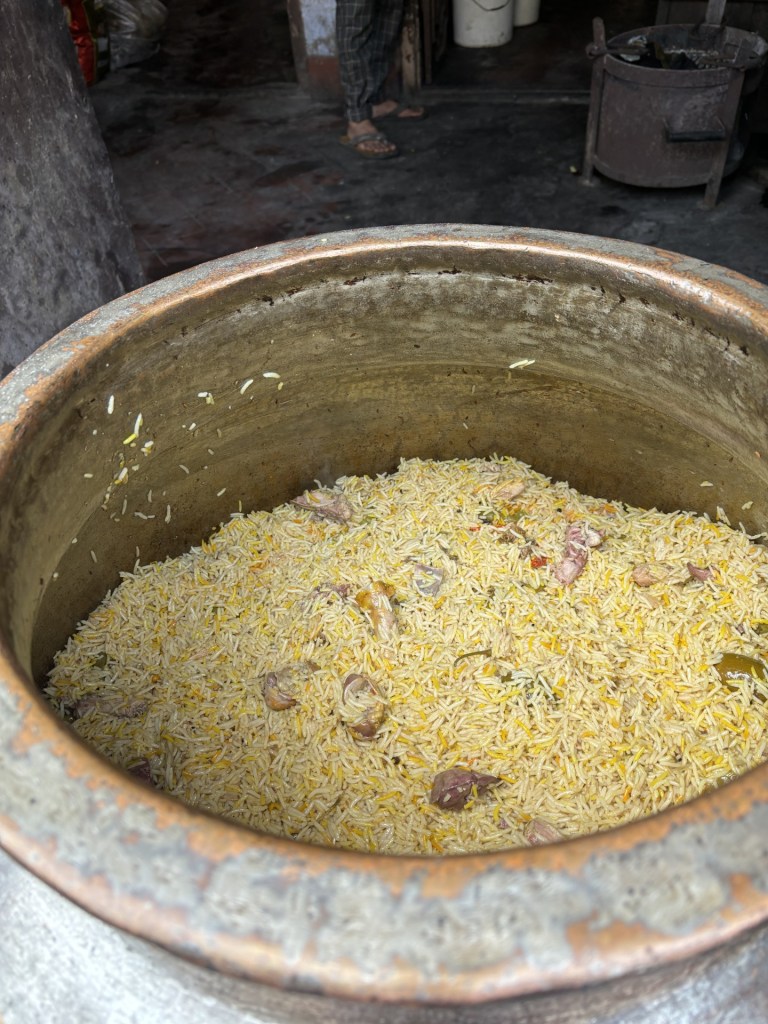
A favorite was this guy cooking biryani in the huge pot on the roadside. Yes, I resisted temptation. It looked delicious and the aroma was so tempting.
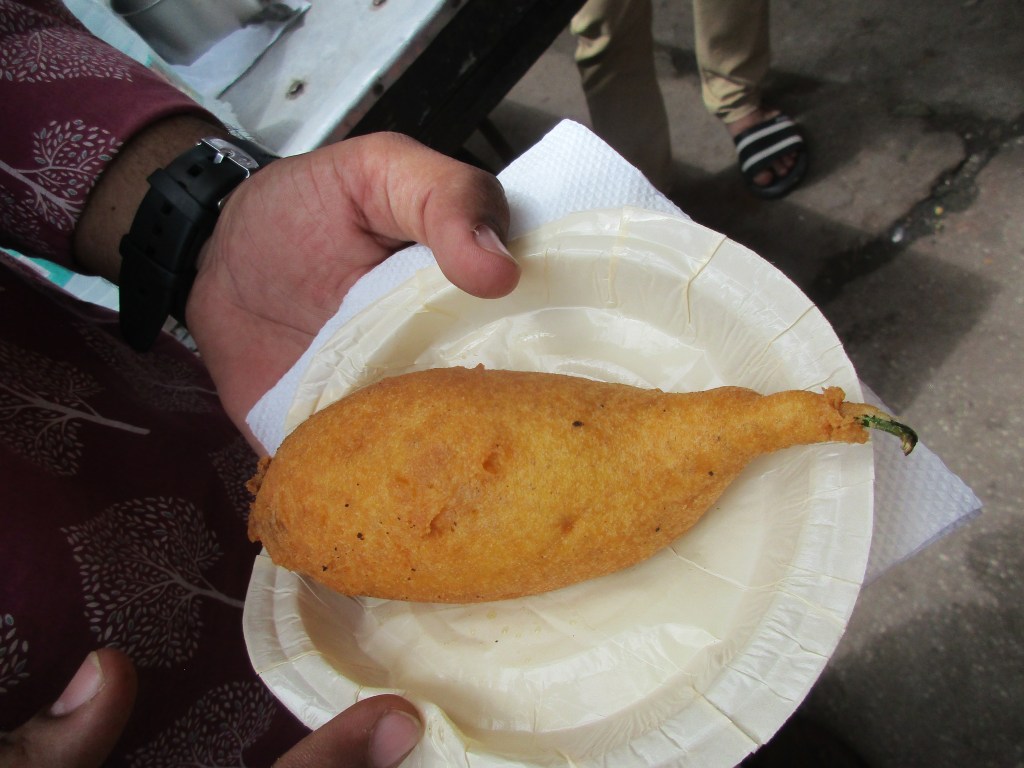
On my second day in Jodphur, India’s Blue City, where I was taken after my first week of teaching via the train (see Oct 7, 2024 post) I ventured into the forbidden realm of street food. My guides stopped for a bite at a local market near one of the city gates and introduced me to Mirchi bada or mirchi vada, a popular Rajasthani street food recipe made with bhavnagiri or green chili jalapeno and chickpea flour batter. Delicious and not too spicy.
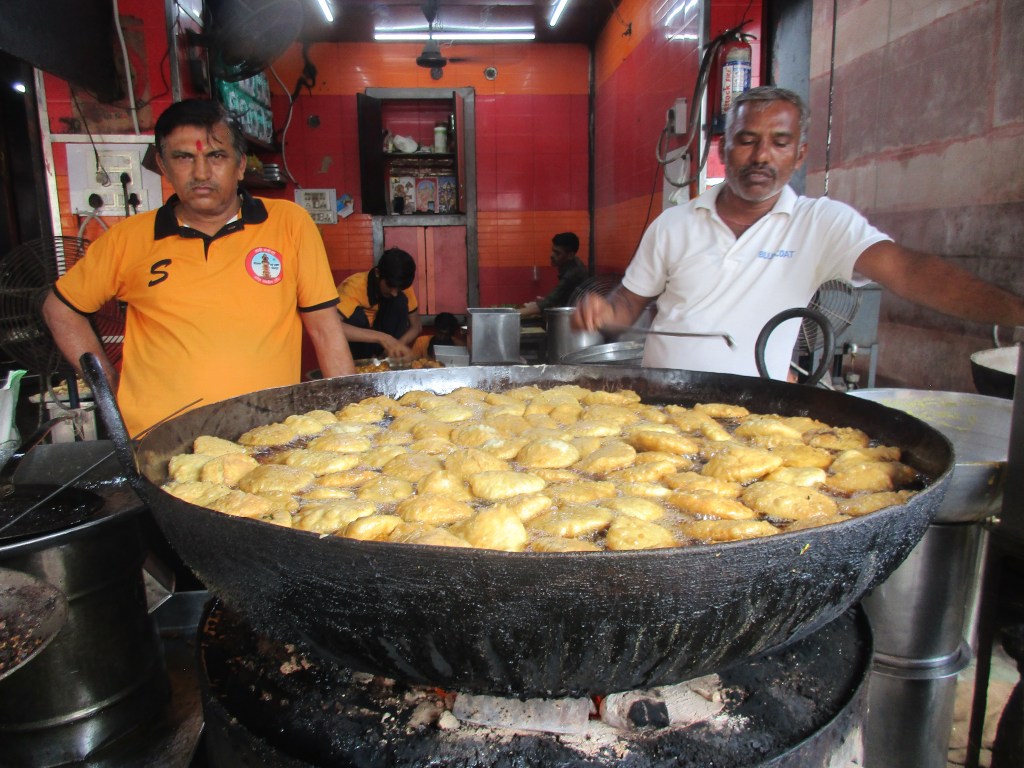
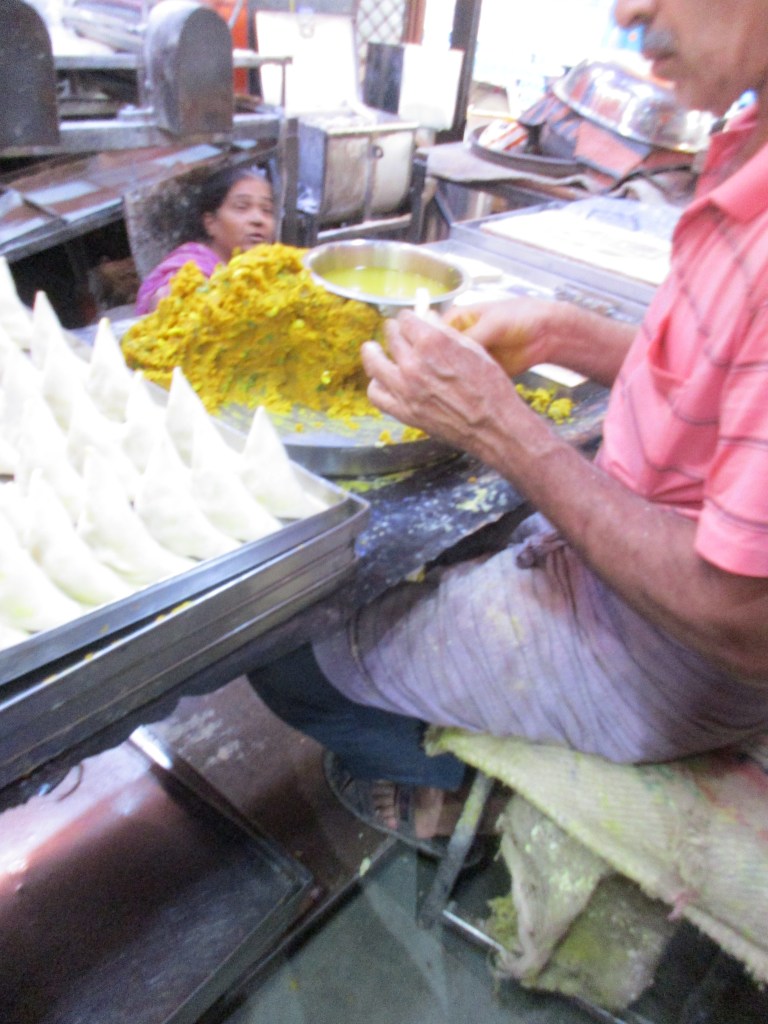
So much was being prepared there I could not stop taking photos.
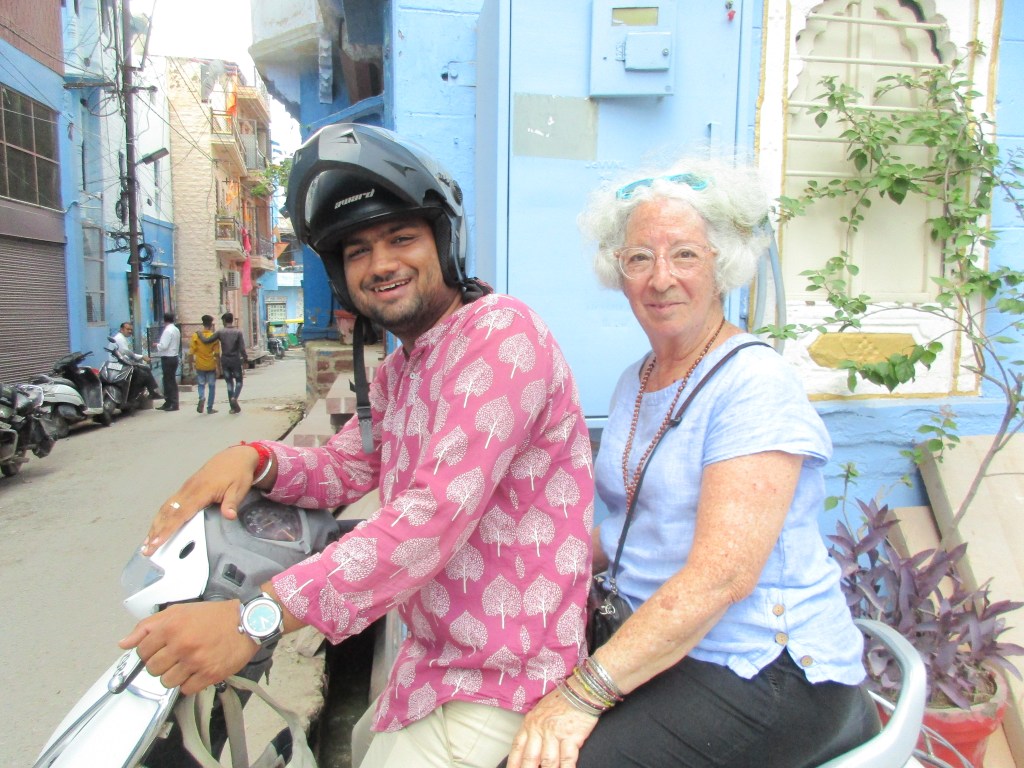
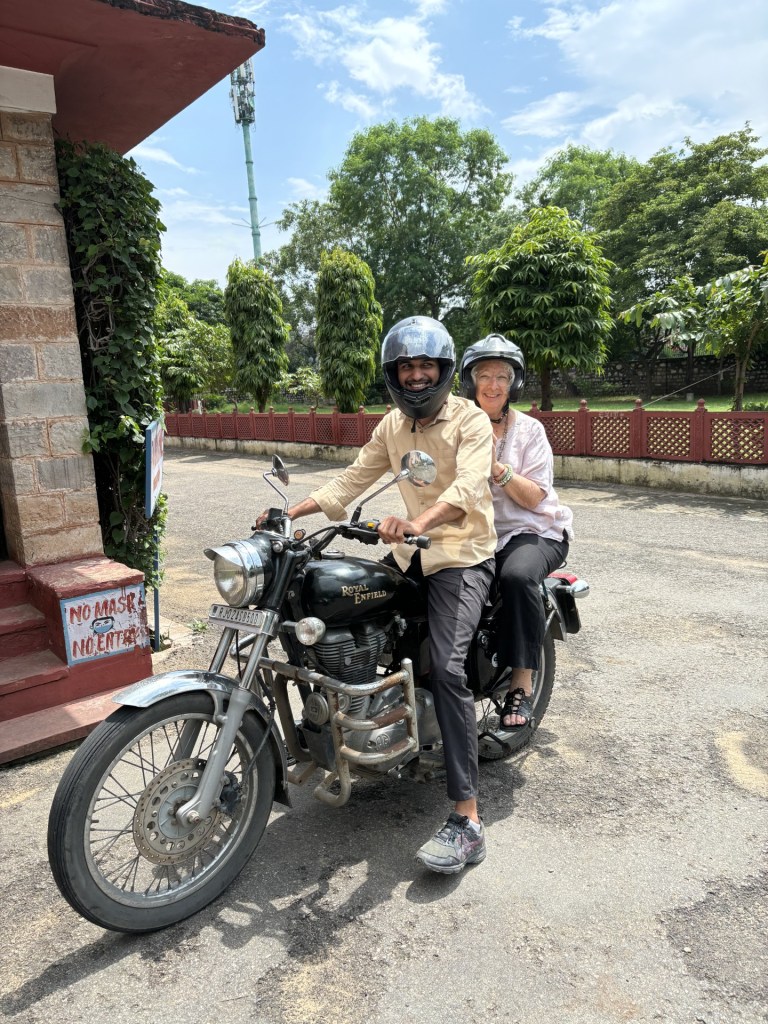
That day I was also inducted into one of the popular forms of transport, the moto.
Masala Chowk. My students were told to take me to Masala Chowk, an open air food hall near the Albert Hall Museum. The food there, I was told was “safe.” After paying the small entrance fee, you enter a quad surrounded by a variety of food types from different parts of India. Lots of families, students, young couples come here.
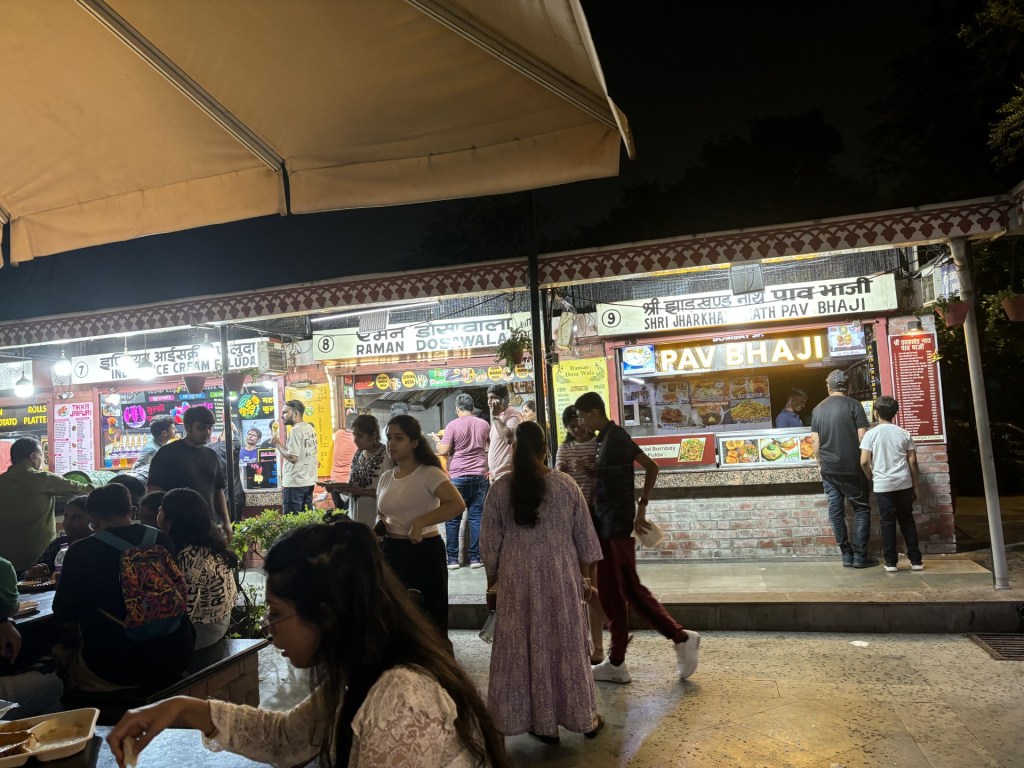
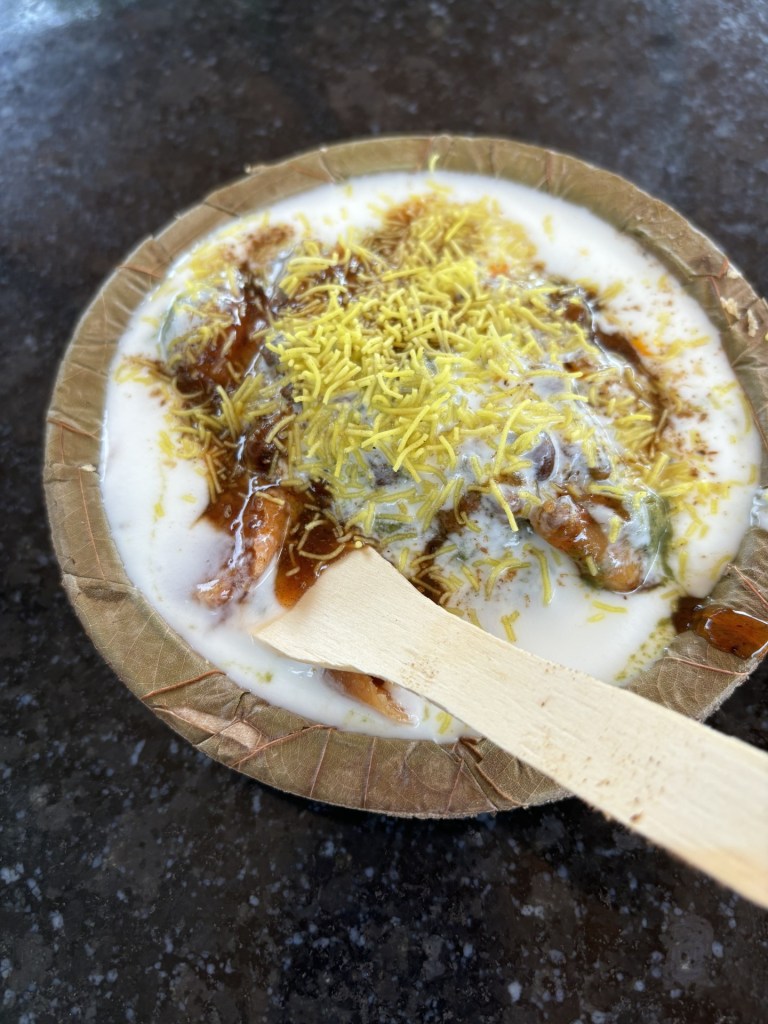
I was introduced immediately to chaat, a variety of snacks that are sweet, salty, spicy, crunchy, and savory, that I’d seen offered on the street. It’s an assault in your taste buds filled with flavors and consistencies, https://www.tasteofhome.com/article/chaat/.
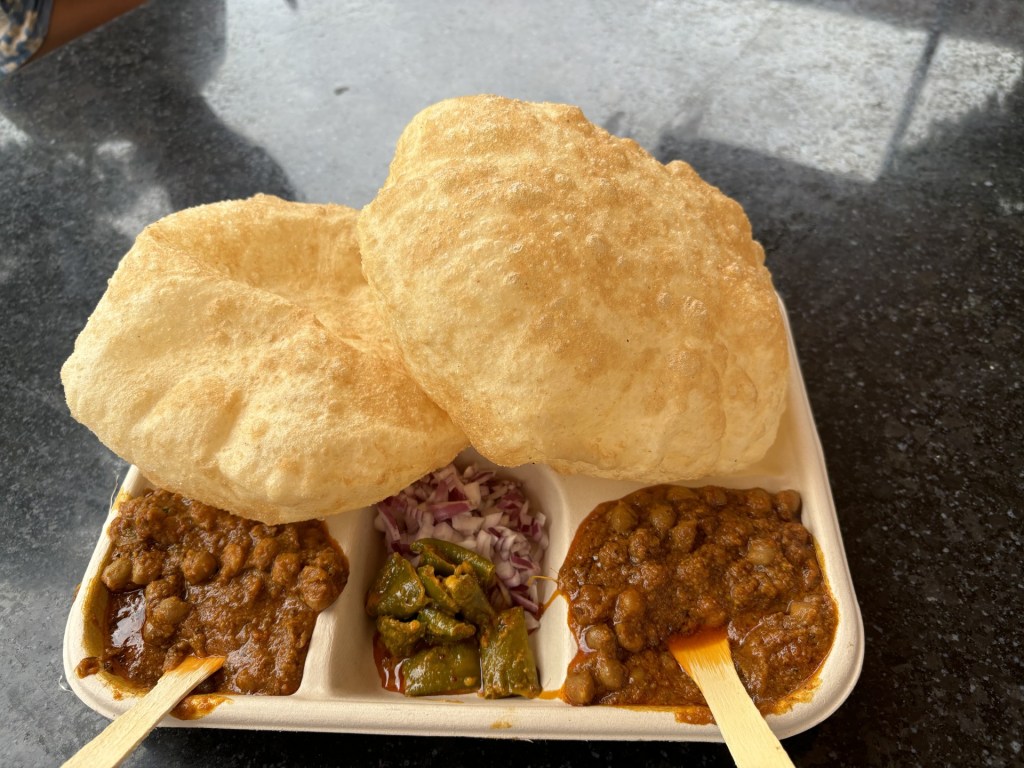
Chole Bhature also known as Chana Bhatura is one of the most popular Punjabi dish liked almost all over India. Chole stands for a spiced tangy chickpea curry. Bhatura is a soft and fluffy fried leavened bread.
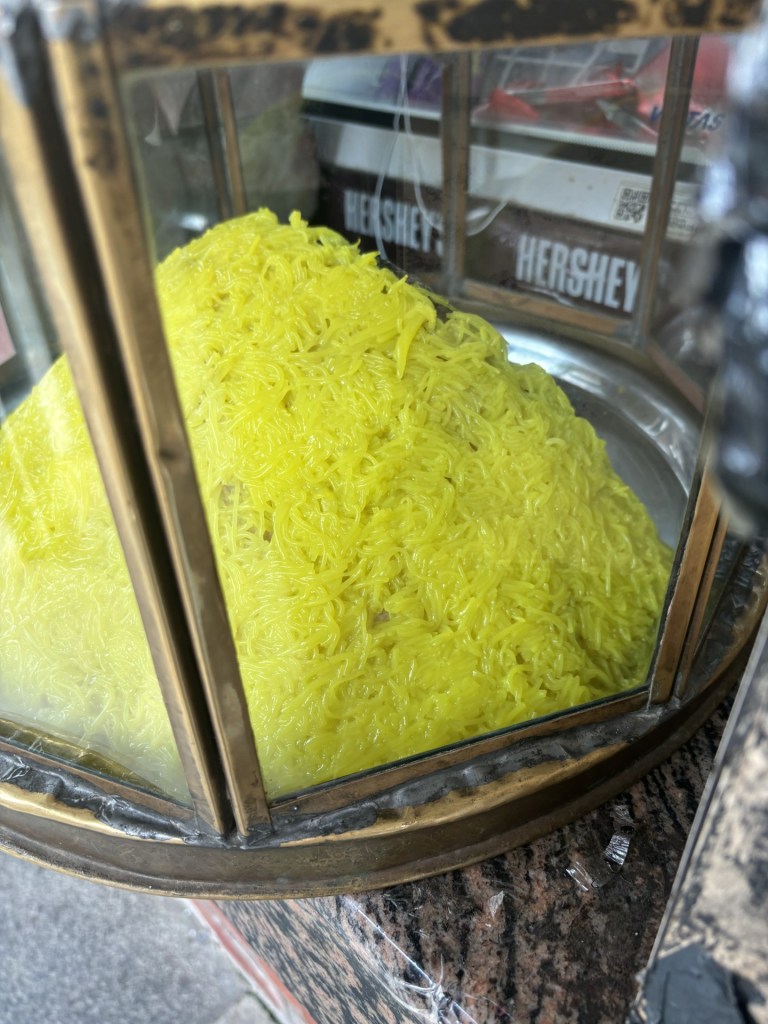
I also tried kulfi, a kind of ice cream or frozen dessert. It is often described as “traditional Indian ice cream.” The kulfi stands also had falooda, thin noodles also eatten as dessert.
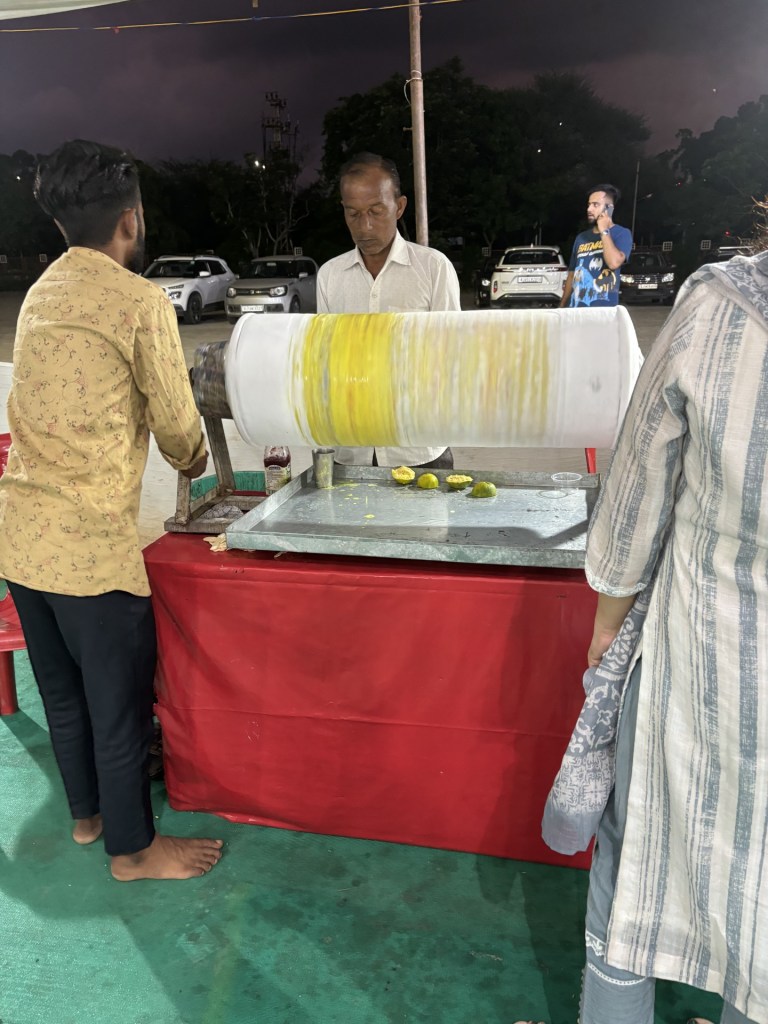
At the textile fair we dropped in on (see Oct 7, 2024 post), I saw man working over a curious cylinder. Yes, he was carving an iced treat from it, known as roller ice cream (https://food.ndtv.com/food-drinks/watch-delhi-street-vendor-is-using-90-kgs-ice-to-make-roller-ice-cream-desi-internet-is-confused-2714922).
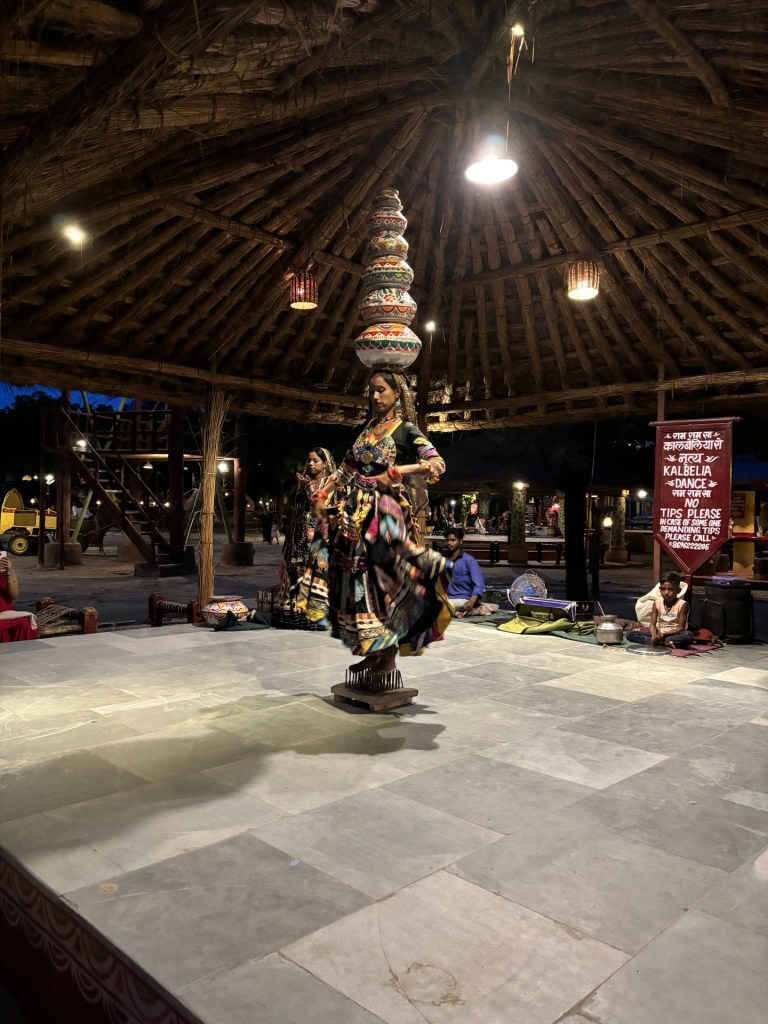
Chokhi Dhani. And then there was Chokhi Dhani (https://chokhidhani.com/village-fair-restaurant-jaipur/). I was taken to this recreated touristy Rajasthani village by our wonderful archeology professor, Tamegh Panwar, along with two other guests. Here visitors wander through different buildings, watch dancers and musicians, ride village rides or an elephant, camel, or horse, see interesting museum exhibits, and taste wonderful foods, and of course shop.
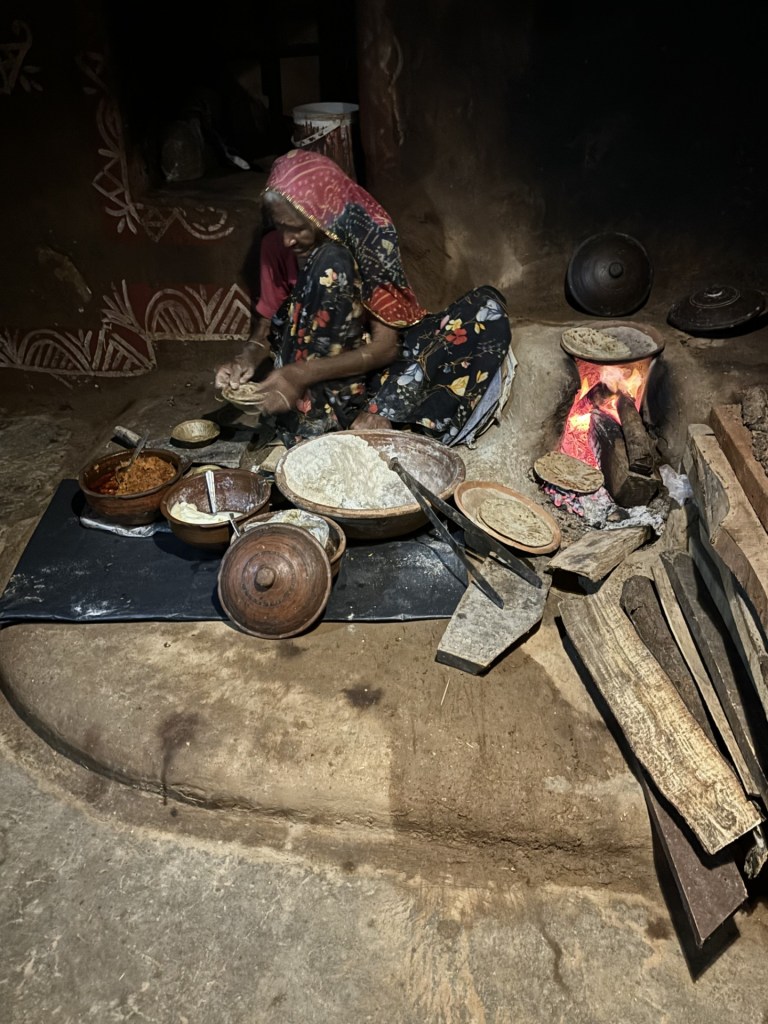
In a small corner building, a woman was making some sort of food. I did not get the name. Yes, I tasted.
Then there were some mystery foods my student guide told me about. I tasted the first one, kind of like a puffed popcorn-ish snack food. The second is a fruit we have in South Florida, thanks to immigrants. The third remains a mystery.
Fox nuts or makhana are a type of seed derived from the Euryale ferox plant. They are widely cultivated throughout Asia, often used in traditional forms of medicine to treat various conditions. They’re also sometimes roasted and eaten as a savory snack or added to curries, side dishes, or desserts.
The mud apple is what Indians call sapodilla or sapota, a tropical American fruit now grown in South Florida.
The wood apple is a popular fruit in Indian and Sri Lankan cuisine. It is commonly referred to as the elephant apple. Wood apple pulp is often used to make chutneys and jams.
Of course, there were many more food adventures and observations, but I’ll stop here. And so many other adventures and experiences, including more moto rides.
 Creatively Annette
Great post, as always. So many interesting natural connections of what comes from India and is grown in South Florida (including one of our favorite fruits, the mango).
LikeLike
And it was not mango season when I was there and did not eat a one!
LikeLike
Tough to get in South Florida this year, too!
LikeLike