Everywhere you look in Jaipur and elsewhere in India, bright colors, different patterns, glitters of gold and other bling, as we say now, catches your eye. Ladies in everyday dress on the street, in the shops, in tuktuks (also known as “autos”), on motorbikes paint the otherwise dusty city scape. I could not get my fill of this bright and lively landscape.
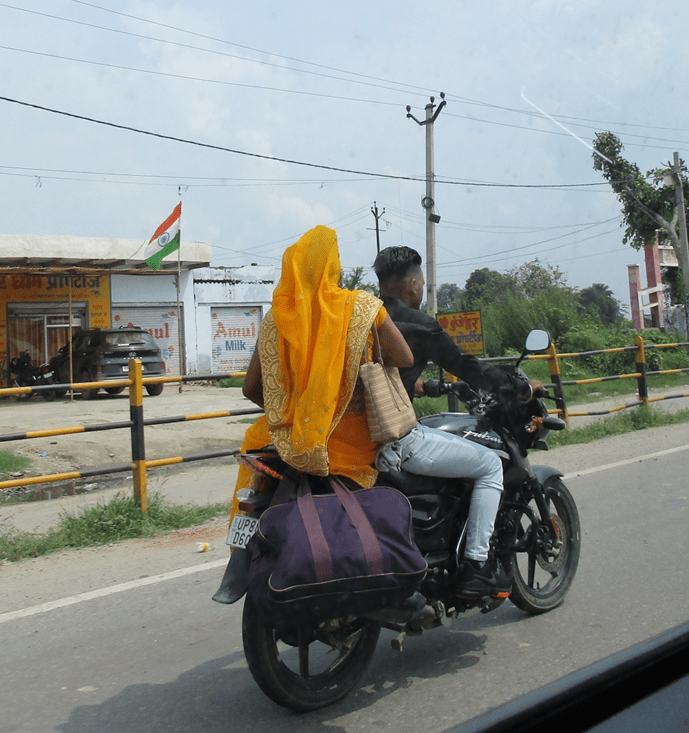
The fabrics are solid, block printed, tie died. The block prints are interesting, beautiful, and everywhere. But I never knew how to ask women where they bought their clothes. These factories are on the stop of every tuktuk drivers and tour guide.
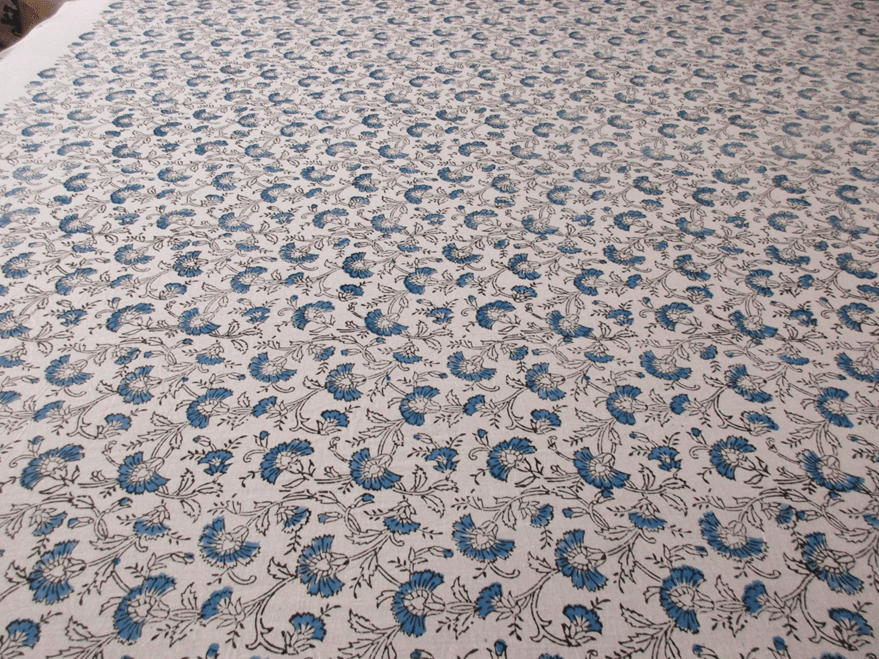
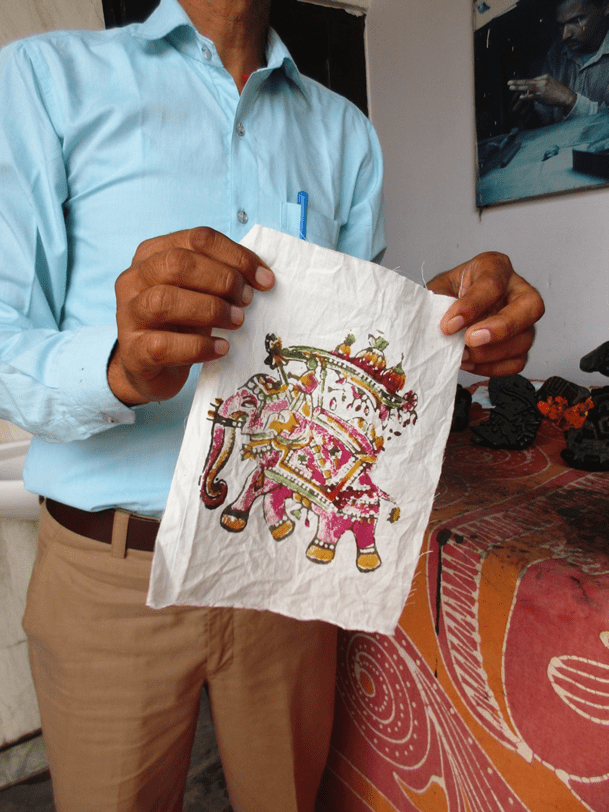
Before the ritual chai and hard sell, you get to try your hand at the printing process. It’s always the elephant.

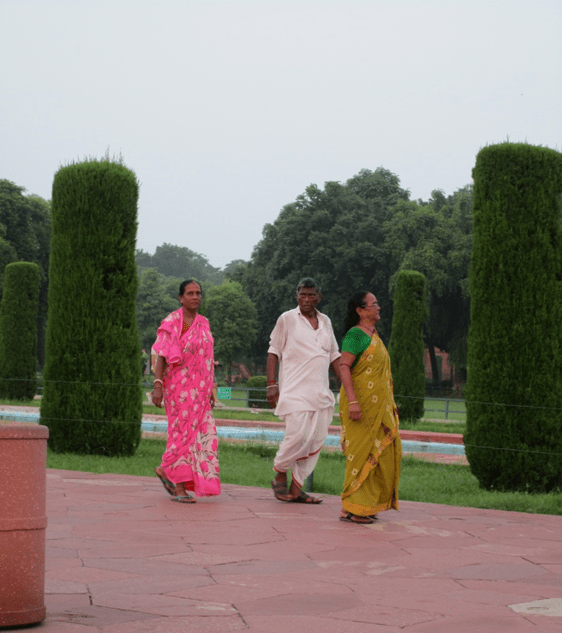
Saris are a magical kind of attire. I’ve always been entranced by them, the variety of fabrics, their rich and varied patterns, how they are go around and around the woman’s body frequently redraped, the whole package.
Textiles were part of my undergraduate degree and they have remained a longtime love, a subject I pride myself in knowing something about.
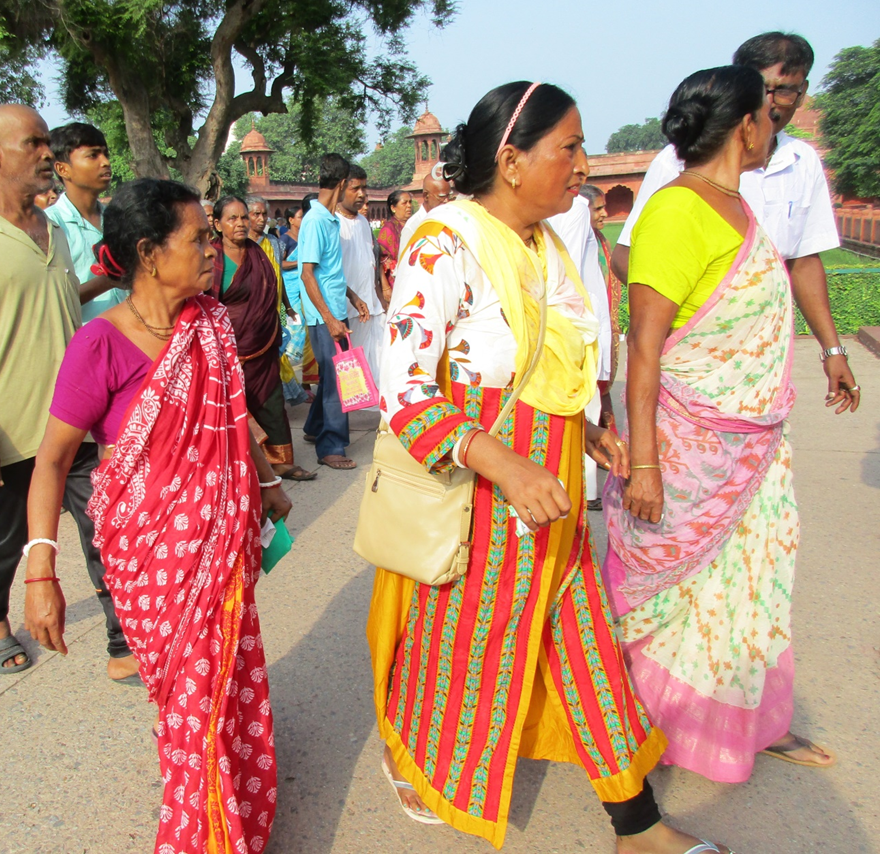
Sometimes, I surprise myself with how much is stored in my brain from so long ago.
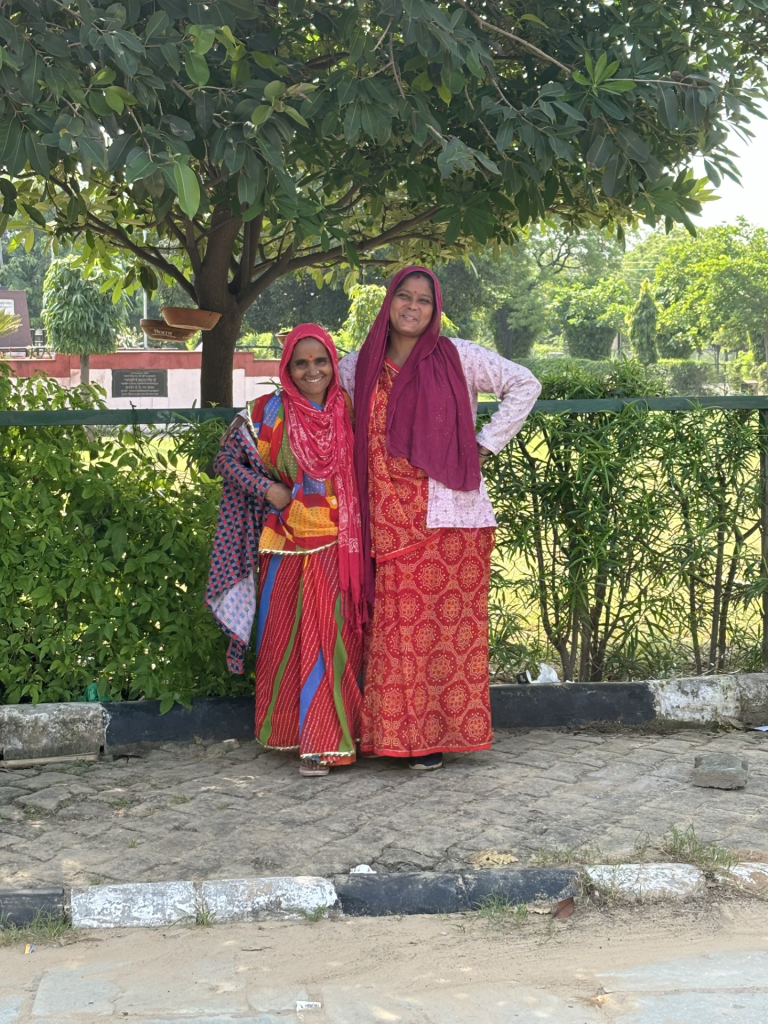
In India, I was bombarded by the richness and variety daily.

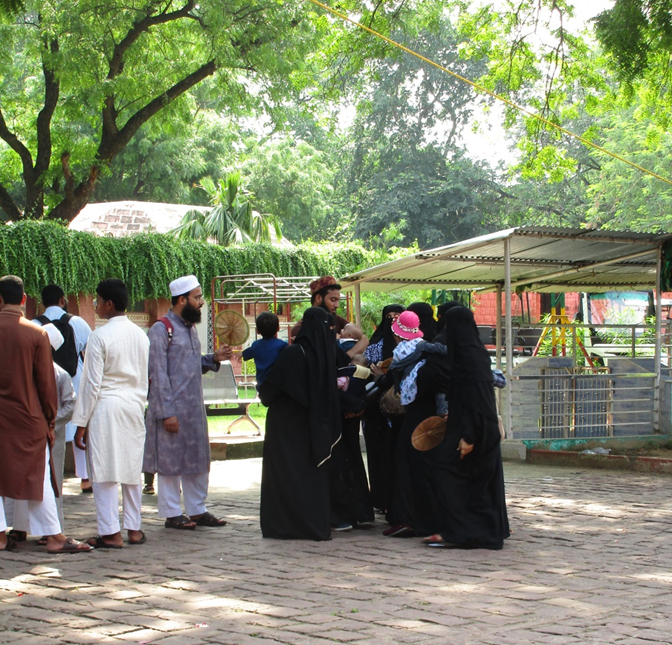
India is a multicultural society and not everyone wears bright attire.
Another day, we happened to pass the annual Cotton & Silk Expo. A quick u-turn and we entered another world of amazing textiles. I fell in love with these intricate tie-die fabrics.
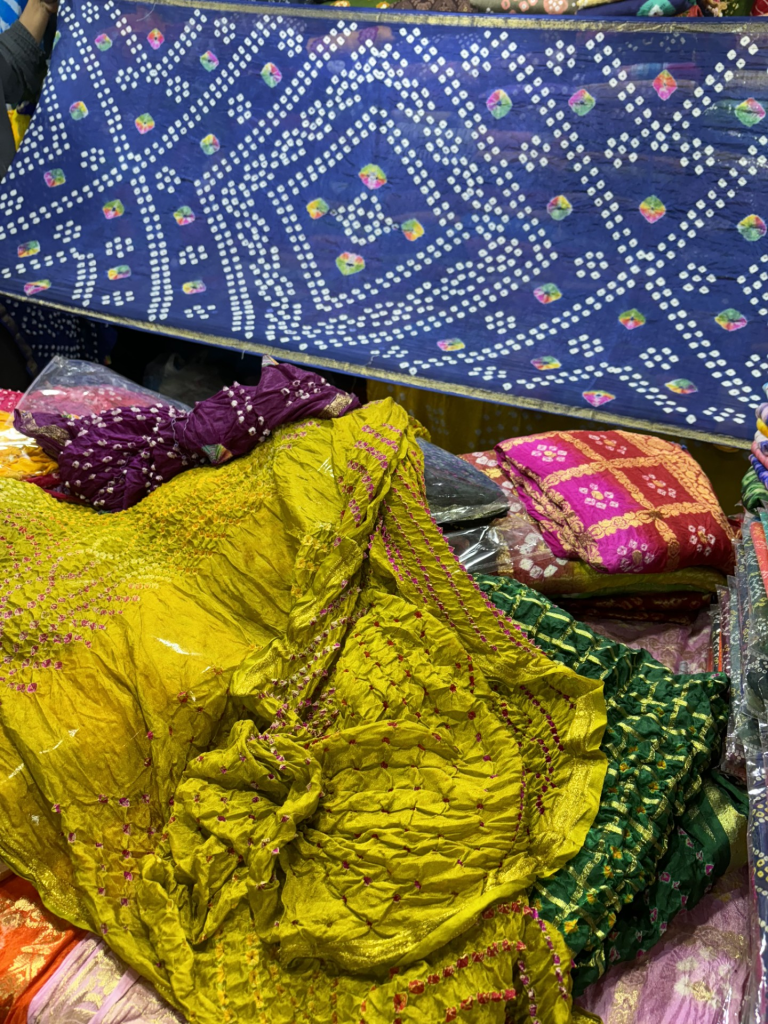
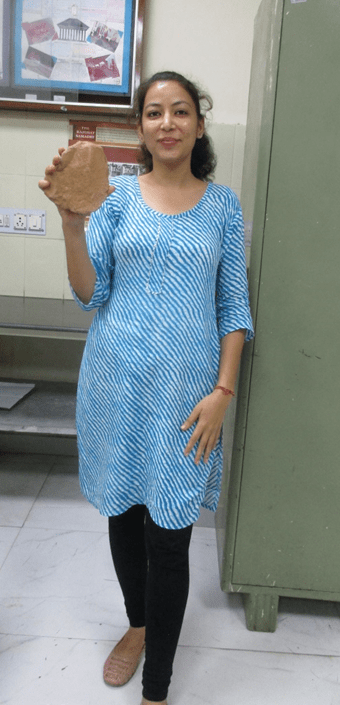
During my first week in India, coincidentally the week of the Teej festival (see 18 Sept. post), one of my students pointed out a particular fabric pattern known as leheriya, from the word leher or wave. It is a tie dye or resist technique that results in diagonal stripes that look like waves on the fabric.
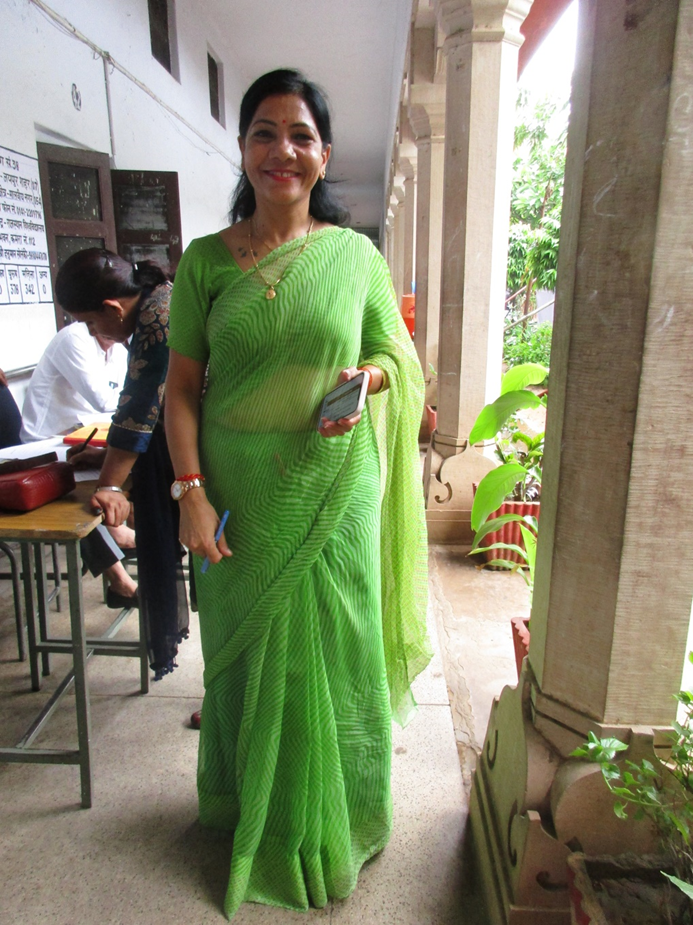
My student was actually wearing a variation, Chunari print, or broken wave. Leheriya’s colorful diagonal or chevron striped patterns are unique to Rajasthan.
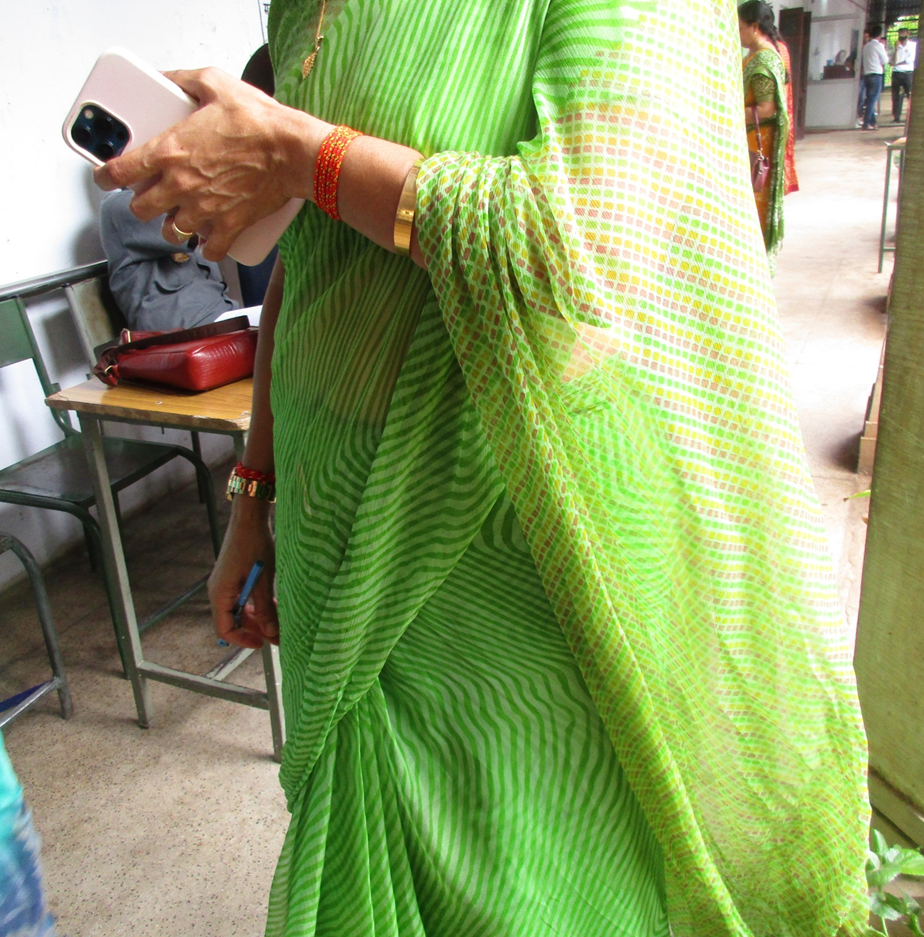
Laheriya dates back to the seventeenth century. The Leheriya sari has been mentioned in many iconic Rajasthani songs. Motifs are usually inspired by nature especially the patterns of the wind blowing across Rajasthan’s deserts with colors ranging from warm sands to clear blue skies. Originally the rich colors were derived from natural sources, such as plants and minerals.
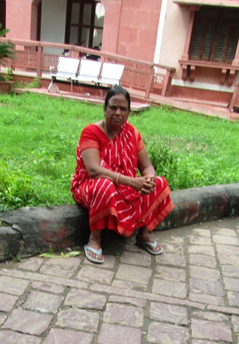
Laheriya became a status and a cultural symbol when Rajasthan’s elites patronized the pattern in the nineteenth and twentieth centuries. Laheriya turbans were a heritage marker for Rajasthani Rajputs.
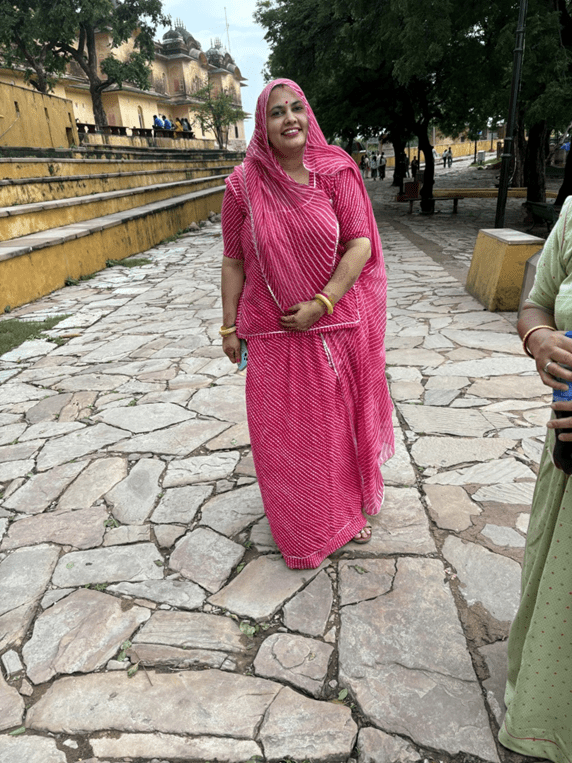
Leheriya symbolises prosperity. Women give each other laheriya sarees as a token of love and auspiciousness. It is also a mandatory gift at a wedding; traditionally, the mother-in-law gives a lehariya sari to the new bride. The vivid pink leheriya sari is considered auspicious and is made specially for brides to wear on the occasion of the first Teej since their marriage. Green laheriya represents happiness and is worn for the festivities of Teej.
Apparently it is one of the most loved sari designs among women. I came to recognize the lahriya pattern and I see it daily, coming and going.
 Creatively Annette
Such a gre
LikeLike