Constant Companion and I escaped for a short vacation awaylast week, really away. We went to Cartagena, Colombia. I’d heard praises about this colonial city along the Caribbean and we took a chance. The chance paid off in spades. What a lovely time. We arrived on a Monday, midafternoon; took a quick taxi ride to our hotel; and started exploring.
But first the hotel. My curiosity was piqued by the name: Ethnic Thematic Hotel* What? It’s located in the center of the colonial city, up a flight of stairs. The ethnic is found in each room, named and beautifully decorated with different aspects traditional culture found in Colombia. What more could the folklorist in me ask for?
*If you are interested, google the hotel for more information. I highly recommend it !
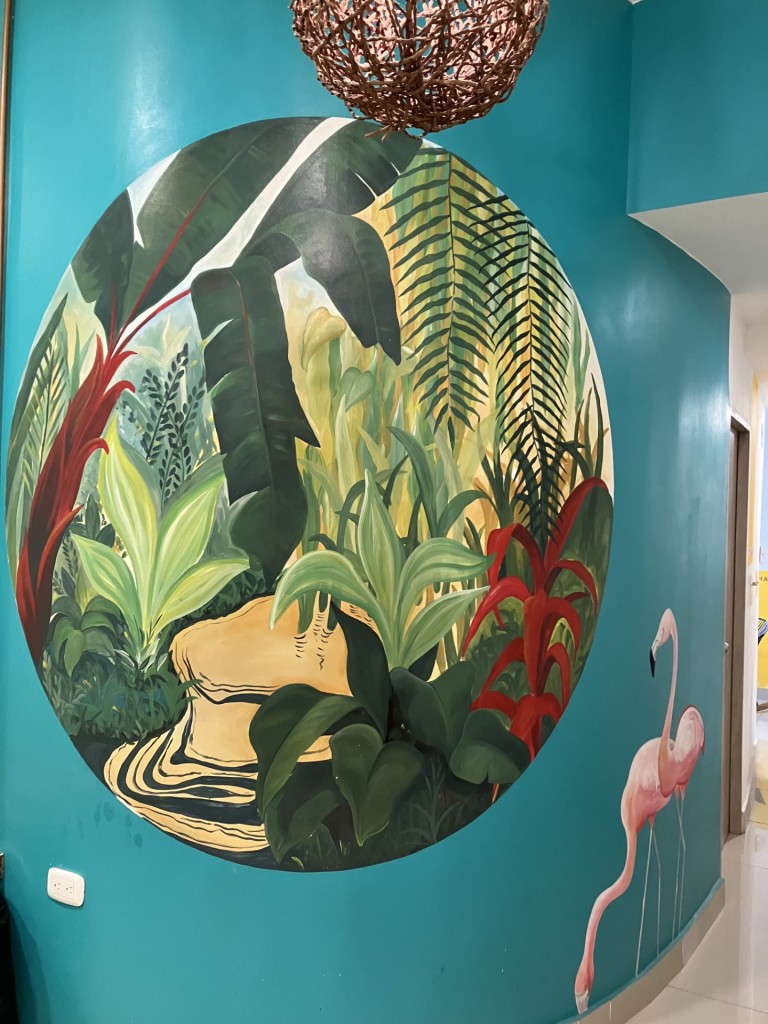
The lobby, off of which the rooms radiate, is painted brilliantly. We were introduced almost immediately to Maria Mulata, a bird immortalized in painting and sculpture all over the city. She’s a medium-sized bird of iridescent black or brown, not a blackbird or raven, but a great-tailed grackle. And she overlooks the lobby.
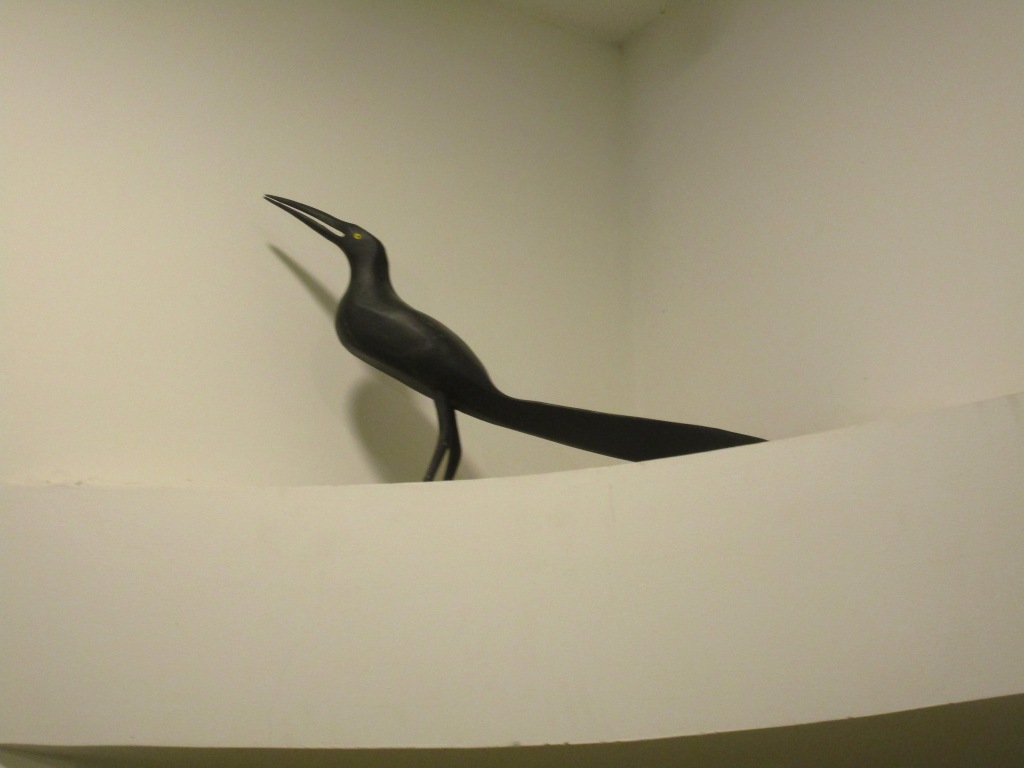
The story of Maria Mulata tells of a time in Getsemani, a barrio in the city, where people and exotic animals, including a vividly colored bird called Maria Mulata lived together. Maria Mulata carried the people of the neighborhood to safety when a fired raged. Her feathers, however, were blackened forever. The iridescence is a reminder of the bird’s former bright plumage.
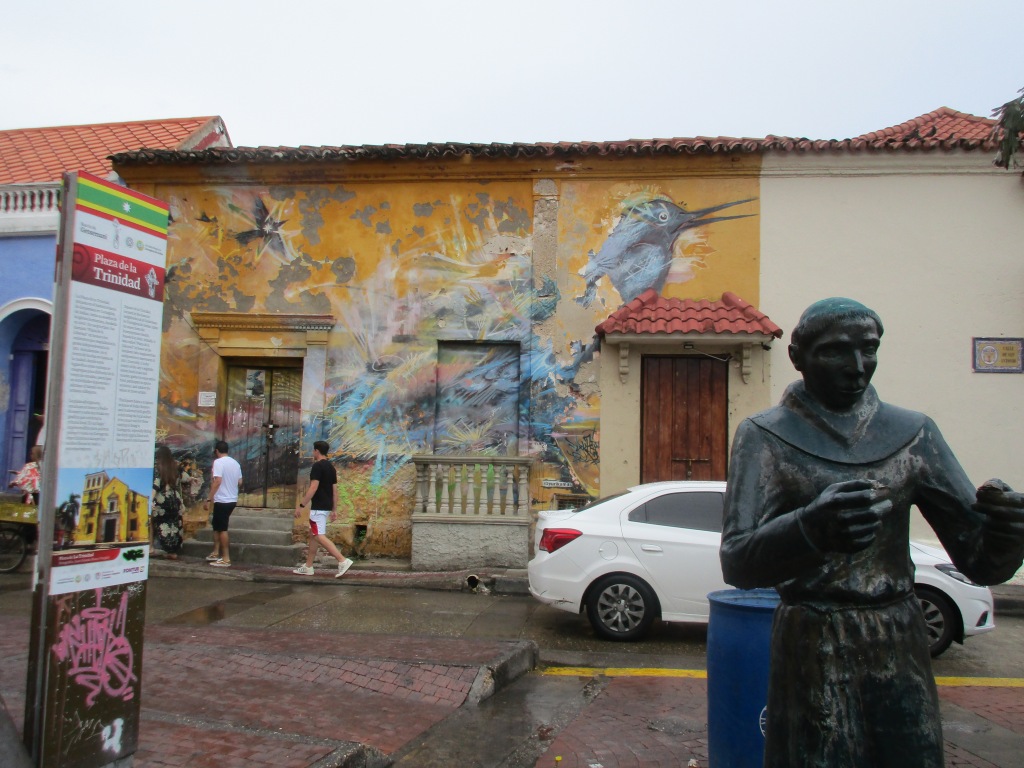
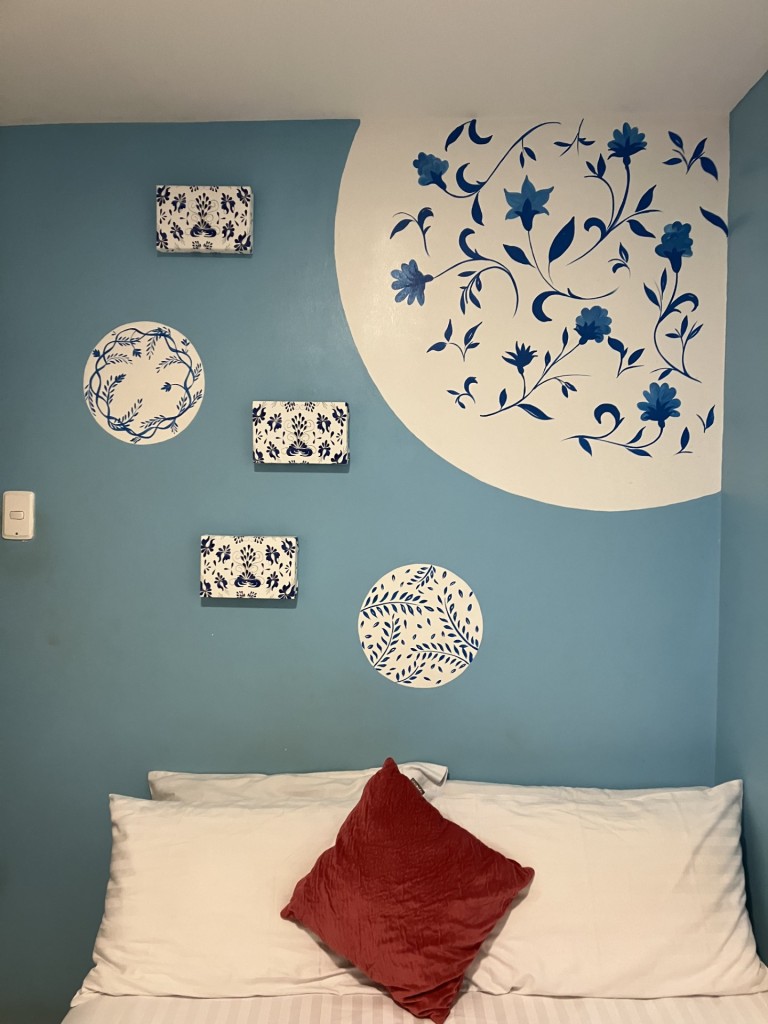
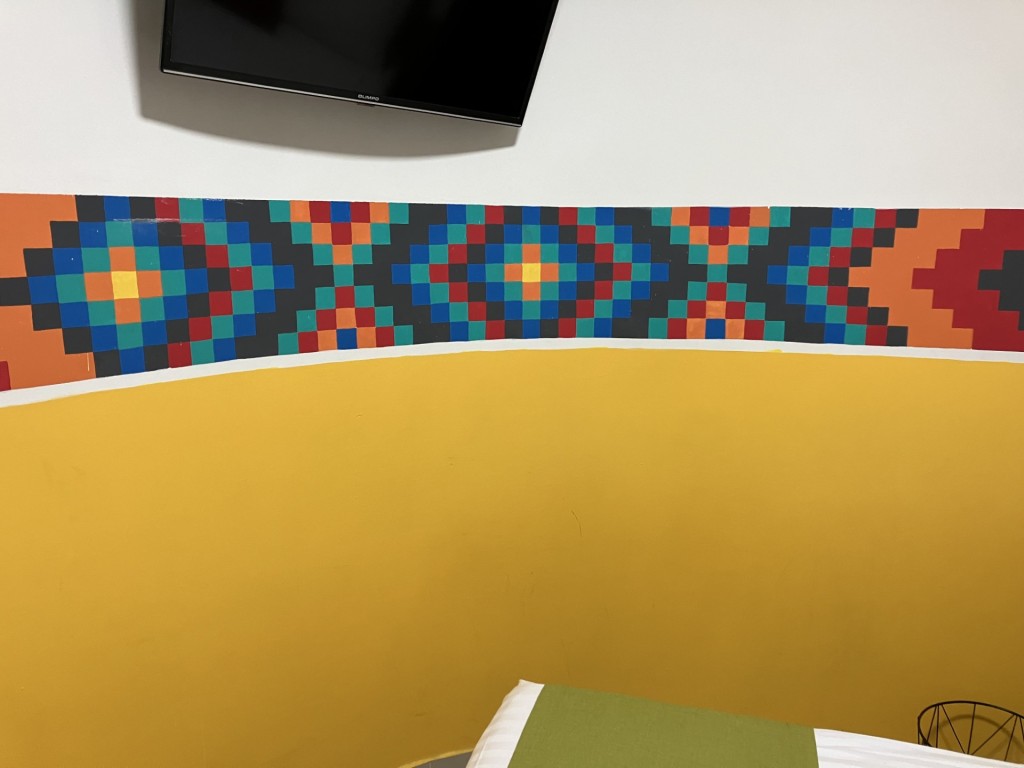
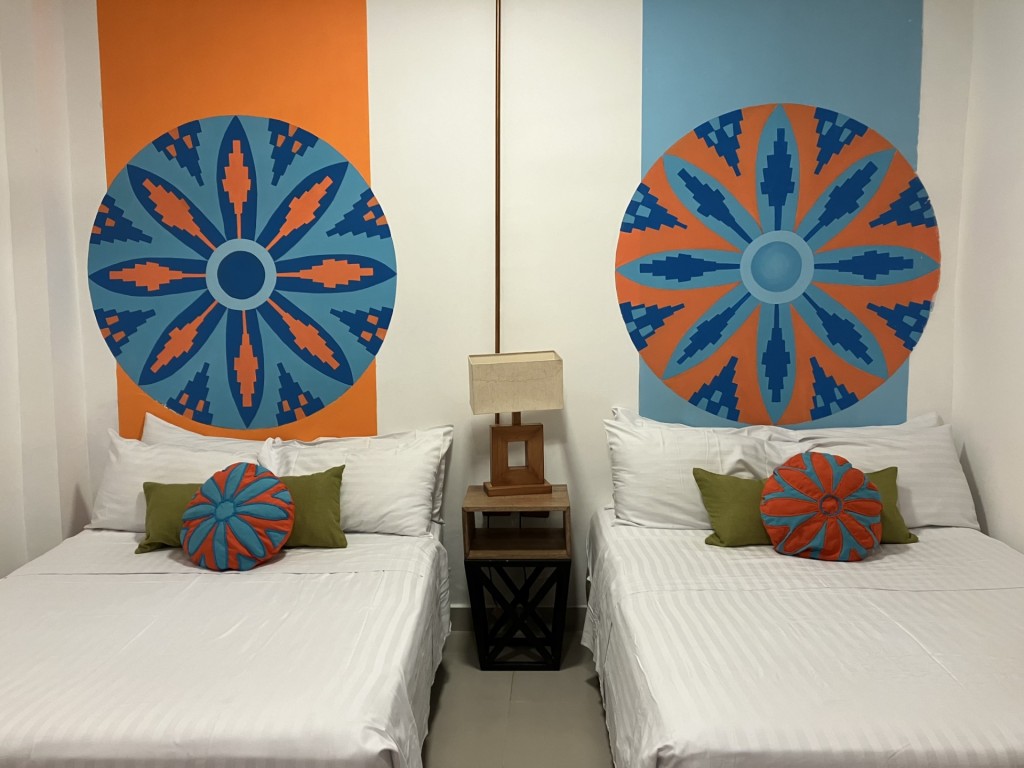
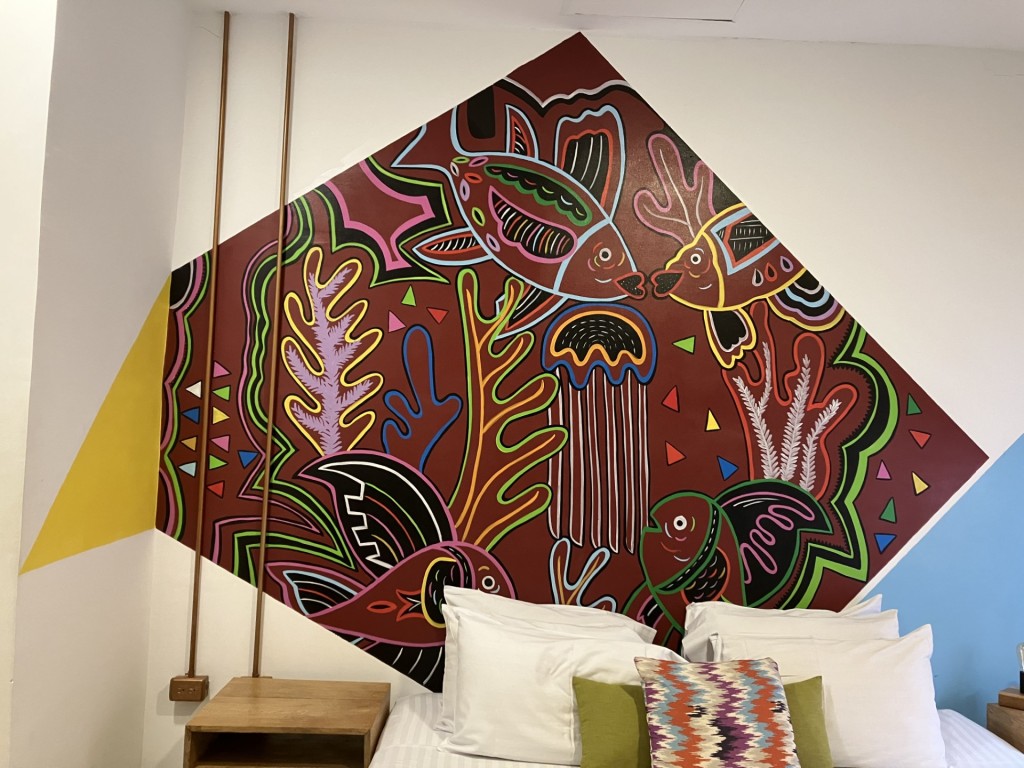
The murals of Getsemani were brought into each of the rooms to enliven and brighten them. Traditional materials featured in room ranged from beautifully decorated ceramics from different peoples,
intricate and colorful beadwork of the Embera culture,
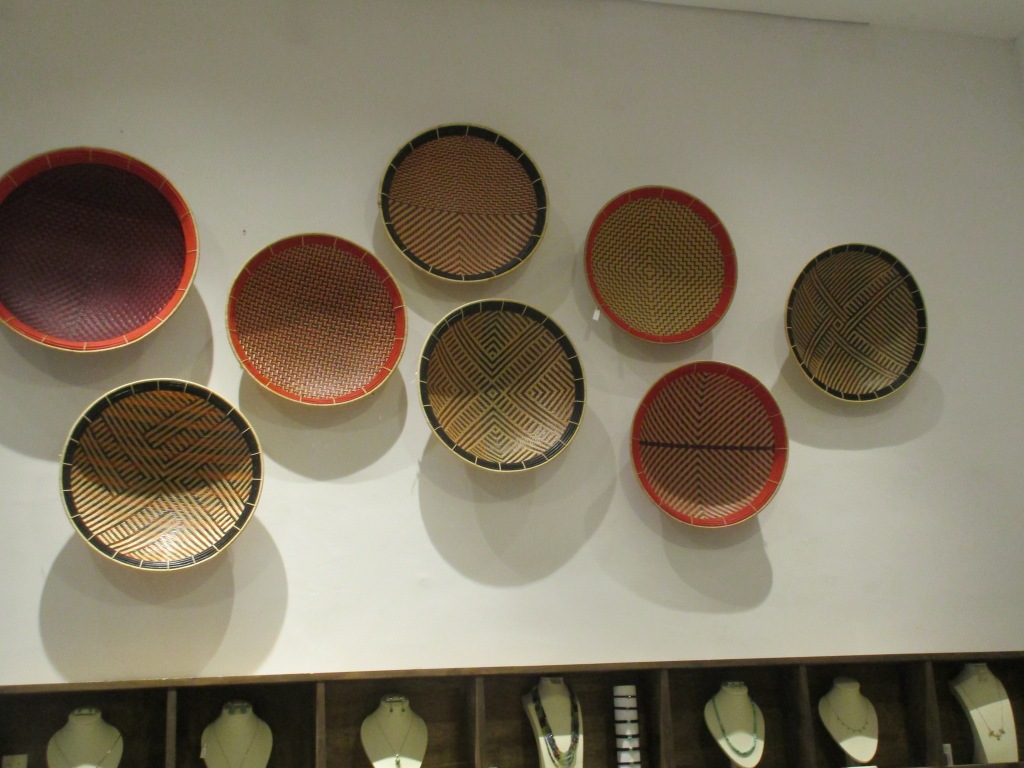
woven artistry of the basketry from Guacamayas,*
*We saw these baskets in several stores and restaurants, with patterns created from natural materials from which they are made and some pigment.
molas, the amazingly complex reverse appliques made and worn by women of the islands in both Panama and Colombia,
woven patterns of the Wayuu,
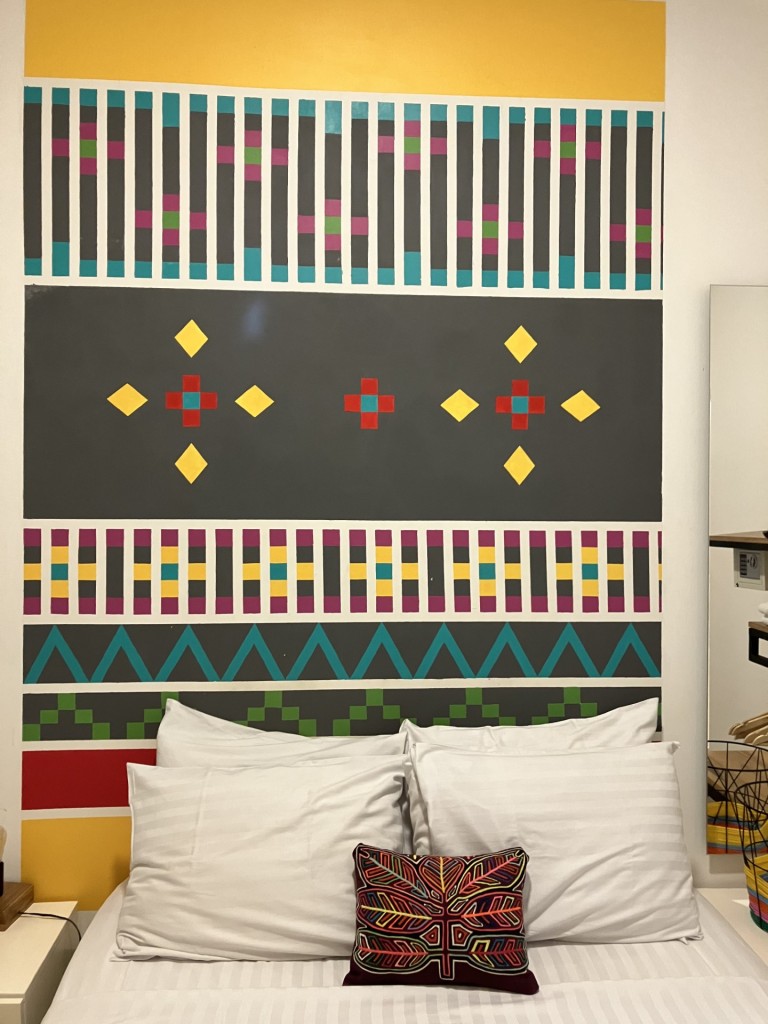
mopa-mopa art, an ancient craft from the resin of the mopa-mopa tree, developed by the Quillacingas Indians.
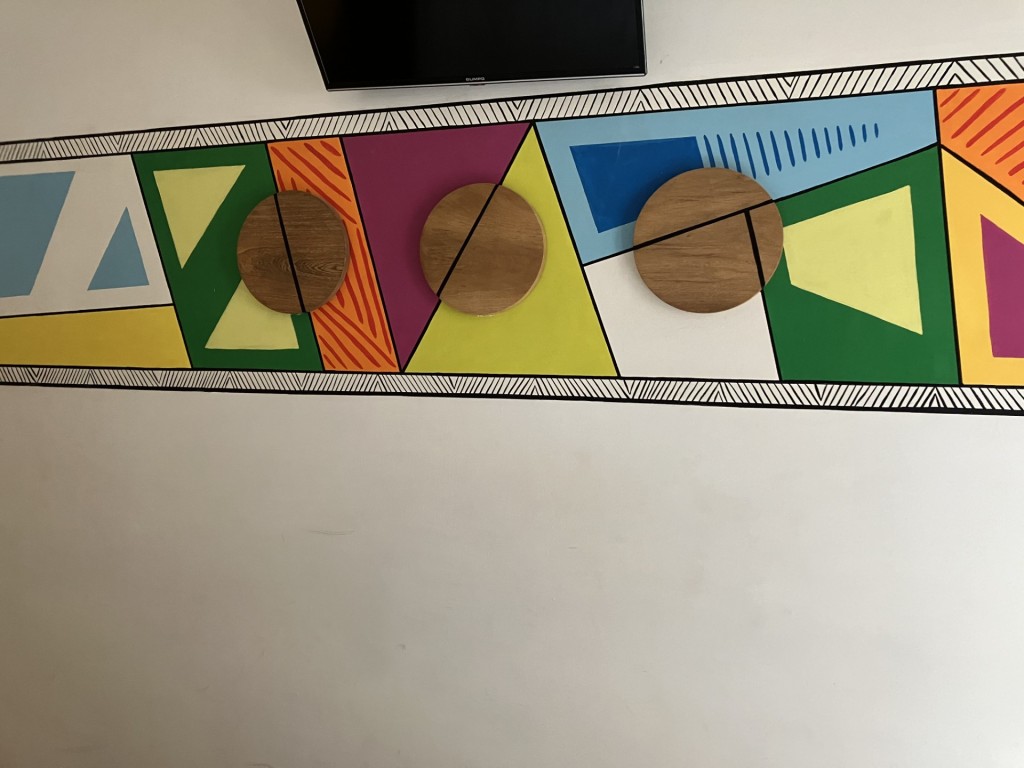
We celebrated Carnaval in our room (and today’s feature photo)!
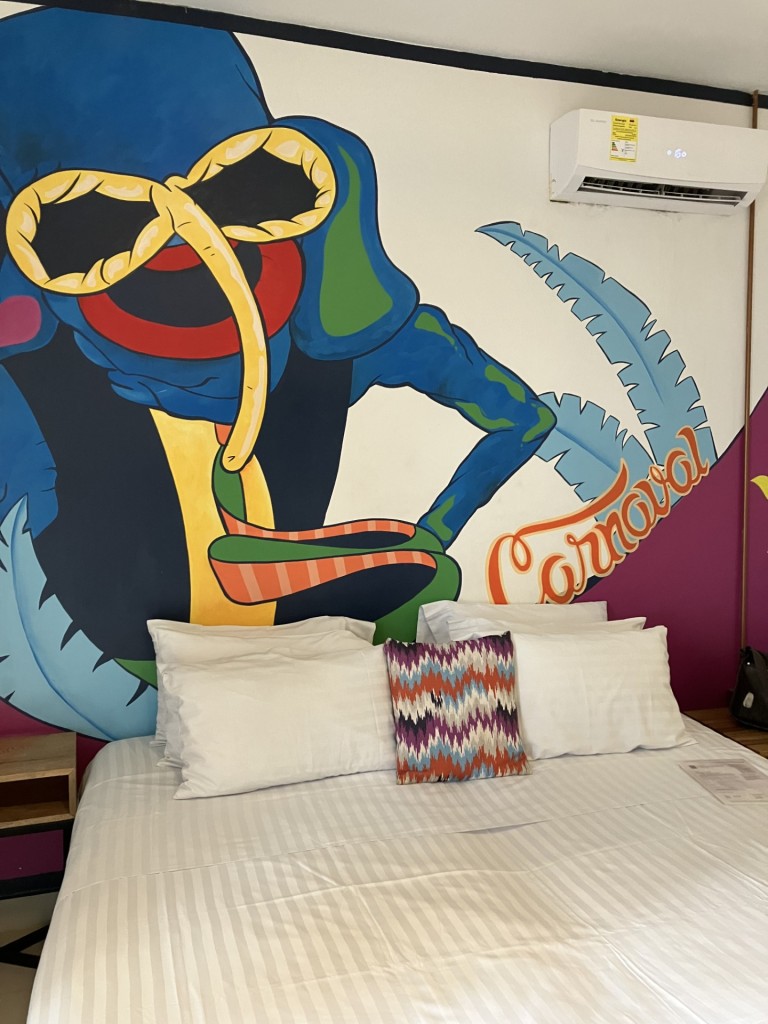
What an excellent choice of hotel.
And if that was not immersion enough, while rambling around town after we settled in, we saw this man wearing the traditional dress of the Arhuaco people in the Sierra Nevada de Santa Marta come out of a building. He kindly “spoke” to me through his translator and allowed me to take a photo.
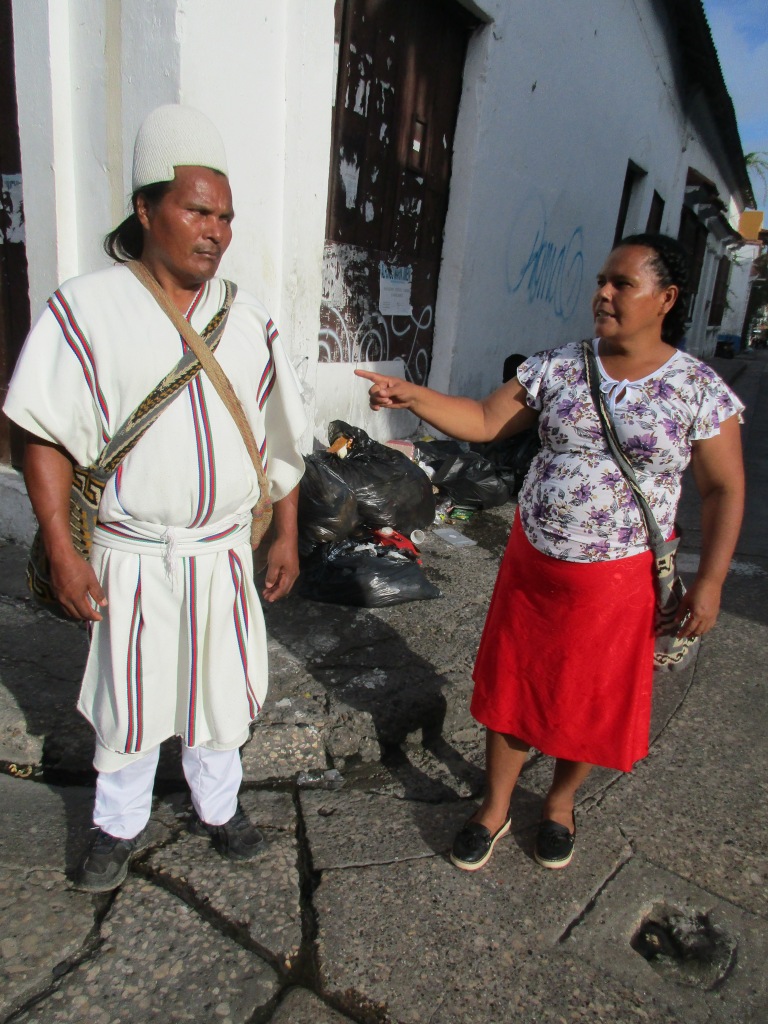
What a great way to start our brief “get-away.” I’ll share more of what we learned and observed over the next four days.
 Creatively Annette
Terrific! Looking forward to hearing and seeing more!
LikeLike
Terrific! Looking forward to hearing and seeing more!
LikeLike
Wonderful! Thanks for sharing.
<
div dir=”ltr”>
<
blockquote type=”cite”>
LikeLike
how on earth did you find this hotel? What a lovely excursion for the two of you. I live vicariously through you, Annette!
LikeLike
CC found it on booking.com
LikeLike
Amazing artwork! Continue to enjoy your travels!
LikeLike
You know… I saw your last post
LikeLike
Thank you, miss seeing you and Jim –
LikeLike