It’s still rainy season here, no doubt about it. We can expect rains and storms through the end of November, and sometimes longer. In the meantime, temperatures are slowly dropping. The cooler evenings are so delightful. It’s time to return to the garden to trim my out-of-control shrubs and repot my succulents.
One afternoon last week, Constant Companion (CC) and I joined a very informative walking tour of Little Havana, a neighborhood that attracts loads of tourists. Which means, loads of tourist shops. Our amazing guide, however, introduced us to local businesses.

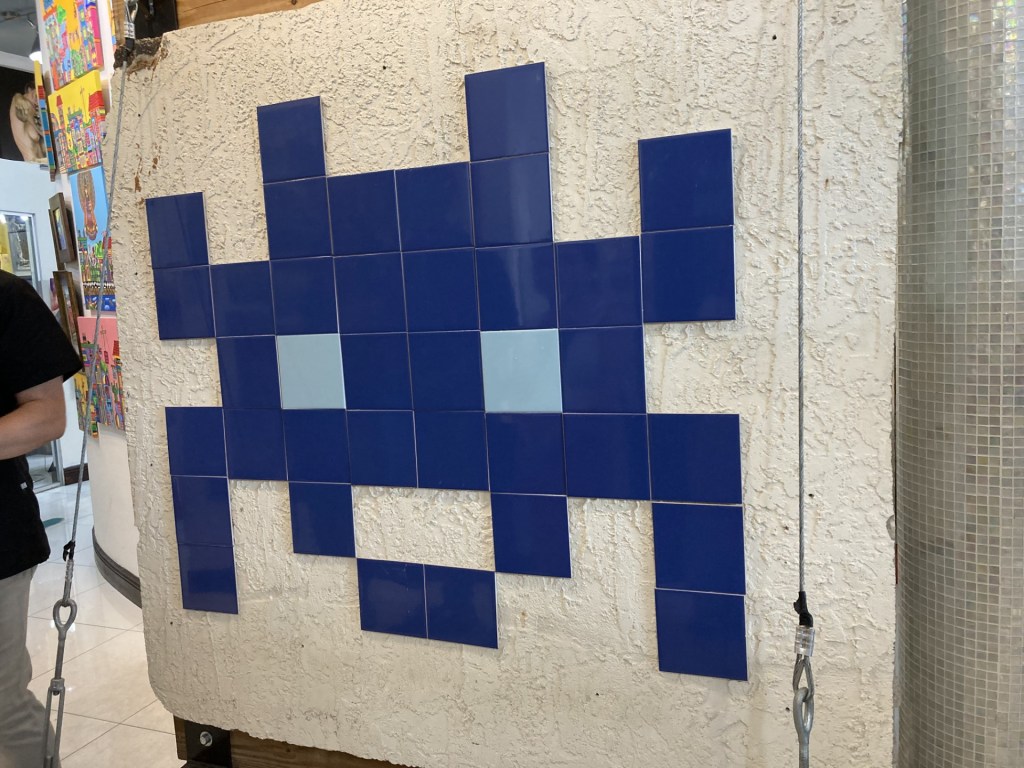
We started near the western edge of Little Havana at Futurama 1647, what our guide termed an art incubator. It is a maze of local, working artists’ studios and small shops. CC and I arrived early and explored the space. A large mosaic mural caught our eyes. Invader (https://www.space-invaders.com/home/) is a self-identified free artist originally from France. His work can be found on buildings, high and low, all around town and around the world for that matter. This one was cut from a wall somewhere and you can purchase it for your own home!
As we strolled down Calle Ocho (8th Street, Tamiami Trail, US 41) we passed by and visited a number of shops. One of the many rooster sculptures (gallos) found in front of El Pub, a mom and pop restaurant for the past fifty years, has a history. This rooster proudly wearing U.S. and Cuban flags was stolen in September 2011. It was held “hostage” for almost a week before being returned. In the meantime, the kidnappers had spray-painted its entire body white.
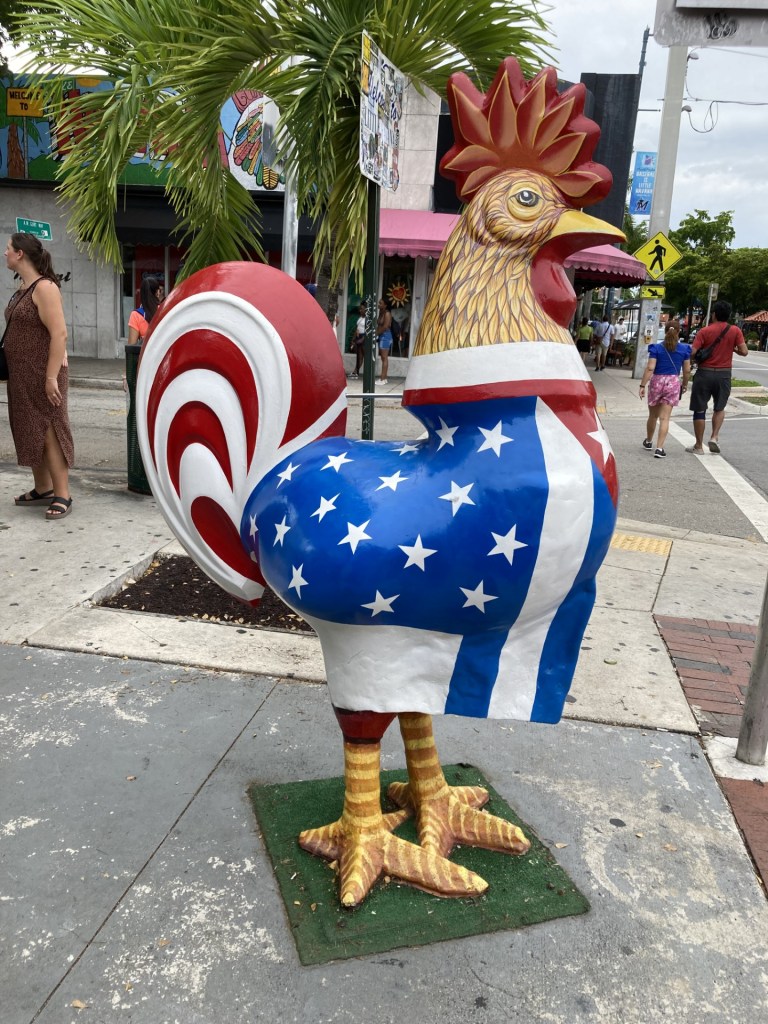
At least twelve such sculptures can be found along the “Rooster Walk,” which was established in 2002. Two different “traditional proud gallos” were created by Cuban-American artists, the late Tony López and the late Ramón Lago.
At El Pub we partook the Miami afternoon delight, a Cuban coffee (cafecito) from the ventanita. Many Cuban neighborhood restaurants have a sidewalk-side little window where you can get a quick coffee and maybe a pastelito or croquetta. The ventanita is a purely Miami Cuban invention. The founder of the landmark restaurant, Versailles, recognized his fellow exiles love for this strong and sweet pick-me-upper. He created a quick and easy way to fill the caffiene need that is now find all over the city.
We were next at the corner presided over by the Ball and Chain, Azucar, the Tower Theater, and Domino Park. The Ball and Chain is legendary in the city. Opened in 1936, noted performers including Ella Fitzgerald, Cab Calloway, Billie Holliday, Chet Baker filled the house, Azucar, now in its tenth year, celebrates Cuban singer Celia Cruz who opened her shows with the salutation, “Azucar,” to which her audience joyfully responded.
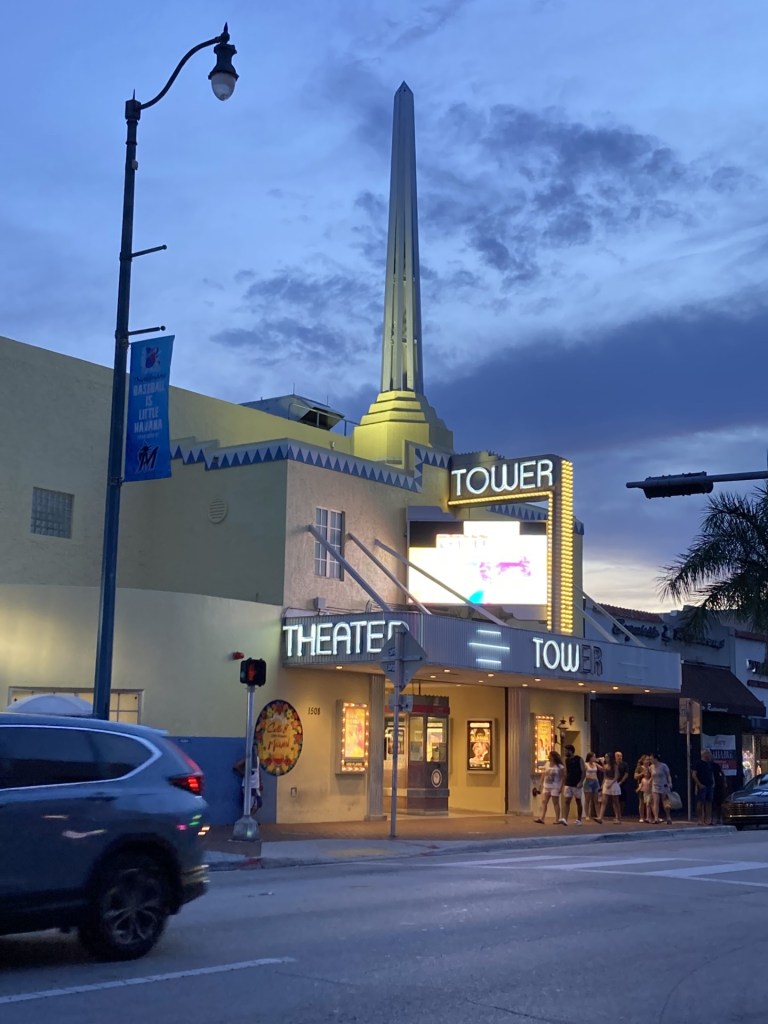
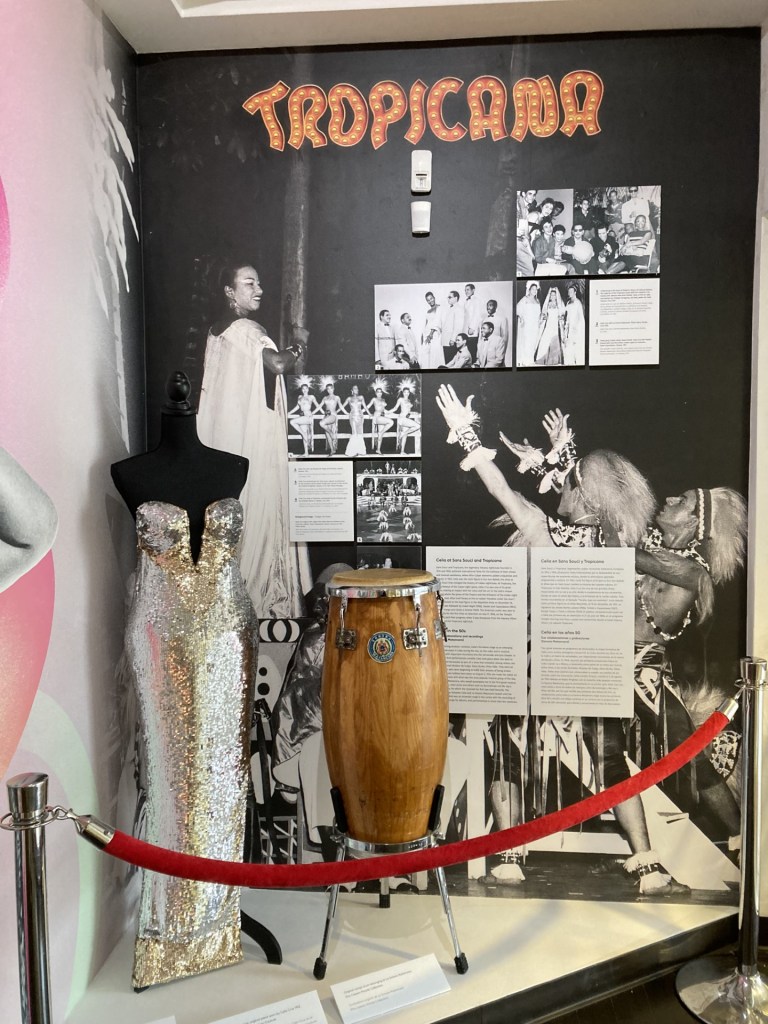
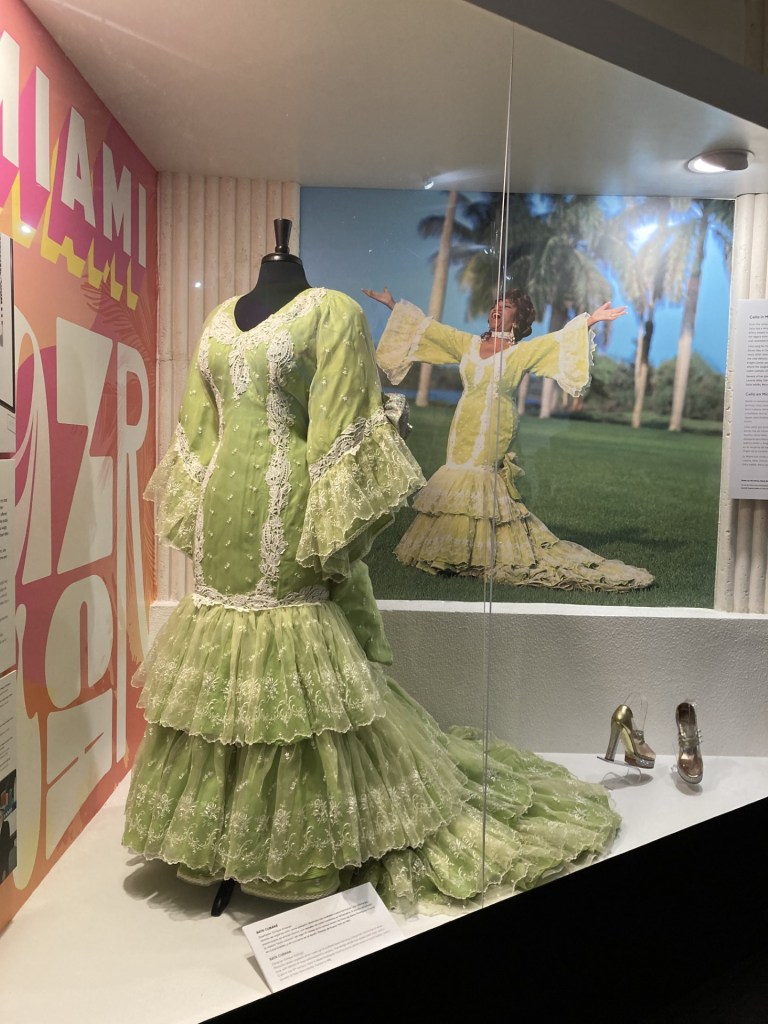
The Tower Theater opened in 1926. With the influx of Cuban refugees to the neighborhood i the 60s, they started showing Spanish subtitled movies. In more recent years, indie films were shown and film festivals held here. Like other venues in the community it is in flux. The exhibit, “Celia Cruz: Por Siempre” now graces the theater’s first and second floors. A brief video introduces visitors to this significant Cuban cultural icon. Exhibit cases are full of Celia’s extravagant costumes, including shoes and wigs.
Across from the theater is so-called Domino Park or Máximo Gómez Park. Here, seniors enjoy a game or two all day long; you have to be 55 years older or older to get a membership card. A former parking lot was transformed into the park by a group of Cuban ex-political prisoners after the disaterous Bay of Pigs Invision in 1962.
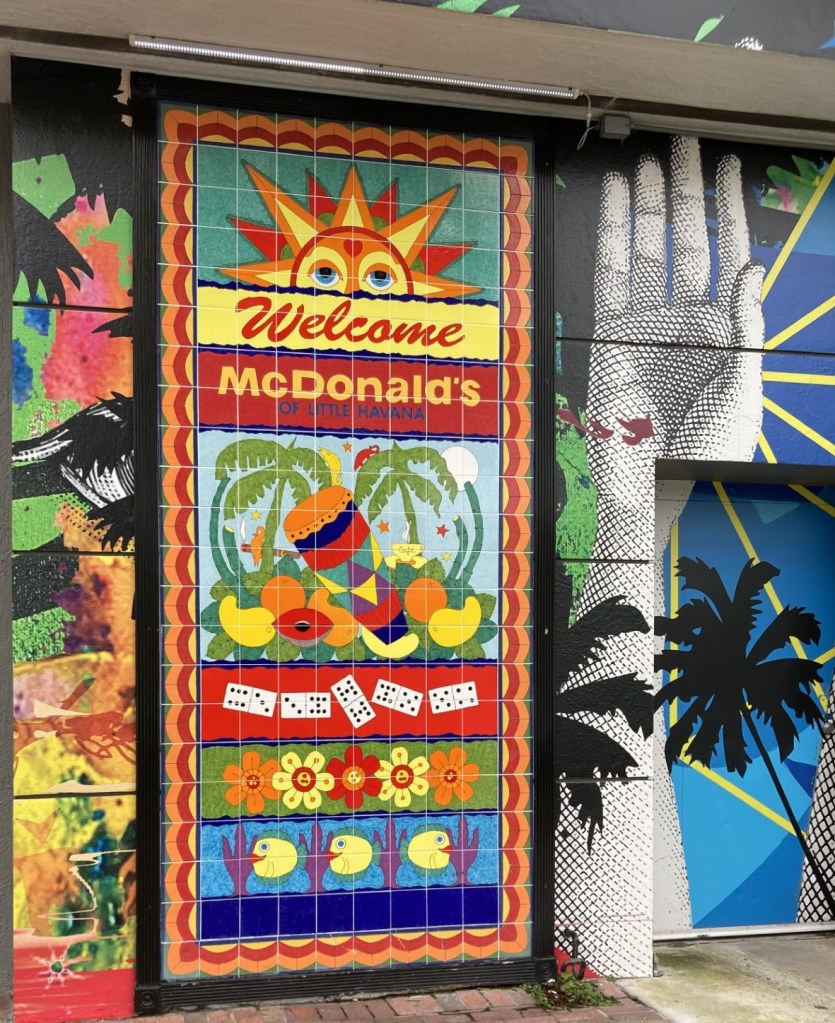
Everything has a Cuban flavor in the neighborhood. Until recently, the neighborhood McDonalds sported a Cuban tile roof. The nationwide corporate redesign did away with the local touch. Murals representing Cubanismo, however, now decorate the building.

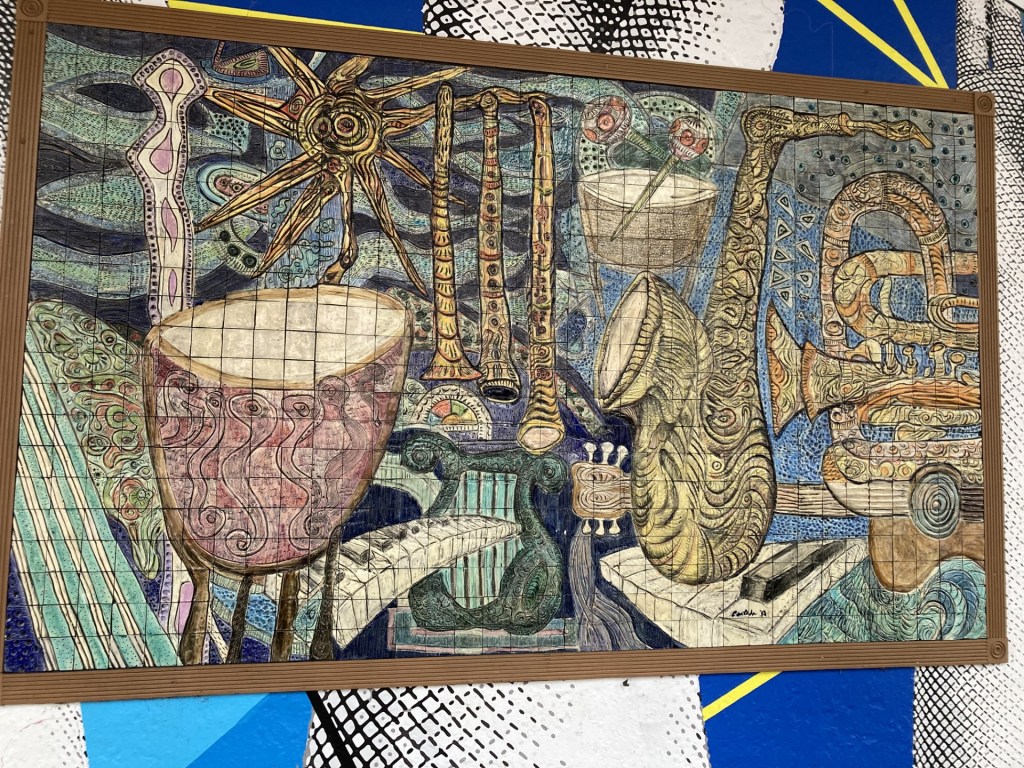
Miami has become a major hub for Latino and Cuban Music as depicted in this mural. Conga, a purely Cuban import, salsa, Latin jazz and, Latin rock are all popular.
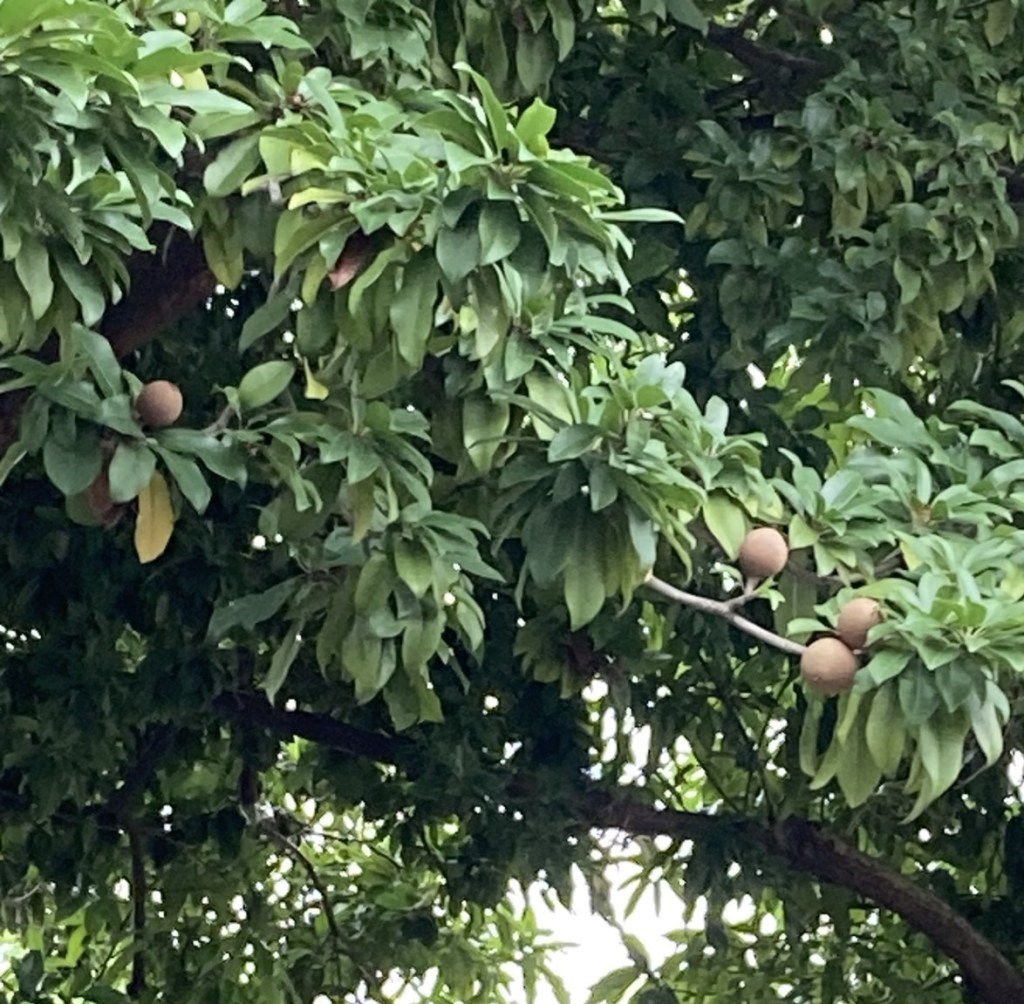
Next stop was the historic Los Pinarenos Fruteria, which 103 years ago was the southern terminus of the Indian River Fruit Company. The Hernandez family has run this fruit stand for almost sixty years. Our group enjoyed cold, freshly squeezed mango juice and admired low-hanging fruit on the sapodilla / sapote tree in the yard.
We had other stops over the three hour tour including Cuban Memorial Blvd and its monuments to the Bay of Pigs debacle. The Casa de las Trucas is a Havana/family business established in 1915, only one of many, many businesses brought lock, stock, and barrel north to Miami after the rise of Fidel Castro.
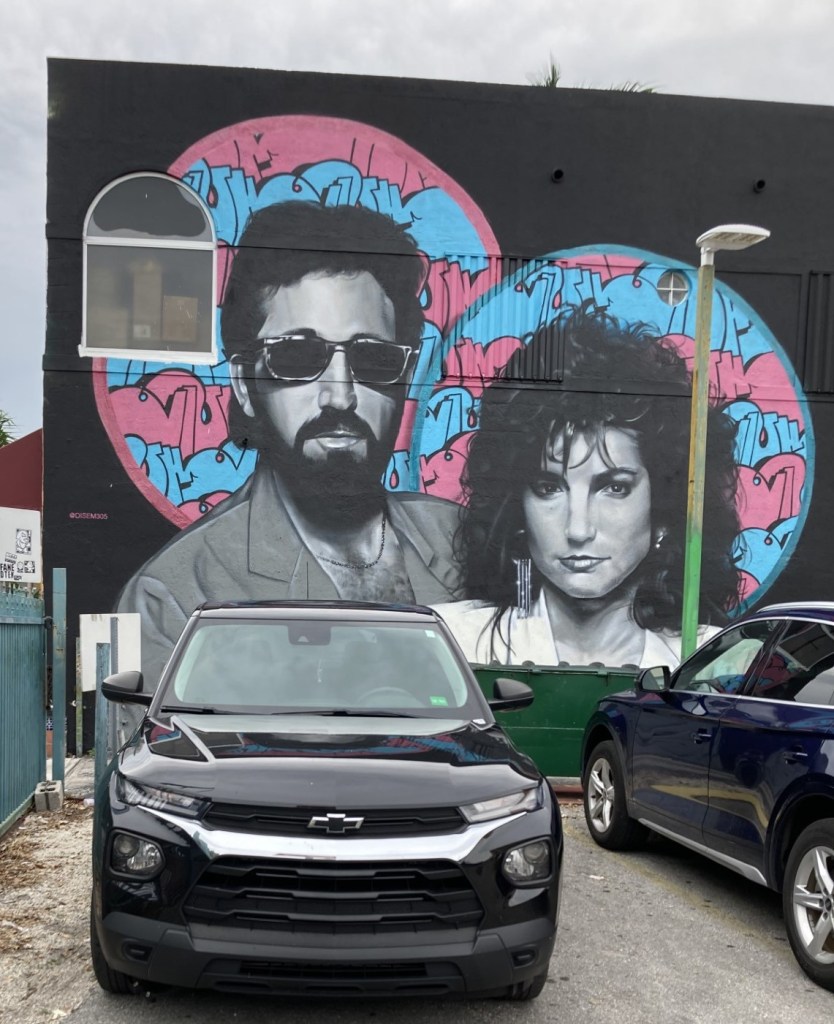
Adjacent to this huge costume shop is a recent mural by local artist Disem 305 honoring local musicians, Emilio and Gloria Estefan.
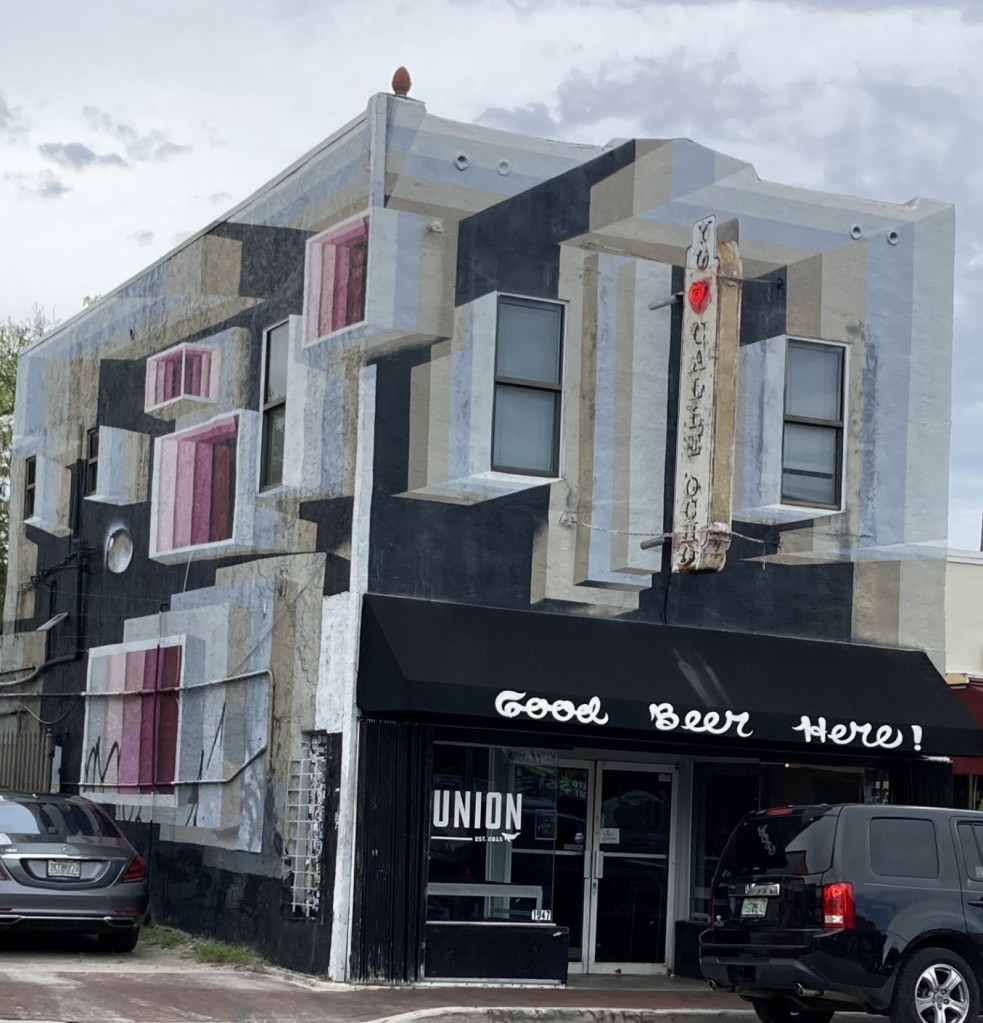
Many other murals caught my eye as we walked. I’ve passed this one many times, this was the first time I caught the 3-D effect.
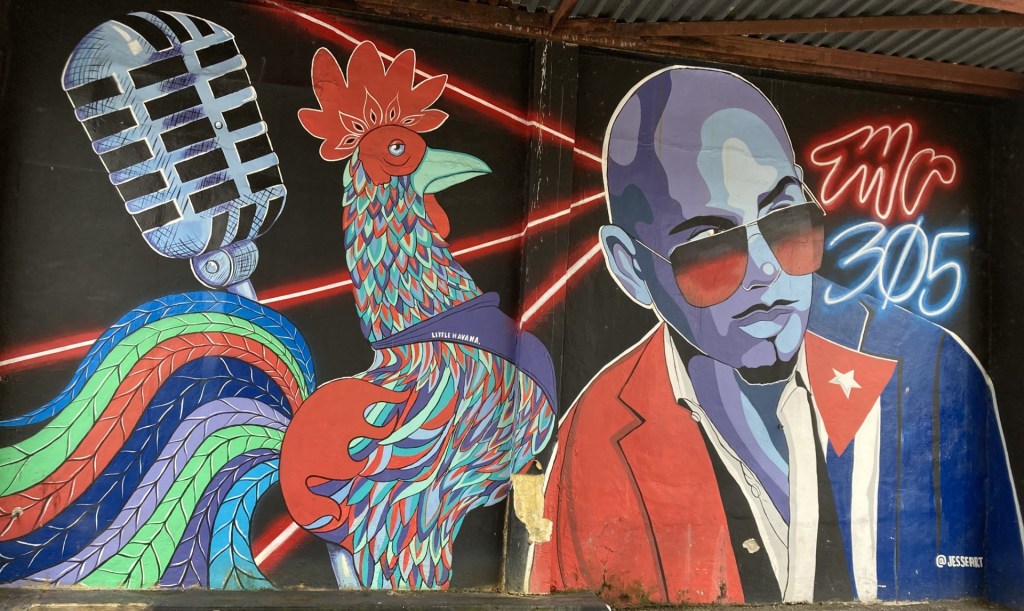
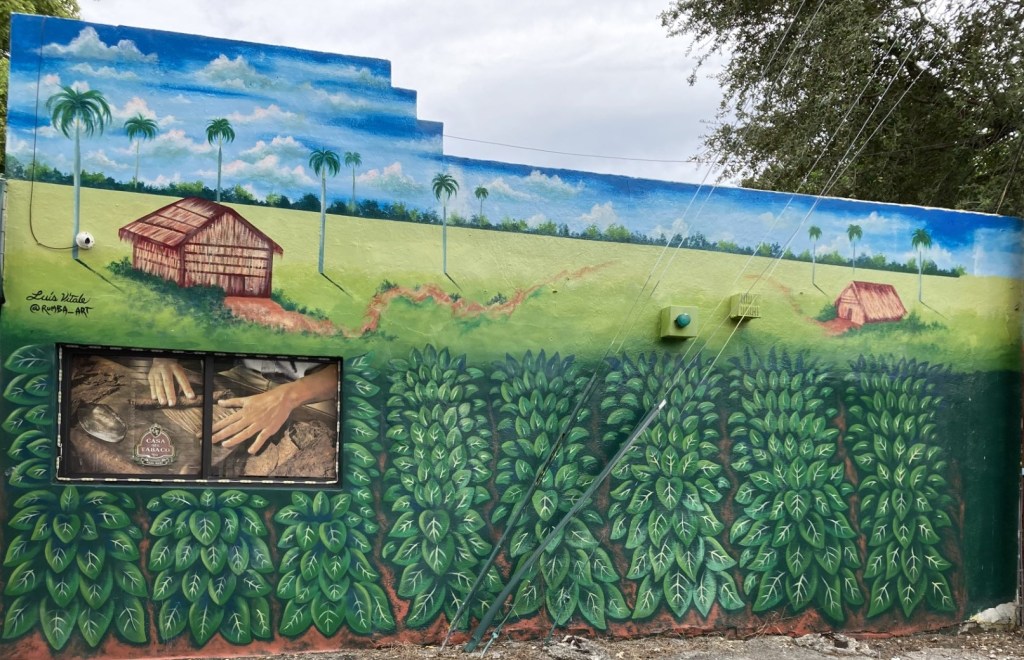
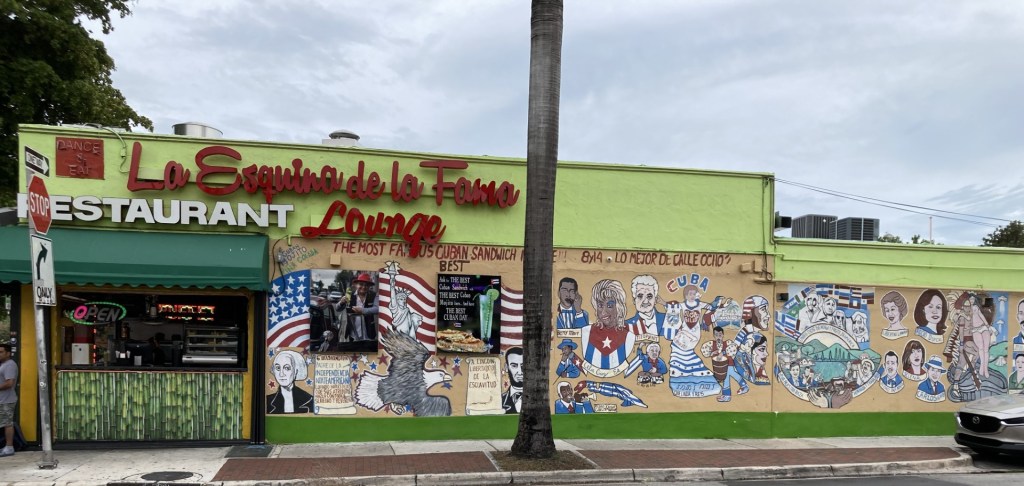
The Arte de las Americas mural, painted by local Nicaraguan artist Arcie Nica (Luis Manuel Cuadra Peralta) visually brings together caricature-like images including Celia Cruz, Tito Puente, Selena with Abraham Lincoln and George Washington.
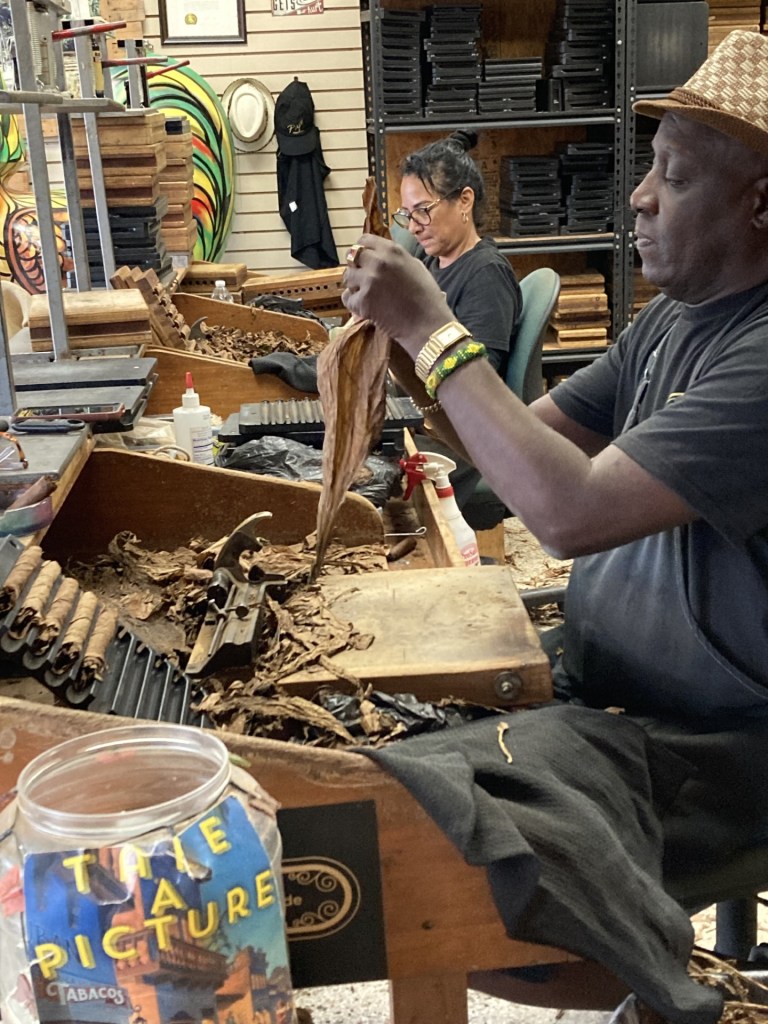
The last two stops on the tour were Havana Classic Cigars where “Roberto” and another person were rolling cigars in the window. Of course, we could have bought cigars if that was our desire.
The Havana Collection Experience on the second floor of the Cubavera Guayabera store. As well as the amazing array of linen guayaberas, this small sculptural collage constructed from pieces of rafts that carried many refugees through the waters between Cuba and Florida caught my eye.

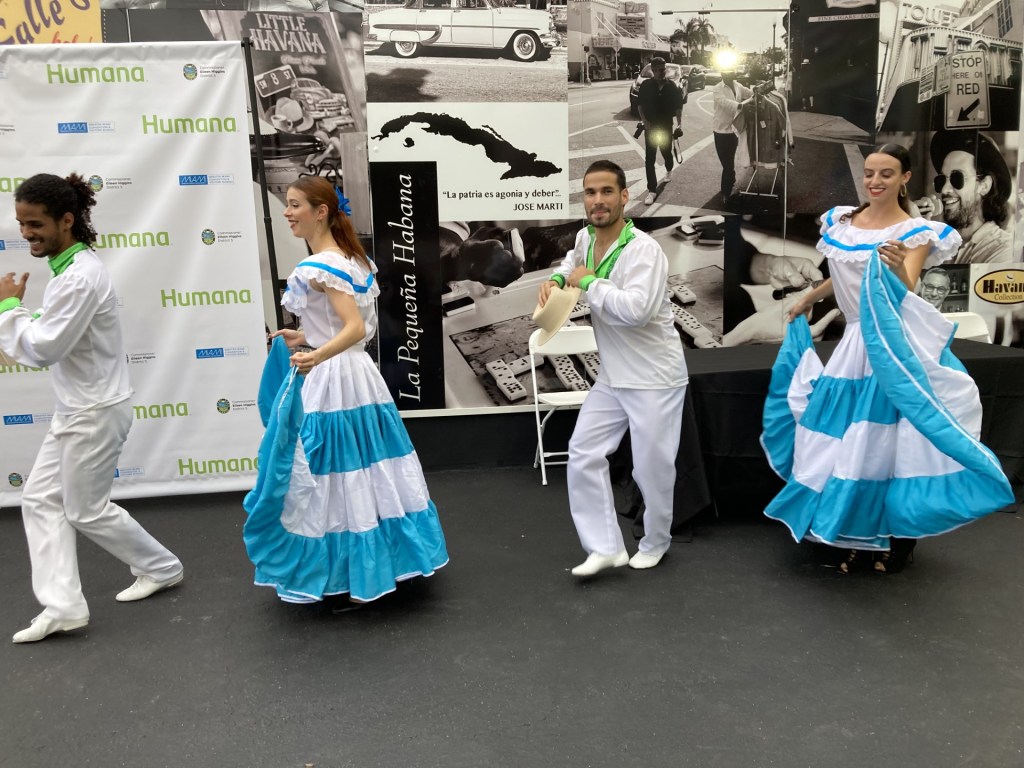
We closed the staycation in The Havana Collection Experience’s courtyard with a celebration of Hispanic Heritage Month, dance, music, food and more!
Now CC and I have to plot our next staycation and make the time for another adventure in our own community.
Thanks to the Greater Miami Convention and Visitor’s Bureau for organizing this informative and enjoyable walking tour.
 Creatively Annette
We loved, loved your post and learned a lot.
LikeLike
Some of my favorite places!
LikeLike