meat that one rarely sees around here, veal breast and lamb breast. My mom expertly cooked these two relatively low cost cuts when we were kids. Her uncles were butchers from Greece transplanted in New York’s Lower East Side; they knew meat. I’ve tried both cuts several times, but never really conquered the fat deposits that’s a part of each. Seeing them reasonably priced within the time of a few weeks, I thought I’d give each another try.

For the veal, I once again turned to my cookbook selection and found a recipe in one of my older, treasured volumes, Raymond Sokolov’s The Jewish American Kitchen. This, too, was another flash to the past. I was reminded of Sokolov’s column on food and cooking in the New York Times Sunday magazine section long ago. Maybe reading his beautifully, often humorously worded, essays got me interested in food history. His column was a weekly highlight. Upon rereading his recipe for Stuffed Breast of Veal, one wonders if the meat is the highlight or simply the vehicle for one of three stuffings: Matzo Ball stuffing, Potato stuffing, and Liver and Bread stuffing. Actually, I chose my own path and improvised with selected contents of my crisper drawer.
Stuffed Breast of Veal (a la Raymond Sokolov). Start with a breast of veal. Ask the butcher to cut a pocket in the meat to separate the two thin layers of meat from the central layer of fat.
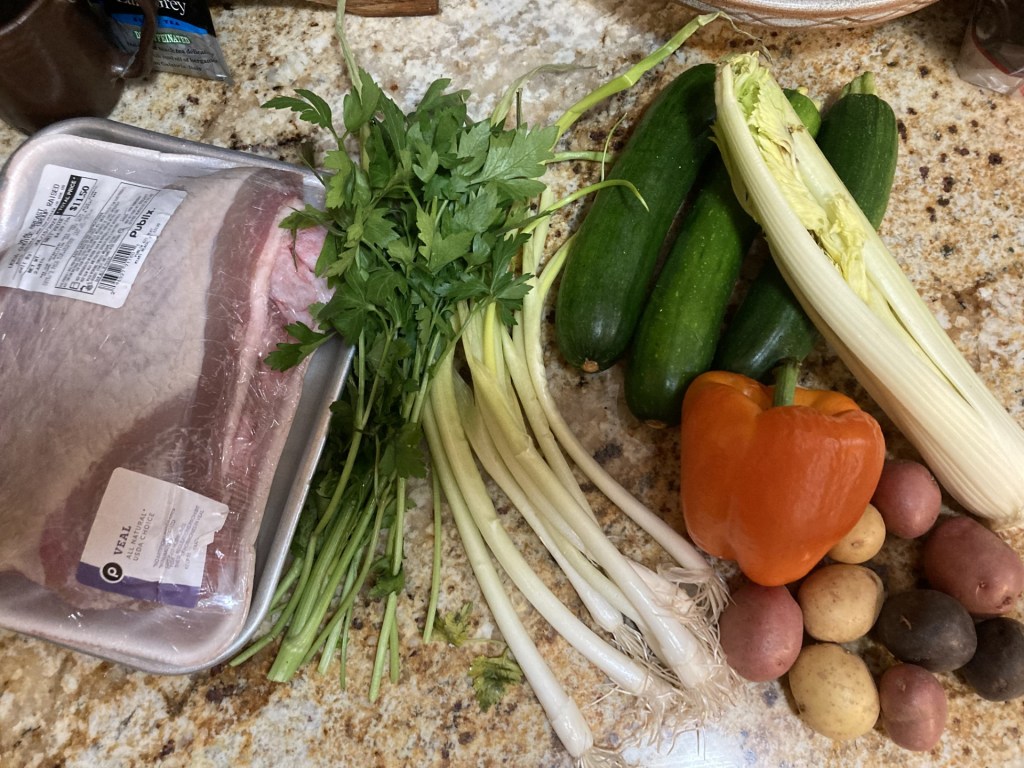
Preheat the oven to 375 F. Wash and dry the meat. Rub the insides with salt and pepper. Then gently sauté ¾ cup chopped onion, 3 tbsp schmaltz* (oil), one chopped pepper, some chopped celery, chopped Italian parsley, and salt and pepper. When they are nicely softened, stuff the veal breast; I used skewers to try to try to close the opening.
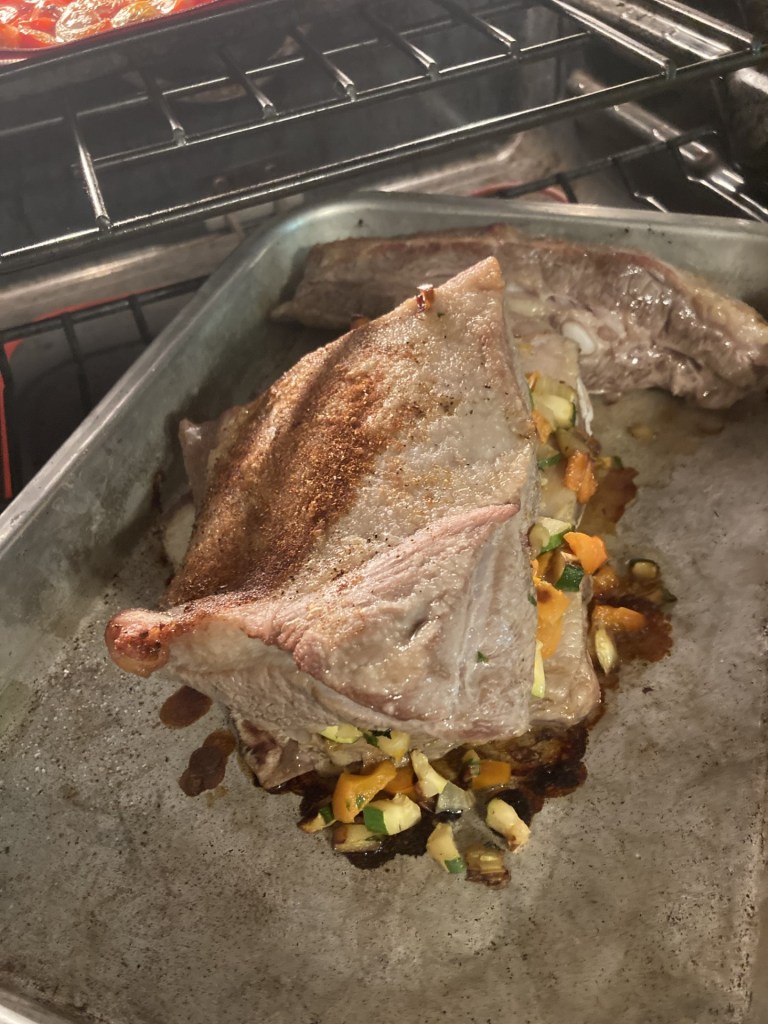
The meat went into a prepared roasting pan into which was scattered some small potatoes, cut up zucchini, and cut up eggplant, all tossed in oil.* Cook for 30 minutes. Add one cup of water and cook another 30 minutes. Cover the pan with aluminum foil and continue cooking for another 2 ½ to 3 hours. Sokolov recommends making a gravy with the pan drippings. Constant Companion enjoys soaking up pan drippings with bread rusks.
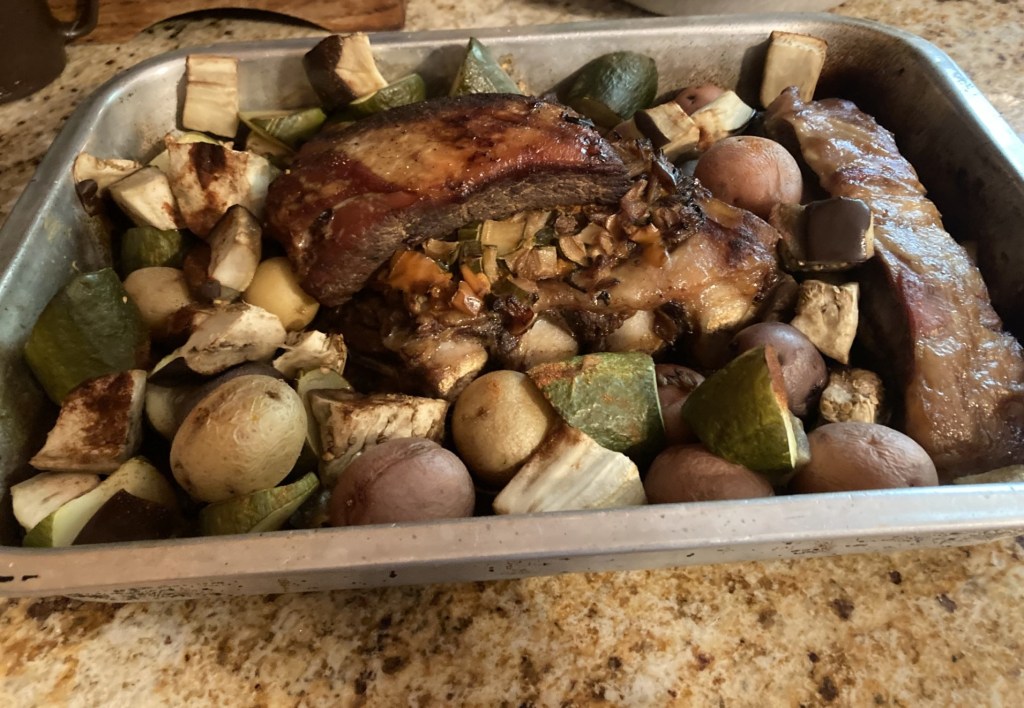
*To show the age of this book, Sokolov recommends schmaltz (rendered chicken fat) or margarine in place of oil.
Just a few weeks later, when another grocery store offered lamb breast at an excellent price I gave it a try. Within a month, the family was subjected to two old style meals, this one, however, was not stuffed. This recipe for roasted lamb breast came care of my friend google and Allrecipes Test Kitchen (https://www.allrecipes.com/allrecipes-test-kitchen-7553892).
Roasted Lamb Breast (https://www.allrecipes.com/recipe/221996/roasted-lamb-breast/). Preheat the oven to 300 degrees F. whisk together 2 tbsp olive oil, 2 tsp cumin, 2 tsp salt, 1 tsp black pepper, 1 tsp Italian herb seasoning (I mixed together a bit of oregano, basil, and garlic powder), 1 tsp coriander, 1 tsp paprika. Coat the lamb breasts (cut into 2 pieces) with the spice mixture and place fat side up in the roasting pan. Tightly cover with aluminum foil and bake for 2 hours.
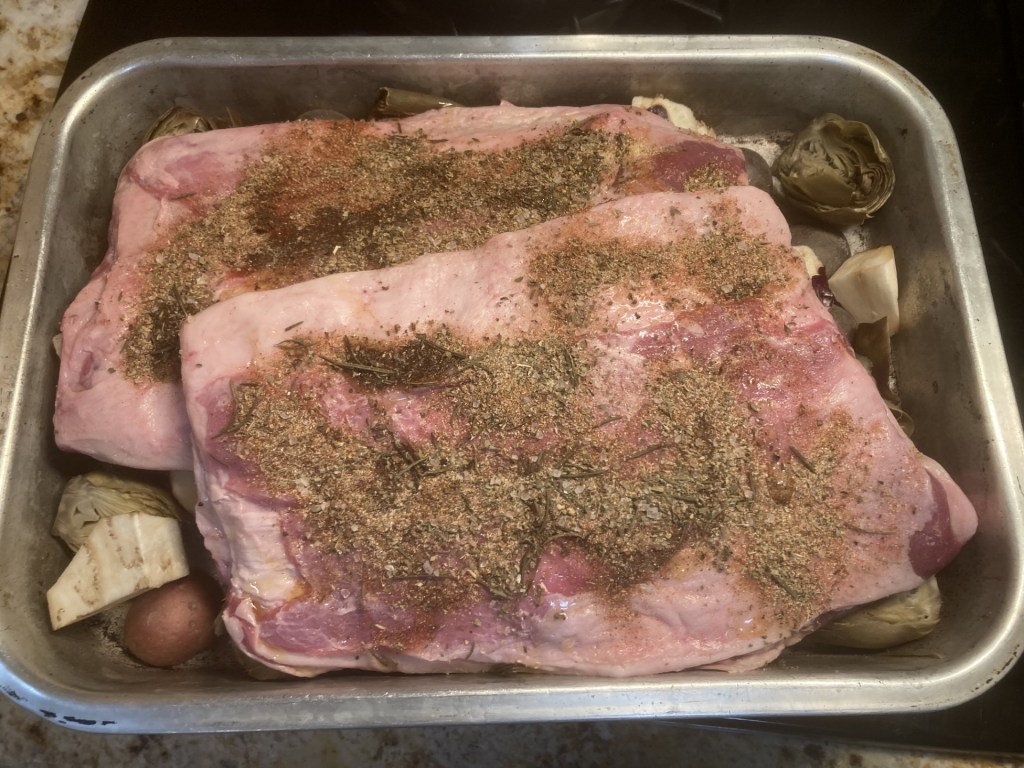
Remove the meat from the oven and increase the oven temperature to 450 degrees F. Line a baking sheet with aluminum foil. Cut the lamb into four pieces. Place the meat on the prepared baking sheet.* Brush tops with fat drippings from the roasting pan. Roast for another 20 minutes until the meat is browned and edges are crispy. Finally, place the meat under the broiler for about 4 minutes, to brown the meat. The recipe calls for a parsley-vinegar sauce – olive oil whisked with ½ cup chopped Italian parsley, 1/3 cup white wine vinegar, juice of 1 lemon, 2 crushed garlic cloves, 1 tsp honey, and ½ tsp red pepper flakes. I did not make this sauce.
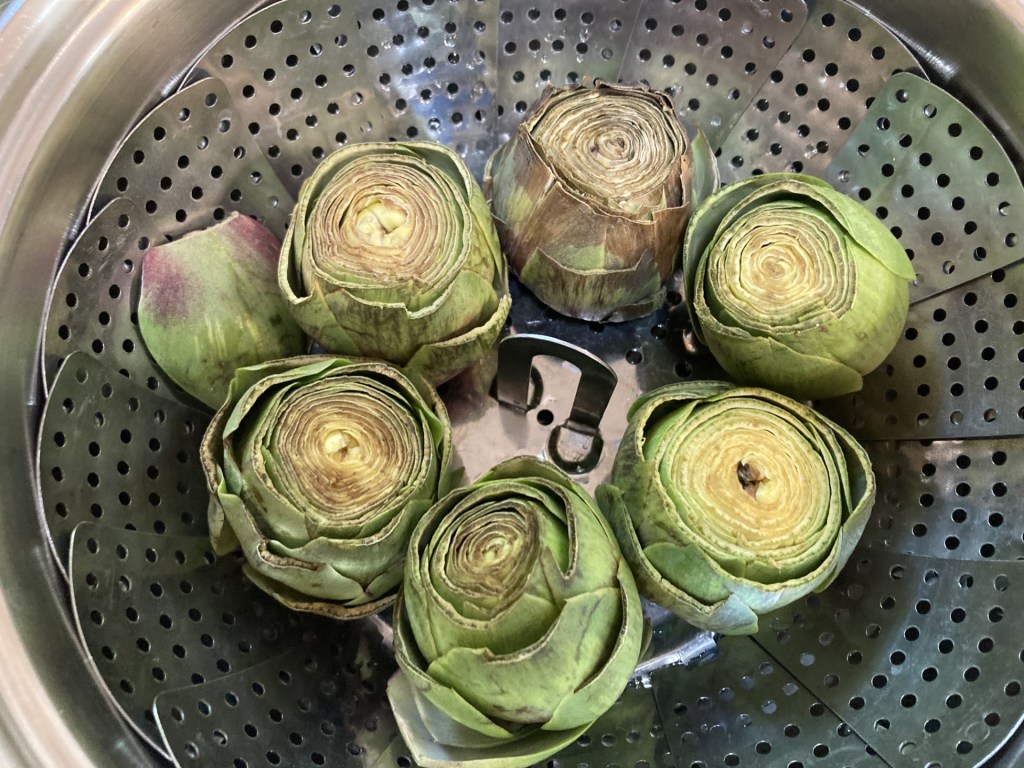
*Again, excavating in my larder, I added some steamed baby artichokes (something I love to add to roasting lamb) and chopped up eggplant to the roasting pan. I pulled them out after the first round in the oven. They were a soft and succulent addition to the fatty, meaty dish.

We enjoyed two meaty dishes from the past. I expect it will be a while before they again grace our dinner table.
 Creatively Annette
Lovely post. Do you remember how your mother used to cook the meats? Take care.
LikeLike
Hi Michelle, my mom cooked them pretty much the way I did. I think these are the main, old-style way of cooking these meats. No matter, they are pretty fatty.
LikeLike
I never tried cooking these cuts of meat but will definitely try now that you’ve provided these interesting recipes.
Thank you!
LikeLike
Let me know the results … no doubt delicious!
LikeLike
Perfect in advance of the Jewish New Year!
LikeLike